



Spotlight On: Oscar Gomez, Managing Partner, Chair Litigation Group, EPGD Business Law

Key points:

  • • EPGD Business Law blends entrepreneurial roots with enterprise-level services, emphasizing proactive legal planning as a long-term investment.
  • • Rising litigation in Miami reflects rapid business formation, tech-driven shortcuts in transactional work, and a dense entrepreneurial ecosystem.
  • • Macroeconomic pressures and global trade exposure are increasing risk, making structured agreements and preventative counsel more critical than ever.
Oscar gomez spotlight onFebruary 2026 — Invest: spoke with Oscar Gomez, managing partner and chair of the litigation group at EPGD Business Law, about Miami’s entrepreneur-driven growth, the rising stakes of business litigation, and why proactive legal planning matters. “Legal services is an investment in getting things right, so you don’t have to pay more later,” Gomez said.


Join us at caa’s upcoming leadership summits! These premier events bring together hundreds of public and private sector leaders to discuss the challenges and opportunities for businesses and investors. Find the next summit in a city near you!


What does EPGD Business Law do, and how do you ensure clients receive solutions tailored to their specific business needs?

Our law firm started as a firm geared toward entrepreneurs, or people who were starting businesses. Over the years, we’ve grown into a larger firm. We’re about a 30-attorney firm now.

Today, we tailor services both to entrepreneurs and to enterprise clients, meaning bigger companies. So we support small, medium, and large organizations. But the core reason we can tailor effectively is that the roots of the firm are in entrepreneurship. That’s how we started.

We spent years working with founders on funding, their journey, and the day-to-day realities of building a company. Our attorneys have that background and that mindset. It shows up in how we approach problems and how we communicate with business owners, because we understand the pressures of starting, scaling, and operating with limited time and resources.

Even though the firm has grown, we’ve stayed grounded in that entrepreneurship mentality. That helps us deliver services to clients in a way that feels legitimate and genuine, because it comes from understanding what that journey looks like.

From a litigation perspective, what are the most common legal mistakes small and mid-sized businesses make, and how can they avoid them?

Legal services is an investment in getting things right, so you don’t have to pay more later. One of the most common mistakes small and mid-sized businesses make is not wanting to make that investment.

When you’re starting a company, or you’re still smaller, everything can feel more scarce. So business owners try to hold off on spending money wherever they can, including on attorneys. A lot of times, that’s a mistake. People convince themselves they can do things on their own, but if they scale and become successful, the issues they didn’t address early often end up costing far more on the back end.

The businesses that avoid these mistakes are the ones that plan and prioritize legal services as a form of insurance. They treat it as a way to ensure they’re doing things the right way, so that as they grow, they’re not hit with surprises.

On a basic level, it often comes down to corporate documents and corporate formalities. Those are foundational steps. They’re not even expensive, but they can save a lot of problems in the long run. They also set the framework for building the company the right way, instead of letting it grow in whatever direction happens naturally, without structure or clarity among owners and partners.

There’s also a newer version of this issue now. It’s not new that small businesses use general document services to generate contracts. Today, with AI, it’s even easier to produce a contract or a template quickly. Those tools can help with general understanding, but they’re not individualized solutions. If you want something that truly addresses your industry and your business, that’s much harder to do without guidance, especially if you’re not a lawyer and don’t know what details you should be building into the document.

What role does preventative legal counsel play in the services you provide, and how do you educate clients on proactive legal strategies?

I’m a litigator. Our firm does a wide variety of corporate work, but my focus is on trial work and litigation. The first thing I always tell any C-suite executive or business owner is that any dollar you spend up front, before you have a problem, is probably worth $10 you’re going to spend later if you don’t do it.

The cost difference is real. Doing work up front is significantly cheaper than litigation or anything that happens once there’s already an antagonistic situation. Once there’s litigation, you have entrenched interests that are financially against each other. That makes it longer, more difficult to unpack, and harder to resolve.

Preventive legal counsel is about building the foundation early. It’s about structuring the business correctly, setting expectations clearly, and putting agreements in place that reduce ambiguity. That’s how businesses protect themselves, and it’s how they set themselves up to grow with fewer disruptions.

What emerging trends or shifts are you seeing in business litigation that entrepreneurs and business owners should be aware of?

Litigation in the United States is blowing up. It’s getting bigger, and transactional work is getting smaller for a lot of the reasons we’ve been talking about. More businesses are turning to technology for transactional work. That can make things faster, but it can also build up problems if the work isn’t truly tailored or if companies skip important steps.

When you talk about Miami as a market, Miami has become more than just a place where large companies set up shop. That’s part of the story, but Miami has also become a hub for small entrepreneurs who have dreams and want to build something.

Brickell, in particular, has become an environment where you see young people with a lot of ideas all working on something. They’re hustling, trying to build themselves into something. That shift has become a defining characteristic over the last five to 10 years, and especially since COVID. You have people moving from around the country with an idea and a plan, and they want to come to Miami because they see it as an entrepreneur-friendly place with energy and opportunity.

When you have that kind of entrepreneurial density, it brings a lot of litigation. It’s a natural result of rapid business formation, partnerships, and scaling. That’s also why you see bigger law firms continuing to expand in Miami. It’s not only the large companies coming in; it’s also the volume of entrepreneurs and growing businesses operating in the market.

Traditionally, Miami litigation has been heavily tied to industries like real estate, construction, and healthcare, and those remain major. But now it’s broader. It touches almost everything because business activity is rising across many industries at the same time.

What emerging legal challenges do you think businesses may face over the next few years, and how is the firm preparing to help clients navigate them?

There are challenges already in the market, including tariffs and international instability. Some of those challenges hit Miami more than other markets because so much importing and exporting happens through Miami, and so many businesses here are tied to global activity.

On a broader level, you also have major macroeconomic factors. Interest rates are still fairly high. Inflation has gone down somewhat, but you still have inflation. These are the kinds of conditions that can stress businesses, change consumer behavior, tighten capital, and increase the likelihood of disputes.

What I’ve found is that the U.S. economy has become much more complex over the last 15 to 20 years. It used to feel more straightforward, where people focused on a handful of indicators. Now there are more moving parts, globally and domestically, and they affect businesses in different ways depending on their industry and their exposure.

Many entrepreneurs and smaller business owners are focused on getting their foothold and building the business. They’re not always paying attention to macro signals. But those forces can shape costs, contracts, supply chains, and risk. Our job is to help clients plan, structure relationships carefully, and build agreements that hold up even when the environment gets more challenging.

What makes Miami attractive to entrepreneurs?

The entrepreneurial spirit in Miami is a big angle that gets missed a lot. In my practice, I’ve seen the number of people from around the United States who have moved to Miami over the last five to six years specifically to set up a business. They come here saying they want to be business owners, and they see Miami as a friendly place to do it.

There are a lot of reasons for that, including Florida’s business-friendly environment at the state level and factors like no state income tax. But beyond the policy side, there’s also momentum. There’s a real concentration of people building, taking risks, and trying to scale. That entrepreneurial energy is a defining characteristic of Miami right now, and it’s shaping growth across the region.

Want more? Read the Invest: Miami report.

 

Building Pittsburgh’s next talent pipeline

Key points:

  • • Pittsburgh’s workforce pressure spans tech, healthcare, and skilled trades, requiring durable, employer-aligned talent pipelines.
  • • Universities are expanding experiential learning and AI-ready curricula to close skills gaps and improve retention.
  • • Construction and healthcare face acute labor shortages, making collaboration across education and industry essential to regional competitiveness.

PittsburghFebruary 2026 — Pittsburgh’s key workforce sits at the intersection of technology, “eds and meds,” and a construction-and-restoration cycle that is putting real pressure on the talent pipeline.


Join us at the Invest: Pittsburgh 3rd Edition Leadership Summit! This premier event brings together hundreds of Pittsburgh’s business and regional leaders to discuss the challenges and opportunities for businesses and investors. Buy your ticket now!


In 2025, 71% of U.S. employers reported difficulty finding the skilled talent they need. That tension and the collaboration required to resolve it sits at the heart of one of the key conversations at the upcoming Invest: Pittsburgh leadership summit.

With leaders spanning the built environment, higher education, and healthcare, the opening panel discussion will reflect what is increasingly true in Southwestern Pennsylvania — that closing skills gaps is less about one-off recruitment pushes and more about building durable pipelines, co-designed with employers and reinforced through experiential learning.

Be part of the conversation at the Invest: Pittsburgh 3rd Edition Leadership Summit, taking place February 26, 2026 (8:00–11:00 a.m.) at the Rivers Club — an opportunity to connect with senior leaders across education, healthcare, construction, and beyond as Pittsburgh scales the next generation of talent and innovation.

Major jobs engine

Pittsburgh’s employer base has long been anchored by higher education and healthcare, with institutions such as the University of Pittsburgh and its affiliated medical center among the region’s largest non-governmental employers, alongside PNC Bank, Highmark Health, and Giant Eagle.

At the same time, the region’s robotics and AI cluster has matured into a major jobs engine. The Pittsburgh Robotics Network describes an ecosystem of 250-plus advanced technology companies supporting more than 7,300 jobs across sectors ranging from autonomous transportation to healthcare and manufacturing.

This creates both an opportunity and an imperative that curricula must move quickly enough to match real-world demand, while still building the “human skills” that remain differentiators as automation accelerates.

In an interview with Invest:, Christina Clark, president of La Roche University, framed the moment as an “AI-driven industrial revolution,” with institutions needing to ensure graduates leave campus with both technical fluency and the judgment to use it responsibly. 

“Employers now prioritize these skills over experience,” Clark said, adding that La Roche moved to ensure “every student graduated with these competencies.” Clark also pointed to the shrinking availability of traditional entry-level roles, emphasizing experiential pathways that translate classroom learning into workplace readiness.

Experiential learning

If skills gaps are the problem, work-engaged learning is increasingly the mechanism for solving them at scale. At La Roche, Clark highlighted the university’s SOLVE Center model, where community partners bring projects and students tackle applied work through courses and faculty-led engagement. La Roche cites National Survey of Student Engagement (NSSE) benchmarking that 96% of its courses include experiential learning, compared with 56% at peer Catholic institutions, 44% at Carnegie-class institutions, and 43% across NSSE institutions overall.

At Slippery Rock University, president Karen Riley described a similar emphasis on outcomes — and the operational discipline required to reach them. “Our strategic plan goal was to increase retention by 0.5% year over year for five years,” Riley told Invest:. “In our first two years, we have increased retention 4.8%, from 81.6% to 86.4%… and far exceeding the national average of 77%.” Workforce partnerships are central to that strategy, she noted, pointing to relationships that shape curriculum and provide hands-on training environments — including safety equipment support and curriculum input from corporate partners, and clinical training pathways with major health systems.

These models reflect a broader higher-education reality: demographic headwinds and intensifying competition are forcing institutions to differentiate through career outcomes and employer alignment, particularly as the “enrollment cliff” reshapes recruitment strategies nationwide.

The skilled-trades squeeze

Pittsburgh’s skills conversation isn’t only happening in labs and lecture halls. It is also happening on job sites, and in the workforce systems that feed them.

Guy Amatangelo, president of restoration firm Mariani & Richards Inc, described the past two years as “an explosion of activity,” with a level of volume he said he “had not witnessed in 20 years.” 

That surge is paired with a familiar constraint: talent. “In the past six to seven weeks alone, we have hired approximately 20 people,” Amatangelo said, adding that if more qualified candidates were available, the company would hire them. He also underscored the recruitment gap facing unions and contractors alike, calling it “an ongoing effort to engage younger generations in the trades and increase interest levels.”

A PublicSource analysis found the Pittsburgh region has lost nearly a quarter (23%) of its skilled trades workers ages 25–44 since 2012, intensifying competition for talent just as infrastructure, redevelopment, and industrial investment demands grow. And local workforce leaders have warned of a longer-run constraint: in 2025, Pittsburgh and Allegheny County leaders anticipated a shortfall of 80,000-plus workers over the next decade, reinforcing the need for training-to-employment pathways that convert potential into job-ready talent.

Designing for budgets, longevity

In architecture, the skills conversation often shows up as a business resilience question: how do firms remain stable through cycles while still building teams and mentoring the next generation?

Martin Kimmel, president of Kimmel Architecture, linked his firm’s growth to a long-term strategy built around diversification and mission-driven delivery — a model he said has helped the company avoid layoffs for decades. “Because of that model, we’ve never had a layoff in 30 years,” Kimmel said, noting that even as segments such as multifamily soften, balance and discipline create stability.

Kimmel also pointed to the firm’s operating philosophy — “Extraordinary Solutions for Ordinary Budgets” — as a differentiator that requires both technical competence and problem-solving creativity. In practice, that means designing waste out of the process so clients can apply budgets where value matters most.

Navigating complexity at scale

Healthcare is one of Pittsburgh’s defining sectors, and it is also one of the most complex talent environments — blending clinical skills, digital systems, customer experience, and behavioral health capacity.

Sally Schufreider, market leader and general manager of Cigna Healthcare, pointed to personalization and proactive support as central to improving navigation for members, describing a strategy built around a dedicated customer experience team and “an office of transformation.” Schufreider also highlighted the cost environment shaping healthcare employers’ priorities, saying the industry is facing the “highest healthcare cost increases in 15 years,” with employers feeling the pressure as healthcare remains a top expense category.

What collaboration looks like now

Across sectors, the most effective approaches connect training to tangible work — through practicums, clinicals, apprenticeships, and employer-led curriculum input. In Pittsburgh and Southwestern Pennsylvania, organizations such as the regional workforce development boards are structuring programs that tie funding to outcomes and support learn-and-earn models. Meanwhile, state-level investments continue to prioritize apprenticeships and pre-apprenticeships in high-demand fields such as advanced manufacturing.

For employers, the question is increasingly less “Where can we find talent?” and more “How do we help build it?” And for educators, it is less “What should we teach?” and more “How do we teach in partnership with the labor market, without losing what makes graduates adaptable over the long term?”

As the region scales its robotics and AI ecosystem, reinvests in neighborhoods and legacy facilities, and continues to lead in healthcare and higher education, the workforce challenge becomes a competitive advantage for those who collaborate early, build pipelines intentionally, and treat skills development as a shared regional strategy.

Want more? Check out the Invest: Pittsburgh report!


Why Charlotte remains a top choice for relocation and business growth

Key points:

  • • Charlotte’s strength as a national banking hub continues to anchor job growth and corporate expansion.
  • • Steady population gains and diversification into energy, manufacturing, and data centers reinforce resilience.
  • • Competitive costs and expanding infrastructure sustain its edge as a relocation destination.

CharlotteFebruary 2026 — As national headlines debate a “Sun Belt reset,” higher-for-longer interest rates, and shifting migration trends, Charlotte continues to rank among the most resilient large U.S. metros for corporate relocation, business formation, and population growth.


Join us at caa’s upcoming leadership summits! These premier events bring together hundreds of public and private sector leaders to discuss the challenges and opportunities for businesses and investors. Find the next summit in a city near you!


Inventory is rising. Rent growth has cooled. Office demand is more selective. And competition — particularly from Dallas on the banking front — is intensifying.

Yet the fundamentals that built Charlotte’s rise remain intact. Here are five reasons the Queen City continues to stand out.

1.- A National Banking Anchor

Charlotte is widely recognized as the second-largest banking center in the United States after New York, based on asset concentration and headquarters presence. The city is home to Bank of America, which reports roughly $2.8 trillion in assets, and Truist Financial, with more than $500 billion in assets. The metro also serves as a major employment hub for Wells Fargo, which maintains its East Coast headquarters in Charlotte. 

Charlotte supports more than 100,000 financial services jobs, with employment growth outpacing the national average in recent years. Recent expansion activity reinforces that position. According to CoStar, TD Bank signed a 10-year lease in Ballantyne that more than tripled its Charlotte footprint, citing population growth and access to talent as key drivers. Citigroup also announced plans to add more than 500 new jobs in Charlotte, with average salaries reported at approximately $131,800, according to the Charlotte Business Journal.

Blake Morris, Charlotte market president at United Community, noted the underlying demand dynamics. “Charlotte is one of the markets where you see large population growth, which creates a continued need for banking services across both the consumer and commercial sides.”

Still, competition is sharpening. According to Axios Charlotte, Dallas has aggressively positioned itself as “Y’all Street” and now ranks second nationally in financial services employment behind New York. Charlotte’s edge in asset concentration remains strong, but the rivalry underscores a more competitive landscape.

2.- Sustained Population Growth

According to the U.S. Census Bureau, Charlotte added 23,423 residents between July 2023 and July 2024, bringing the city’s total population to 943,476. That made Charlotte the 14th largest city in the United States and the sixth-fastest growing major city in numeric terms over that period.

At the metro level, the Charlotte-Concord-Gastonia region ranked 11th nationally in numeric population growth, adding more than 61,000 residents between 2023 and 2024, according to the Census Bureau’s 2025 metro estimates release.

Workforce demographics further strengthen the story. The Charlotte Regional Business Alliance reports that approximately 157 people move to the region each day, with more than two-thirds between the ages of 20 and 34 — prime working years. 

Andrew Griffin, regional executive at First Bank, described the region’s role succinctly. “Charlotte is the economic engine of North Carolina… This region typically leads the bank in production and growth, which ultimately drives net income.”

For employers evaluating relocation, that growth translates directly into labor force expansion and sustained economic momentum.

3.- Continued Corporate Diversification

Beyond banking, Charlotte has attracted major corporate investments across automotive, industrial manufacturing, energy, and advanced materials.

In 2023, Scout Motors selected the Charlotte region for its corporate headquarters, a project expected to create more than 1,000 jobs and represent roughly $200 million in capital investment, according to state officials. 

The city is also home to Albemarle Corporation, a major lithium producer central to the global electric vehicle battery supply chain, as well as Duke Energy, one of the nation’s largest electric utilities. According to the Charlotte Business Journal, Duke’s former renewables division, now operating as Deriva Energy, signed a 10-year lease to relocate its headquarters within Uptown — reinforcing Charlotte’s role in both traditional energy and renewable infrastructure.

Construction activity reflects this diversification. Steve Smith, executive vice president at McKenney’s, pointed to growth in mission-critical sectors.

“Charlotte has become a highly attractive market for data centers,” Smith said. “It has available power capacity, competitive rates for high-usage customers, plenty of land near the metro, and a well-established fiber network originally built to support the banking industry.”

That convergence — energy capacity, fiber infrastructure, and land availability — has positioned Charlotte squarely in the path of data center and advanced infrastructure investment.

4.- Cost Advantage

Cost discipline remains a core part of Charlotte’s investment appeal. The state’s corporate income tax rate stands at 2.5%, among the lowest in the nation, with further reductions scheduled under current law, according to the North Carolina Department of Revenue. 

At the local level, Mecklenburg County’s property tax rate is approximately 0.75%, significantly lower than Dallas County’s roughly 1.7% rate — a difference that can materially affect long-term holding costs for major commercial assets.

Housing costs, while elevated compared to a decade ago, remain competitive relative to coastal financial hubs. According to Zillow data from January 2026, the average Charlotte home value is $390,729, with a median sale price of about $408,333. Homes are going under contract in roughly 42 days, reflecting a more balanced market.

More than 60% of recent home sales have closed below list price, indicating improved negotiating conditions for buyers. On the rental side, average monthly rent stands at $1,691 — below the national average of $1,895.

Affordability pressures remain real. Reporting from The Charlotte Post shows the 2025 median home price reached $443,850, requiring an estimated $138,000 in annual income to afford. Even so, Charlotte remains significantly less expensive than traditional gateway markets where median home prices often exceed $700,000.

For relocating companies and incoming talent, the city offers scale and access without gateway-city pricing.

5.- A Major Transportation and Logistics Hub

Connectivity continues to be a defining advantage. Charlotte Douglas International Airport handled 53.6 million passengers in 2025 — its second-busiest year on record, according to Axios Charlotte. As American Airlines’ second-largest hub, the airport serves as both a major connection point and an origin market, with the share of travelers starting their trips in Charlotte rising from 25% to 35% over the past decade.

On the ground, the North Carolina Department of Transportation is advancing major mobility projects. According to NCDOT, the proposed I-77 South Express Lanes would add toll lanes along roughly 11 miles from Uptown to the South Carolina line using an elevated design to reduce neighborhood impacts. Meanwhile, new I-485 interchange improvements in Matthews continue to come online to ease congestion along key growth corridors.

Walbridge vice president Michael Bedell summarized the broader infrastructure and growth alignment. “Mission-critical facilities are our largest and fastest-growing segment today. Charlotte sits within a fast-growing Southeast footprint where we see a lot of opportunity.”

For businesses evaluating supply chain reach, executive mobility, and regional access, Charlotte’s infrastructure is not static — it is expanding in parallel with growth.

Want more? Read the Invest: Charlotte report.


Spotlight On: Michael Landguth, President & CEO, Raleigh-Durham Airport Authority

Key points:

  • • Transform RDU’s $2.5B capital program is modernizing runways, terminals, roadways, and parking to support the Triangle’s rapid growth.
  • • Expanding international service, including new nonstop flights to Dublin, reflects rising global demand and industry alignment.
  • • Sustainability investments and long-term planning through 2032 position RDU as a critical infrastructure driver for regional expansion.

Michael Landguth spotlight onFebruary 2026 — In an interview with Invest:, Michael Landguth, president and CEO of Raleigh-Durham International Airport, discussed how Transform RDU is positioning the airport to meet the region’s rapid growth. “Transform RDU is a $2.5 billion program that is reshaping the airport experience and building for the region’s next phase of growth,” Landguth said.


Join us at caa’s upcoming leadership summits! These premier events bring together hundreds of public and private sector leaders to discuss the challenges and opportunities for businesses and investors. Find the next summit in a city near you!


What have been the most significant changes or milestones for RDU over the past year?

The biggest milestone has been Transform RDU, our major capital infrastructure program. Transform RDU is a 10-year, $2.5 billion investment designed to reshape the airport experience and position RDU for the region’s next phase of growth.

That investment includes four major initiatives. The first is replacing our primary commercial runway—a billion-dollar effort that renews critical airfield capacity and ensures we maintain safe, reliable domestic and global connectivity.

The second is the expansion of Terminal 2’s landside facilities. This includes additional ticket counters, expanded security checkpoints, improvements to baggage claim, and increased capacity for international arrivals.

The third is improvements to John Brantley Boulevard, our primary roadway into the airport. Enhancing this corridor is essential for efficient drop-off, pick-up, and overall circulation.

The fourth is expanding parking capacity. Landside access is a fundamental part of the customer experience and has become a constraint as passenger volumes continue to rise. 

Together, these projects are transforming the travel experience while building long-term capacity in a region that continues to attract jobs, investment, and new residents.

With Vision 2040 and Transform RDU in motion, how are you balancing immediate operational capacity with long-term growth and investment?

It’s a challenge because our growth mirrors what’s happening across the region—we are expanding rapidly.

In the near term, we are maximizing the use of our existing footprint, particularly through improved gate utilization. That allows our airline partners to continue adding service within current constraints.

At the same time, we are evaluating whether certain elements of our expansion program need to be accelerated. Additional gates were originally projected outside our 10-year window, but demand may require us to move that timeline forward to maintain a high level of service and deliver an excellent customer experience.

What trends are you seeing in international and local travel, and how are those shaping airline recruitment and global connectivity?

Our community is increasingly diverse, with residents from around the world calling this region home. That diversity, combined with sustained business growth, strengthens international demand and supports airline recruitment.

Today, we offer service to 84 nonstop destinations, including international markets, and we continuously evaluate emerging demand across both business and leisure segments.

We recently announced nonstop service to Dublin on Aer Lingus beginning in April 2026. The community’s response was immediate and strong. I expect we will continue expanding our route map as the region’s global personal and professional connections deepen.

There is also strong alignment between the Triangle’s industry clusters and those in Ireland, particularly in research and development, technology, and pharmaceuticals. Tourism adds another layer of demand, especially with destinations like Pinehurst and Southern Pines, where golf travel creates meaningful connectivity between the two regions.

How are you aligning infrastructure and operations to meet demand driven by Research Triangle growth and investment?

We closely monitor population growth and investment trends in jobs. The Research Triangle consistently ranks among the top places people want to live and work, and that directly drives air service demand.

That’s why we are investing in core infrastructure through Transform RDU. Our primary commercial runway is nearing the end of its useful life, and replacing it is essential to maintaining safe, reliable West Coast and transatlantic connectivity.

We also need terminal capacity that keeps pace with growth. Eighteen airlines operate at RDU, and as they expand, our passenger processing and facility capacity must keep up.

Landside access is equally important. Improving roadway flow and expanding parking ensure customers can reach the airport efficiently, regardless of how they arrive. Transform RDU reflects the region’s trajectory, and our delivery timeline must align with that growth.

How are you planning for future passenger expectations through technology?

We focus on technology that reduces friction in the customer journey. A strong example is our parking garage wayfinding system, which uses visual cues to identify open spaces. Customers consistently tell us it reduces stress and saves time, especially during peak travel periods.

As we move forward, we will continue implementing practical solutions that improve flow, enhance safety, and help customers move efficiently from curb to gate. As we build new capacity, we are pairing infrastructure investments with technology that helps maintain reliability during construction, so customers experience progress with minimal disruption.

What are your most promising initiatives under the Sustainability Management Plan?

One project we’re especially proud of is the Park Economy 3 expansion. Through the Envision sustainability framework, it earned Platinum verification from the Institute for Sustainable Infrastructure—the highest rating awarded.

The project integrates solar power, electric vehicle charging, and a first-of-its-kind stormwater management system that treats runoff from parking operations before it leaves the site.

Our goal is to embed sustainability into growth rather than treat it as an afterthought. These investments scale alongside expansion, reduce environmental impact, and strengthen long-term resilience.

How has your thinking evolved on drone integration and commercial drone activity?

I see two primary applications. The first is operational use—construction monitoring, airfield inspections, and enhanced site visibility—which is already becoming more common.

The second is passenger-carrying advanced air mobility technology. We’ve begun discussions about how that could integrate into our airspace in the future. Major global events, such as the Los Angeles Olympics, may serve as early testing grounds for whether the technology is mature and scalable.

A key consideration is energy infrastructure. If airports eventually support fleets requiring substantial charging capacity, utilities and electrical systems will need to evolve accordingly. I don’t know whether that horizon is 5 or ten years away, but the industry is clearly moving toward real-world deployment.

Looking ahead to 2030, what are your top priorities for RDU?

Our top priority is completing the new runway under Transform RDU. That project enables the expansion of Terminal 2 and the addition of future gates. We are also advancing landside improvements at Terminal 2, including additional ticket counters, expanded security checkpoint capacity, and upgraded baggage claim systems. Expanding the international arrivals area is another key priority to ensure a seamless experience as global service grows.

Roadway improvements remain essential. Access and circulation are foundational to the overall customer experience. If customers cannot move efficiently in and out of the airport, terminal improvements alone will not deliver the seamless experience travelers expect.

What is the overall timeline for Transform RDU?

The $2.5 billion Transform RDU program has approximately seven years remaining. By 2032, major components—including the new runway, Terminal 2 landside expansion, and improvements to John Brantley Boulevard—should be complete or nearing completion.

Following that, additional phases of development are anticipated, potentially representing another multi-billion-dollar investment once the current program is delivered.

What role does the airport play in the region’s continued growth?

The overarching theme is the energy and optimism of this community. Confidence in job growth and the region’s direction continues to drive demand for air travel and connectivity.

Our responsibility is to deliver infrastructure that enhances the customer experience while supporting the region’s next phase of growth. As the Triangle expands, our role in connecting this community to the world becomes even more important.

Want more? Read the Invest: Raleigh-Durham report.


Leading intelligent growth in the age of AI

Key points:

  • • AI has become a strategic imperative across planning, education, and banking, shifting from experimentation to operational integration.
  • • Institutions in Palm Beach are using AI to accelerate analysis, enhance talent, and prepare students for AI-enabled careers.
  • • Leaders emphasized governance, guardrails, and responsible deployment as essential to long-term AI-driven growth.

Intelligent growthFebruary 2026 — Artificial intelligence has moved from buzzword to boardroom imperative. No longer a distant promise, it is actively transforming how organizations scale, deploy capital, design communities, and sharpen their competitive edge. Yet alongside its vast potential comes a new set of challenges, from governance and workforce preparedness to equity and risk management.


Join us at caa’s upcoming leadership summits! These premier events bring together hundreds of public and private sector leaders to discuss the challenges and opportunities for businesses and investors. Find the next summit in a city near you!


As AI accelerates change across industries, the real question is no longer whether to adopt it, but how to harness it responsibly and strategically. Executives from different industries recently gathered at the Invest: Palm Beach 6th Edition Leadership Summit to discuss how today’s leaders can move beyond experimentation and toward deliberate, intelligent growth in the age of AI.

Watch Panel 1 of the Invest: Palm Beach 6th Edition launch conference:

Providing faster results

“As an MPO, AI is not new to us, but it is becoming more visible and providing faster results. We use AI and all kinds of data for regional modeling, helping us plan for the next 20-25 years in predictive terms. Running potential future scenarios and projections in a matter of minutes is very important to us,” said Valerie Neilson, executive director of the Palm Beach Metropolitan Planning Organization. 

“AI should enhance talent, not replace it. This tool is helping us to do research faster and reduce the timing that it takes to finish tasks. Early adoption of AI is also important, and the key is to provide good guidance on how to use it,” Neilson stressed.

Nelson was speaking as part of the summit’s first panel, titled “Intelligent Growth: How companies leverage AI to outpace traditional limits, and the steps leaders can take to integrate it with impact.”

Neilson’s thoughts echo the national trend that shows how MPOs are increasingly using AI to shift from reactive, manual planning to proactive, data-driven, and automated processes. 

But the shift is really taking off on campus, with schools helping students prepare for an AI-assisted career.

“As an educational institution, we are preparing students for the technological future. Businesses and organizations in Palm Beach get to benefit from the talent that we produce, and we teach our students to embrace and utilize AI and other technologies,” said Ryan Britton, vice president for economic development at the Florida Atlantic University. “Every discipline will have some exposure to AI, every profession will need to use it. In response to this, we have built a robust education department to be on the cutting edge curve of technology,” Britton added.

Britton’s response is perfectly aligned with how schools across Palm Beach County are integrating AI. 

The Palm Beach County Schools recently implemented Khanmigo, an AI-powered chatbot and tutor for students and teachers across all middle and high schools. The tool serves as a writing coach, research assistant, and interactive tutor in subjects like math and history, aimed at enhancing learning rather than replacing teachers.

The panel also included insights from the banking sector, which highlighted the role of AI for internal and client-facing operations.

“The banking industry is using AI tools to deliver better client solutions. From a client experience perspective, we have become more efficient since the implementation of AI into our internal systems. AI helps us to conduct analysis faster, reducing the time it takes to make decisions. Our goal is to use AI tools in order to insulate us from a client-centric focus,” said Michael MacIntyre, chief banking officer at City National Bank.

With 78% of local financial firms now using AI in at least one core function, the technology is moving from experimentation to essential, with a focus on augmenting rather than replacing staff.

“The question is not how to use AI, but how to use it without getting into trouble. AI applications are great, but we must establish the correct guardrails in place to make sure that our framework is set from the top down to be used responsibly,” said Paul Gabriele, partner at EisnerAmper. “Leaders in the private sector have to treat AI as an investment, even if the returns on investment are not immediate,” Gabriele highlighted.

For complete conference panel discussions, tune in to our YouTube Channel.

Interested in reading the Invest: Palm Beach 6th Edition report? Sign up today!


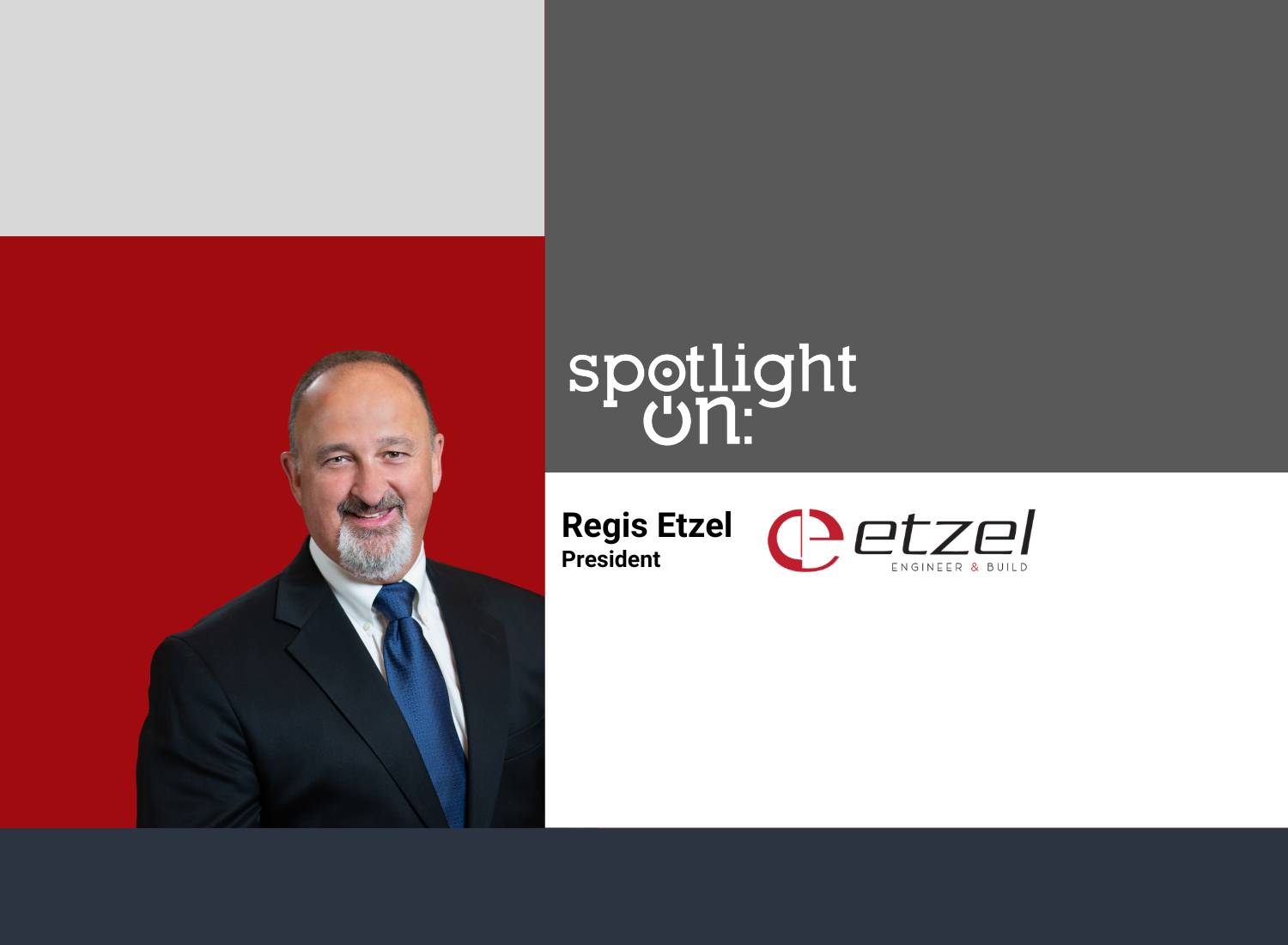
Spotlight On: Regis Etzel, President, Etzel Engineer & Build Inc

Key points:

  • • Etzel Engineer & Build was founded on a transparent design-build model that eliminates finger-pointing and aligns accountability.
  • • AI-driven data center demand is accelerating speed-to-market pressures, equipment lead times, and workforce competition.
  • • Pittsburgh’s energy access and skilled labor base position it as a growing hub for next-generation data center expansion.

Regis Etzel spotlight onFebruary 2026 — In an interview with Invest:, Regis Etzel, president of Etzel Engineer and Build, shared how a broken industry model led him to create a design-build firm focused on transparency and accountability. With AI fueling unprecedented data center demand, Etzel emphasized speed to market and Pittsburgh’s growing appeal as a strategic hub. “We’re already seeing major data center operators looking at Pittsburgh as a market for expansion. That momentum is only going to continue,” Etzel said.


Join us at the Invest: Pittsburgh 3rd Edition Leadership Summit! This premier event brings together hundreds of Pittsburgh’s business and regional leaders to discuss the challenges and opportunities for businesses and investors. Buy your ticket now!


What led you to start Etzel Engineer & Build, and how does your approach differ from traditional construction firms?

I launched the company in 2007 after spending years in the industry and seeing how disjointed the process was. There were too many players focused on protecting themselves — architects, engineers, contractors — each passing responsibility around. Contractors would find design issues before the bid and hold them back to create change orders later. It all became more about covering liability than delivering a solid product.

Etzel wanted to do things differently, to build a process where everyone is aligned and focused on the client’s end goal. That’s why we emphasize design-build. We take full responsibility for both the design and the construction. We even purchase as much of the equipment as we can, which helps control costs and eliminates ambiguity. The client sees all subcontractor pricing, and we select the team together, with full transparency.

How do you choose where to operate and grow your presence across the United States?

We typically grow by following our clients. We’re licensed in 20-plus states. After we deliver a successful project, clients often ask us to look at their other facilities in other cities across the country. That’s what has fueled our growth. We also help clients standardize their development process. For example, one client asked us to develop its site standards for new data centers. We brought in specialized engineers and architects, worked through the client’s needs, and built a scalable model which they could use across all locations.

What sectors are driving the most activity right now, and how is AI influencing demand?

We see high-reliability infrastructure, including data centers, internet hubs, and AI farms, namely facilities that can’t go offline, as our most active sector. Right now, AI is the biggest driver of demand. The data center industry is growing at a pace like never before, and it’s being pushed by the demand for AI, which requires entirely new design standards. Design-build continues to gain traction, and more clients are looking to create partnerships, allowing for single-point accountability and increased speed-to-market.

Another influence is the increase in equipment complexity and lead times. Generators and UPS systems are getting harder to source. We’re seeing situations where lead times have doubled almost overnight. That forces us to finalize designs much earlier, just to place orders in a timely manner.

What has been the biggest challenge for your team this year?

Speed to market is a huge challenge. AI clients are pushing hard to get these facilities built fast, but lead times on critical equipment keep extending. We’re having to adapt by accelerating design decisions and locking in procurement early. We also face workforce shortages. There’s strong competition for electricians, plumbers, pipefitters — the skilled trades are stretched thin. Contractors are offering several dollars above the standard hourly rate just to attract workers, which is driving up costs. We must rely on staffing agencies to help bring in strong candidates. 

What is your outlook for Pittsburgh’s construction industry over the next few years?

Pittsburgh is well positioned to support AI growth. The region sits on top of natural gas resources and has a strong and talented construction workforce. We’re already seeing major data center operators looking at Pittsburgh as a market for expansion, and that momentum is only going to continue. Etzel is committed to stay current with technology, both in how we build and with the equipment we install. Data centers are evolving fast, and we need to stay ahead of trends in cooling, power delivery, and first-day cost control. Speed to market is everything, and we’re focused on delivering that.

Want more? Read the Invest: Pittsburgh report.


AI Boom Underpinning a K-Shaped Economy?

Key points:

  • AI-driven stock gains are widening the gap between top earners and the broader economy.
  • Investor concerns over AI spending returns have triggered volatility among major tech stocks.
  • Market outlook hinges on whether AI profits materialize or growth broadens beyond Big Tech.

K-shaped economyFebruary 2026 — The AI boom drove Wall Street to record valuations in 2025. But in 2026, U.S. financial markets are confronting a more fragile reality: an increasingly “K-shaped” economy wherein industries like technology and AI are booming, while others lag. The result is a widening of the inequality gap, where top earners win and the rest get squeezed. 

Economists use the term “K-shaped” to describe a split in two directions. This means higher-income households and stronger industries rise, while lower-income consumers, small businesses, and more vulnerable sectors fall behind.

Artificial intelligence capital expenditure has widened this divide. According to Otaviano Canuto, senior fellow at the Policy Center for the New South, the scale of investment in AI companies has amplified wealth at the top of the income distribution, while leaving wage earners under pressure.

“Wealth gains for the top of the income pyramid (have resulted) from the overvaluation of (AI) stocks, accompanied by real-wage and purchasing-power squeezes at the bottom,” Canuto said in a report published by the Policy Center.

In 2025, for instance, the S&P 500 reached record highs, delivering extraordinary returns to investors. Much of that performance came from just a handful of tech stocks —  known as “The Magnificent Seven” — that accounted for about 40% of the index’s total gains.

For Canuto, the AI boom is the “upward-pointing part of the K,”  the single greatest force currently pulling up equity markets and separating the top from the bottom of the American economy. 

But as the U.S. economy settles into the second month of 2026, the same forces lifting markets are also deepening the K-shaped divide — and beginning to test investor confidence.

AI spending fatigue?

For one, signs of “AI spending fatigue” have begun to emerge. According to Michael Field, chief equity strategist at Morningstar, investors are growing increasingly skeptical if these massive capital outlays by technology giants will translate into revenue growth. 

“At a certain point this bet becomes binary: either demand and monetization follows and pays off the spend, or it doesn’t and the businesses fail,” Field told CNBC. “Investors were comfortable when it was a side bet, but when the whole business is at risk, they are much less comfortable.”

That shift in sentiment is now showing up in price action. In February, some of the biggest tech companies in the world, such as Microsoft and Amazon saw sharp drop-offs in share prices. 

In total, more than $1 trillion was wiped from the market caps of Big Tech companies amid concerns over the scale of AI spending and uncertainties over financial returns.

“While not a forecast of a crash, it is a warning that at the very least these (Magnificent Seven) stocks, which currently make up about one-third of the total U.S. market cap, are at historically extreme valuations,” wrote financial author Larry Swedroe in a substack.  

As Canuto notes, the sharp rise in tech share prices regardless of effective earnings is reminiscent of the dot-com bubble. 

“With AI spending still in its early stages, productivity dividends will still be limited in 2026,” he said. “There are doubts about the extent to which the impact of AI will be reflected in earnings for most of the overvalued companies. After all, only a few survived the dot-com experience.”

Still, he does not envision the bubble bursting anytime soon with AI spending likely to provide at least a second year of solid gains in capital expenditure. 

“The big AI ‘hyper-scalers’ are still funding much of the data-center expansion with formidable cash reserves,” Canudo said. 

Lower arm of ‘K’ sees strain

But while the industry at the top bracket of the American economy may not be at imminent risk of collapse, on the lower arm of the K, financial strain is becoming more visible. 

This is because of the effects of AI, explained Eric Winograd, director of developed market economic research and chief U.S. economist at global investment management firm, Alliance Bernstein. 

“AI and the benefits of AI are being reaped largely by those who are invested in financial markets,” said Winograd in a company video. “The other side of that, of course, is that the way in which artificial intelligence is boosting productivity is largely by punishing labor.“

Slower job creation this year has been in part due to AI-driven automation and efficiency contributing to weaker hiring in some sectors. Unemployment has likewise ticked higher, mostly concentrated among younger workers whose roles are more vulnerable to automation. 

Winograd also noted that the income inequality in the United States, as measured by the Gini coefficient, is now the highest among other high-income nations and closer to levels more commonly associated with emerging markets. 

“This is a lot higher than it usually has been for the U.S., and again, a lot higher than it is for the countries we tend to think of as our peers,” he said.

However, this divergence is structural rather than new, as Winograd points out. The K-shape, in other words, predates the current cycle by several years, if not decades. What is new is how closely it is intertwined with financial markets and AI capital expenditure.

Under these conditions, investors should consider two possible market scenarios entering 2026, as Morgan Stanley’s Wealth Management CIO Lisa Shalett laid out in an investor guide

Two possible scenarios

In the first, U.S. stocks continue to climb, propping up spending among high-income households. This would effectively tie broader economic growth to investor confidence that massive AI investments will eventually pay off.

“Our view is that there is about a 50/50 chance that these enormous AI-related investments will deliver on investors’ very high expectations,” said Shalett. “AI implementation may take longer than expected, with productivity gains limited to a few large companies.”

That scenario would bring bouts of volatility and broader market selloffs as valuations adjust, part of which is already being seen on a granular level. 

In the second scenario, rate cuts, tax relief, and deregulation broaden economic growth beyond the AI-heavy leaders. In that case, stock-market gains would extend beyond the AI-focused technology giants to a wider range of industries that would benefit from stronger consumer spending and improving business conditions. 

However, Shallett cautioned that such a rebound could also reignite inflation pressures, potentially forcing the Federal Reserve to slow or halt rate cuts. 

In general, though, the consensus is that the upward arm of the K will continue to extend itself as long as AI sentiment sustains equity valuations. In the event that revenue growth fails to match the scale of investment, the same concentration that fueled gains could amplify downside volatility.

“It’s important to understand … the current circumstance in which different consumer segments and industries grow at drastically different rates,“ said Shallott. “Navigating the K-shaped economy will be complicated.”

Want more? Read the Invest: reports.

Spotlight On: Robert Schanck, Senior Vice President, LJA Engineering

Key points:

  • • LJA Engineering is scaling in Central Florida through diversified services, strategic growth, and its employee-owned ESOP model.
  • • Transportation, utilities, renewable energy, and data centers are driving rising infrastructure demand across Greater Orlando.
  • • AI adoption is expanding, but disciplined data use and municipal planning remain critical to long-term competitiveness.

Robert Schanck spotlight onFebruary 2026 — Invest: spoke with Robert Schanck, senior vice president of LJA Engineering, about how a diversified service platform, employee ownership, and technology investments are helping the firm keep pace with Central Florida’s growth. “If you put bad data in, you’re going to get unreliable or bad data out,” Schanck said.


Join us at caa’s upcoming leadership summits! These premier events bring together hundreds of public and private sector leaders to discuss the challenges and opportunities for businesses and investors. Find the next summit in a city near you!


How would you characterize LJA’s role in the Orlando market, and what recent milestones best reflect your growth?

LJA is a full-service multi-discipline engineering firm, and we organize a lot of what we do around our eight service sectors so clients have access to specialists. We cover a wide range of services, including surveying, land development, power and energy, telecom, environmental, transportation, and other related areas.

Over the past year, growth has been a combination of strategic acquisitions and organic expansion. We’re up to about 17 offices in Florida now, and we’ve tried to keep that growth sustainable. You’ll see some firms acquire quickly, then they lose staff. We’re focused on building long-term capability and keeping teams intact as we expand.

Another important part of who we are is that we’re an ESOP. We’re employee-owned, and that matters for recruiting and retention, but it also matters for clients. It aligns incentives around quality and service, and it helps create continuity on projects.

Over the past decade, what shifts have most defined the engineering and infrastructure landscape in Central Florida?

Florida is cyclical, and Central Florida is no different. You’ll have periods where housing is booming, and a lot of firms chase that work. We do a significant amount of single-family residential and master-planned communities for large builders, so we understand that market well.

But the risk is relying too heavily on one segment. When the cycle turns, firms that are concentrated in one lane can struggle. Our approach has been diversification, both across services and across markets. We’ve expanded in areas like power and energy, transportation, industrial, and other categories that help balance demand. That diversification lets us retain staff through downturns and continue delivering at a high level, even when one part of the market cools.

Where are the most visible infrastructure pressures across Greater Orlando?

Transportation is one of the biggest pressures. Our transportation group is continuing to grow because the region needs more capacity to handle the population growth and the rooftops coming online across the metro.

Another part of the pressure is utilities. Development can only move as fast as water, sewer, and supporting infrastructure allow. Builders may want to go to certain areas, but if the infrastructure isn’t there, projects slow down or become more complicated.

From our side, we try to be positioned across the major markets in Florida and to stack services within offices. If an office is strong in transportation, for example, we’ll build out the land and surveying practices around it. That gives clients a full-service team that can support projects across the state with consistency.

What economic or development trends are shaping demand for engineering services, including mixed-use growth?

Demand is still strong overall, but it’s shifting. Multifamily hasn’t been as strong as it was in prior years, and you can see developers being more selective. Single-family remains active, but there are shifts in what’s being built, including a continued need for affordable housing.

On the infrastructure side, renewable energy is a major driver. We’re seeing a big push in solar, and that creates demand not only for the solar fields, but also for the supporting substations and transmission lines to move power to where it’s needed. We’re doing work with utilities in Florida and the Southeast, and that sector continues to be a growth engine.

We’re also seeing industrial growth, tied to logistics and warehousing, and that comes with infrastructure requirements of its own.

Data centers are becoming a bigger conversation statewide. What are you seeing in Central Florida?

It’s still developing, and it’s a little unclear exactly how the siting patterns will shake out long term. They’re popping up in different areas, and I don’t think everyone has it fully figured out yet.

I was the engineer of record on a data center in Central Florida that’s nearing completion, and the larger trend is real. Data centers bring significant demand for power and infrastructure, so they connect directly to the energy resilience conversation and to long-term planning for utilities.

Beyond energy, what other factors will influence Orlando’s competitiveness in the next few years?

Orlando has become a more diversified economy, and that helps its competitiveness. Tourism is still a major driver, and institutions like Disney and Universal continue to shape development and infrastructure needs. The region also benefits from higher education, including UCF, and that matters for talent and for long-term innovation.

But growth also creates pressure in relation to the workforce. Finding top talent in engineering is a challenge everywhere, and it becomes more competitive as regions grow. Orlando’s ability to keep strengthening its talent pipeline will influence how quickly and effectively projects can be delivered.

Permitting and entitlement complexity can slow timelines. How is LJA navigating those challenges?

Permitting, entitlements, and rezoning can always be a challenge, especially as markets get more active and agencies are balancing demand. One of the most effective things you can do is hire experienced people who understand the process and have strong relationships, because that helps projects move more predictably.

We’re also investing in efficiency. Our clients expect speed and responsiveness, coupled with the high quality we’ve always provided and that expectation keeps rising. To keep pace, you have to stay up-to-date on technology, software, and processes that reduce friction and improve turnaround.

We’re fortunate to have internal support teams that help enable that. We have a corporate services business solutions group that supports production operations, and that’s important for keeping teams focused on delivery while still modernizing tools and workflows.

What investments are you making in AI, both in software and in preparing your teams to use it effectively?

We have an AI committee that’s studying the space and trying to spearhead initiatives. We’re also integrating AI in practical ways across the business where it improves quality and efficiency.

Some of our core platforms already include AI integration, like accounting software and client resource management. We’re also using AI to support permitting and code compliance work. Those are real applications that can help teams move faster while maintaining standards.

The committee’s role is also to think about what’s next and where AI can add value without introducing risk. In technical fields, the goal is to use the tool responsibly and make sure it supports better outcomes.

How do you balance the excitement around AI with the need for accuracy in engineering work?

AI is absolutely powerful, but it still depends on what you feed it. If you put bad data in, you’re going to get unreliable or bad data out, so you have to teach it, provide good information, and make sure it’s being guided by people who understand the context.

We’ve always said the same thing about engineering models. The model is only as good as the assumptions and the data. AI is another tool, and it needs that same discipline, especially when you’re dealing with compliance, safety, and long-term infrastructure decisions.

Looking ahead two to three years, how do you expect demand for infrastructure services in Orlando to evolve, and what will be your priorities?

Transportation, power, and energy should remain strong. Data centers are another area that’s growing, and the infrastructure demands around them will continue to expand, particularly on the power side.

Residential can move in cycles, but Central Florida continues to grow, and that growth creates ongoing demand for community development and for the connectivity between housing, employment centers, and city cores.

A big differentiator will be municipal foresight. Builders may want to develop in certain areas, but if water and sewer infrastructure isn’t in place, development is constrained. Cities and municipalities that plan ahead and invest early in core utilities can shape growth more effectively and unlock better long-term outcomes.

For us, priorities are continuing to grow the right service lines, investing in efficiency, and staying aligned with what clients and communities need as Orlando’s development continues to accelerate.

Want more? Read the Invest: Greater Orlando report.


Spotlight On: Dan Rhoton, CEO, Hopeworks

Key points:

  • Hopeworks is using AI to fast-track underserved youth into high-wage tech jobs, accelerating job readiness dramatically.
  • •Expansion to Newark builds on its Camden and Philadelphia model, pairing trauma-informed care with workforce training.
  • The long-term goal is placing 700 young adults annually into $50,000 careers, driving economic independence at scale.

Dan Rhoton spotlight onFebruary 2026 — In an interview with Invest:, Dan Rhoton, CEO of Hopeworks, highlighted AI’s impact in accelerating job readiness for underserved youth. “It’s going to define workforce development,” Rhoton noted. With plans to expand to Newark, Hopeworks pairs trauma-informed care with tech training to help young adults secure stable, high-wage jobs.


Join us at caa’s upcoming leadership summits! These premier events bring together hundreds of public and private sector leaders to discuss the challenges and opportunities for businesses and investors. Find the next summit in a city near you!


What recent changes or milestones have most impacted Hopeworks’ mission and operations?

At Hopeworks, we work to place young adults into life-changing jobs through technology. One of the biggest developments has been the integration of artificial intelligence. We’re seeing that our young adults, who typically enter at the ground level, are now performing at the level of professionals with three to 10 years of experience. It’s been incredibly impactful.

How would you describe the workforce development landscape in Camden and across New Jersey?

There’s a lot of potential. New Jersey has a robust and growing economy, but it also has significant pockets of poverty, including places like Newark, Camden, and Paterson. These cities are full of the talent businesses need. The challenge is connecting that talent with the right opportunities. As business continues to grow, we need to do a better job linking employers to the workforce that’s ready and waiting.

Are most of your partnerships based in Camden, or are you expanding across New Jersey?

Right now, we’re in Camden, we opened in Philadelphia in 2022, and we’ll be launching a Newark location in 2026. Our focus is still on underserved communities, and Newark is a natural fit.

How has economic revitalization in Camden supported your mission?

As businesses expand, they need to hire beyond their traditional networks. Many of our young adults may not have a college degree or a conventional background, but they are ready to work. The more the economy grows, the more opportunities there are for these young people.

Have you observed a trend of older individuals returning to education or training?

Not really. Most of the young adults we work with are ready to enter the workforce. We haven’t seen a significant interest in returning to higher education, either from our participants or the companies hiring them. The focus is on ability and readiness to work, not on degrees.

Have economic fluctuations had an impact on your work or the market you serve?

Not in a major way. We don’t accept federal funding, so we’re insulated from some of the larger shifts. Our young adults are still finding jobs, though economic uncertainty does make things harder. We’re looking forward to more stability in the broader economy.

What employment readiness trends have you observed recently?

AI is the biggest shift. It allows entry-level workers to perform at a much higher level quickly. For experienced professionals, AI can offer marginal gains, but for new workers, the improvement is transformational. It’s going to define workforce development for the next five years.

Hopeworks emphasizes trauma-informed care. How does this focus shape your outcomes?

It’s foundational. Our goal is to help young adults succeed in the workplace, and that’s only possible if they’re mentally and emotionally ready. Trauma-informed care means giving them tools to manage their emotions and face challenges head-on. It might sound complex, but it’s about making sure they’re prepared every day.

We use tools like safety plans, which help regulate emotions, and systems checks, which guide productive conversations around difficult topics. These tools help young adults deal with stress and conflict, which are critical skills for any job.

What key partnerships help support your mission?

We partner with employers who hire our young adults and with organizations that provide housing, food access, and mental health services. We can’t do everything ourselves, so strong partnerships are essential.

Do you work with higher education institutions as part of your programming?

While we value those institutions, our young adults are typically not best served by that path. Many have found that school hasn’t worked well for them in the past. Our focus is on getting them into the workforce as efficiently as possible.

Hopeworks also works with geographic information systems (GIS). How has that evolved?

We provide digital mapping and data analytics for clients nationwide. For example, we’re helping the Philadelphia Airport track tree growth and assisting Camden with streetlight functionality mapping. We use tech not just for innovation, but to genuinely improve people’s lives.

Do you have concerns around cybersecurity or data protection in your work?

Keeping data secure and accessible only to the right people is a top priority. We have strong protocols in place and haven’t faced any significant threats. It’s something we’re always focused on.

What are the top challenges and opportunities in serving Camden and the broader New Jersey region?

The biggest opportunity is helping people move from dependency to independence. That means connecting them to jobs that offer stability, benefits, and the ability to support themselves and their families.

What is the main challenge young people face when entering the workforce?

Social capital. They have the drive and ambition, but they don’t always know what jobs are out there or who’s hiring. One of the most important things we do is make those connections, opening doors and building relationships that help them grow.

What are Hopeworks’ top priorities for the next three to five years?

By 2030, we aim to place 700 young adults into jobs each year. At an average salary of $50,000, that’s $35 million in wages going back into the community annually. That’s our vision, and we’re on our way to making it happen.

Want more? Read the Invest: New Jersey report.


Shawn St-Pierre, General Manager, Fairmont Pittsburgh

Shawn St-Pierre, General Manager, Fairmont PittsburghIn an interview with Invest:, Shawn St-Pierre, general manager of the Fairmont Pittsburgh, discussed the city’s collaborative spirit and the hotel’s role in its hospitality landscape. “We want to ensure that travelers coming into Pittsburgh are welcomed with authenticity at the Fairmont, that they can experience the local culture, while experiencing luxury hospitality at the same time,” St-Pierre said.

What have been your key takeaways from living in Pittsburgh over the past two years?

I moved to the city in March 2023, and I immediately loved the city and the dynamics of it. There is really a desire from all Stakeholders to make downtown and the greater Pittsburgh area a dynamic force. That is what I like. I have worked in other markets where the priorities might be a bit misaligned between different levels. Here, I have found that private industry, public government, and everyone else seem to want to ensure that if you are coming here for either a vacation or a business trip, you feel safe. They want you to enjoy the city so that you return on your own time, whether for vacation, a concert, or a sporting event. I have been very impressed with the way the city and its different stakeholders are pushing in the same direction.

Given that Fairmont in Pittsburgh is celebrating its 15-year anniversary this year, how does the Fairmont contribute to Pittsburgh’s hospitality and hotel landscape?

Fairmont is the only true luxury hotel in the city. We are fortunate to welcome high-profile guests to the hotel. Different companies and organizations select the Fairmont to host their visitors because they want to showcase the best of the best. We are in a fortunate position. We are celebrating our 15th anniversary this year, and the impact of the Fairmont has been significant since we opened in 2010. We want to ensure that travelers coming into Pittsburgh feel welcome with authenticity, as if they are locals, while also experiencing luxury at the same time.

How has Fairmont’s collaboration with the Fifth Avenue Club by Saks Fifth Avenue enhanced the guest experience at the hotel?

Sometimes, luxury hotels can feel exclusive, but the Fairmont has done an excellent job of welcoming locals since day 1. We have a coffee shop in the lobby where the majority of our guests are locals. Our health club has many local members, and our spa is primarily frequented by locals. Our restaurant and bar also have a strong reputation as a place to be and be seen in the city. The partnership with Saks Fifth Avenue is no different. Saks used to be present in Pittsburgh but eventually had to depart. They have been looking to re-enter the market, and partnering with luxury hotels like ours allows them to do so. This partnership offers private shopping in a luxury setting by appointment, whether for hotel guests or locals. It is another amenity that enhances the experience. Guests can enjoy private shopping in the morning, followed by a spa treatment, lunch at our restaurant and enjoy a full day of wellness right in the heart of the city. We are very excited about this offering.

What are some of the key challenges that you and other industry leaders are seeing, and what strategies are being implemented to address them?

We are hosting the NFL Draft in April 2026, and as I mentioned earlier, all stakeholders are aligned in making the city safe and attractive for both locals and visitors. We are located on Market Street, so the revitalization of downtown and Market Square directly benefits our guests. 

We are very happy to be part of these efforts and recognize how important it is to get the community involved as well. We want to ensure that downtown is attractive and welcoming for visitors, whether they are here for business or leisure. We have been working with different stakeholders to contribute to this effort by keeping sidewalks clean, improving safety, and enhancing the overall experience. The city has done a great job addressing these issues, especially after the challenges many major cities faced post-pandemic. The steps taken have been appropriate and effective.

How have guest expectations for hotel stays evolved in recent years, and how does your team adapt to meet those changing demands?

Personalization is key. Guests are looking for experiences that allow them to engage with local culture. In our restaurant and bar, we design our menus to reflect the taste of Pittsburgh and western Pennsylvania. For example, we offer pickled cocktails year-round, inspired by one of the best food festivals in the country, Picklesburgh. Luxury is about personalization, which comes down to making people feel special. At the Fairmont, that is our goal with every interaction.

How has the Fairmont integrated technology, such as AI, into operations to enhance the guest experience?

Technology is important, and we strive to stay at the forefront. We recently integrated an internal platform for better colleague communication, streamlining guest requests through mobile instead of traditional communication. We also introduced mobile ordering for in-room dining and guests can now also select their meal, and choose a delivery time at their convenience. However, we still offer the option to speak to someone directly if they prefer. True luxury is about choice, and we aim to provide both convenience and personalized service.

How are you developing different partnerships or programs to involve the Fairmont with the local business community as much as possible?

The health club is a good example where we have partnerships with different organisation in downtown Pittsburgh. These organizations receive special offers for their employees, allowing them to use our facilities. The hotel features a steam room and a sauna, which many appreciate. Proximity plays a significant role in these partnerships, as many people utilize the parking beneath the hotel to access nearby office buildings. It is very convenient as guests arrive early in the morning, park at the hotel, work out, proceed to their workplace, and return to the hotel to retrieve their cars.

Our location also provides many advantages. We are just one block away from the Cultural District and serve as the official hotel of the Pittsburgh Symphony Orchestra. Many locals use our valet service for ease of parking. They drop off their cars, dine at our restaurant, attend a concert, and return to collect their vehicles seamlessly. The Fairmont has been a cornerstone of downtown Pittsburgh for 15 years, and we remain committed to serving the community. Additionally, our coffee shop attracts many locals who value a safe and clean environment for their morning coffee. The hotel was designed with a sense of place in mind, offering more than just accommodations.

Do you believe this integration with the local community is a broader trend in the hospitality industry, or has it always been a focus for hotels?

I think this approach has existed for some time, but it is challenging for hotels that were not initially designed with this mindset. In some markets, attracting locals can be a challenge, The Fairmont in Pittsburgh was conceived with this vision from the beginning, and we are fortunate to continue fostering these connections.

Looking ahead, what developments would you like to see in downtown Pittsburgh, and how do you plan to further integrate the Fairmont brand into the city’s growth?

There are many synergies to explore, with the NFL Draft being one of them. Downtown Pittsburgh is undergoing renovations, including improvements to Market Square and other areas and I would like to see better access to our three rivers, and efforts are already underway to enhance waterfront development. This will benefit both visitors and locals.

The return of Picklesburgh on the Roberto Clemente Bridge this year highlights the city’s iconic bridges, which are a defining feature of Pittsburgh. Showcasing these attributes reinforces our unique identity. Additionally, there is a strong desire to convert office spaces into residential units, which will invigorate downtown beyond business hours. More residents will support local restaurants and create a vibrant atmosphere, making the area more appealing to visitors.

These developments will strengthen Pittsburgh’s sense of place and ensure the Fairmont remains an integral part of the city’s growth.