



Spotlight On: Michael Platner, Managing Partner, Lewis Brisbois

Key points:

  • AI is reshaping legal risk, driving new governance, liability, and compliance demands across contracts and litigation.
  • Fort Lauderdale’s business-friendly climate, infrastructure investment, and quality of life continue attracting companies and talent.
  • Platner sees long-term growth ahead, with firms adding value by pairing tech-enabled efficiency with client-focused counsel.

Michael Platner spotlight onFebruary 2026 — Invest: spoke with Michael Platner, managing director at Lewis Brisbois, about how artificial intelligence is reshaping legal risk, why Fort Lauderdale continues to attract businesses and talent, and what leaders should prioritize as economic conditions evolve. “I tend to believe that the more successful your clients are, the more successful your law firm will be, and we like to play on winning teams,” Platner said.


Join us at caa’s upcoming leadership summits! These premier events bring together hundreds of public and private sector leaders to discuss the challenges and opportunities for businesses and investors. Find the next summit in a city near you!


How has the legal space changed recently, and how is that shaping the kind of advice clients are looking for?

Immediately, what comes to mind is the involvement of artificial intelligence. We’re seeing many ramifications of AI and its pervasiveness, which might actually not be sufficiently well understood given how quickly it has penetrated nearly every aspect of the business and legal world.

Companies are coming to us now with newly proposed contractual provisions focused on managing the use of AI in delivering services. That includes questions around liability, disclosure, governance, and how intellectual property rights are treated when AI is involved. These issues aren’t limited to technology or media companies. They touch nearly every business that handles customer data or personally identifying information.

As a result, AI has triggered a need for additional contractual language across purchase orders, service agreements, website terms, and privacy policies. There’s a significant amount of legal work that exists not because of AI itself, but because AI has been introduced into daily workflows, risk management, and operational decision-making.

From a law firm perspective, we’re receiving AI-related questions every day that simply didn’t exist before. We also have to be mindful of how AI is being used by lawyers on both sides of litigation. If human judgment is not playing a meaningful role in important transactions or court filings, the consequences can be serious.

We recently had a case where pleadings filed by opposing counsel cited fictional cases or mischaracterized real ones. When reviewed, it became clear the material appeared to be generated by AI. We brought it to the court’s attention, and the judge independently called for sanctions. That dramatically altered the case dynamics.

It’s difficult to understand why competent professionals would rely on tools that produce inaccurate or fabricated work. We’ve seen similar skepticism from judges and juries when experts rely too heavily on AI without independently validating the results. This movement is easily one of the most significant developments affecting legal practice and client needs today.

Do you see AI as more of a risk or an opportunity for law and business?

It’s very positive in many ways. We’re at a point where AI can genuinely accelerate human intelligence and business insight. At the same time, it brings new precautions. Just like any powerful tool, it needs to be used thoughtfully, with strong governance and accountability. It’s not about rejection, but responsible integration.

You’ve described Fort Lauderdale as an increasingly attractive place to start and scale private companies. What trends are you seeing in the market today?

Florida continues to gain recognition as a great place to live and do business. The laws are business-friendly, the tax environment is favorable, and by most measures the state appears to be well managed.

You can hardly pick up a paper without seeing coverage of companies relocating or expanding in Florida. South Florida, and Fort Lauderdale in particular, offers unique advantages. Many people already know the area from vacations or cruises, which lowers the barrier to relocation.

The local government has invested in infrastructure like the convention center, strengthening the city’s appeal as a place where executives and employees want to live. We also benefit from a vibrant economy, strong schools, and an overall quality of life that supports both families and businesses.

What I’ve seen over decades practicing law here is that this trend hasn’t changed, it’s accelerated. You’ll often learn about a Broward County-based company with national or international reach that many people weren’t aware of. That consistency makes the region a great place for investment.

What distinguishes Fort Lauderdale from other major markets?

Every market is different. Miami, for example, is larger and more complex, with strong international ties to Latin America. Fort Lauderdale is international as well, but its connections are globally diverse.

What really stands out is that Fort Lauderdale is a user-friendly business environment. It’s easier to become part of the community, build relationships, and get connected. There’s an open, entrepreneurial culture that makes collaboration and growth more accessible.

That kind of environment is attractive to businesses of all sizes, from early-stage companies to large enterprises, because it lowers friction and encourages engagement.

How are leaders thinking about risk differently today, especially in high-growth or regulated industries?

Risk management has always been central to business. We have a substantial defense practice nationwide, including in Fort Lauderdale, helping clients manage claims and litigation risk. On the commercial side, good contract structuring and governance remain essential.

What has changed is the broader context. Leaders are cautious, perhaps more so than several years ago, but they’re also operating in a more favorable business climate. Lower taxes, reduced regulation, and a business-friendly environment influence how risk is evaluated.

When people are doing well, risk feels less like an obstacle and more like a manageable part of growth. And of course our deep corporate finance bench is here to help companies get the capital they need to grow and lenders and investors the companies they need to help them thrive.That mindset supports continued investment and expansion, particularly in regions like Fort Lauderdale.

What is your outlook for the firm and the legal industry over the next few years?

The right lawyers always add and protect value. We have over 1,650 attorneys nationwide, with Fort Lauderdale serving as our largest Florida office. Across the state, we continue to grow rapidly well past 100 lawyers statewide.

Demand for high-quality legal talent remains strong, and recruiting the right people is as challenging as ever. Fit matters. We’ve invested heavily in recruitment and lateral growth, and the outlook remains very positive.

Efficiency and value delivery are top priorities. Technology, including automation and AI, helps us provide services faster and more effectively. For example, we now use systems that allow clients to track their multiple business entities and stay compliant in real time.

Even in a profession that bills by the hour, faster and better service ultimately benefits both firms and clients. I tend to believe that the more successful your clients are, the more successful your law firm will be.

Of course, clients also need counsel during difficult situations. In those moments, the role of a lawyer is to help define what success looks like and work toward that outcome in a practical, business-oriented way. As long as people do business, there will be disputes, but good lawyers can often help resolve them efficiently and professionally and help define and achieve winning in each matter.

Want more? Read the Invest: Greater Fort Lauderdale report.

 

Luxury Hotels Emerge as Bright Spots in Uneven US Market

Key points:

  • Luxury hotels are outperforming as higher-income travelers sustain demand amid a fragmented, K-shaped hospitality market.
  • Flat national RevPAR and rising costs are pressuring midscale and economy hotels, while upscale assets show resilience.
  • New hotel development is concentrating in select Sun Belt and lifestyle markets where luxury experiences drive long-term value.

Luxury hotelsFebruary 2026 — U.S. hotels are facing a difficult start to the year following a weak performance in 2025, but luxury hotels in select markets are emerging as strategic bets for recovery, according to industry forecasts.


Join us at caa’s upcoming leadership summits! These premier events bring together hundreds of public and private sector leaders to discuss the challenges and opportunities for businesses and investors. Find the next summit in a city near you!


“Growth will remain moderate and concentrated among higher-tier hotels,” Amanda Hite, president of STR, said in CoStar’s 2026 hotel industry outlook.

That uneven performance reflects the broader K-shaped U.S. economy, defined by a growing disparity between the top and bottom parts of the economy (sectors, industries, and income groups). 

In the hospitality sector, this means that higher-income travelers continue to spend on premium travel, while more price-sensitive consumers are pulling back as costs rise and economic uncertainty persists.

“High-net-worth travelers are expected to remain one of the most reliable drivers of global travel spending next year,” Giray Boran, managing director of BLG Capital, told Hotel Dive. “As the gap between luxury travelers and the rest of the market grows, the industry is seeing clear differences in performance.”

The most striking divergence in the market is occurring by asset class. Luxury and upscale properties in major cities remain well-positioned to capture relatively stable demand. On the other hand, midscale and economy hotels are facing greater pressure to drive occupancy and rates as travelers become more price-sensitive. 

A fragile national outlook

Forecasts released late last year underscore the fragility of the near-term outlook. 

According to a report by CoStar, U.S. hotel performance in 2026 is expected to be “turbulent,” with revenue per available room growth (RevPAR), an industry standard performance benchmark, projected to hover near flat levels nationally.

Even modest gains in average daily rates (ADRs) are unlikely to fully offset soft occupancy and rising operating costs. While some demand remains resilient, particularly among affluent leisure travelers, analysts warn the industry overall is entering a period of slower and more volatile growth.

However, luxury demand shows little sign of cooling with rates increasing to the point of “near inflation,” according to Hotel price forecasts by Amex GBT Consulting.  

In fact, per CoStar’s 2026 forecasts, luxury hotels are expected to produce the strongest RevPAR metrics relative to other segments (upscale, midscale, economy, and independent), despite slower growth compared to 2025.  

This suggests that while most domestic markets continue to struggle with heightened uncertainty around travel patterns and cost pressures, new luxury hotel openings in a small but influential cluster of cities are emerging as industry bright spots. 

Selective expansion

As a result, development and expansion activity is becoming more concentrated in regions that favor higher-end hospitality products, particularly in parts of the Sun Belt, while many secondary and tertiary markets continue to lag.

More specifically, markets such as Miami, Dallas, Phoenix, and Nashville are expected to lead the national hotel development pipeline, even as activity remains subdued across much of the Northeast and Midwest. 

Even outside major metros, luxury-oriented development is appearing as part of broader mixed-use or lifestyle projects. In Franklin, Tennessee, The Factory at Franklin announced plans for a 120-room hotel focused on “wellness and quality of life” as part of its next expansion phase.

“Both are key elements of the holistic experience today’s guests seek,” Bill Simmons, area managing director of The Factory at Franklin, told Invest: Nashville.

Meanwhile, in Rowan County, two new upper-tier hotels — one Marriott-branded and one Hilton-affiliated — are in the pipeline. Tourism CEO James Meacham told Invest: Charlotte that strong occupancy and limited room supply helped justify the projects.

“We’ve maintained over 70% occupancy the past couple of years, which is strong,” Meacham said, while cautioning that the sector remains vulnerable to volatility.

“I always tell my board: I can tell you exactly what’s happening today and clearly describe what’s happened before, but I can’t guarantee tomorrow,” he said. 

Key markets

Against a sluggish national backdrop, U.S. hotel brands are seeking to future-proof assets against softer mass-market demand through an emphasis on luxury and wellness, as Condé Nast Traveler indicates

A slate of high-profile luxury and upper-upscale hotel openings scheduled for 2026 illustrate the trend toward experience-driven properties, especially in U.S. markets viewed as structurally advantaged. 

In the Carolinas, for instance, The Cooper Hotel is set to open with a prime waterfront location overlooking Charleston Harbor, reflecting a broader trend toward boutique-style luxury in historic, tourism-driven cities.

The expansion of The Knox Hotel & Residences in Dallas by Auberge Resorts Collection is another prime example of the luxury sector’s growth and presence in Texas. 

At the same time, Florida continues to attract capital toward the high-end segment as well, with Oetker Hotels preparing to open The Vineta in Palm Beach, targeting ultra-affluent leisure travelers.

What this means for hoteliers

The persistence of luxury development amid moderate national outlook reflects a calculated tradeoff. 

As PERE reports, many hospitality investors are choosing to “stay through tough times,” betting that well-located and high-quality assets will outperform over the long run, even if near-term returns are compressed. 

Overall, the U.S. hotel market is showing signs of deeper fragmentation in reflection of the country’s K-shaped economy. 

But while the economy continues to grow, room demand is staying flat. “The American economy keeps growing, but the hotel industry doesn’t,” said Jan Freitag, CoStar’s national director for hospitality market analytics, to PERE.

”Over 30 years there was always this one-to-one relationship between GDP growth and room demand … That relationship doesn’t exist anymore,” he added. 

But in a handful of cities and at the top end of the market, new luxury openings prove that right-placed products in the right locations can still drive demand. 

According to Jacob Segel, senior managing director at private equity firm, Cain International, this performance gap highlights where demand remains durable.

“Other areas of the hospitality market flatline or dip a little,” Segel, who works across the firm’s luxury hospitality and branded residences, told PERE News.“But not where we play.”

Want more? Read the Invest: reports.

Spotlight On: Brian Hagan, Florida Market President, First American Bank

Key points:

  • First American Bank is expanding its Florida footprint while maintaining a relationship-driven, family-owned banking model.
  • The bank is supporting small and middle-market businesses through advisory services, trade finance, and community-based partnerships.
  • Workforce development, succession planning, and wealth management are emerging priorities as businesses navigate uncertainty and transition.

Brian Hagan Spotlight onFebruary 2026 — Invest: spoke with Brian Hagan, Florida market president of First American Bank, about the bank’s growth in the state, how it supports family-owned businesses, and why relationship-led banking still matters in a tech-heavy era. “We’re really engaged in trying to solve problems, and we’re not just a lender or someone who takes deposits, but we’re a partner for business,” Hagan said.


Join us at caa’s upcoming leadership summits! These premier events bring together hundreds of public and private sector leaders to discuss the challenges and opportunities for businesses and investors. Find the next summit in a city near you!


How has the bank’s presence and footprint evolved in Florida over the past few years?

We’ve grown significantly, investing in our facilities, people, and expertise to better serve the Florida market.  Last year, both our deposits and loans increased, and our wealth management group saw gains, marking our 11th consecutive year of profit margin growth. We’re proud of what we’ve done, and look forward to continuing to support businesses here.

What commercial lending trends are you seeing among Florida businesses, and how is the bank responding?

Economic uncertainty and shifting tariffs have been concerns for Florida businesses this past year, especially for family-owned, small, and middle-market companies.  

We respond by connecting our customers to groups and specialists who can address complex issues like supply chain restructuring, sourcing shifts, or the ripple effects of policy changes.  Our goal is to act as a facilitator and partner, going beyond simply providing capital.

How do you tailor financial services to support small and middle-market businesses in Miami and across the state?

We tailor our services through community engagement and strategic partnerships that address the challenges our clients face. In Miami, for example, I serve on the boards of the Beacon Council, which focuses on workforce development, and the World Trade Center, which provides expertise on supply chains and trade. These connections allow us to bring the right skills to the table when businesses need them, reinforcing our role as a long-term partner.

How has your expansion, including staffing investments, influenced customer relationships and market penetration?

Our success has allowed us to expand our staff, enhancing the support we provide to customers. By hiring experienced senior team members and empowering them to understand clients’ businesses, we improve decision-making and strengthen advisory relationships. Long-term employee retention is equally important, as continuity and stability help maintain the lasting relationships our customers value.

Given Miami’s position as a global hub, what role do trade finance and international banking play in your Florida strategy?

It’s top of mind, and global developments have changed how American businesses operate. That shift is particularly impactful in Miami.

Tariffs and global shifts are prompting companies to explore local sourcing and production, and we help clients navigate available incentives. For example, through our work with the Manufacturing Association of Miami-Dade—which we helped establish as a hub of the South Florida Manufacturers Association—we are spearheading the development of a contract manufacturer list. This initiative connects businesses with local production options and supports their growth amid evolving global conditions.

What are the biggest challenges and opportunities for the banking industry in Miami and South Florida over the next few years?

Consolidation remains a major theme in banking, and a big driver is the race to keep up with technology and compliance needs. Those costs are significant, and large institutions can spread them over a much bigger footprint.

Our challenge is to remain independent and family-owned while delivering best-in-class technology and compliance. The opportunity lies in investing strategically while preserving what makes a community bank valuable: local knowledge, strong relationships, and long-term commitment.

How do you balance personalized community banking with the scale and resources of a larger institution?

It comes down to people and presence. Technology helps us deliver services efficiently, but personal relationships remain critical, especially for family-owned, small, and mid-market businesses. As we grow, we add local expertise without losing the relationship-driven approach that sets us apart.

How are you supporting businesses as they navigate regulatory challenges and uncertainty?

We help clients navigate regulatory uncertainty through education, partnerships, and multiple channels, including newsletters, events, and webinars. Our goal is to keep businesses informed and connected without requiring them to build large internal teams for every specialized need.

Are you pursuing workforce development initiatives, such as training, retention, or financial literacy?

Workforce development is essential for our customers’ growth. It’s critical to their plans that they have a sufficient workforce.

We’ve developed partnerships with local institutions, including FIU, the University of Miami, and Miami Dade College. They have workforce training programs, and in some cases, they can tailor programs to specific business needs. We recently met with a company that needed engineering expertise, and we discussed how we could help connect them to the right training resources. We work with companies on these issues and use local knowledge to connect them to solutions so they can continue to grow.

Looking ahead, what initiatives are you most excited about for the bank in the coming years?

I’m excited about our educational programs focused on business transition, from succession planning to sales or employee ownership. With so much capital pursuing businesses, owners need informed guidance. This work ties directly into our wealth management capabilities, and we’re excited about building out and expanding our wealth management group here to better serve family-owned businesses in that next stage.

What I hope comes across is how we see our role in the market: we’re focused on solving problems and supporting businesses, not just lending or taking deposits-we aim to be a true partner for our clients.

Want more? Read the Invest: Miami report.


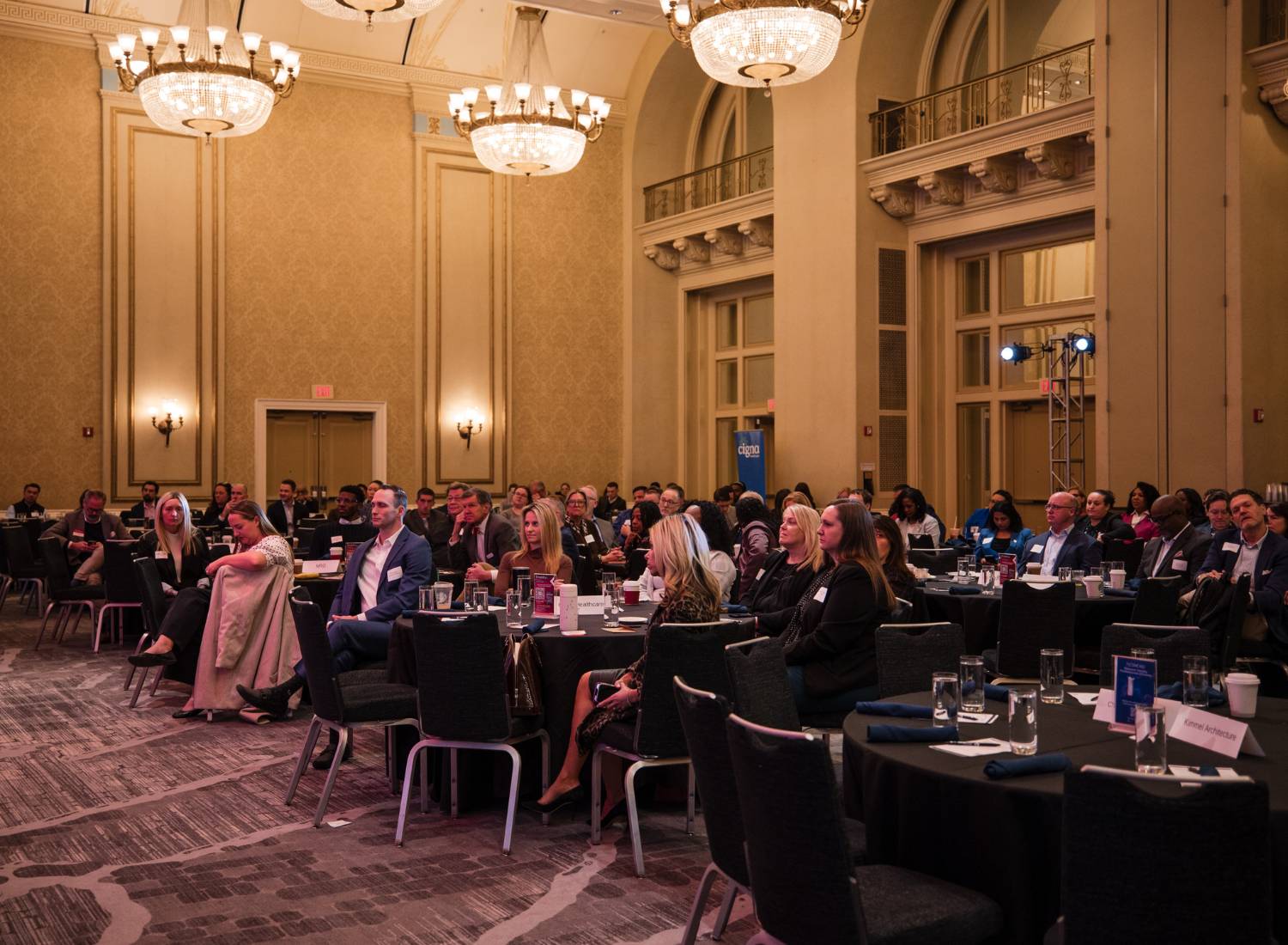
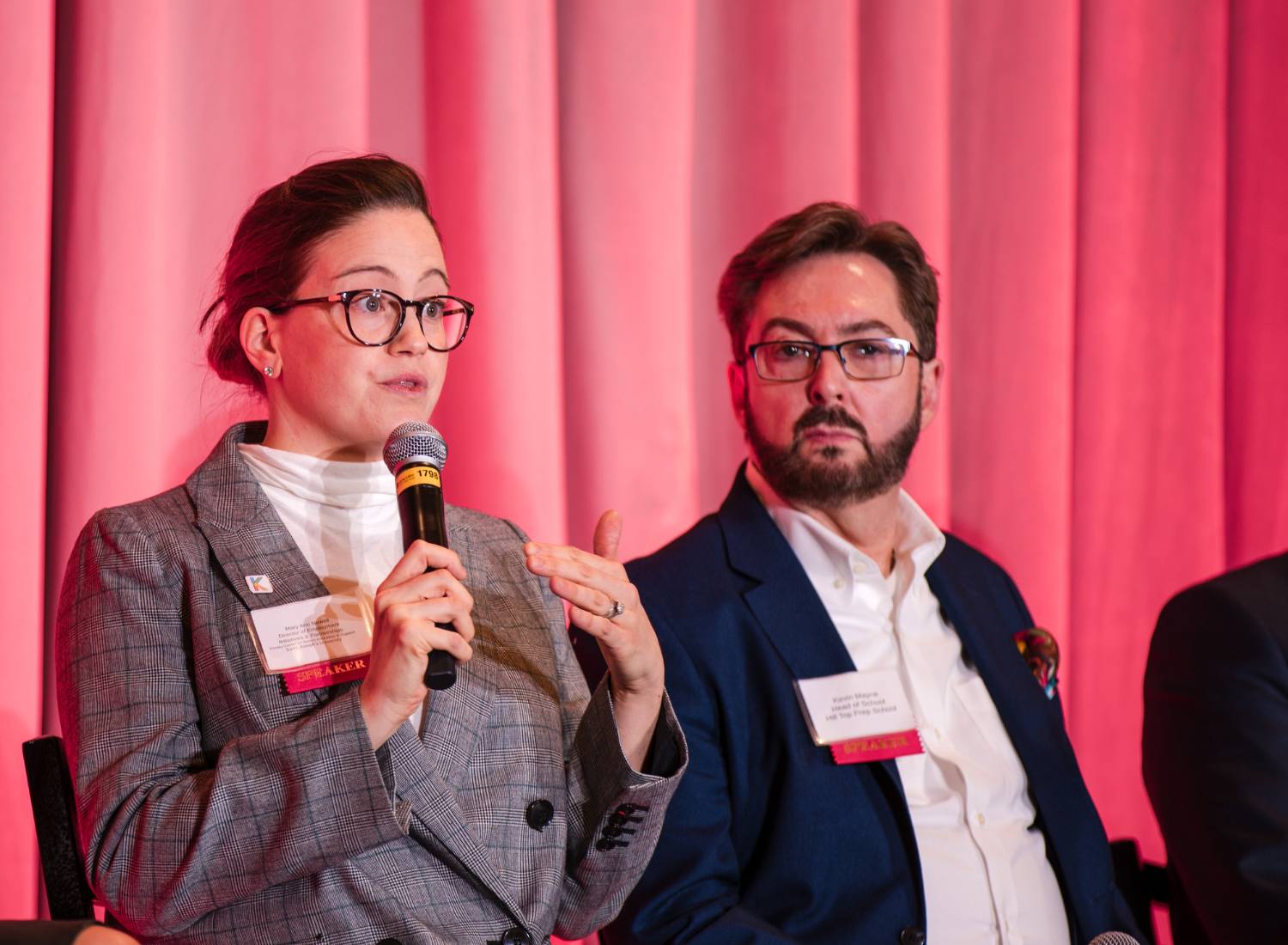
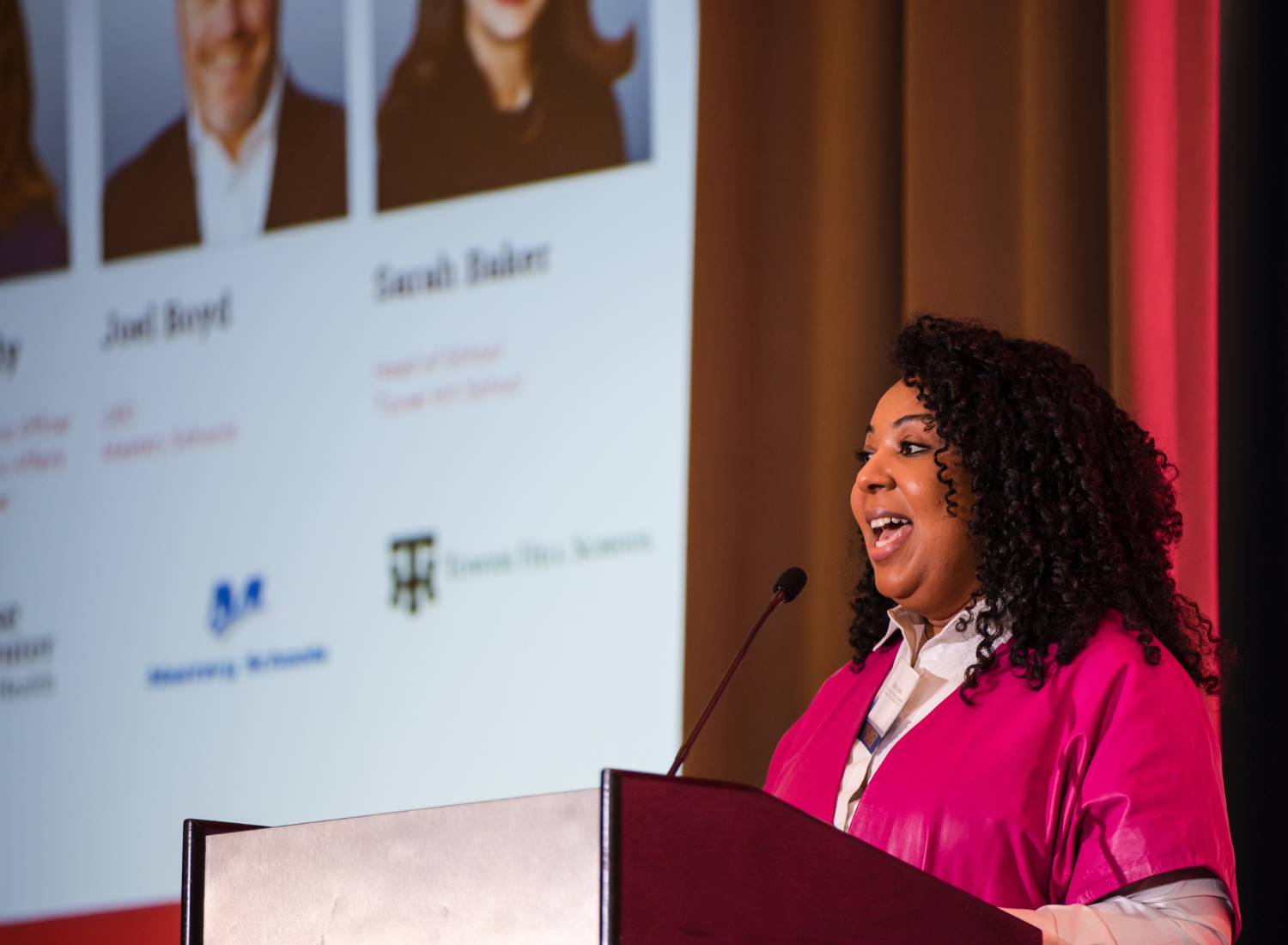
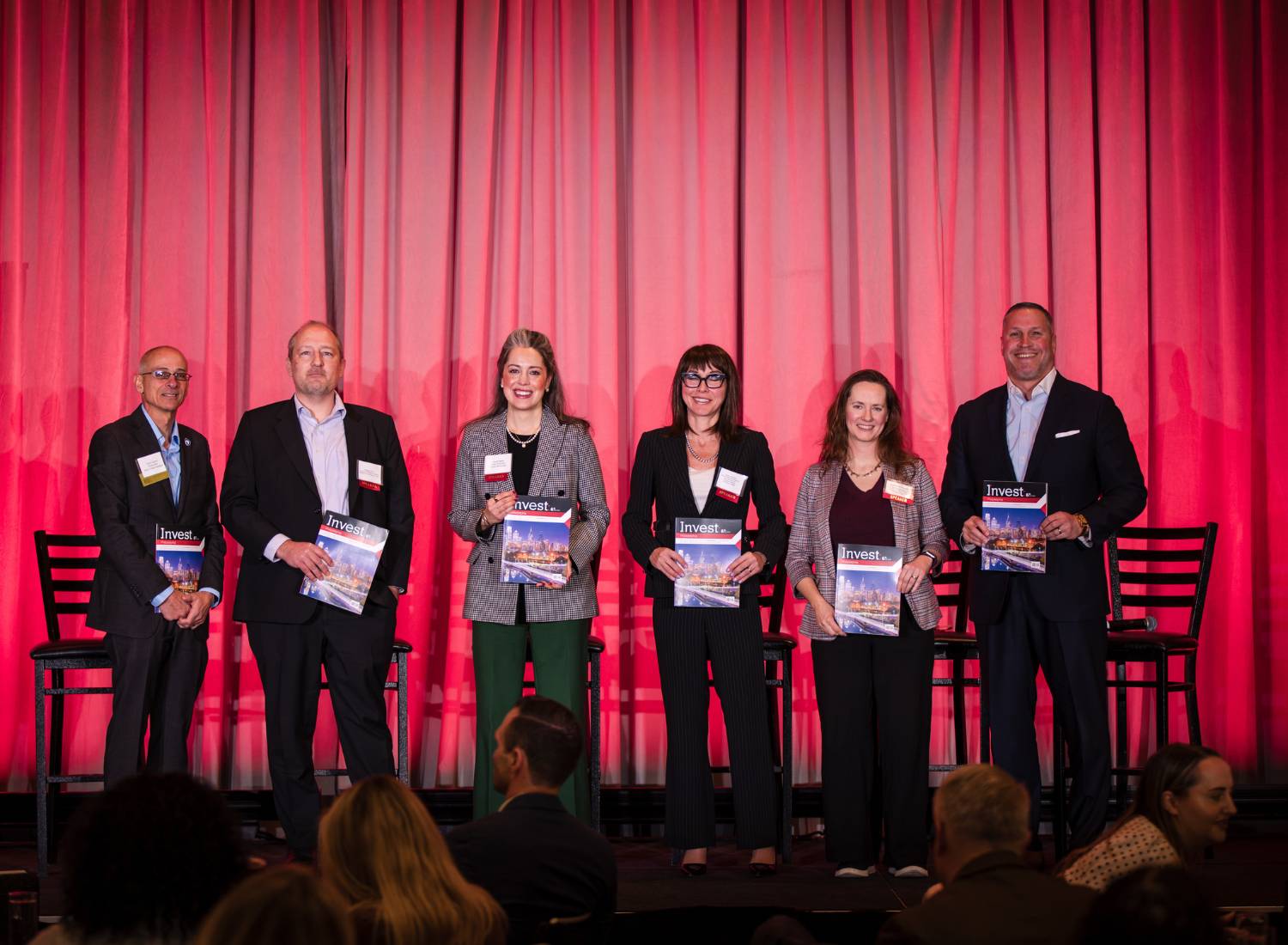
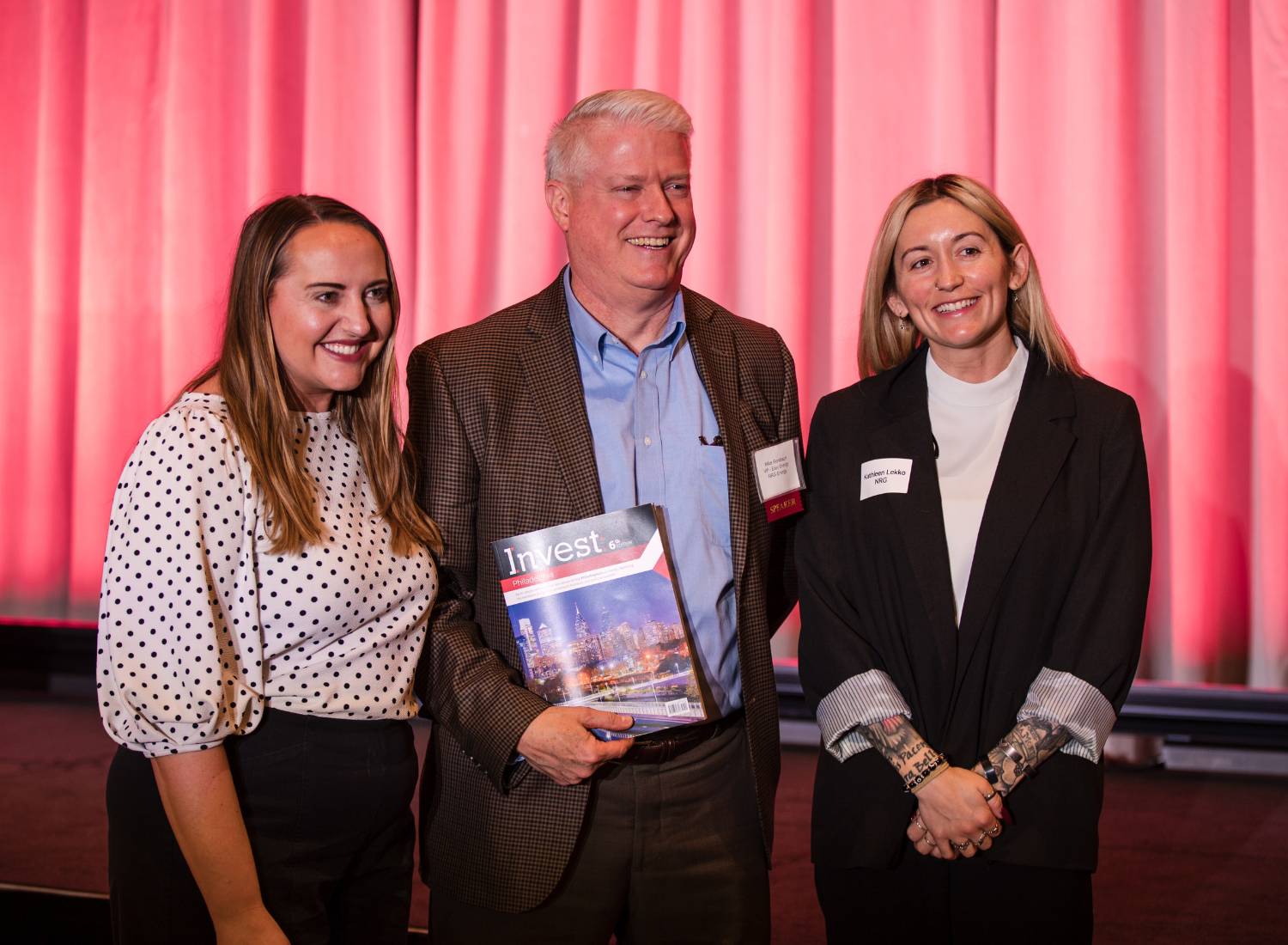
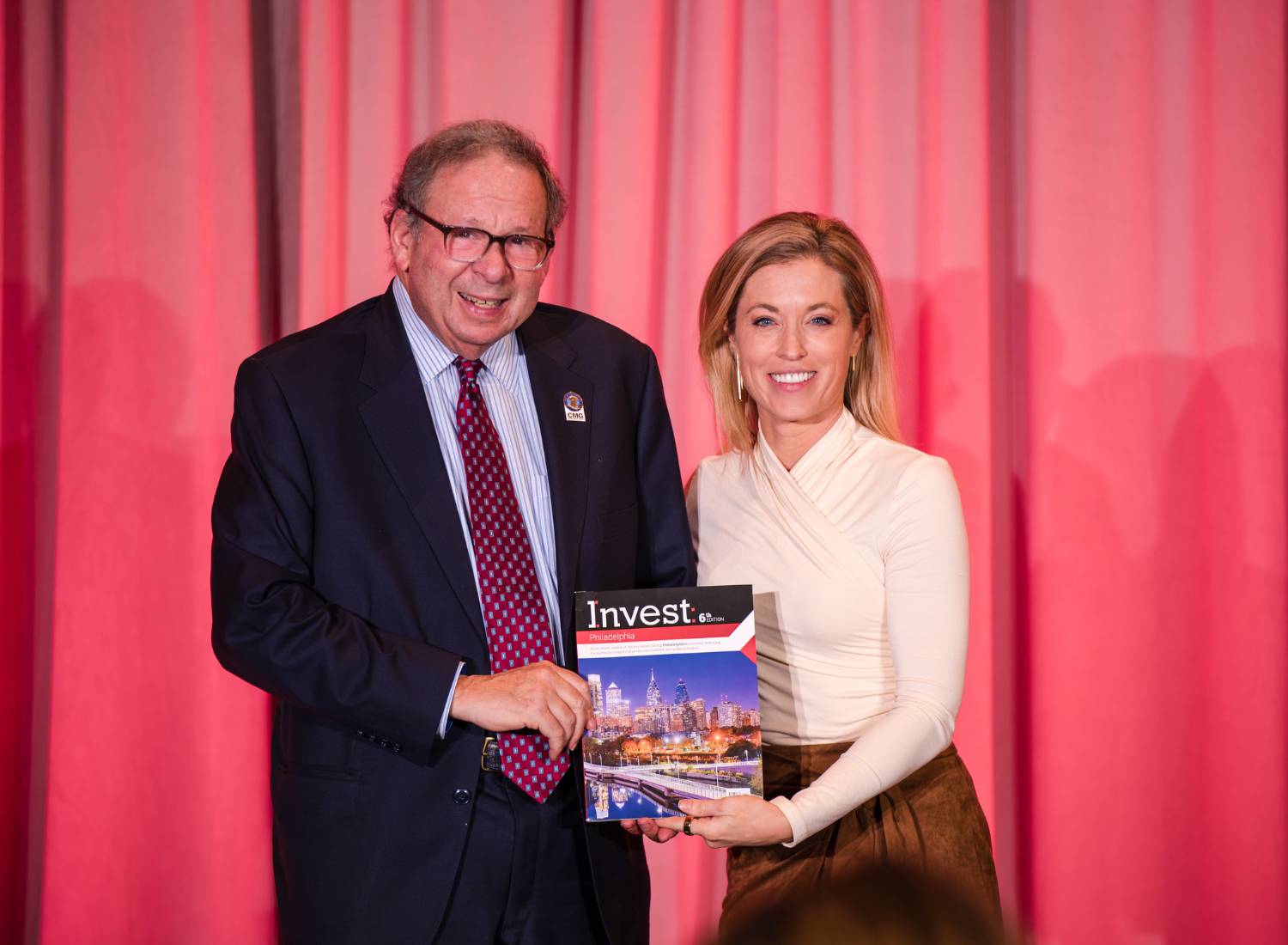
Invest: Philadelphia 6th Edition Leadership Summit – Photo Gallery

Take a look at all the photos and videos from Invest: Philadelphia 6th Edition Leadership Summit!

Stay tuned for the summit videos here.

Philadelphia Philadelphia Philadelphia Philadelphia Philadelphia Philadelphia Philadelphia Philadelphia Philadelphia Philadelphia Philadelphia Philadelphia Philadelphia Philadelphia Philadelphia Philadelphia Philadelphia Philadelphia Philadelphia Philadelphia

Southern New Jersey emerges as global food manufacturing hub

Key points:

  • Cumberland County is emerging as a hub for European food manufacturers investing in U.S. production.
  • Italian, French, and Swiss firms are driving over $1B in industrial impact and job creation.
  • Specialized food infrastructure and proactive recruitment are reinforcing the county’s global growth strategy.

New JerseyFebruary 2026 — Global manufacturers are planting their flags in the United States, and Southern New Jersey is quietly becoming the destination of choice.

In the past three years alone, several European firms have made substantial investments in large-scale production and administrative facilities in Cumberland County, NJ. As a result, the county has transformed into a significant anchor point for global supply chains serving the broader American market.

What began as a handful of foreign-owned facilities has evolved into a cluster of Italian meat producers, Swiss construction materials manufacturers, and French producers of plant-based beverages, whose investments are energizing the local economy. 

“While neighboring counties emphasize logistics, we prioritize manufacturing, particularly in food and refrigeration,” Gerard Velazquez, president and CEO of The Authority (Cumberland County Improvement Authority), told Invest:.

A combination of factors drives the momentum: proximity to major consumer markets on the East Coast, comparatively affordable industrial land, and a growing business ecosystem tailored to food production and advanced manufacturing. The synergy created by these assets is translating into new jobs, enhanced infrastructure, and long-term capital investment. 

Cumberland County’s recognition of the growing demand for premium foods and its targeted recruitment of the producers of those foods is a case study for state and local officials seeking “smart growth” opportunities.


Join us at caa’s upcoming leadership summits! These premier events bring together hundreds of public and private sector leaders to discuss the challenges and opportunities for businesses and investors. Find the next summit in a city near you!


A Legacy of International Industry

Cumberland County has a long history as the U.S. home of international manufacturing firms. One of the most prominent examples is its decades-long relationship with Durand Glass Manufacturing, part of France-based Arc International, which established operations in Millville in the early 1980s. 

The plant became a major regional employer and helped anchor the county’s industrial base for generations, supplying tableware and glass products across North America. Durand played an integral role in attracting another French-based company, T-Fal, a division of Groupe SEB, to locate their cookware and small appliance manufacturing facility in Cumberland County. 

Cumberland County’s legacy as an attractive location for international investment laid the foundation for today’s diverse mix of international firms.

Firms such as Danone North America, which produces plant-based and dairy beverages from its state-of-the-art production facility in Bridgeton, helped blaze a trail to Cumberland County and has become a steady stream of innovative premium food producers.  

A New Wave of Global Food Producers

In the past three years, three Italian specialty meat producers have chosen Cumberland County for their U.S. expansion. 

Italian charcuterie producer Rovagnati opened a 64,000 square-foot plant in Vineland in 2021 — its first U.S. production facility. Since then, the plant has mass-produced prosciutto and other cured meats for the American market, employing full-time workers and supplying more than 2,000 retail stores nationwide. 

Rovagnati’s success also served as a model for additional Italian specialty meat producers, including Levoni, a historic Italian firm that launched its first national production site in Millville in 2024.

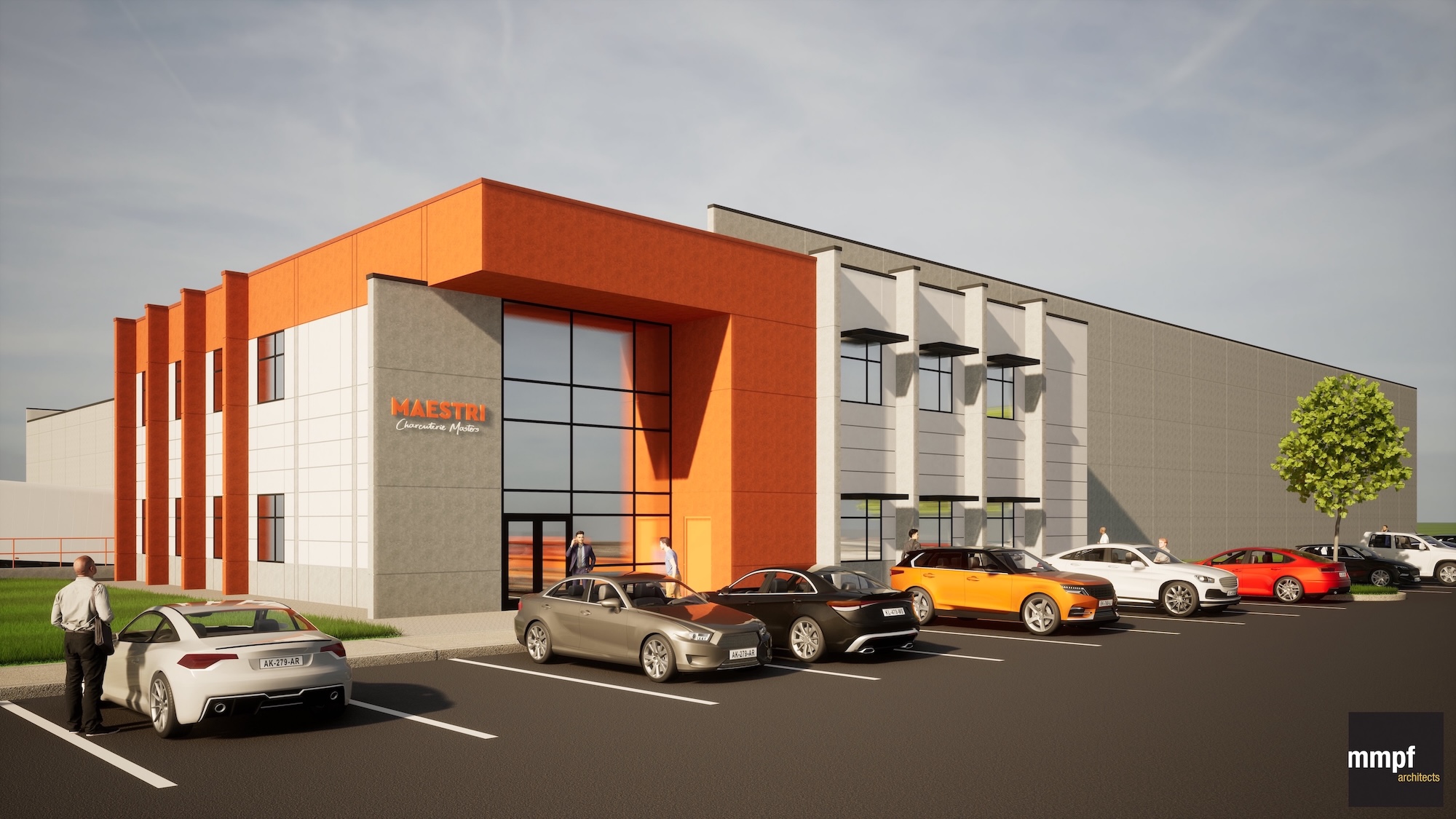
Maestri D’Italia Inc. similarly established a U.S. production facility for high-quality deli and charcuterie products in Vineland, NJ. The 70,000 sf plant, the first phase of their expansion, began operations in 2024.

Levoni has described the New Jersey location as central to its North American growth strategy, driven by the need to meet rising demand for premium imported-style meats produced domestically.

“We have created a pipeline for Italian companies to come to Cumberland County by providing the resources they need to be successful,” said Velazquez. “The relationships we have built have created an atmosphere of collaboration among our Italian firms whereby one Company’s success leads to another.  In fact, we have another company exploring Cumberland County as a site for relocation.”

This clustering effect is significant for Cumberland’s economic profile. With multiple international firms operating regionally, the county has been able to expand its reputation abroad as a viable landing spot for international food companies entering the U.S. market. 

Economic Impact

The arrival of international firms has had tangible effects on employment and local business activity. New manufacturing plants continue to create direct jobs in production, quality control, logistics, and management, while also supporting indirect employment through packaging suppliers, transportation providers, maintenance contractors, and professional services.

According to The Authority of Cumberland County, which leads economic development efforts, the county has facilitated more than $1 billion in economic impact over recent years — much of it tied to industrial and food manufacturing projects. 

The multiplier effects extend well beyond plant walls, strengthening small and mid-sized businesses throughout the region.

Infrastructure improvements have likewise followed. Road upgrades, utility investments, and site redevelopment have been undertaken to support larger-scale production, often with public-private coordination.

Growth Infrastructure

A defining advantage for Cumberland County is its specialized support infrastructure for food manufacturers. 

For instance, the Rutgers Food Innovation Center in Bridgeton helps food companies — including foreign entrants — navigate U.S. compliance requirements and enter the American market.  

The center also operates as a food business incubation and accelerator facility, offering FDA- and USDA-inspected shared processing space, regulatory guidance, training, and market research. 

Complementing that is the Food Specialization Center (FSC), a 32,000-square-foot facility that opened in 2021 and is operated by The Authority. The FSC provides international food businesses with essential services that reduce upfront capital costs, such as customizable production, freezer, and shipping space. 

Challenges

Despite the momentum, these international firms face hurdles. Regulatory compliance — particularly in food processing — can be complex and costly. Workforce availability, while improving, also remains a concern as manufacturers compete for skilled labor. At the same time, rising energy and transportation costs pose risks, especially for export-oriented operations.

“From our perspective, we need to be prepared to help our businesses succeed,” Velazquez said. “We are already having conversations with new manufacturers about workforce availability and…despite the current global uncertainties, we will be prepared.”

Outlook

Cumberland County is still maturing into a hub for international firms, but its trajectory is clear, as Velazquez notes. Many international firms are betting big on its long-term potential and growing global industrial network. 

With an increasing number of these manufacturers seeking both stable and cost-effective U.S. footholds, the county’s blend of legacy manufacturing, state-of-the-art food infrastructure, and proactive economic development places it in a strong competitive position.

Want more? Read the Invest: New Jersey report.


Eric Green, Chief Investment Officer – Senior Portfolio Manager, Senior Partner, Penn Capital Management

Invest: spoke with Eric Green about the shifting dynamics shaping small- and mid-cap investing, including policy changes, interest-rate movements, and a renewed appetite for the asset class. “I cannot stress enough that we have a competitive advantage by looking at the whole capital structure, and that’s allowed us to perform over the long haul,” said Green, on their competitive advantage.

What changes in the broader economic environment over the past year have had the biggest impact at Penn Capital?

The economic environment has been heavily influenced by policy shifts — tax legislation, tariff strategy, and a more deregulatory framework. For the small-cap universe specifically, deregulation can be a major tailwind because reduced compliance costs directly benefit earnings and reinvestment ability. The move lower in interest rates has also been significant, improving balance-sheet flexibility for the companies we follow and strengthening the backdrop for both financing and growth.

How would you describe the current environment for small and mid-cap companies, and how has it influenced the opportunities you’re tracking?

Small caps have substantially underperformed large caps for more than a decade, which aligns with historic cycles where leadership alternates every eight to 15 years. We believe the next cycle is shifting in favor of small caps. Several factors are lining up: tax policy is relatively more favorable for smaller businesses, the current tariff structure is less punitive for them than for larger global companies, and rate cuts are occurring alongside stable economic growth. At the same time, small caps now trade at a roughly 20% to 25% discount relative to large caps — the opposite of historical norms. That valuation gap, paired with increasing M&A activity and a supportive credit backdrop, creates compelling opportunity.

How are you thinking about the balance between credit and equity in today’s market? Are there situations where one offers a better risk-reward profile?

At Penn Capital, we analyze the entire capital structure — from bank debt to bonds, convertibles, preferreds and ultimately equity. Credit always comes first in our process. Right now, credit conditions are signaling a green light for equities. The high-yield market is exceptionally healthy: spreads are low, default rates are near historical lows and maturities are well below long-term averages. Typically around 30% of the high-yield market matures within two years; today it’s about 9%. Lower near-term maturities reduce refinancing risk and help keep spreads stable. That supportive credit backdrop is especially positive for small caps.

What are you seeing in terms of investor appetite for growth versus value in the small-cap space, and how has that shaped your portfolios?

We see a fairly balanced appetite between growth and value. We benchmark to a core index and maintain exposure to both styles. The real shift has been renewed interest in the small-cap asset class overall. After years of large-cap dominance, many institutions and individuals became underweight small caps, and they’re now looking to rebalance. At the same time, some investors are reassessing illiquid private equity and private credit exposures, where certain deals haven’t matured as expected. They’re seeking liquid opportunities with genuine value — and small caps offer that. This is the strongest interest we’ve seen in about a decade.

You emphasize discipline around strategy capacity. How does that protect client performance and guide your culture?

Capacity limits are fundamental to preserving performance. In asset classes like small cap and high yield, allowing assets to grow too large forces managers to move up the market-cap spectrum or hold hundreds of positions simply to stay nimble. We avoid that. 

We’re intentionally more concentrated and committed to keeping our strategies at a manageable size so we can continue to operate in the true small-cap universe. Our goal isn’t growth for growth’s sake — we would rather be a $5 billion firm with strong performance than a $20 billion firm that’s compromised its process. 

We want the first investor and the last investor in our strategies to have access to the same opportunity set. That discipline has always been part of our culture, and in the past we’ve closed strategies when we reached capacity.

Do you see any lasting changes in how companies in your space raise capital or manage their balance sheets?

Most public companies continue to rely on the high-yield market, which remains healthy. The area of greater concern is private credit. Smaller companies are increasingly turning to private credit deals because spreads in the traditional high-yield market are tight. But private credit often involves higher risk, higher rates and less liquidity, and we’ve already seen recent blow-ups in that space. By contrast, the public high-yield market offers deeper liquidity and a broader investor base. We prefer to see companies raise capital there, and today we aren’t seeing any issues with accessing that market.

What are your top priorities for the firm over the next three to five years?

We’ve built a highly experienced team — many of whom have been with us for more than 15 years — and our majority owner, Seaport Global, has expanded our marketing and distribution capabilities. With strong long-term performance, solid financial backing and a stable team, our priority is to grow thoughtfully. I’ve set a goal of raising a billion dollars over the next year and another billion the following year, while maintaining strict capacity discipline to protect performance.

Is there anything you’d like to add that we may not have covered?

We’re a Philadelphia-centric firm and proud to be part of the region’s investment community. We encourage people to come visit us — we’ll be moving from the Navy Yard to Schuylkill Yards in April 2026. 

Ultimately, what differentiates us most is our integrated credit-to-equity approach. We start with the bonds and move to the equity only when the fundamentals justify it. I cannot stress enough that we have a competitive advantage by looking at the whole capital structure, and that’s allowed us to perform over the long haul. With what we believe is the beginning of a new small-cap cycle, we see meaningful opportunity for strong performance in the years ahead.

New higher education strategies target future workforce

Key points:

  • Universities across key U.S. markets are redesigning curriculum around experiential learning, AI integration, and workforce alignment.
  • Institutions are expanding internships, microcredentials, and career pipelines to strengthen job readiness and talent retention.
  • Higher education is increasingly positioned as economic infrastructure, linking access, applied skills, and regional growth.

Future workforceFebruary 2026 — As the United States faces increasing global competition for skilled talent, and warnings of 75% of U.S.-based scientific brain drain, universities are no longer just degree-granting institutions, they are future workforce engines.


Join us at caa’s upcoming leadership summits! These premier events bring together hundreds of public and private sector leaders to discuss the challenges and opportunities for businesses and investors. Find the next summit in a city near you!


Across markets like New Jersey, Orlando, Pittsburgh, and Tampa Bay, institutions are redesigning how students learn, credential, and connect to industry.

“When access, excellence, and workforce relevance move together, then we’re going in the right direction,” said Francine Conway, chancellor of Rutgers University–New Brunswick, at the recent Invest: New Jersey Leadership Summit, where education leaders in the state gathered to discuss this issue.

The alignment Conway alluded to is no longer optional. It is a national economic strategy that will define the global position of the United States in the years to come.

Experience over content

A big part of the push is a result of the emergence of generative AI, which is reshaping industries, with institutions shifting from static content delivery to applied, adaptive learning.

At Stetson University in Orlando, President Christopher Roellke described the shift as a need to focus on experiential learning. 

“Teaching and learning are evolving. At Stetson, we don’t aim to compete on content,” Roellke said. “Instead, we compete on experience. We focus on what we call experiential, contemporary, and integrative learning.”

Similarly, David Birdsell of Kean University emphasized that transformation must extend beyond curriculum updates. “It can’t only be about what people learn in college. It has to be about how they learn in college.”

Since the arrival of powerful AI tools in education, the conversation has shifted from fearing replacement, toward enhancing human qualities, such as care, connection, and real-world guidance. AI can automate administrative tasks, personalize learning, and allow educators to spend more time creating safe environments for students to thrive.

This underscores the growing importance of fostering community and guiding learners toward credentials and skills that reflect goals beyond efficiency and content. In this view, AI isn’t diminishing the role of teachers but amplifying their capacity to deliver a deeper, more human educational experience.

In Tampa Bay, the University of Tampa operationalized that philosophy through initiatives like AI Across the Curriculum, Internships for All, and expanded microcredentials.

“UTampa’s educational philosophy blends intellectual development with practical readiness,” said President Teresa Abi-Nader Dahlberg. “We are enhancing academic excellence through agile curriculum delivery, expanded experiential learning, and innovative microcredentials that help students stand out in a competitive job market.”

This shift reflects broader workforce realities. The World Economic Forum’s “2025 Future of Jobs” data shows employers increasingly prioritize adaptability, digital fluency, and critical thinking — skills that extend beyond technical knowledge.

Given the technological evolution, around 170 million new jobs will be created around the world as a consequence of the digital transformation, while 92 million jobs will be displaced, such as cashiers, administrative assistants, and certain trade workers.

Career readiness as infrastructure

In Pittsburgh, Seton Hill University embedded career development from day one.

“We live in an intellectual and service-driven economy,” said President Mary Finger. “There are fewer and fewer career paths that offer long-term stability without postsecondary education. Today’s workforce requires critical thinking, technical skills, and the ability to adapt.”

Seton Hill’s “Fit for the World” program integrates career assessments, networking, and internships from freshman year forward.

“Career readiness at Seton Hill isn’t just about landing a first job,” Finger added. “It’s about building a mindset of engagement, service, and lifelong learning.”

That mindset aligns with broader workforce data. Credential stacking and ongoing professional certifications are increasingly tied to wage mobility and industry advancement. It allows individuals to accumulate accredited skills that will structure a career advancement opportunity in the long run.

Institutions are responding with executive education, short-term credentials, and industry-aligned certifications.

“We’re also expanding short-term and executive education programs, particularly in our business school,” Roellke said. “These programs cater to ongoing professional development and certifications, which we see as a significant growth area for private higher education in Florida.”

Ecosystems that keep talent home

In New Jersey, the conversation has expanded beyond graduation rates. Leaders are focused on retention — not just student retention, but regional talent retention.

Mark McCormick, President of Middlesex College, described the need for a state’s coordinated pipeline in each education level.

“When students can see from middle school through high school, to the two-year college, that there is a pathway that gets them to a high paying job, right here in their hometown, they often stay”, he said during a panel discussion at caa’s Leadership Summit.

To reduce out-migration of college-bound students, institutions are building intentional two-year to four-year pathways, alongside industry partnerships, to reduce that leakage.

At Essex County College, President Augustine Boakye framed community colleges as economic anchors.

“We see ourselves together with our four-year institutions as the drivers of our region’s economy, because we transform talent into a smart and skilled labor force, empowering individuals, families, local businesses and the state as a whole,” he said.

The competitive edge

Higher education is no longer measured solely by test scores or enrollment growth, since technology has changed the way students show their accomplishments. Increasingly, its success is tied to social mobility, industry alignment, and economic impact.

Rutgers reported during the Invest: New Jersey conversation that 84% of its New Brunswick graduates earn more within six months of graduation than when they entered. That is not just student success. It is a workforce strategy.

Across Orlando, Tampa Bay, Pittsburgh, and New Jersey, leaders are converging around the same insight: Higher education must integrate access, applied learning, and industry connectivity to secure the future workforce.

Rather than reacting to disruption, these institutions are redesigning their models. They are expanding microcredentials, embedding internships, launching AI-integrated programs, building community pipelines, and partnering directly with employers.

In an era defined by technological acceleration and global competition, higher education remains one of the most powerful tools for talent retention and economic growth across the nation.

In those markets that treat education as infrastructure and not just as instruction, the future workforce is already taking shape.

Want more? Read the Invest: reports.

Houston healthcare capital investment powers industry growth

Key points:

  • Healthcare added 10,100 jobs in 2025, accounting for roughly two-thirds of Houston’s total employment growth.
  • Major hospital expansions across Cypress, Pearland, and Lake Houston are increasing capacity alongside population gains.
  • Workforce shortages in nursing and specialty care are driving new education pipelines and accelerated training programs.

Houston healthcare capital investmentFebruary 2026 — Healthcare employment continues to anchor Houston’s labor market. The region added 14,800 nonfarm jobs in 2025, according to the Greater Houston Partnership. Healthcare accounted for the largest share of that growth. The Health Care and Social Assistance sector added 10,100 jobs, bringing total employment to 400,400 workers across the metro. Healthcare generated roughly two-thirds of all net new jobs last year.


Join us at caa’s upcoming leadership summits! These premier events bring together hundreds of public and private sector leaders to discuss the challenges and opportunities for businesses and investors. Find the next summit in a city near you!


The resilience reflects structural demand. According to the Partnership, Houston’s population exceeds 7.8 million residents and continues to grow across suburban counties, including Montgomery and Fort Bend. New housing activity in Cypress, Katy, and Pearland is expanding the patient base for healthcare facilities beyond the urban core.

Healthcare demand tracks age as well as population growth. U.S. Census Bureau data show Texans age 65 and older grew 3.8% from 2023 to 2024, faster than any other age group, according to reporting by the Texas Tribune. The state’s median age has also ticked upward since 2020. As residents live longer, national per capita medical spending rises significantly after age 60, increasing demand for clinical staff, outpatient services, and specialty care.

Looking ahead, the Partnership forecasts Metro Houston will add 30,900 jobs in 2026, and healthcare is expected to remain a primary driver of that expansion with an estimated 14,000 additional healthcare jobs.

Expansion drives headcount

Houston’s concentration of medical assets amplifies the effect. The Texas Medical Center encompasses more than 60 member institutions and supports a workforce exceeding 100,000 employees, according to its latest institutional reports. The campus records more than 10 million patient encounters annually, and the TMC3 research campus continues to attract capital investment in translational science and biotech commercialization.

The strength extends beyond the urban core. Major systems are committing hundreds of millions of dollars to new beds, expanded emergency departments, operating rooms, and multi-specialty outpatient campuses.

Houston Methodist filed plans to invest $50 million in additional build-outs at its new Cypress hospital, according to the Houston Business Journal. The 82,300-square-foot expansion will add critical care units, operating rooms, and a dialysis area. 

The hospital opened in March of 2025 as a $685 million campus with 100 beds and capacity to expand to 276, and employed 770 workers. At full build-out, officials say the campus could support nearly 3,000 employees. The system also included 113,000 square feet of shelled space reserved for future clinical growth, signaling long-term hiring plans tied to population gains along the U.S. 290 corridor.

Memorial Hermann Health System broke ground in October on a $277.5 million expansion of its Cypress hospital, including a new six-story patient tower, according to a press release from the health system. The project will increase capacity to 201 beds, with infrastructure to expand to 345 beds at full occupancy. The build-out adds 52 inpatient beds, doubles emergency room capacity, and expands operating rooms, women’s services, neonatal ICU space, and rehabilitation services. Completion is scheduled for 2027.

In Brazoria County, HCA Houston Healthcare announced a $60 million expansion of its Pearland hospital in December. The project will nearly double the facility’s size, adding 44 inpatient beds, eight new emergency treatment spaces, and upgraded operating room capacity. Construction is expected to begin in late 2026.

“This investment reflects our deep belief in the future of this region,” said Elias Armendariz, CEO of HCA Houston Healthcare Pearland, in a press release. “Pearland continues to be the number one place to live in Texas, and we are proud to be the first hospital to serve this community.”

Outpatient growth is advancing in parallel. In September, Kelsey-Seybold Clinic opened a 135,000-square-foot, five-story campus in the Lake Houston area with capacity for up to 51 providers offering multi-specialty care. The facility includes an on-site laboratory and imaging services, with space designed for future expansion into ambulatory surgery and cancer care.

“Kelsey-Seybold Clinic is focused on meeting our patients where they are and making it easier for northeast Houston-area families to get the high-quality care they need, when they need it,” said Azam Kundi, MD, chairman and CEO of Kelsey-Seybold Clinic, in a press release

Workforce constraint emerges

National research from the Association of American Medical Colleges shows 31 of 35 physician specialties face shortages, including primary care, OB/GYN, and geriatrics. Nursing and allied health roles are also in short supply. In Texas, physician supply is projected to meet only about 75 percent of family medicine demand in the coming years.

Hospitals across the state continue to report staffing constraints. The Texas Hospital Association has warned that workforce shortages can limit usable bed capacity even when facilities have physical space.

Education steps forward

Health systems are not waiting for labor markets to correct themselves. They are building the pipeline. In The Woodlands area, Sam Houston State University partnered with four hospital systems through the Shared Nurse Academic Practice Partnership Initiative, according to Community Impact. The program pairs working nurses with faculty roles to address a statewide nursing faculty shortage. Texas faces a projected shortage of nearly 46,000 registered nurses, according to the Texas Center for Nursing Workforce Studies. Officials say faculty limitations, not student demand, cap enrollment.

Private training providers are also accelerating pathways. According to the Houston Business Journal, the College of Health Care Professions launched a new division offering employer-aligned certifications that can be completed in as little as 12 weeks for medical assistants and seven months for radiologic technologists. The goal is to upskill existing workers into patient-facing roles faster than traditional programs allow.

Higher education institutions are also investing in emerging specialties. Rice University and Houston Methodist secured National Science Foundation funding for a three-year digital health workforce initiative focused on biomedical hardware and artificial intelligence applications in care delivery, according to a press release from the university.

Additionally, workforce development is beginning earlier. Memorial Hermann Health System and Aldine Independent School District launched HEAL High School to create direct career pathways into nursing, imaging, therapy, pharmacy, and health care administration. According to the Houston Business Journal, the school enrolled more than 350 students in its first two years and is supported by a $31 million philanthropic investment.

The effort reflects a broader shift. Hospital construction adds physical capacity. Education expansion determines whether that capacity can be staffed. Training capacity is not unlimited. Clinical placements, faculty shortages, and limited rotation slots constrain how many students can move through nursing and allied health programs each year.

Houston’s healthcare systems are expanding beds, emergency departments, and specialty clinics across the metro. The next phase of growth will depend less on steel and concrete and more on how quickly the region can scale its workforce pipeline.

Want more? Read the Invest: Houston report.


Spotlight On: Thomas Boothby, Managing Partner, Forvis Mazars – Charlotte Office

Key points:

  • Charlotte is a legacy growth market, central to the firm’s leadership pipeline and global Forvis Mazars integration.
  • Strategic priorities center on talent development, partnership stewardship, consulting strength, and AI-enabled innovation.
  • Community engagement and an “Unmatched Client Experience” anchor long-term growth and differentiation.

Thomas Boothby spotlight onFebruary 2026 — In an interview with Invest:, Thomas Boothby, managing partner of Forvis Mazars, said that the firm’s strategic growth is deeply rooted in its people, innovation, and community engagement. “We’re renewing our focus on delivering an unmatched client experience, which begins with ensuring our people are truly invested in how we serve clients,” Boothby said.


Join us at caa’s upcoming leadership summits! These premier events bring together hundreds of public and private sector leaders to discuss the challenges and opportunities for businesses and investors. Find the next summit in a city near you!


What makes the Charlotte market such an important focus for business?

A few things come to mind. Not only has our firm experienced significant growth, but our Charlotte office specifically has seen remarkable expansion. I’d say the Charlotte practice plays an outsized role within the broader firm, especially given that many of our firm leaders have roots in Charlotte or currently call it home.

When we think about our commitment to Charlotte and the broader Carolinas, this region is a legacy area for our firm. These are key business development markets for us, and we’re incredibly proud of the number of firm leaders who have come out of the Charlotte office and gone on to lead in other areas of the organization.

To give some perspective, we surpassed $2.2 billion in revenue this past year as a full-service accounting and advisory firm. Nationally, we added around 1,000 people through key transactions. One highlight I want to emphasize about the Charlotte office is our involvement in forming our global network. On June 1, 2024, we officially became Forvis Mazars through a strategic transaction with Mazars, and Charlotte played a pivotal role in that effort.

This alignment with our global growth strategy enables us to support Charlotte-based companies that have international ties, offering them a unique experience on the global stage. That’s been one of the most exciting developments in our Charlotte practice this past year.

What are your top priorities, and how do they align with the firm’s broader national and global vision?

One of my main priorities since stepping into my role has been to capitalize on Charlotte’s tremendous growth. It’s a dynamic city with expanding opportunities, and we want to ensure our firm’s local presence and resources scale in tandem with the market.

I’ve spent the last 25 years of my career in North Carolina, and I’m excited to build new relationships here while leveraging my existing network across the state. Talent development is another top priority. As a CPA firm, we’ve maintained a traditional partnership model, which is becoming increasingly rare in our industry. Many firms are shifting to alternative ownership structures, but we believe strongly in stewardship, preserving the firm for future generations of partners.

I also serve on the firm’s governing board, a role I’ve held since 2020, and I’m part of our global assurance committee. These positions allow me to bring national and global best practices back to Charlotte, ensuring our clients here benefit from the full strength of the firm.

Lastly, we’re deeply committed to what we call our Unmatched Client Experience. This means staying flexible and agile in how we support our clients. Innovation is core to this, and we hold our leaders accountable for delivering on our brand promise.

Which industries are currently driving the most demand for your advisory and assurance services in the Charlotte region?

In short, we focus on advising companies with exciting growth potential. Whether they’re navigating succession planning, leadership transitions, or tackling today’s complex challenges, we aim to go beyond just being an accountant or auditor. We want to be their strategic advisor. 

Charlotte is home to many companies that are seeing exciting growth. We serve a wide range of sectors, including owner-operated businesses, private equity-owned firms, and organizations in leadership transition. While some firms in Charlotte tend to have a narrow focus, we have the scale to offer specialized services across nearly every major industry that Forvis Mazars supports.

Some key sectors we serve include financial services, insurance, construction, real estate, manufacturing, and higher education, which is an area of growing demand. But it’s not just about sectors. We support companies that are growing and in need of guidance to reach their next stage.

Our Charlotte office also has a particularly large consulting practice. While we do provide assurance and tax services, much of our value lies in our advisory capabilities. That strong consulting presence sets us apart from many competitors in the market.

Can you share how you’re balancing innovation and what kinds of investments the firm is making in technology?

We have made a significant investment in AI. Because we view AI as a tool to augment our people, our focus has been on deploying AI tools that support and enhance the work our teams do every day. We’re confident that as we continue to grow, we’ll keep expanding our employee base alongside our technological capabilities.

We also benefit from having the leader of our national innovation team right here in Charlotte. EDGE, our Enterprise Digital Growth and Enablement group, works closely with our team to drive both national strategy and local innovation.

We’re also deeply focused on data integrity and confidentiality. As technology evolves, we strive to stay ahead of it, ensuring our clients’ data is secure. Additionally, we regularly host innovation tournaments across the firm, encouraging our teams to think creatively about how we can better serve clients tomorrow, not just today. This gives everyone in the firm a voice in shaping our tech strategy and maximizing the impact of our investments.

How is the Charlotte office approaching talent recruitment and retention in this competitive market?

We’re incredibly proud of the culture we’ve built. We’ve received national recognition as a top place to work in Charlotte and across the country. Our talent strategy starts with strong partnerships with local and regional universities. We’ve invested in professorships and scholarships and are hiring more graduates from local institutions than ever before.

For instance, we’ve made recent endowment contributions at UNC Charlotte that created one of the largest accounting scholarship funds in the school’s history. That’s helped us create a robust talent pipeline.

We also heavily value in-person collaboration. While it’s common for team members to work remotely when needed, we believe our in-office culture is critical to how we serve clients. When our team isn’t in the office, we encourage them to be out meeting with clients in person.

Leadership development is another area of focus. We invest in programs to develop our future leaders and encourage them not only to lead internally, but also within the community. Being a leader at Forvis Mazars means making an impact beyond the office.

How does community engagement play into your brand and positioning in the market?

We are passionate about community engagement. We have an internal group called the IMPACT Committee, an employee-led initiative that helps determine where we direct our time, resources, and charitable efforts. We’re well into our 2026 community priorities, making sure they reflect the causes our employees care most about.

We’re also designing a major signature event for 2026, which will be shaped entirely by our Charlotte team. The idea is to mobilize our 500+ local employees around causes to make a meaningful impact in the community.

Beyond that, we host events like economic impact summits, where we bring together local leaders and industry professionals to educate and inform clients on important topics. This includes AI, tariffs, and tax legislation. We see it as our responsibility to share our knowledge and build strong relationships across the community, including with local nonprofits. Ultimately, it’s about amplifying our impact for everyone.

How are your Charlotte clients navigating challenges, and how is Forvis Mazars helping?

Our support goes well beyond accounting. We help clients build the right structures to capitalize on growth and overcome challenges, both domestically and globally. One area where we’ve provided especially impactful support is in healthcare. With all the regulatory changes in that sector, our dedicated healthcare consulting team has played a vital role.

They bring deep expertise in cost control, operations, and strategic planning for large practices and healthcare systems. We even support leadership gaps through our executive search capabilities. When clients need help turning ideas into action, our consultants walk alongside them and their boards to help execute on those plans.

What are your top goals for the Charlotte office over the next two to three years, and how do they align with the firm’s overall direction?

I’d start with our people, our greatest asset. We’re renewing our focus on delivering an Unmatched Client Experience, which begins with ensuring our people are truly invested in how we serve clients.

One priority is getting our team further engaged in the community, deepening authentic relationships, and showing up as true business leaders. That builds both our internal culture and our external impact.

We know our people come to us for a strong accounting career, but they stay because they believe in our broader mission, how we support clients, and how we uplift the community. That purpose-driven culture is what makes us different.

We’re proud of the national awards we’ve received for workplace culture and talent development. My vision is clear: create a world-class experience for every employee and client in Charlotte. While simple in concept, it takes real work to train, prepare, and support our teams to meet that bar and to hold ourselves accountable to delivering on our promises. We want open communication with our clients, and we want them to feel empowered to tell us when we’re not meeting expectations. That’s what we’re focused on.

Want more? Read the Invest: Charlotte report.

 

Spotlight On: Jim Anthony, CEO, APG Companies

Key points:

  • Policy shifts, labor constraints, and tighter capital are forcing repricing and disciplined deals in growth markets.
  • Office is split between thriving mixed-use and struggling older assets facing vacancy and redevelopment.
  • Capital gaps and demographic shifts are creating opportunities in conversions, discounted multifamily, and land.

Jim Anthony spotlight onFebruary 2026 — Invest: spoke with Jim Anthony, CEO of APG Companies, about how policy shifts, capital constraints, and demographic pressures are reshaping commercial real estate, and where opportunity is emerging amid disruption. “We’re benefiting, in the Triangle, and that’s why I stay optimistic about 2026 and beyond in our market area, because we tend to be the place people go when they’re in distress in other parts of the country,” said Anthony.


Join us at caa’s upcoming leadership summits! These premier events bring together hundreds of public and private sector leaders to discuss the challenges and opportunities for businesses and investors. Find the next summit in a city near you!


Over the past year, what shifts have you seen in the commercial real estate landscape, and how have they influenced how APG operates or invests?

This has been a year of structural change rather than normal cyclical variation. One of the most important drivers has been trade policy. Tariffs and geopolitical pressures have triggered a wave of reshoring that is unprecedented in scope. For markets with land, infrastructure, and workforce capacity, that shift is creating long-term tailwinds and a new foundation for investment.

At the same time, tighter border controls and enforcement have produced labor-market ripple effects. Many construction and manufacturing operations have seen workers hesitate to show up on job sites, which has slowed timelines for projects that otherwise have demand and financing. The country clearly needs a dependable worker-permit system that balances security with economic necessity. Until that comes together, labor constraints will continue to shape project feasibility and timelines.

Overlaying all of this is the story of capital. Interest rate moderation in 2025 has brought stability, but access to leverage has not recovered in parallel. Loan-to-value ratios that once ranged from 70% to 80% now often land between 50% and 65%. That equity gap has removed buyers from the field and reduced transaction velocity in every major asset class.

As a result, repricing is underway. Asset values are adjusting downward, cap rates are moving higher, and both investors and lenders are scrutinizing underwriting assumptions more closely. Part of this reflects a correction from a prior period of artificially low rates and inflated pricing. Markets are recalibrating to fundamentals, and until that recalibration settles, lenders will remain cautious about advancing long-term capital.

For APG, this means maintaining discipline, controlling leverage, and focusing on opportunities where repricing creates value. The fundamentals of Raleigh-Durham and similar growth markets remain compelling, but the terms under which deals can be executed have shifted meaningfully.

How are rates and capital availability influencing your environment today?

Nominal rates are improving, but loan structures and loan availability have not normalized. Many lenders remain conservative on leverage and are reluctant to extend terms beyond five years. For developers and investors, that short horizon adds refinancing risk and narrows the universe of viable projects.

The banking system is stronger than it was at the peak of volatility, but risk appetite has not returned to historical levels. That is especially true in sectors where values are still correcting. A higher equity requirement and a smaller pool of lenders prolong the adjustment period and keep transaction volumes below typical levels.

For firms like ours, this requires careful alignment with lenders’ risk frameworks and a willingness to prioritize projects that remain durable under conservative scenarios. It is a different environment than the mid-2010s, when capital was abundant and pricing was accelerating. Today’s landscape rewards patience, underwriting discipline, and strong balance sheet management.

How would you characterize the office market now in Raleigh-Durham and in comparable metros?

The market is bifurcated. Highly amenitized, mixed-use districts — such as North Hills in Raleigh — continue to outperform. These projects attract marquee tenants willing to relocate for quality, convenience, and modern design. They are achieving the highest rents in the market.

Most of the remaining office inventory is experiencing the opposite trend. Older Class A-minus and B properties face rising vacancies, downward pressure on effective rents, and higher operating expenses. When rental income is flat but taxes, insurance, and maintenance rise each year, net income erodes even if buildings remain leased. In many cases, owners are evaluating whether to continue operating at diminishing returns or pursue redevelopment.

Redevelopment is increasingly viable. In downtowns with high construction costs and small building footprints, office conversions are more challenging. Suburban locations, however, offer land, flexibility, and lower conversion costs. Markets across the country — especially Atlanta — are seeing office demolitions followed by redevelopment into apartments, townhomes or mixed-use environments.

A newer factor in the office market is AI. While it will not replace skilled trades, it is likely to reduce the number of traditional office roles over time. Functions such as marketing, research, drafting, design assistance, legal, and basic administrative workflow are increasingly augmented by automated systems. That has real implications for long-term office demand and should factor into underwriting and asset strategy.

Looking ahead, where do you see the greatest opportunities over the next three to five years?

Disruption is creating several avenues for real value. The office sector is one of the clearest. Many suburban buildings are strong candidates for adaptive reuse into schools, healthcare facilities, government buildings, or institutional uses. Others are better suited for full demolition and redevelopment into residential or mixed-use communities. These sites often benefit from existing infrastructure, ample parking, and proximity to population centers.

Demographic trends are another powerful driver. Shrinking academic enrollment pools are affecting colleges nationwide, and some institutions will consolidate or close. While that is difficult from a community standpoint, it also opens opportunities to reposition campuses and purpose-built student housing into more productive uses, including affordable housing.

In multifamily, most markets are seeing assets trade below replacement cost due to rising cap rates, softening rents, and elevated concessions. For investors with long-term horizons, that creates opportunities to acquire high-quality properties at meaningful discounts.

Land pricing is also adjusting. Projects that cannot secure construction financing or no longer pencil at today’s rates are being paused or shelved. As those sites come back to market, they often do so at lower valuations, creating a window for more patient capital.

The priority is to focus on opportunities that align with long-term regional fundamentals. Raleigh-Durham remains a magnet for talent and investment, and that resilience supports our optimism looking toward 2026. We’re benefiting, and that’s why I stay optimistic about 2026 and beyond. In our market area, we tend to be the place people go when they’re in distress in other parts of the country. With disciplined leverage, selective acquisitions, and an openness to reimagining underperforming assets, we see pathways to create value even in a more constrained capital environment.

Want more? Read the Invest: Raleigh-Durham report.