Spotlight On: Christopher Roellke, President, Stetson University
Key points:
• Stetson is investing in campus growth and preservation while keeping affordability and access front and center.
• Experiential, integrative learning and industry partnerships are core differentiators in a changing higher-ed landscape.
• The university is embracing AI and digital tools to enhance learning without replacing mentorship and community.
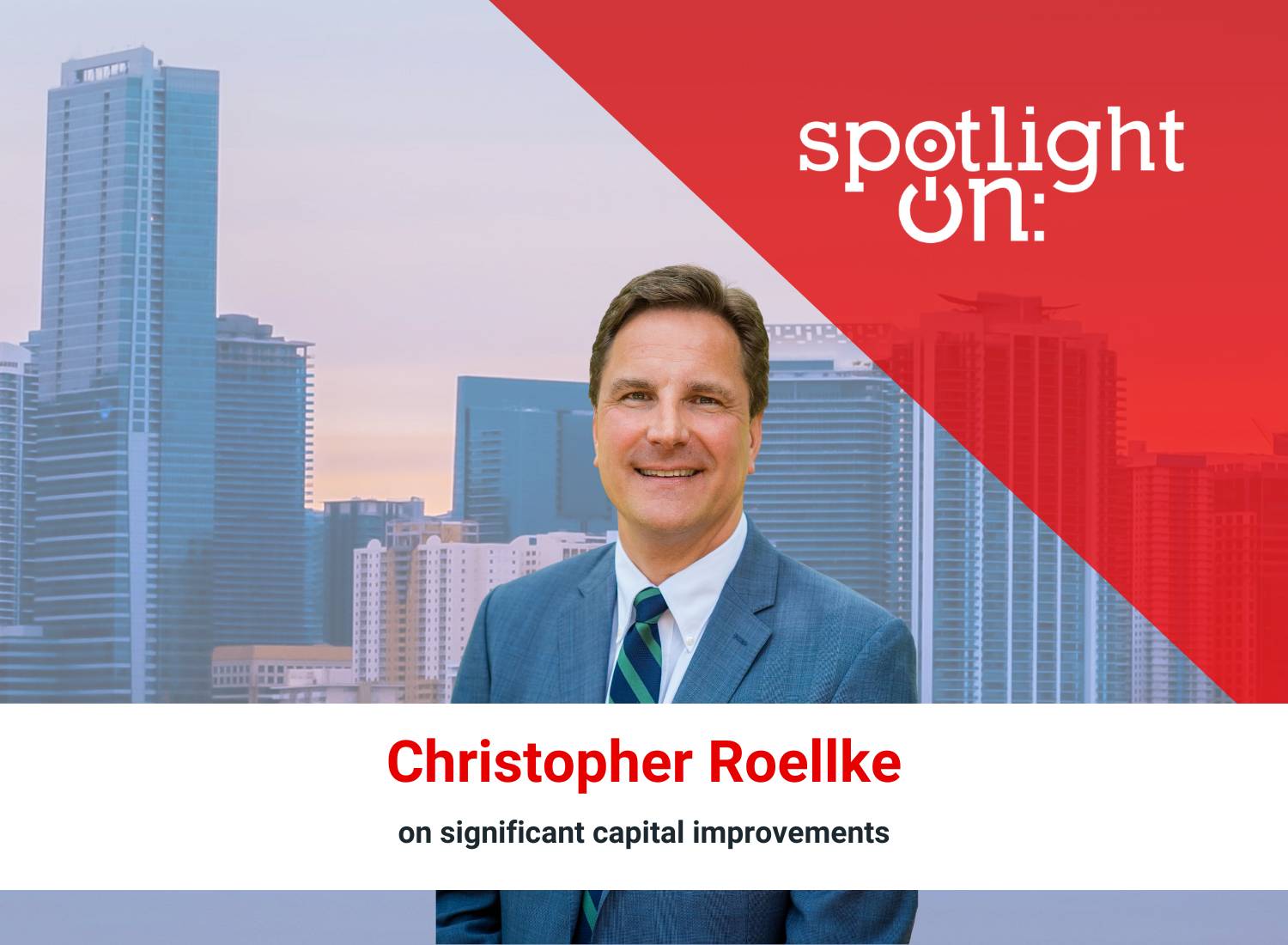 January 2026 — In an interview with Invest:, Christopher Roellke, president of Stetson University, emphasized the university’s commitment to experiential, contemporary, and integrative learning as a response to the evolving landscape of higher education. “At Stetson, we don’t aim to compete on content — information is now readily available. Instead, we compete on experience,” Roellke said.
Join us at caa’s upcoming leadership summits! These premier events bring together hundreds of public and private sector leaders to discuss the challenges and opportunities for businesses and investors. Find the next summit in a city near you!
What changes and milestones have had the most impact at Stetson University, and in what ways?
We’ve had another record-breaking fundraising year at Stetson, and we’re undertaking several significant capital improvements on campus. One major project is a new 305-bed residence hall, which opens in January. This will benefit both prospective and current students.
Additionally, thanks to a historic preservation grant from the state and generous private donations, we’re rebuilding Hulley Tower to its original height of 116 feet. It will house a 52-bell carillon — one of the finest instruments of its kind in the world — restoring the tradition of beautiful music on campus. This is not only a tribute to our past and a step toward the future, but it also holds regional significance. The tower was not hurricane-ready after storm damage in the early 2000s, but it will be now. Many community members missed the bell music, and this restoration brings it back as both a preservation effort and a symbol of resilience and renewal.
Higher education is also facing a declining demographic of college-aged students. At Stetson, we’re working hard to meet this challenge by ensuring our education remains both affordable and accessible, not only to regional students but to those across the globe. International student enrollment has faced obstacles recently, but we’re committed to making Stetson a welcoming and thriving environment for all students.
How would you describe the landscape of higher education in Florida?
With rapid advancements in generative AI, teaching and learning are evolving. At Stetson, we don’t aim to compete on content — information is now readily available. Instead, we compete on experience. We focus on what we call experiential, contemporary, and integrative learning. Experiential means students are immersed in real-world, career-ready experiences from day one, supported by close faculty mentorship. Contemporary means our curriculum directly addresses today’s societal needs.
For instance, students work on issues like food insecurity, environmental resilience, and cognitive decline among the elderly through programs like our Brain Fitness Academy. Integrative learning means our students draw from multiple disciplines. A business student, for example, is expected to write and speak effectively and be broadly educated to remain adaptable in a changing economy.
We believe this distinctive approach — experiential, contemporary, and integrative learning — gives our students a competitive edge. While Florida’s public institutions are excellent and increasingly competitive, our main challenge as a private university is affordability. We’re addressing this with robust financial aid and scholarships, ensuring access and opportunity for talented students both nationally and internationally.
How is the university expanding partnerships with both public agencies and private organizations to provide more opportunities for students in their fields of interest?
In the Greater Orlando area, healthcare is a booming industry. We were intentional in not only building new facilities but also in establishing strong partnerships, such as with AdventHealth. Many of our students intern or work there while attending Stetson.
We also partner with EA Sports, located nearby, where several of our alumni hold leadership roles. We have been ranked among the Top 50 institutions for game design, and this partnership offers our students direct industry exposure.
In addition, we host Stetson Takeover Days, during which major employers like Delta Air Lines, Disney, and Brown & Brown Insurance come to campus and engage directly with students. These events often result in students receiving job offers on the spot. It’s another example of how we bridge the gap between education and employment.
How does the hands-on learning model extend to graduate students and adult learners?
Stetson has a small but impactful group of graduate programs in DeLand, including MBAs and a Master’s in Creative Arts. One-fourth of our student body is at our College of Law. Our graduate students are split roughly 50-50 between those who continue directly from undergraduate studies and adult learners seeking professional advancement or a career change.
We’re also expanding short-term and executive education programs, particularly in our business school. These programs cater to ongoing professional development and certifications, which we see as a significant growth area for private higher education in Florida.
In what ways can digital tools complement, rather than replace, the human-centered, mentorship-driven aspects of universities?
At Stetson, we’ve been preparing for the rise of generative AI for several years. We even appointed a provostial fellow on generative AI to develop thoughtful policies on its ethical use. This ties closely into our broader initiative on information literacy. We expose students to AI tools early, but also equip them with the critical–thinking skills to evaluate information and discern good sources from bad. It’s not just about using AI, but using it ethically and in ways that align with our values of human dignity, intellectual exploration, and lifelong learning.
AI can enhance learning by increasing efficiency, lowering costs, and helping students tailor their educational journey. With the rising costs of education, many families now piece together degrees from different institutions. Embracing AI is part of how we help students meet those challenges affordably and flexibly.
At Stetson, our students aren’t just learning about AI, they’re leading the conversation. We have a business ethics competition team exploring AI ethics. Our investment students are currently evaluating AI startups to determine which are the best to invest in. I even teach a class of 25 first-year students every fall, which is a bit unusual for a university president, but it helps me stay connected. And I’ll tell you, these students are often more advanced than we are in using AI both ethically and practically. We need to listen to them. They’re shaping how these tools will be used moving forward.
Some educators still say, “Don’t use it.” That’s unrealistic. Our students are using it in every aspect of their lives. So the real question is how to guide them in using it responsibly, how to verify sources, and how to apply it to improve society and human well-being.
What role do you see universities playing in fostering community and economic resilience in the areas they serve?
We have a profound responsibility. Although we’re a private nonprofit, we rely heavily on our local and regional communities for internships, partnerships, and services.
We are one of the region’s largest employers of highly educated individuals. Our impact extends beyond education — we share a football stadium and a baseball stadium with the city of DeLand. The mayor is both a Stetson alumnus and employee, and his daughter is in my class. That shows how deeply interconnected we are.
Since 1883, we’ve been part of this community. We’re committed to mutual growth: sharing resources, fostering economic vitality, and supporting each other. Our town-gown relationship is one of the strongest I’ve seen.
Looking ahead to the next three to five years, what are Stetson’s top priorities to remain an economic driver and improve educational outcomes?
One of our proudest achievements is that nearly half of our students are Pell-eligible, meaning they come from lower-income families. The education we offer transforms lives, both personally and economically.
We consistently rank high for social mobility and for our support of veteran students. Stetson is a place where students feel seen, heard, and valued. That sense of belonging is crucial for their long-term success.
Our main focus for the next few years is ensuring this transformative education remains affordable. We’ve launched an ambitious campaign to raise $350 million by the end of my second term as president. We’ve already secured $225 million, with 75% going directly to student scholarships and support.
Ultimately, we want to continue attracting bright, kind, and ambitious students from across the country and the world — and ensure they have the support and access they need to thrive.
Want more? Read the Invest: Greater Orlando report.