



Spotlight On: Johnny Wong, Executive Director, Hillsborough Transportation Planning Organization

Key points:

  • Rapid growth and major mixed-use developments are increasing congestion pressure and reshaping long-term mobility planning priorities.
  • I-4 express lane design and potential Brightline expansion signal major structural shifts in regional connectivity.
  • Autonomous vehicles, climate resilience, and transit gaps are defining the next phase of transportation strategy.
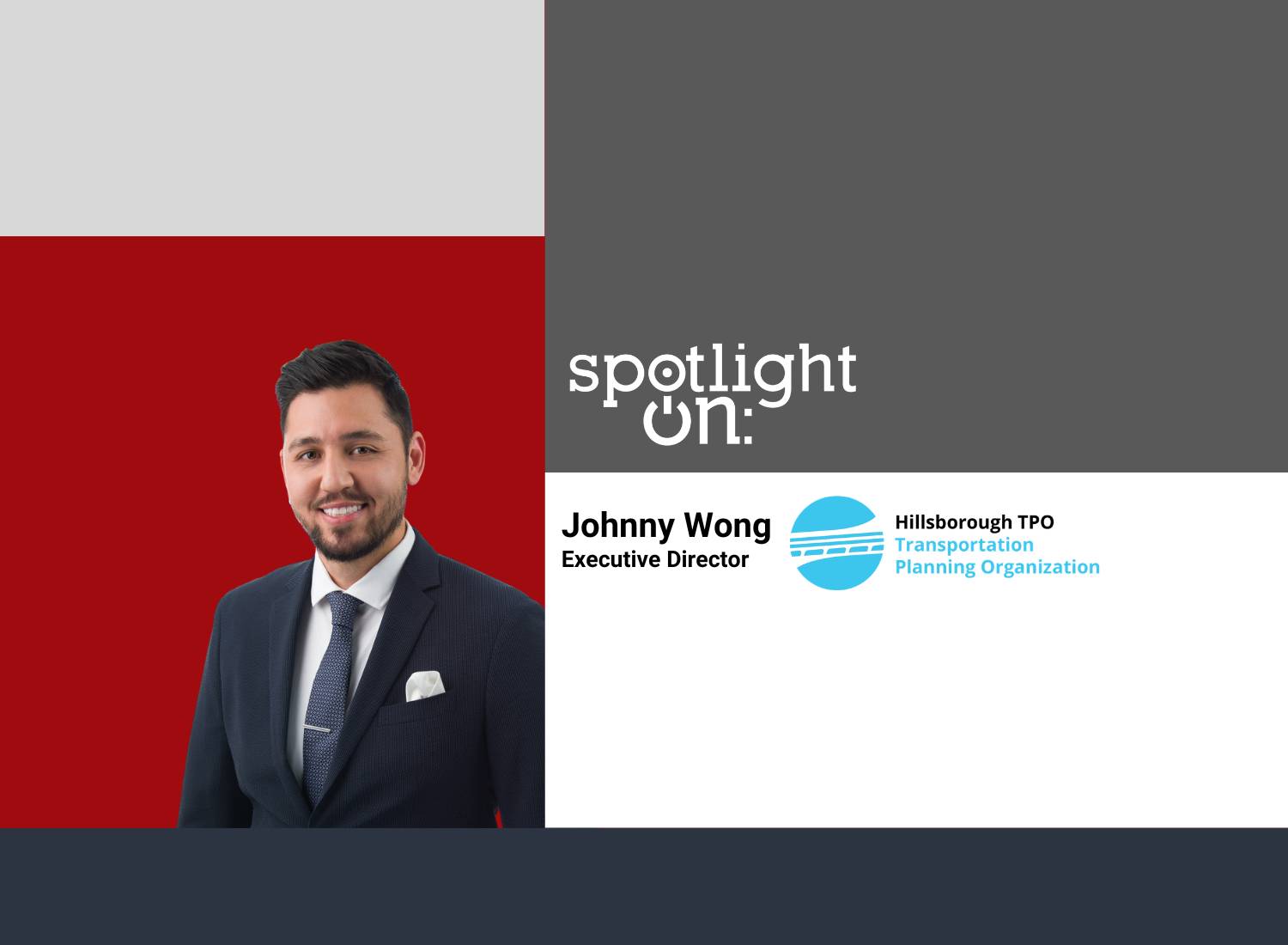
Johnny Wong spotlight onFebruary 2026 — Invest: spoke with Johnny Wong, executive director of the Hillsborough Transportation Planning Organization, about how rapid growth is reshaping mobility priorities across Tampa and Hillsborough County. He shared how congestion, safety, resilience, and emerging technologies are influencing transportation planning as the region prepares for its next phase of economic expansion. “Ultimately, transportation is about more than moving vehicles. It supports economic growth, quality of life, and resilience,” Wong said.


Join us at caa’s upcoming leadership summits! These premier events bring together hundreds of public and private sector leaders to discuss the challenges and opportunities for businesses and investors. Find the next summit in a city near you!


Over the past 12 months, what key changes have most impacted the Hillsborough Transportation Planning Organization, and in what ways?

2025 was a really impactful year for the city of Tampa, and that affected the TPO directly. There was a report in the summer of 2025 showing that the city’s goods and services grew by almost 40%. That kind of growth shows that Tampa is a very attractive market for commercial and industrial investment, and entices people to relocate here.

The level of attention we are receiving places Tampa among other competitive metropolitan areas that are developing a national or even global profile. The connections to our work are inherent because when people consider moving to a new region, they consistently ask the same questions about the state of the local economy, quality of education, and transportation options. The transportation options are a critical dimension of that decision-making process that my agency can influence.

The economic stimulus and growth potential also creates added pressure for planners because while we are planning projects for existing residents and local government partners, we are forced to consider how transportation can support the conditions for continued population growth in a way that is sustainable.

Growth is not evenly distributed, either. Certain parts of the city,county, and region are experiencing it more intensely.Ybor City comes to mind as one of those areas where it is significantly more intense. The development and transportation decisions affecting that area will have ripple effects across the greater transportation network.

What developments stand out most right now, and what impacts are you watching closely?

The broader downtown, Ybor City, Midtown,Channelside, and even USF areas are a major focus. There have been ongoing conversations about potential stadium and mixed-use developments across those geographies, which would dramatically affect traffic patterns throughout the entire Tampa Bay region.

Beyond that, specific projects like Gasworx, across multiple phases, are reshaping land use and travel demand. Ybor City, in particular, has strong potential to become a gateway into and out of the Tampa Bay region.

When I say gateway, I am alluding to the possibility of Brightline. Once that project begins to advance, it would connect the Orlando metro to Tampa, with indications that a station would be located in the greater downtown area, which would include Ybor City.

That raises important planning questions, like how do we make Ybor City a welcoming and functional destination for visitors arriving by rail? And how do we ensure the transportation network allows residents and workers to move efficiently in and out of that area? For us, getting answers to those questions is materially about transportation, but beyond that, they are questions about how Tampa Bay can maintain and extend its economic competitive advantages, how it fits into the global economy, and how it preserves quality of life for those who live here.

What recent transportation decisions signal longer-term change for the region?

Late in 2025, the TPO Board approved funding for the design of I-4 express lanes. I-4 is recognized nationally as one of the most congested and dangerous roadways in Florida, but also the most critical for distributing goods throughout the state, so addressing those deficiencies is essential.

At the same time, those express lanes impact more than just roadway performance. Modernization of that interstate will help advance the conversation about future rail service, because any rail operator would likely operate within the I-4 corridor.

While there are still a lot of details outstanding about when, where, and how intercity rail will move forward, the design of the interstate adds some clarity to those conversations

How does the TPO support workforce development in transportation and planning?

We support workforce development, but mostly in an indirect way. As an agency with a very focused mission to do long range transportation planning, we are not responsible for training contractors or managing large workforces, but our plans influence the FDOT work program, which then influences the labor demands across the local development industry. 

The most direct way that we support workforce development is for planners specifically. Succession planning is a real concern for transportation agencies as our staff ages into retirement, and training the next generation of professionals is critical. In planning specifically, we benefit from our relationship with the University of South Florida, which has a certified planning program, and the pipeline from education to employment is very direct in this region.

The TPO operates a very successful fellowship program with USF where we take two fellows each academic year and give them an opportunity to work with our staff and contribute to real projects that can shape the region’s future. That hands-on experience is valuable for both the students and the agency.

Beyond formal programs, transportation connectivity itself plays an important role in workforce development, attraction and retention. We have heard from employers that the labor market is constrained by travel time. Improving mobility expands access to talent and allows businesses to draw from a wider pool of specialized workers.

What transportation trends are shaping planning decisions today?

One major trend is the rapid advancement of autonomous vehicle technology. Electrification is becoming more affordable, and transportation and technology companies are working together to deploy new systems.

Companies like Waymo, Zoox, and many others are already operating in other U.S. markets and are now focusing on Tampa. Calling attention to just one for a moment, Waymo vehicles have been mapping streets in Hillsborough County and preparing for a launch, with the goal of becoming operational as early as 2026. While those vehicles are mostly available as part of a ridehailing or rideshare system, if autonomous vehicles can penetrate into the personal vehicle market, it would dramatically reshape how we think of personal mobility. 

Tampa is attractive for these pilots because local and state leadership has been willing to work with private partners. With supportive leadership and policies, this region has positioned itself as a place where innovation can be tested, provided it helps address real transportation challenges.

What are the most pressing challenges facing transportation planning today?

Aside from everything else that we’ve touched on, climate risk is one of the biggest challenges, particularly heat. Florida’s climate discourages walking and biking for much of the year. A typical walkshed in a more temperate climate might be 20 minutes whereas here it is about 10 minutes, or roughly half a mile, and many daily destinations are located well beyond that distance.

There are many other factors playing a role in that, but with climate in mind, car reliance in Tampa Bay is extremely high. While local governments have done a commendable job investing in bike and pedestrian infrastructure, providing meaningful protection from heat and weather remains difficult.

Resilience to hurricanes is another serious concern. A major storm damaging critical infrastructure could significantly disrupt the regional economy and rebuilding bridges or highways after a catastrophic event could take months or years.

FDOT, Hillsborough County, and our cities have demonstrated a commitment to resilience by reinforcing infrastructure and tackling vulnerabilities, but those improvements are costly. As planners, our role is to be strategic about where investments are made to add redundancy while balancing risk, cost, and long-term benefit.

Looking ahead, what are your key priorities for the next few years?

Our priorities center on balancing the needs of different users while addressing congestion, safety, and growth. First and foremost, transit accessibility and availability remain major gaps in Tampa Bay’s transportation system and we need to find a way to address those deficiencies. The region only has a few fixed guideway systems but they are fairly localized connections that haven’t integrated into one large network. If Tampa Bay wants to compete with large metros and global cities, the transit network needs to grow substantially.

At the same time, congestion and safety issues remain a pain point and will continue to be a top priority for the TPO in the coming years. 

I’ll close out by mentioning that transportation planning needs to be informed by industrial recruitment and residential development efforts. Bringing jobs closer to where people live, or bringing housing closer to employment centers reduces pressure on the transportation system. To reduce the number of vehicles on our roads, and all of the issues stemming from that problem, we need to abbreviate the longest trips of most people’s day, which are from home-to-work and work-to-home. 

Ultimately, transportation is about more than moving vehicles. It supports economic growth, quality of life, and resilience. Our goal is to ensure that as Tampa Bay continues to grow, the transportation system evolves in a way that supports long-term success.

Want more? Read the Invest: Tampa Bay report.

 

Venture Capital Decentralizes Beyond Coastal Tech Hubs

Key points:

  • Venture capital is shifting from high-cost tech hubs to emerging U.S. markets offering lower valuations, efficiency, and untapped growth.
  • Atlanta, Georgia, and Middle America are drawing investor interest as regions with strong talent, infrastructure, and scalable startup potential.
  • As AI dominates funding, decentralized VC markets are gaining relevance for early-stage deals while traditional hubs retain late-stage dominance.

Venture capitalFebruary 2026 — Venture capital (VC) investment across the United States is shifting from high-cost tech centers toward smaller and emerging markets as investors pursue lower valuations and opportunities for untapped innovation.


Join us at caa’s upcoming leadership summits! These premier events bring together hundreds of public and private sector leaders to discuss the challenges and opportunities for businesses and investors. Find the next summit in a city near you!


People are realizing that innovation doesn’t just happen in the Bay Area or Boston. There’s deep expertise, real industrial know-how, and strong government support here in the middle of the country,” Nathaniel Harding, a managing partner at early-stage VC firm Cortado Ventures, told Silicon Valley Bank.  

Fast-growing U.S. regions like Middle America are now capturing a greater share of capital than ever before; meanwhile, developing innovation hubs in the Southeast are attracting growing interest from big players across the country. 

“There is significant interest from investors in Silicon Valley, Boston, and New York in Georgia’s tech ecosystem,” Larry Williams, president and CEO of the Technology Association of Georgia, told Focus: Atlanta, referencing his conversations with national VC and PE firms. That interest has also extended locally with many VC firms doubling down on home markets they believe are poised for rapid expansion.

Looking for fast growth

“We’re looking for markets that are small today but very fast-growing,” Dave Cummings, CEO of investment company, Atlanta Ventures, told Focus: Atlanta. “We like markets that have the opportunity for subscription revenue.”

As Cummings explained, Atlanta has established a strong base for startup formation and early-stage growth companies, but that there are unrealized opportunities to extend that momentum beyond the early stages. This means tapping into markets with high-growth potential where companies can be supported as they scale, expand, and mature into later-stage enterprises.

“The opportunity ahead of us is to really get stronger at the next stage beyond the early stage, which includes the growth stage, the expansion stage, and the pre-IPO stage,” he said.  

For Invest Atlanta CEO Eloisa Klementich, this level of VC investment in the region could inject the local economy with a major boost. “Like many cities, we need more venture capital to support entrepreneurs… (and help) early-stage businesses get off the ground.”

Beyond the Southeast, regions in Middle America has recently gained significant traction in the venture capital landscape. 

According to Silicon Valley Bank’s Future of Frontier Technology report, the U.S. Midcontinent surpassed the East Coast in total VC funding in 2024, signaling a meaningful geographic rebalancing of capital flows.

The advantages of these markets are clear: deep talent pools, innovative startups, and growing infrastructure to support tech and industrial automation. 

More specifically, entrepreneurs from outside the so-called “elite tech hubs” in the East and West Coasts can benefit from lower labor costs and operating expenses, leading to lower deal sizes and valuations, which creates bias toward efficiency and profitability. 

In other words, these lower priced startups in Middle America can avoid the inflated valuations seen in overheated markets and instead achieve more realistic scale, as explained by Harding.

Growing venture capital interest

For VC firms, this implies more reasonable deal terms, qualified industry expertise, and strong government backing, all of which has contributed to their growing interest in the region.  

VC funds based in the Midcontinent now account for approximately 12% of all funds raised over the past three years — roughly double the share from a decade ago — highlighting how emerging markets are capturing a greater role in the U.S. innovation economy. 

In fields like deep tech and AI, smaller, emerging VC markets offer core competitive advantages. This is because venture capital opportunities are highly bifurcated in the United States, as Wellington Management’s 2026 Private Investing Outlook notes. 

While most startups are struggling to secure investment given a tighter financing environment, AI companies are raising funds faster and at higher valuations across all stages. (Currently, nearly two-thirds of U.S. VC deal value is concentrated around AI companies, as data from SG Analytics suggests.)

The result has been narrower fundraising conditions for companies outside the sector and a more selective investment landscape in general. 

Shifting landscape

While experts believe that financial markets are headed toward a reset given signs of improved liquidity, VC firms are shifting their attention to ventures in regions like Georgia and Middle America, where valuations are grounded in reality and the potential for growth is long term. 

This shift does not mean tech centers such as Silicon Valley or Boston are fading away from prominence. Established tech hubs continue to house many of the country’s largest technology companies and dominate overall deal value. However, the center of gravity in venture capital is broadening as emerging regional markets offer value-oriented investment opportunities amid higher costs and stretched valuations at traditional hubs. 

For founders, the rise of regional VC markets signals greater access to capital closer to where their core operations and talent are based. For investors, the trend represents a diversification strategy that blends emerging sectors with traditional technology portfolios. 

While funding levels continue to vary by region and ecosystem, the broader direction is clear: U.S. venture capital is decentralizing. Areas once considered peripheral are increasingly competing for early-stage deals and fund formation, even as primary VC hubs maintain their dominance in mega-rounds and later-stage financing. 

Want more? Read the Invest: reports.

Spotlight On: Paul Sharkey, Executive Director, UnitedHealthcare

Key points:

  • UnitedHealthcare reduced prior authorizations and expanded its Community Plan to widen access statewide.
  • Simpler commercial plans, telehealth growth, and behavioral health expansion address cost and workforce pressures.
  • Maternal health, crisis care, and community partnerships anchor its next phase of regional investment.

Paul Sharkey spotlight onFebruary 2026 — In an interview with Invest:, Paul Sharkey, executive director of UnitedHealthcare, highlighted key initiatives, digital innovations, and partnerships that are shaping the company’s approach to healthcare access. “Our goal is to meet members where they are and provide support in the way they need it most,” Sharkey said.


Join us at the Invest: Pittsburgh 3rd Edition Leadership Summit! This premier event brings together hundreds of Pittsburgh’s business and regional leaders to discuss the challenges and opportunities for businesses and investors. Buy your ticket now!


What changes over the past year have most impacted UnitedHealthcare in the region, and in what ways? 

There have been significant developments with UnitedHealthcare, both nationally and within the Western Pennsylvania and Pittsburgh markets. Our primary focus remains on ensuring the healthcare system works better for everyone by enabling access to the right care at the right time. In Pittsburgh, we have taken steps to simplify processes for our members. One key initiative has been reducing the number of required prior authorizations by nearly 20%. Additionally, we are piloting a Gold Card program, which exempts high-quality physicians with the best outcomes in their specialties from prior authorization requirements. These efforts are designed to streamline access to care while reducing unnecessary costs.

UnitedHealthcare has expanded its Community Plan for Kids to 12 additional counties across Pennsylvania. How is this expansion improving access to care?

We are very excited about this expansion. Our Community Plans are now available in 64 of Pennsylvania’s 67 counties. For these members, the focus is on lowering out-of-pocket costs, emphasizing preventative care, primary care visits, pediatric visits, and ensuring access to essential medications. This is particularly important for our most vulnerable members, as it helps them maintain healthier lives. By broadening our reach, we are making it easier for families across the region to receive the care they need without financial strain.

How has UnitedHealthcare implemented or adapted digital tools to improve member health outcomes?

Digital tools are critical in modern healthcare, and we recognize their potential to empower members. One of our key innovations is Smart Choice, a feature that helps members find physicians, clinicians, or hospitals based on personalized preferences. This tool considers factors such as gender, language, location, and quality benchmarks to recommend the most suitable providers. By offering dynamic, tailored suggestions, we ensure members receive care that aligns with their needs while meeting high standards of quality and cost efficiency.

What trends do you see as most transformative for commercial plans?

One of the most prominent trends is the demand for simplicity and lower costs. Many individuals find the healthcare system overly complex, so much so that only 4% of Americans can accurately define terms like deductible, coinsurance, copayment, and out-of-pocket maximum. To address this, we have introduced Surest, a copay-based plan that provides price certainty before care is received. This plan uses data to identify high-quality, cost-efficient providers and offers lower copays for those who meet these standards. 

Furthermore, according to recent data, about 10% of Pennsylvanians and 11% of Americans nationwide delayed or avoided care in the past year due to cost or complexity. To combat this, we have expanded telehealth services, offering affordable virtual visits 24 hours a day, seven days a week. 

As the healthcare sector faces rising costs and provider shortages, what operational challenges have been most pressing for your Pittsburgh operations?

Workforce shortages are a significant issue across the entire country, particularly in Pittsburgh; for example, the nursing shortage is well-documented here and nationwide as well. Additionally, COVID-19 exposed a mental health crisis in the United States. We are focused on expanding access to care, not just for physical health through 24/7 virtual visits, but also for mental health. We have increased our mental and behavioral health network in Pennsylvania to ensure members, especially those with urgent needs, can quickly connect with providers. We also offer express appointment scheduling and have introduced self-service options. Additionally, UnitedHealthcare recently partnered with Calm Health to offer fully insured members access to their mobile app, which provides at-home solutions for stress reduction, meditation, and self-care. 

What partnerships or initiatives in the Pittsburgh area illustrate UnitedHealthcare’s commitment to supporting community health, education, and economic resilience?

At UnitedHealthcare, we recognize that social drivers of health significantly impact both short-term and long-term outcomes. We collaborate with numerous community partners across Pennsylvania, but one of our proudest relationships is with BLOCS. Since 2019, we have partnered with them to provide scholarships to underserved families across the Commonwealth, enabling access to tuition-based education when appropriate. To date, we have awarded over 2,300 scholarships statewide, including in Western Pennsylvania. This initiative not only addresses immediate needs but also contributes to long-term health and stability for students and their families.

Looking ahead to the next few years, what are your top priorities for UnitedHealthcare?

Our primary initiative is expanding access to affordable, quality care. We will continue growing across our community, Medicare, and commercial plans by increasing storefronts, retail experiences, and mobile units to bring healthcare directly to communities. Another major focus is addressing the mental health crisis, particularly in Western Pennsylvania, by improving access to crisis intervention and integrated behavioral care. Additionally, we are prioritizing maternal health outcomes in underserved communities. This includes enhancing traditional maternal care, partnering with doulas, and expanding prenatal, postnatal, and postpartum services for members across the state.

Want more? Read the Invest: Pittsburgh report.


Invest: Nashville leadership summit spotlights real estate, regional partnerships

Writer: Eleana Teran

Key points:

  • The Invest: Nashville Leadership Summit will convene cross-sector leaders to examine forces shaping Middle Tennessee’s long-term growth.
  • Panels will focus on infrastructure and mobility, healthcare and education-driven development, and real estate market priorities amid economic uncertainty.
  • The event marks the release of Invest: Nashville 4th Edition, highlighting collaboration as a driver of regional competitiveness.

INASe4_Cover_Invest_NashvilleJanuary 2026 — As Nashville continues to navigate sustained growth, shifting economic conditions and evolving infrastructure demands, business, civic, and institutional leaders will convene for the Invest: Nashville Leadership Summit on Thursday, March 5, from 8 a.m. to 11 a.m. at the Bridgestone Arena. (Purchase tickets here.)

The summit marks the official release of Invest: Nashville 4th Edition, caa’s in-depth economic review of the region, and will bring together leaders from real estate, healthcare, education, infrastructure, utilities, and finance to examine the forces shaping Nashville’s growth. Through panel discussions, the event will explore how collaboration across sectors is influencing development patterns, investment decisions, and long-term competitiveness across Middle Tennessee. 

“Nashville is experiencing sustained growth across real estate, infrastructure, healthcare, and education,” said Abby Lindenberg, founder and CEO of caa. “This event brings together leaders shaping that growth and examining how today’s decisions will influence the region’s long-term trajectory.”

Check in will begin at 8:30 a.m., followed by opening remarks and a welcome address from Kyle Clayton, chief strategy officer of the Nashville Predators. The program will feature three panel discussions focused on infrastructure and mobility, healthcare and education-driven development, and the broader economic outlook for the region’s real estate market.


Explore more from our Nashville coverage:

Spotlight On: Lance Carter, President & Founder, Phoenix Management Group

Spotlight On: Victor Berrios, Chairman of the Board/President & Owner, Tennessee Latin American Chamber of Commerce/ Jani-King Nash

Regional Review: How Nashville’s new infrastructure is powering global investment


Mobility, infrastructure, and real estate opportunity

The opening panel “Bridging Progress: How mobility and infrastructure development are unlocking new real estate opportunities, and the key challenges moving forward,” will examine how transportation systems, utilities and large-scale infrastructure investments are shaping development across the region.

The discussion will be moderated by Marshall Crawford, president and CEO of The Housing Fund. Panelists include Chris Jones, president of Middle Tennessee Electric; Desmond Jackbir, AVP of network at Verizon; John Vardaman of DPR Construction; and Doug Blizzard, chief solutions officer at Catapult.

Healthcare, education, and campus-driven development

The second panel “Healing Grounds: How healthcare and education campus developments are driving real estate growth, and how the wider community benefits from these projects,” will focus on the role of institutional development in shaping surrounding neighborhoods, workforce pipelines, and long-term community outcomes.

Presented by George Crawford of Butler Snow, the panel will be moderated by Clifton Harris, president and CEO of The Urban League of Middle Tennessee. Panelists include Blake Bratcher, partner and EVP at Flagship Healthcare Properties, John Cunningham, director of healthcare partnership solutions at Nashville State Community College, Harry Allen, CFO of Belmont University, and Middle Tennessee State University leadership.

Economic uncertainty and market priorities

The final panel, “Uncertain Outlook: How a rapidly changing economy is reshaping Nashville’s real estate market, and the priorities that will ensure long-term success,” will address capital availability and strategic decision-making in an evolving economic environment. 

The discussion will be presented by Paul Allen of Wealth Strategies Partners and moderated by Bobbi Jo Lazarus of Elliott Davis. Panelists include Alex Sanders, CEO of Pinnacle Construction Partners; Brian Masterson, Nashville partner-in-charge at FBT Gibbons; Bradford Vieira, regional president and CEO of ServisFirst Bank; and Kelley Kee, Tennessee state president at United Community Bank.

The in-person summit is expected to draw hundreds of senior executives, developers, lenders, institutional leaders, and public-sector stakeholders from across the Nashville region. Register today!

About caa & Invest: Nashville

caa is an integrated media platform that produces in-depth business intelligence through its annual print and digital economic reviews, high-impact conferences and events, and executive interviews via its video platform, Invest:Insights.

Invest: Nashville is a comprehensive economic review examining the key issues shaping the regional economy. Featuring exclusive insights from prominent business, civic and institutional leaders, the publication is designed to provide actionable investment intelligence while promoting Middle Tennessee as a premier place to do business.

For more information, contact:

Shain Collins
Senior Executive Director
786-598-7526

Want more? Read the Invest: Nashville report.

Subscribe to Our Newsletters

Address(Required)
Would You Like To Receive Our National Newsletter?(Required)
Interests
Markets
This field is hidden when viewing the form

Spotlight On: Monica Smith, Founder & CEO, Marketsmith

Key points:

  • Marketsmith is shifting from a traditional agency model to data-driven growth consulting with its new MSIGenerate™ platform.
  • AI, automation, and private equity pressures are pushing brands toward predictive intelligence and measurable ROI.
  • The firm is focusing on midmarket growth, human-centered strategy, and diversity-led innovation rooted in New Jersey.

Monica Smith Spotlight onFebruary 2026 — Monica Smith, founder and CEO of Marketsmith, spoke with Invest: about adapting innovative strategies in marketing and advertising, and what the landscape for the industry looks like. “Marketsmith pivoted a few years ago and is releasing our first version of an innovative, on-demand intellectual data product that will change the way marketing is done today. I am looking for a way to develop an advancement that will create a benefit for the economy in the United States,” Smith added.


Join us at caa’s upcoming leadership summits! These premier events bring together hundreds of public and private sector leaders to discuss the challenges and opportunities for businesses and investors. Find the next summit in a city near you!


Over the past year, what internal or market changes have had the greatest impact on Marketsmith?

Marketsmith operates as a full-service advertising agency, but our foundation has always been rooted in growth consulting. From the start, our mission has been to help brands grow intelligently through data science, strategy, and innovation. Over time, we added creative, media, and performance marketing services, but consulting remains the heartbeat of who we are.

Our strength lies in using data to drive measurable growth. That is why, even in challenging climates like the one we are experiencing nationally and here in New Jersey, our model continues to thrive. We are built for times of complexity. When markets tighten, businesses look for partners who can deliver results rooted in intelligence, and that is where we excel.

How would you describe the advertising and consulting landscape in New Jersey and the broader United States?

The landscape has shifted dramatically. In the United States alone, there are more than 65,000 digital agencies — and nearly 90% of them are small firms. For years, the model was to build an agency and hope a private equity group or holding company would acquire it. But that’s changed. The holding companies are now moving downstream to work with smaller brands themselves just to feed their own models. It’s a highly competitive, low-margin business.

We’re also seeing the next major transformation: algorithmic and AI-driven tools will replace about a quarter of existing firms within the next few years. Companies are bringing work in-house or shifting toward platform-centric marketing — more AI, less humanity. Seeing that change was coming, we pivoted years ago to lead innovation rather than be replaced by it.

That pivot has culminated in the release of our first on-demand intellectual data product, MSIGenerate™, which will fundamentally change how marketing is done today. We see this platform as an advancement that benefits the broader economy by giving businesses across the country the right tools for growth at the speed at which data is coming in.

What economic or market forces are most influencing client strategies and expectations this year?

Private equity is the primary economic driver right now, not the consumer. Over the past decade, a flood of private capital reshaped industries, influencing how companies think about scale, innovation, and ROI. The tightening of public markets has made growth more expensive, while consolidation has reduced the number of brands agencies can serve.

The result is a market where competition is fierce, the cost of entry is high, and the velocity of change fueled by AI and automation is relentless. For many, that’s destabilizing. For us, it’s an opportunity. Data-driven intelligence is the bridge between financial and brand success. The companies that will win are those that can turn data into enterprise value by using AI and predictive insight to drive quicker, human-centric decision-making and smarter go-to-market strategies, ultimately culminating in shareholder growth. 

How is Marketsmith helping clients adapt their omnichannel strategies for today’s fragmented audience landscape?

We’ve developed MSIGenerate™, a predictive intelligence and market activation platform that unites full-funnel strategy with business intelligence, attribution, and data visualization. It helps brands see their performance more clearly, make faster and smarter decisions, and ultimately transform information into action.

The platform operates on two levels. The first is a visual layer that makes insights intuitive for users of all skill levels. Beneath that are dynamic mini-models that drive prediction, optimization, and risk mitigation. By merging AI with human understanding, we give our clients enterprise-grade intelligence that’s still deeply accessible and human.

Our goal is to help brands, particularly those in the midmarket, find balance in an age of automation by using technology to empower people, not replace them.

How do you find a good balance between AI tools and data analytics without leaving the human side behind?

Right now, much of the industry is racing to automate, and in that race, humanity is often left behind. We see things differently. The most successful strategies will be those that merge data precision with human insight.

At Marketsmith, we focus on the middle of the economy — organizations searching for their next stage of growth. We help them formalize data-driven decisions and turn those insights into prioritized, actionable strategies. Our goal isn’t just to help companies compete with larger enterprises — it’s to give them the intelligence and confidence to grow sustainably, with humanity at the core.

How does Marketsmith continue to champion diversity and inclusion in both its workforce and client strategies?

It starts with where we choose to operate. Keeping Marketsmith headquartered in New Jersey is a statement of purpose. This is one of the best states in the country for women in business, a place where innovation meets equality.

New Jersey’s geographic and demographic diversity gives us access to perspectives and patterns that wouldn’t be visible elsewhere. That diversity drives our innovation, our hiring, and our community engagement. The state provides women entrepreneurs with proximity to policymakers, investors, and the global financial community, and even though it’s an expensive place to operate, the quality of life and inclusiveness are unmatched.

We will continue to champion women-owned businesses, women in the C-suite, and women entrepreneurs. Our ecosystem here is built for it.

Looking ahead, what are Marketsmith’s top strategic priorities, and how do you plan to maintain your leadership in innovation and performance marketing?

Our priority is the launch of MSIGenerate, but the vision extends far beyond a single product. It’s about introducing a new way to think. We believe MSIGenerate will change how business is done and, more importantly, it will change who gets to win. Our mission is to make innovation accessible, helping companies scale intelligently, attract investment, and deliver shareholder value through data-driven intelligence.

For us, leadership means redefining what’s possible and continuing to build the future of marketing as its architects, not just its participants.

Want more? Read the Invest: New Jersey report.


Key real estate trends shaping Tampa Bay’s next growth phase

Key points:

  • Tampa Bay housing has stabilized at a 4.3-month supply with steady demand driven by migration and corporate relocations.
  • Retail, medical, and high-quality industrial lead commercial growth, while mixed-use regains momentum as rates ease.
  • Affordability remains the core challenge, even as luxury, lifestyle districts, and infrastructure investment fuel long-term value.

Tampa BayFebruary 2026 – As the first quarter of 2026 unfolds, the Tampa Bay real estate landscape has shed its extreme volatility.  Current data shows a healthy rebalancing, with inventory climbing to a 4.3-month supply, a significant rise from the historic lows of previous years. While the median home price for single-family homes has stabilized around $415,000, the region continues to attract high-net-worth individuals and corporate relocations that are fundamentally reshaping the skyline. This shift is backed by a population growth rate that remains above the national average, ensuring that demand for housing and infrastructure remains a primary economic engine.

“On the commercial side, the strongest growth has been in retail and medical. Population migration into the Tampa Bay region has driven steady demand for neighborhood retail and healthcare services,” Michelle Esposito Young, director of developer services at Michael Saunders & Company, told Invest:.


Join us at caa’s upcoming leadership summits! This year, our 7th edition of Invest: Tampa Bay will shift its focus toward business growth and the continued expansion of the Tampa Bay region and its relationship to real estate and construction, spotlighting leadership, innovation, and investment that are driving the market’s next chapter.


The Commercial Quality Distinction

In 2026, development is no longer about sheer volume, but about quality and long-term performance. According to Young, industrial has also been an important part of that story, supported by the ports in the Tampa area and regional highway connectivity. “Some older industrial products have begun to soften as newer facilities come online, so there is a clear quality distinction within that sector,” she stated

Mixed-use projects—long a hallmark of Tampa Bay’s urban evolution—have faced recent headwinds. Young highlighted that some projects were paused or slowed as feasibility shifted, noting that the economics did not pencil out. However, the outlook for 2026 is improving. 

“The encouraging sign today is that interest rates are easing, construction costs are stabilizing, and both lenders and developers are adjusting to the ‘new normal’ for materials,” Young said.

Evolving Migration Patterns

Migration patterns continue to favor Florida’s West Coast. Since 2020, more than 270,000 people have moved into the Tampa Bay metro, driven by both domestic and international in-migration. As demand continues to shift, David Moyer, executive vice president of Smith & Associates Real Estate, emphasized that it’s critical to understand the region at a neighborhood level. You can’t generalize Tampa Bay with broad statistics. The market is 100% niche, so what’s happening in one zip code is completely different from what’s happening in another.” 

Moyer noted that relocation momentum remains steady across key feeder markets. “We continue to see inbound migration from Chicago, Pittsburgh, New York, and other northern markets. People are relocating for job opportunities and lifestyle.”

He also added that newcomers are increasingly drawn to the kind of mixed-use, district-style growth that has redefined where people choose to live long term. “Midtown, Water Street, and the Marina District have changed the map. Gasworx connecting to Ybor is another major example. Armature Works has become a hub,” he said, pointing to the way these nodes shape demand beyond their immediate footprints. Within these districts, “you get a blend of residential, office, retail, and hospitality, and that mix creates demand,” lifting surrounding neighborhoods as buyers prioritize proximity to walkable amenities and daily convenience.

Smart Systems & Urban Hubs

The physical DNA of Tampa Bay’s buildings is evolving alongside tenant expectations. “Mechanical and electrical systems have seen some of the most meaningful advancements,” said Matt Coticchio, president of Interstruct Design + Build, in an interview with Invest:. “There’s a stronger push for improved air quality, increased fresh air intake, and more zoned AC systems that allow for better comfort and energy efficiency.” 

Office design is also shifting. “Offices now incorporate more glass to maximize natural light, and lighting systems are more flexible and easier on the eyes,” Coticchio added. Sustainability has become standard practice as well. “Material choices have also shifted, with clean drywall, low-VOC paints and adhesives, and reclaimed materials becoming more common.”

These upgrades are supported by rising rents. “Office rents have risen from about $30 per square foot five years ago to $50–$60 today, which has increased TI allowances and enabled higher-quality build-outs,” Coticchio explained. 

The Affordability Frontier

Despite the rise in luxury development, affordability remains the defining challenge for 2026. While home prices in the Tampa Bay metro have climbed roughly 67% since 2019, mortgage rates rising into the 6%–7% range have pushed typical monthly payments significantly higher, even as rents — now around $2,200 per month on average — have begun to flatten after years of double-digit growth.

“Affordability is the biggest trend, and it touches everything,” Brian Batten, division president at Lennar, told Invest:. “For the first-time homebuyer, we need to get home prices and the monthly payment down to a point where it is affordable for the majority of people.”

Batten emphasized aligning homeownership costs with the rental market. “If you can get an apartment with a deposit, first and last month, and then your monthly rent, we want to do everything we can to be in alignment with getting the monthly payment on a home to a similar level.” 

He underscored the enduring appeal of ownership, adding, “The value proposition of homeownership is still powerful. With a home, you get a garage, you get a yard, you get equity, and you get ownership.” 

Lifestyle as an Economic Engine

Lifestyle continues to fuel Tampa Bay’s growth. In his interview with Invest: Dominic Pickering, executive director at BTI Partners, explained that high-net-worth individuals tend to buy based on several factors. “They want to walk to restaurants, access the water, and enjoy life while making a sound investment,” he stated.  

Pickering pointed to a reinforcing cycle between lifestyle-driven relocation and business growth. “Many large companies are coming to the Tampa Bay area, bringing executives who are exploring the luxury market – one trend fueling the other,” he said. “They came to Tampa Bay for the lifestyle and later established businesses here, creating jobs and contributing to regional growth.”

Tampa Bay is no longer a speculative boom market. With more than $2 billion in infrastructure projects underway and continued population growth expected through the end of the decade, the region has entered a new phase defined by balance and durability.

Looking ahead, Pickering sees Tampa Bay entering a more mature growth phase. “When you look at the level of public investment and private capital flowing into Tampa, it’s clear the city is entering a new chapter, one that’s creating long-term value and an elevated lifestyle for those choosing to call it home.” 

Want more? Read the Invest: Tampa Bay report.

 

Spotlight On: Brian Batten, Division President, Lennar

Key points:

  • Demand for affordable and first-time buyer homes remained strong despite rates staying higher for longer.
  • Lennar leaned on volume, incentives, cost discipline, and AI to protect affordability and sustain momentum.
  • High land costs and execution pressure are driving deeper alignment with sellers, trade partners, and talent.

Brian BattenFebruary 2026 — Invest: spoke with Brian Batten, division president of Lennar, about what it takes to keep delivering homes in a market defined by elevated land costs, tight affordability, and interest rates that have not provided the relief many expected. “We kept expecting rates to drop, or some kind of major shift to happen, and we really did not see that. What we did see was that demand stayed, particularly for affordable homes and for first-time homebuyers. So the demand is there, and it is real,” Batten said.


Join us at caa’s upcoming leadership summits! These premier events bring together hundreds of public and private sector leaders to discuss the challenges and opportunities for businesses and investors. Find the next summit in a city near you!


What key changes over the past year have most impacted your operations, and in what ways?

Over the past 12 months, the biggest change was that the market did not get the catalyst many people were expecting. We kept expecting rates to drop, or some kind of major shift to happen, and we really did not see that. What we did see was that demand stayed, particularly for affordable homes and for first-time homebuyers.

So the demand is there, and it is real. Early in 2025, we focused on how to capture that demand. We made a decision to push volume, keep building at our desired pace, and not revise any of our guidance in terms of what we said we were going to deliver. There was still a lot of uncertainty around rates and affordability, but we did not want to lose momentum.

With that approach, we were willing to use margin as kind of our shock absorber, as we have said as a company before. We just continued to push volume, and we were one of the few builders in Tampa, and across the country, to maintain our volume.

What recent developments or initiatives stand out for you the most in Tampa Bay, and what impact are you seeing so far?

A few things stand out, and they all connect back to affordability and execution. As a company, we have leaned into AI and technology in practical ways that support the business. We are using AI as a coaching tool for our NHCs, our new home consultants. We have also used it in marketing to make sure we are finding the right buyers and delivering a clear message about what we are offering.

At the same time, we have been offering strong incentives over the past year or two to move the needle and meet demand. The demand is there, but affordability is the issue, so the incentives have helped bridge the gap for buyers while the market works through higher-rate conditions.

Internally and externally, we have focused on cost. We have tried to go attack everything we can on a cost basis. That includes renegotiating current land opportunities we already have, renegotiating with our trade partners to lower their costs, and looking at our internal structure to see how we can get more efficient.

All of that is aimed at one outcome: getting our costs down so we can meet the affordability plea in the market. When affordability is stretched, the details matter, and we have been disciplined about pulling the right levers to keep delivering homes at a pace that matches demand.

Apart from technology and AI, what housing or consumer trends do you see most influencing in the Tampa Bay market?

Affordability is the biggest trend, and it touches everything. For the first-time homebuyer, we need to get home prices and the monthly payment down to a point where it is affordable for the majority of people.

As the economy continues to do what it does, we want to be the mainstay in the economy where people know you can always get an affordable payment. We do everything we can to make that monthly payment competitive, and ideally better than the average rental market out there.

If you can get an apartment with a deposit, first and last month, and then your monthly rent, we want to do everything we can to be in alignment with getting the monthly payment on a home to a similar level. That is what makes homeownership realistic again for people who are weighing the decision.

The value proposition of homeownership is still powerful. With a home, you get a garage, you get a yard, you get equity, and you get ownership. So the focus becomes how to make that payment work, and how to remove friction so the first-time buyer can step into that opportunity.

What are the biggest challenges facing home builders in Tampa Bay today?

Land cost is still high, and it is a constant focus. It all starts with land, so we need land sellers to contribute and come along with us. We want their pricing to be in alignment with today’s world, not five years ago during the COVID boom when prices were going through the roof. We need to bring pricing down.

That is why we meet with land sellers early and often. We want to make sure we are bringing them along in the discussions of where the market is, what we have to do to meet affordability, and what it means for pricing assumptions going forward.

We also focus heavily on alignment with trade partners. We consistently meet with our trade partners and our land sellers to make sure they hear the message often: here is where we are today, here is what we are doing this quarter and next year, and we need you to come alongside us and share in the restructuring of cost to get affordability down.

Another major priority is building the right team to execute in a challenging environment. One of the biggest wins I have had as a division president is bringing on great people to the Tampa team. We have added strong land acquisition leaders, development leaders, and sales leaders. We have built an unbelievable team in Tampa, and that matters because the market is moving fast, the cost structure is under pressure, and the ability to adapt comes down to talent and leadership.

How are you approaching talent attraction and workforce development within the Tampa division today?

This is where Lennar, and the Tampa division, stands out. We are in homebuilding, but we are in the people business. At the end of the day, we build and sell homes for people, and it all starts with the people we have at the division at every level.

I have focused on making sure the leaders around me have the same mission and the same mindset about how we operate. We do monthly goals together, business and personal. I need to know what they want to accomplish that month, business and personal, and I am there to support them in going to accomplish those things.

In turn, they have their teams, and they do business and personal goals with them as well. That creates alignment. Everybody is in alignment with what the division wants to do for the year and each month, and then we go granular to each person and ask, what do you want to accomplish this month that supports our yearly goals?

That structure strengthens leadership, improves accountability, and helps people grow with the business. When you have clarity in goals and consistent support, you build a culture where people want to stay, contribute, and develop, and that is a competitive advantage in a market like Florida.

Looking ahead, what are your key goals and priorities for Lennar’s Tampa division over the next year?

A key priority is strengthening our team and building alignment around clear targets. I just went through a first round with my team over the past week, and we set one-year and three-year goals.

We start with division goals. Our division goal is to sell and close a certain amount of homes in 2026. Our fiscal year ended at the end of November, so we are already into our new fiscal year. We also have goals for land. Here is the amount of land we want to purchase and get under contract in 2026, and here is our purchasing goal for 2026.

Then we connect that to individual growth and leadership development. For each of my team members, I want to understand their career goals for 2026, what they want to accomplish, and how I can support them in that role. It is about getting those goals in alignment with the division so we can accomplish what we need to for the company in 2026.

Want more? Read the Invest: Tampa Bay report.
 

Invest: Philadelphia summit highlights education, research, and infrastructure planning

Key points:

  • Leaders examined how education, research, and infrastructure shape Philadelphia’s economic trajectory.
  • Panels focused on workforce wellbeing, innovation ecosystems, and institutional capacity to support growth.
  • David L. Cohen closed by underscoring calm, consistent leadership and listening as core principles.

Invest PhiladelphiaFebruary 2026 — Business, education, and civic leaders from across the Greater Philadelphia region gathered for the Invest: Philadelphia 6th Edition Leadership Summit. The event convened executives from education, healthcare, finance, utilities, and cultural institutions to discuss how educational institutions, research organizations, and infrastructure systems are influencing the region’s economic direction.


Join us at caa’s upcoming leadership summits! These premier events bring together hundreds of public and private sector leaders to discuss the challenges and opportunities for businesses and investors. Find the next summit in a city near you!


Abby Lindenberg, founder and CEO of caa, opened the program by speaking to how investment decisions are shaped by a broader view of regional conditions. “Insight only works when it reflects all sides of the investment community — and when it tells the story of real people building real businesses in real places,” Lindenberg said. “We know from our research that it is never one person or one company that an investor or a business is looking at. It is always the entire community.”
Lindenberg also pointed to Philadelphia’s distinctive approach to growth, citing the city’s use of arts, culture, and density as drivers of civic and economic engagement.
(Become a member today to access the latest edition of Invest: Philadelphia)

Emotional health and technology in education and the workforce

The opening panel, “Emotional Health & Responsible Tech: Education’s new core learning goals, and their impact at school and in the workforce,” examined how emotional health, neurodiversity, and technology use are affecting learning environments and workplace expectations. The session was presented by Mark McGuriman, regional business development director for the Mid Atlantic, New England, and New York Metro region at CBIZ.

Moderated by Stephen Stunder, executive director of the Life Skills through Career Program at Chestnut Hill College, the panel included Sally Schufreider, market leader and general manager at Cigna Healthcare; Mary Ann Newell, director of employment initiatives and partnerships at the Kinney Center for Autism Education and Support at Saint Joseph’s University; Kevin Mayne, head of school at Hill Top Preparatory School; and Gregory Martin, head of school at Woodlynde School.

Panelists described a workforce shaped by generational differences, constant connectivity, and uneven access to care. Schufreider noted that behavioral health challenges are increasingly visible at work, particularly among younger employees. “When employees cannot access care, organizations feel the impact, including higher turnover,” Schufreider said.

The conversation also touched on inclusion and support for neurodivergent individuals. Stunder emphasized the difference between programs and practice, saying, “Providing support means hiring people and truly accepting them into the community.”

Research and regional economic activity 

The second panel, “Powering Research: How cutting-edge research and innovation are critical to the region and businesses,” focused on how research institutions contribute to workforce development and economic activity. The session was presented by Brittany Lewis, director of community education and engagement at the Pennsylvania Academy of the Fine Arts, and moderated by Gary Liguori, chancellor of Penn State Abington.

The panel included Ben Smith, executive director and president of the Monell Chemical Senses Center; Heather Steinman, senior vice president of business development and executive director of technology transfer at The Wistar Institute; Amanda Purdy, associate chief academic officer and director of academic affairs at Fox Chase Cancer Center, Temple Health; Joel Boyd, CEO of Mastery Schools; and Sarah Baker, head of school at Tower Hill School.

Panelists spoke about how research environments shape long-term participation in the regional economy. Ben Smith pointed to the role of research density in retaining talent. “Research builds the innovation pipeline, and talent follows,” Smith said.
Speakers also emphasized the value of early exposure to discovery. Amanda Purdy described problem-solving as a central outcome of research training. “Teaching people how to adapt and recalibrate prepares them to respond to uncertainty,” Purdy said. Education leaders Sarah Baker and Joel Boyd referenced career-connected learning to link students more directly to applied research and industry-facing roles, particularly for those pursuing nontraditional academic paths.

Infrastructure considerations for institutional growth

The final panel, “Leading the Charge: How strategic infrastructure is paving the way for Philly’s eds and meds success, and how leaders are overcoming obstacles,” focused on the operational systems that support institutional activity, including energy, water, financing, and facilities.

Moderated by Brad Fouss, senior vice president and market president for Greater Philadelphia at OceanFirst Bank, the panel featured Marc Lucca, president of Aqua Pennsylvania; Mike Rombach, vice president of East Energy at NRG Energy; Yulia Murphy, senior vice president of middle market health care at KeyBank; and Martin Kimmel, president of Kimmel Architecture.

The discussion centered on the practical constraints institutions face as demand grows. Rombach and Lucca spoke about electricity use and water infrastructure, noting that both systems require sustained investment and long-term planning to keep pace with institutional needs.

From a financing and design perspective, Murphy addressed how infrastructure considerations factor into lending decisions. “Before financing even enters the conversation, we ask whether the infrastructure can support the plan,” Murphy said. “These are not just banking questions. Infrastructure directly affects cost, timelines, and the ability to complete a project.

Leadership behavior

The event concluded with a fireside conversation between David L. Cohen and Abby Lindenberg. Cohen, who served as U.S. ambassador to Canada from 2021 to 2025 and previously held senior leadership roles at Comcast NBCUniversal, reflected on leadership, listening, and decision-making across business, government, and diplomacy.
“I believe the best leaders behave the same regardless of the circumstances they are in,” Cohen said. “They demonstrate calm, consistency, and clarity no matter the conditions, and they listen before they act.”

Interested in reading the Invest: Philadelphia report? Sign up today!


Spotlight On: Blake Morris, President, United Community

Key points:

  • Easing rates and steady long-term demand have reinforced a positive lending outlook heading into 2026.
  • Charlotte’s population growth is driving opportunities across commercial real estate, healthcare, retail, and manufacturing.
  • United Community’s strategy centers on client-first service, AI-enabled efficiency, and talent-driven regional expansion.

Blake MorrisFebruary 2026 — Invest: sat down with Blake Morris, Charlotte market president of United Community, to discuss lending trends, Charlotte’s growth trajectory, and how a people-first approach continues to shape the bank’s expansion across the region. “Our competitive edge starts and ends with taking care of the client,” Morris said.


Join us at caa’s upcoming leadership summits! These premier events bring together hundreds of public and private sector leaders to discuss the challenges and opportunities for businesses and investors. Find the next summit in a city near you!


What stood out to you most about the banking landscape over the past year, and how has that shaped your strategy moving forward?

Looking back at 2025, it really felt like a tale of two halves in banking. As the Federal Reserve started lowering interest rates, we saw a rise in financing activity and more momentum from borrowers and banks that were active in the market. 

Over the past 12 months, we’ve seen steady demand for borrowing, and we expect that to continue into 2026. Long-term rates have held fairly steady, and we’re seeing more clients execute on their long-term growth plans. Overall, the conditions have supported activity and have reinforced a positive outlook for continued financing demand.

What makes the Charlotte region such an attractive market for United Community’s continued growth?

I know I’m biased, but Charlotte and the surrounding area is a great place to live, work, and play. United Community is a Southeast-based bank, and we operate in a lot of strong markets. Charlotte is one of the markets where you see large population growth, which creates a continued need for banking services across both the consumer and commercial sides.

From a growth perspective, the talent pool in Charlotte is deep, and we’ve been able to capitalize on this with a lot of great hires since I started here in October of 2024. From the Commercial Real Estate perspective, we’re still seeing strong development activity across multiple asset classes, multifamily, student housing, medical office, retail, industrial, and manufacturing. The bank continues to have a strong appetite for all of these property types.

Which industries are driving the most opportunity for your bank in terms of lending and financial services?

We’re still active in commercial real estate development. Multifamily remains an area where we see demand, and we’re also seeing activity in retail, especially grocery-anchored projects. Those asset types continue to make sense in a growing market, particularly when you have population trends that support long-term demand.

Healthcare has also been big recently. Charlotte has two great hospitals, and we continue to see them grow to serve the region’s population growth. That has translated into lending activity, especially in the medical office space. We’re also seeing manufacturing gain momentum. Beginning around mid-2025, I started seeing more manufacturing moving back into the United States, and a lot of that is coming to the East Coast. North and South Carolina are positioned well for that, with a strong airport in Charlotte and access to ports on the coast. The broader point is that when those sectors expand, it creates opportunities for financing and for long-term banking relationships.

Technology continues to reshape banking. How are you leveraging digital tools to meet client expectations and improve efficiency?

We’re leveraging technology to improve processes and procedures, but one of the biggest areas is fraud protection. We’ve made a significant investment in AI-based fraud protection software. It can analyze client patterns and detect fraud before a client even recognizes it, which is extremely valuable.

Fraud isn’t going away, and it’s always evolving, so we’re using AI to stay ahead of those changes and protect clients in a more proactive way.

We’re also leveraging technology on the lending side, particularly to support underwriters and to be more responsive. Responsiveness is one of the ways we can differentiate ourselves, and if we can provide an answer in two to three days instead of two to three weeks, clients appreciate that, and it strengthens trust. Technology helps us move faster and deliver a better experience.

United Community has been recognized by J.D. Power as one of the best banks in the Southeast for Retail Banking Customer Satisfaction and #1 in Trust and People. How does that recognition support your talent strategy?

We’re proud of the J.D. Power recognition. It’s survey-based, so it’s not a pay-to-play award. They survey clients and employees, and that makes it meaningful because it reflects real experiences and real feedback.

I’m a firm believer that if you hire the right people, good outcomes follow. I focus on hiring people who have a strong work ethic and a good attitude. When people enjoy what they do and take pride in making an impact, it shows up in their work and in how they serve clients.

If you bring in people who like helping businesses grow, who care about the community, and who are all rowing in the same direction, it creates a great culture that positively impacts retention, performance, and ultimately the client experience, too.

With consolidation and fintech competition increasing, what gives United Community its competitive edge?

Our competitive edge starts and ends with taking care of the client. That’s the foundation. The bank’s success begins with doing what’s right for the client and staying focused on service. If you take care of the client first, everything else follows naturally.

If we serve clients well, they tend to trust us more and give us the opportunity to expand our relationship. Retail clients will expand and bring their business accounts. Business clients will move personal accounts. That creates momentum and long-term growth. But it only works if the client experience is consistently strong.

Looking ahead, what are your top priorities for the next two to three years in the Charlotte market?

My outlook is extremely positive. We’re in growth mode in Charlotte. We have a larger market share in other markets across the bank’s footprint, including Raleigh, Nashville, Atlanta, and Greenville, where the bank is based, but Charlotte continues to be a key growth opportunity.

My No. 1 priority is continuing to build out the team and hire great talent. I’m always looking to add veteran bankers. Even if we don’t have an open spot, if there’s a strong banker who wants to join, we’ll make space. Over the long term, growing the lending team is a major focus because people are the foundation of how we serve the market.

We’re also continuing to grow our presence across the region. You’ve probably seen how many banks are opening branches on every corner in Charlotte. We made the decision to invest heavily in our people, and we let our service and how we take care of the client speak for itself. That said, I wouldn’t be surprised if we add branches over the next few years to fill in gaps within the Charlotte MSA area. There are markets around Charlotte where additional coverage could make sense — Cabarrus County, Gaston County, Union County, and into South Carolina in York and Lancaster County.

Want more? Read the Invest: Charlotte report.


Spotlight On: Matthew Love, President and CEO, Nicklaus Children’s Health System

Key points:

  • Nicklaus Children’s is expanding precision medicine, virtual care, and advanced facilities to deliver faster, more personalized pediatric treatment.
  • Regional partnerships and telehealth are bringing specialty pediatric care closer to families across South Florida.
  • Community-based prevention, education, and workforce training are strengthening long-term child health beyond hospital walls.

February 2026 — Invest: sat down with Matthew Love, president and CEO of Nicklaus Children’s Health System, to discuss how the organization is using precision medicine, virtual care, campus expansion, and regional partnerships to broaden access to advanced pediatric services across South Florida. Love also shared how community programs are helping the health system move upstream, strengthening prevention efforts while supporting families beyond the walls of the main campus. “We’re not just saving a child. We’re saving childhoods,” Love said.


Join us at caa’s upcoming leadership summits! These premier events bring together hundreds of public and private sector leaders to discuss the challenges and opportunities for businesses and investors. Find the next summit in a city near you!


How is Nicklaus Children’s Health System expanding precision medicine, particularly for children with rare and complex conditions?

The Center for Precision Medicine is a key component of children’s health. For sick kids, getting answers is important, and those answers need to be specific to each child’s individuality. Our focus is on how we deliver diagnoses that are more comprehensive, more accurate, and available more quickly for patients and families.

Years ago, some genetic tests could take months to come back. For families trying to understand what’s happening and what comes next, that timeline is stressful and can delay care decisions. Our goal is to shorten the path to answers, and we’re seeing broader momentum around this work.

One example is the Florida Sunshine Genetics Pilot Program, created by Gov. Ron DeSantis with an original $3 million investment from the state, along with Rep. Adam Anderson. That kind of statewide investment reinforces that precision medicine and genetics are priorities not only for our hospital, but for kids across Florida.

How are immersive tools such as virtual reality and other distraction technologies improving pain management, reducing anxiety, and enhancing the patient experience?

Immersive technology isn’t new in many industries, but in healthcare, it’s been expanding over the last few years. What matters most is that it’s not just “cool tech.” It’s a tool that can improve patient experience and clinical outcomes.

For example, adults can often tolerate procedures like MRIs without anesthesia, but children may need anesthesia to stay calm and still. What we’ve found with immersive technology is a documented decrease in anesthesia use in certain settings.

Whether it’s in an MRI environment or a dialysis room, distraction helps kids focus less on the procedure and more on an experience that feels safer and more manageable. Depending on age, it can reduce anxiety, lower perceived pain, and make the overall experience less disruptive for families.

How have telehealth and pediatric virtual care services evolved, and what role do these technologies play in expanding access to specialty care beyond a hospital campus?

For us, it’s all about access. How do we get care to kids in the communities where they live? Telehealth and virtual health help us reach more kids across a broader geographic area, including families who would otherwise need to travel long distances for pediatric subspecialty care.

That matters in rural communities, where a one or two-hour drive can be a barrier, and it matters in Miami, where traffic can also make access harder than it should be. Virtual care removes friction for families and helps us connect with patients in a way that fits their schedules and circumstances.

Technology is also much better than it was a few years ago. As it continues to improve, we’re going to see more virtual health, more patient connection, and more opportunities to deliver specialty care in ways that are convenient, timely, and clinically appropriate.

How does investment in facility growth, including advanced operating suites and new surgical towers, support your clinical mission and future care demands?

We recently opened the Kenneth C. Griffin Surgical Tower, which includes some of the most advanced pediatric operating rooms in the country. The expansion increases capacity, and we’ve hired additional surgeons to support growth, but it’s also about the complexity of the care we can provide because of the facility.

A lot of what we do is tertiary and quaternary care. The Griffin Surgical Tower enables advanced heart surgeries, brain surgeries, cancer surgeries, orthopedics, and more, all under one roof, supported by leading-edge technology and specialized teams.

Ultimately, these investments position us to meet future demand with the space, staff, and infrastructure required to care for the most complex pediatric cases at the highest level.

How are you leveraging collaboration to extend its pediatric expertise regionally and strengthen clinical and research capabilities for the state?

Nicklaus Children’s is not just a Miami-Dade organization. Our footprint extends north of Palm Beach and over to Collier County on the West Coast, including Broward County. There are a lot of kids across those counties, and our strategy is to bring services closer to where families live.

Our partnership with Broward Health means kids in Broward County don’t have to travel all the way to Miami to access world-class pediatric subspecialty care. That improves convenience for families, supports continuity, and helps ensure children get timely access to specialists.

Our partnership with Florida International University (FIU) is focused on the academic mission and research. We know a shortage of pediatricians is going to hit the country hard over the next decade, and Florida will feel that, too. Working with FIU allows us to train more pediatricians and pediatric specialists, while also advancing research and discoveries related to pediatric illnesses and diseases.

How do community connection and social responsibility programs, such as One Nicklaus, align staff engagement with broader community health and outreach goals?

Nicklaus Children’s is a people organization. We take care of kids, and we have a lot of people who work here, and we wanted to be intentional about how we show up in the communities we serve.

The idea behind One Nicklaus Children’s is not just being in the community, but being part of the community. That means our leaders and teams are out volunteering, supporting causes that align with our mission, and building relationships outside the hospital setting.

Everyone in the organization has community time off, which creates a practical way for people to participate. Whether it’s a camp for autism, Habitat for Humanity, or another mission-aligned effort, the goal is for families to see us not only as a healthcare provider but as a genuine partner.

From CPR education through Project ADAM to food rescue efforts, how are you addressing population health and prevention to create safer, healthier communities?

A children’s hospital is the last thing anybody wants to use, but people are grateful we’re here when they need us. That’s why the shift from illness-based thinking to proactive wellness and prevention has to continue in pediatrics, not just adult healthcare.

You can see that approach in programs like our hunger initiatives and screenings for every child who comes through our doors. The intent is whole health and the whole family. If we can identify needs like food insecurity and connect families with community resources, we’re supporting better outcomes beyond the immediate clinical issue.

Project ADAM is another example. It focuses on sudden cardiac arrest in schools. When seconds count, readiness matters. Through Project ADAM, we train school staff to be first responders, support drills, and help ensure the right tools are available so schools can act immediately.

We have trained every single public school in Miami-Dade County. We expect to have trained every school in Palm Beach County by the end of this school year, and we are on our way to training every public school in Broward County as well. That’s prevention work designed to get ahead of emergencies before kids ever need our facilities.

As you look to the future, how is the health system continuing education and clinical training programs to position itself as a leading pediatric teaching and learning center?

Nicklaus Children’s has the largest pediatric teaching program in the Southeast United States, and we’ve grown it over the last couple of years by expanding specific pediatric subspecialty training programs.

The workforce is directly tied to access to care. Right now, for example, there are challenges across the country getting timely access to pediatric neurologists. We’re expanding our programs to address shortages like that, and to build a stronger pipeline of pediatric specialists.

Over the next few years, especially with our academic affiliation with FIU, we expect to accelerate growth on the clinical education side. The goal is to train more specialists, strengthen pediatric capacity for the region, and ensure kids can access the right care without unnecessary delays.

What is the importance of children’s hospitals overall to the communities they serve?

I always like to re-emphasize how specialty licensed children’s hospitals are in communities. When you look across the country, great communities have great children’s hospitals. It’s a special place, from the people to the technology, to the environment, to the patient experience.

I heard it best when one of our physicians said something that really hit home: we’re not just saving a child. We’re saving childhoods. That’s a powerful statement in pediatric healthcare, because the work is not just about outcomes, but it’s also about protecting what childhood is supposed to be.

Want more? Read the Invest: Miami report.