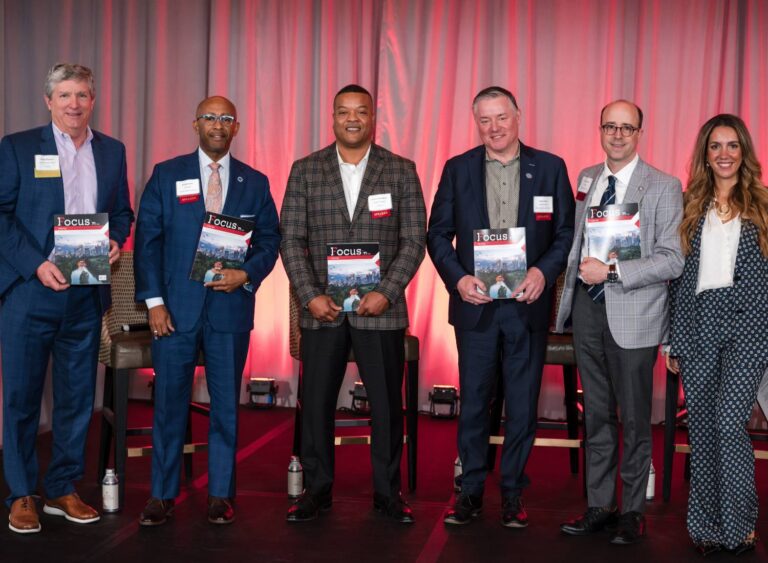







Patrick Jennings, Senior Vice President of Acquisitions, SJP Properties
In an interview with Invest:, Patrick Jennings, senior vice president of acquisitions for SJP Properties, shared several thoughts on the firm’s track record, the current environment, and outlook for the future.
What is your overview of SJP Properties’ presence in New Jersey?
SJP Properties was founded 40 years ago by Steve Pozycki. Steve remains the firm’s CEO and directs the company’s investment strategy and capital allocation decisions. With Steve’s leadership, the firm has developed more than 30+ million square feet in the state with a particular emphasis on build-to-suit office building projects and mid-to-high-rise residential buildings. Through several market highs and lows over the last 40 years, the company has maintained a reputation for excellence respected by numerous institutional partners and stakeholders involved in the dozens of transactions since the firm’s founding.
What recent changes have impacted SJP Properties’ acquisitions?
SJP Properties is primarily a ground-up development company focusing on large projects that require institutional debt and equity capital. With the sharp rise in interest rates over the last 24-30 months, many institutional investors have adopted a “risk-off” posture towards ground-up development. This has complicated the fundraising process, with only those development opportunities with ironclad underwriting metrics able to source the requisite debt and equity capital. More recent questions related to the strength of the domestic economy and rising tariff rates with major trading partners have injected even more uncertainty into the U.S. capital markets. Despite these market challenges, SJP Properties has continued to break ground on many recent headline projects due to our track record and financial stability.
How does SJP’s participation in the development of Nokia Bell Labs’ headquarters affect the region’s economic development?
We’ve thoroughly enjoyed working with DEVCO, Nokia Bell Labs, the NJEDA, and our financial partner to bring this exciting project from an initial concept to our recent groundbreaking and project completion in the fourth quarter of 2027.
Hundreds of construction jobs will be created during the development phase, and several hundred more will relocate to the building at the completion of construction. Nokia Bell Labs will conduct cutting-edge R&D in the fields of artificial intelligence, quantum computing, and drone research over the next several years (and decades) that will be incorporated into new products and services, which will have transformative effects locally, regionally, nationally, and internationally, and even on the moon. The New Brunswick location was critical to Nokia Bell Labs, given the human capital that can be sourced from the major universities within a few hours, with some of the finest engineering, math, and science PhD-level graduates in the world.
How have the recently approved Aspire tax credits for HELIX Phase II influenced your acquisition strategy?
The Aspire Tax Credits will be monetized by Nokia-Bell and used to fund a portion of the construction costs. The base building upgrades required for AI and quantum computing R&D exceed by an order of magnitude the costs associated with a traditional ground-up office building development of a similar size. The Aspire Credits are a financial tool to help offset some of these enhanced base building upgrades.
How does SJP Properties fit within the broader real estate landscape in New Jersey?
To Steve Pozycki’s credit, SJP Properties is the preeminent full-service development platform in the state and is also highly regarded in the broader Northeast and Southeast, where the firm is also quite active. The firm has had favorable economic results over multiple market cycles. Most development platforms go from “boom-to-bust,” but SJP Properties is widely touted for its ability to thrive both in good and bad times. We think our success is attributable, at least in part, to the firm’s meticulous attention to detail throughout the pre-development planning phase, along with the firm’s laser focus on controlling risk throughout all the phases of ground-up development. While it is impossible to see definitively around the next corner, we are always watchful for any changes in the competitive landscape and market conditions. Our financial partners are attracted to our conservative nature, which is foundational to our success over the last several decades. We currently have several exciting projects in the pre-development pipeline, so I think the best chapters for the firm have yet to be written.
How do high-profile leases influence your market positioning?
We typically enter into several large lease transactions every year, and each one of those tenants is often bringing hundreds of employees to a particular location, which has an enormous positive impact on the local economy. More to the point, the number of leases we execute each year, whether that be in conjunction with a purpose-built build-to-suit transaction or in an existing company-owned office building, the efficiency with which we design and build space on behalf of our end-users has a very high satisfaction rate. Our flexibility, professionalism, and determination to make each lease transaction a successful one underpin why we have such good working relationships with countless public and private corporate customers.
How do you adapt to the real estate industry’s macro trends?
We think it is important to be mindful of major macro headwinds and/or tailwinds, including fundamental shifts in these trends. You tend to find compelling opportunities at these inflection points. Here are just a few recent examples: 1) Covid disrupted the traditional 5-day in-office work week. Many tenants realized a lengthy daily commute from suburban locations in the NJ metropolitan area into Manhattan was no longer appealing. This fundamental shift in office building demand catalyzed our suburban build-to-suit office investment strategy over the last 36 months or so, with four successful transactions either completed or under construction. We have several more office build-to-suits in the pipeline with tenants seeking well-located suburban sites with mass transit connectivity; 2) We’ve aggressively pursued several industrial development projects in the Southeast given the strong population shifts into the region, affordable cost of living, light-touch regulatory environment, and the favorable job prospects there. We think this region will continue to be an attractive region to deploy capital into over the next three to five years; and 3) Over the last 18 months, we’ve pursued development approvals for 1,500 apartment units in Jersey City, New Jersey. Jersey City has promising potential since very little new rental housing is being built in New York City, which will continue to put upward pressure on rents in Jersey City. Prime Jersey City rental locations are 40%+ cheaper than existing New York City rental buildings, so many renters in their 20s and 30s will relocate to Jersey City as a well-located “value” alternative. These are just a few examples of the ways our firm leverages what we perceive to be sustained shifts in various macro trends.
What is your take on the increasing demand for adaptive reuse?
I think the adaptive reuse of functionally obsolete office buildings is a great way to add rental housing supply to the New York City housing stock. The conversion process is difficult and not without layout and design challenges, but the ability to deliver new housing at a materially cheaper price point through conversion (vs. much higher rents needed to support the cost of new construction) is a net-positive for New York City. The challenge is finding the right buildings with floor plates conducive to conversion. There are tens of millions of square feet of obsolete office buildings ripe for conversion, but not every office building is a conversion candidate, so it is very much a case-by-case analysis.
How have new technologies reshaped the real estate development market?
I think investment decisions have become much more data-driven, with AI and machine learning algorithms able to sift through vast amounts of information to determine underlying market trends and pricing strategies quickly and effectively. I do think seasoned investment professionals will always be needed to make the final judgment calls on what the data is saying and how future investment trends might unfold.
AI-related software and design tools are also able to offer exciting ways to explore nearly a limitless number of design iterations, so rental rates, construction costs, space functionality, and building design are analyzed in a holistic fashion. This helps marry the financial side of a transaction with the design side, so the product that is delivered fits with current market demand.
How have various partnerships enhanced SJP’s growth in this competitive landscape?
Having terrific long-term relationships with our capital partners and lenders gives us the unique advantage of being able to move quickly when compelling opportunities arise. Our partners and lenders have a high degree of confidence in our thorough data-driven pre-development planning process, which we are known for. Our pre-development process helps us isolate, quantify, and address significant risk factors prior to breaking ground on a project where capital commitments start to ramp up very quickly. We want to know about any problems before we own them.
We also pride ourselves on establishing an arms-length but collaborative rapport with city and county government agencies throughout the state. New Jersey has 564 municipalities, each with its own land-use approval process, so knowing the planners in the various municipalities helps us quickly verify that a proposed development concept is in line with a township’s land-use master plan. This streamlines the approval process as opposed to pursuing a development plan that runs counter to a township’s master plan, which will be a very difficult approval to secure.
What are SJP’s top priorities for the next few years?
We’d like to continue doing what has made us successful under Steve Pozycki’s leadership over the last 40 years, which is to identify attractive risk-adjustment investment and development opportunities in high-growth corridors throughout the state. We want these investments to produce attractive investment returns for our financial partners and add to the desirability and commercial appeal of the townships we invest in.
It is also important that the firm continue to attract and retain the best development professionals and support staff in the industry so we can continue our impressive growth trajectory well into the future. We are well-positioned to thrive not just for the next couple of years but for the next several decades.