






Regional Review: Greater Fort Lauderdale scales infrastructure to new heights
 Regional Review is a year-end series from caa that looks at key developments in a focused industry throughout the year and sets the stage for what’s to come in the near term.
December 2025 — Greater Fort Lauderdale’s gateway economy is entering a new phase. Port Everglades, Fort Lauderdale-Hollywood International Airport, and cruise tourism are scaling together, reshaping how the region moves people, goods, and capital across South Florida and global markets.
Join us at caa’s upcoming leadership summits! These premier events bring together hundreds of public and private sector leaders to discuss the challenges and opportunities for businesses and investors. Find the next summit in a city near you!
“What matters most is that all three sectors — energy, cargo, and cruise — broke records this year. We are moving more volume through the port than ever,” Joseph Morris, CEO and port director of the Port Everglades Authority, told Invest:.
Port Everglades closed the fiscal year with a set of numbers that underscored how central the region has become to Florida’s travel and trade flows. According to a December press release, the seaport reported a preliminary 4,773,873 cruise passenger movements in fiscal 2025, a 16% year-over-year increase, reinforcing its position as one of the world’s busiest cruise homeports. Additionally, the Port affirmed its status in the energy sector, ranking as the state’s No. 1 petroleum port, moving 131 million units and supplying fuel to 12 counties and five international airports.
Over the past year, international travel patterns affecting the region have shifted. As ships get larger and passenger volumes climb, the port has continued to advance capital planning, while regional aviation leaders have tracked uneven passenger trends at Fort Lauderdale–Hollywood International Airport (FLL). While the airport reported 35.2 million total passengers in 2024, monthly data through mid-2025 showed year-over-year declines in several early months. The trend points to more mixed demand at the airport.
At the same time, national policy and perception have begun to weigh more heavily on inbound travel. The U.S. Travel Association forecasted a 6.3% drop in inbound international visits in 2025, citing visa processing challenges, adding uncertainty to the international side of a market that sits at the intersection of the U.S., Latin America, and the Caribbean.
Scaling port operations
Port Everglades closed fiscal 2025 with continued growth across its core business lines, reflecting its role as a multi-use seaport rather than a single-purpose asset. According to Seastrade Cruise News, cruise activity remained the most visible driver, but cargo and energy operations continued to anchor the port’s economic function across the region.
That diversity matters for the regional economy because it links the port to both operational reliability and visitor volumes. Fuel distribution supports aviation activity, trucking, and industrial operations throughout South Florida, while cargo supports supply chains that extend beyond Broward County. According to Port Everglades’ 2025 economic report, the port accounts for nearly $28.1 billion in annual business activity and supports more than 204,000 jobs statewide. Together, those functions stabilize the broader tourism and logistics ecosystem despite demand fluctuation.
“While Port Everglades itself has 268 employees, the real job impact comes from our users — terminal operators, service providers, cargo lines, and cruise lines. With our level of diversity across energy, containers, and cruise, there are dozens, if not hundreds, of career paths connected to what we do,” said Morris. “We’re actively strengthening workforce pipelines through partnerships with the county and its workforce ecosystem.”
Capacity expansion has remained a central focus as shipping patterns evolve. The Southport Turning Notch Extension expanded the port’s turning basin and added new cargo berths, allowing Port Everglades to accommodate larger vessels and improve berth efficiency. The project has already been integrated into the port’s active cargo footprint, supporting both existing tenants and new leasing activity.
Alongside completed expansion projects, the port is advancing foundational infrastructure work. One of the most significant efforts underway is the bulkhead replacement program, a multi-year initiative to modernize aging berth walls so they can support heavier loads, deeper channels, and newer vessel classes. The project is positioned as essential to preserving long-term operational safety and flexibility, particularly as cruise ships and cargo vessels continue to increase in size.
According to a November press release from the Port, the Broward County Commission approved an updated Master/Vision Plan outlining future capital priorities and land-use strategies at the port. The plan identifies billions of dollars in potential investment over the coming decades, with an emphasis on operational efficiency, terminal modernization, and climate adaptation.
Airport capacity and modernization
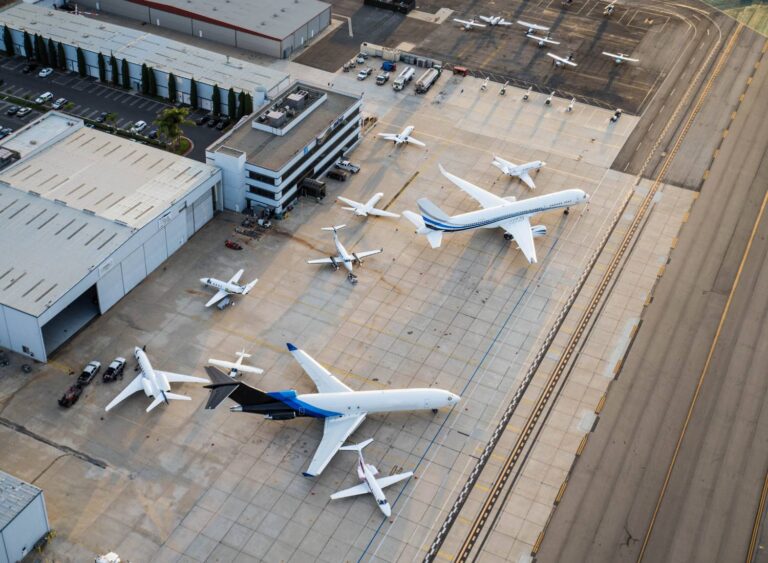
On the aviation side, FLL serves as a core access point for the region’s economy, supporting cruise tourism, business travel, and leisure travel. Its proximity to Port Everglades has made airport operations closely tied to cruise schedules, visitor flows, and regional mobility needs.
Capital investment has increasingly taken priority as officials work to align capacity with long-term demand rather than short-term traffic swings. In 2025, airport planning has remained focused on terminal functionality, passenger circulation, and operational efficiency. One of the most visible projects underway is the construction of Terminal 5, a new domestic terminal designed to expand gate capacity and improve passenger processing. According to Luxury Living Fort Lauderdale, the project is scheduled for completion in mid-2026.
Additional investments are targeting connectivity within the airport itself. FLL is advancing a terminal connectors project that will create post-security walkways between Terminals 1 and 2 and between Terminals 2 and 3, allowing passengers to move between secured areas without clearing security again. The $228.6 million investment is expected to improve internal connectivity and passenger experience as part of a broader modernization effort, according to Construction Briefing.
As these projects move forward, the region’s ability to align maritime, aviation, and ground connectivity will play a growing role in how it competes for visitors, investment, and trade.
Want more? Read the Invest: Greater Fort Lauderdale report.
Subscribe to Our Newsletters