



Regional Review: Orlando redefining growth and opportunities in real estate
 Regional Review is a year-end series from caa that looks at key developments in a focused industry throughout the year and sets the stage for what’s to come in the near term.
December 2025 — Orlando entered 2025 as one of the nation’s most dynamic large metros, leading the country in job growth, population gains and nominal GDP expansion. Together, these indicators underscore Central Florida’s strong economic fundamentals and a resilient real estate market.
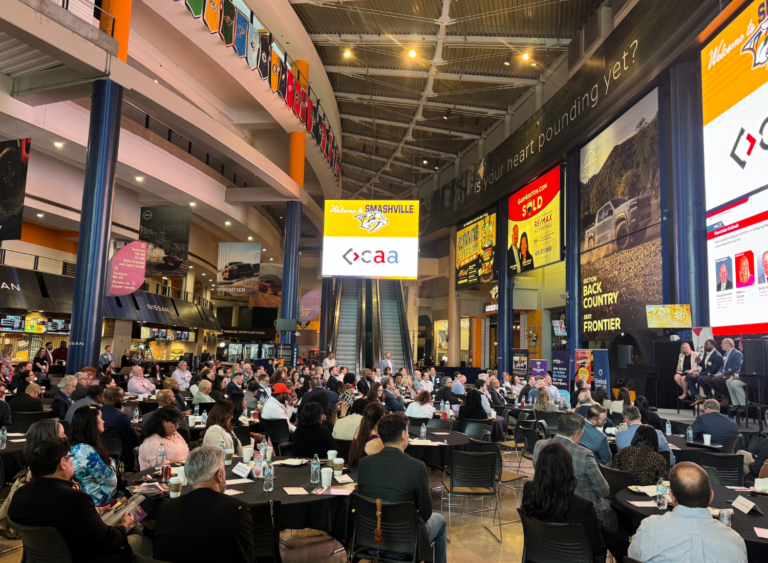
Join us at caa’s upcoming leadership summits! These premier events bring together hundreds of public and private sector leaders to discuss the challenges and opportunities for businesses and investors. Find the next summit in a city near you!
“Our tourism-driven base — anchored by Disney, Universal, the space industry and other theme parks — tends to insulate us from some of the headwinds other U.S. markets face. Because of that, housing activity has been flat to positive rather than negative.” said Cliff Long, Chief Executive Officer, Orlando Regional REALTOR® Association, in a recent interview with Invest:.
Orlando ranked No. 1 in job growth, population growth and nominal GDP growth among the country’s 30 most populous regions. The region posted 2.5% year-over-year employment growth, led by healthcare, tourism and a growing tech and financial services base anchored by companies such as ThreatLocker, BNY Mellon and Charles Schwab.
Population growth remains equally decisive. The Orlando metro recorded a 2.7% annual increase — the fastest among major U.S. metros. The latest official Census estimate places the region at 2.94 million residents, supporting labor force expansion and contributing to an average unemployment rate under 4% in 2025. Statewide population is projected to exceed 24 million by 2027, pushing Florida’s GDP toward $2 trillion by 2028. Industries such as construction, education and hospitality remain key beneficiaries of this demographic momentum.
Employment fundamentals continue to outperform peers. Orlando posted the highest five-year job growth rate among the nation’s 50 largest apartment markets at 24.8%, as cited by RealPage Analytics. Leisure and hospitality led with a 51.4% increase over five years, followed by strong gains across professional and business services and education and health services.
Housing market rebalancing
According to the Orlando Regional REALTOR® Association, the residential sector is trending toward balance. Interest rates dipped to 6% — the lowest in more than a year — helping lift October 2025 home sales 4% month over month to 2,335 transactions. Inventory held steady at 13,047 homes, while new listings rose 9% from September, signaling renewed seller confidence.
“I’m very optimistic about where we’re headed. Interest rates have already been cut twice this year, and as mortgage rates trend down, more buyers will come off the sidelines,” said Long.
The median home price edged up to $380,000, while the average time on market increased to 77 days. Single-family homes continue to dominate activity, while condos and townhomes remain stable at median prices of $185,000 and $320,000, respectively.
Rising mortgage rates have contributed to a national “renters’ nation,” and Orlando reflects that trend with occupancy near 95% and average rents around $2,000. More than 70,000 new residents each year and a tourism base exceeding 74 million visitors continue to support both long-term leases and short-term rental activity. Growth hubs such as Lake Nona and the Disney corridor remain among the most competitive rental submarkets.
Regional infrastructure commitments are also shaping long-term expectations. Nearly $5 billion in upgrades — including new expressways and expanded connector roads — are underway across Horizon West, Sunbridge, Poinciana and surrounding areas. Osceola County’s development surge signals sustained demand across the south Orlando corridor.
CRE shifts
Largo Capital’s 2025 Orlando Outlook reports that retail vacancy remains tight at 3.7%, with asking rents at $29.77 per square foot, up 2.4% year over year. Nearly 795,000 square feet of new supply entered the market over the past year.
Multifamily performance reflects a temporary adjustment due to new supply. Rents declined 2% year over year, while occupancy dipped to 94.4% — the lowest in a decade. Development remains strong, however, with projects such as Ellison Nona and Standard441 adding nearly 700 multifamily units combined.
Orlando continues to lead as the top U.S. hotel market, with average daily rates at $230.05 and revenue per available room (RevPAR) at $167.47. New resort inventory — including hotels tied to Universal’s Epic Universe — continues to bolster the pipeline and keep investor interest high. Luxury and upper-upscale offerings such as the Stella Nova, Terra Luna and Helios Grand hotels further expand the region’s hospitality appeal.
Avison Young’s 3Q25 report identifies Orlando as one of Florida’s strongest industrial markets. Net absorption surged to 1.5 million square feet in Q3, and vacancy tightened to 7.4%, down 40 basis points from Q2. Development in 2025 shifted toward mid-sized facilities, ranging from 50,000 to 199,000 square feet, to meet rising demand for infill logistics and distribution.
Orlando’s role as Florida’s population and job-growth leader — with statewide gains of 1.8% and 2.3%, respectively — continues to strengthen warehousing and distribution interest across the region.
Key developments
Orlando’s 2025 development landscape was defined by large-scale projects reshaping mobility, tourism and community growth. Brightline advanced key environmental and right-of-way work for its planned Orlando–Tampa rail extension, expected to unlock new transit-oriented development. And Universal’s Epic Universe reached final construction milestones, adding more than 2,000 rooms.
Lake Nona continued its rapid expansion with a new entertainment district and ongoing growth across Medical City, including progress at the UCF Cancer Center, VA facilities and Nemours Children’s Health. Development sentiment in 2025 reflected long-term confidence in hospitality and retail driven by robust tourism, while multifamily projects moved more cautiously due to new supply and cooling rent growth. Industrial and healthcare-related real estate remained top targets for investors.
Looking ahead
Despite strong fundamentals, several challenges shaped Orlando’s real estate market in 2025. Rising construction costs continue to pressure affordability and development feasibility. Population growth and rapid household formation complicate long-term demand forecasts, while higher borrowing costs, stricter underwriting standards and rising insurance premiums create a more selective capital environment.
Simultaneously, the expansion of AI-enabled industries and increased interest in power-intensive data centers are introducing new zoning and infrastructure considerations. Developers and lenders face the need for greater operational discipline and strategic decision-making heading into 2026.
Want more? Read the Invest: Greater Orlando report.
Subscribe to Our Newsletters