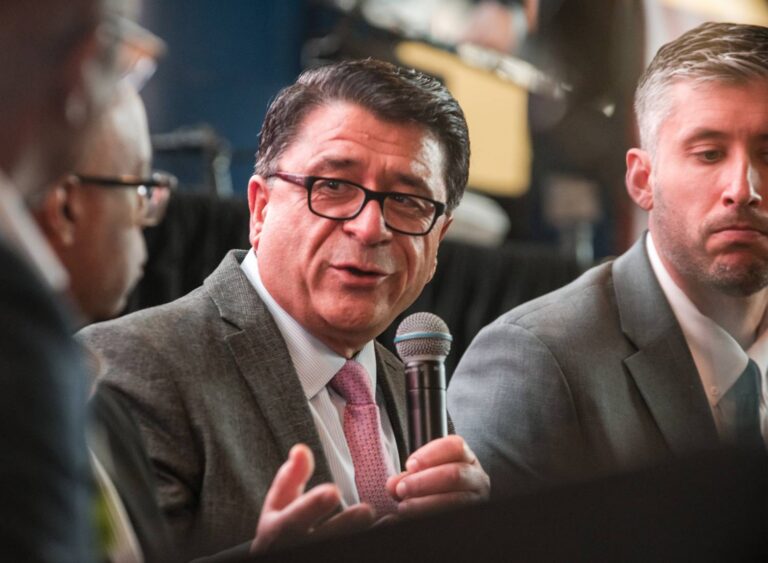







Robert Singer, Financial Advisor & Regional Leader, Edward Jones
 In an interview with Invest:, Robert Singer, financial advisor and regional leader at Edward Jones, discussed the critical need for personalized retirement plans and explained why the firm continues to invest billions in technological innovation. “We do not believe technology will ever replace a financial advisor. A real person has emotions and can feel emotions to help build a better plan. However, good technology can certainly assist a financial advisor to be more effective,” Singer said.
How do Edward Jones’ new enhanced workplace retirement plans benefit both small and large businesses?
I am excited about our workplace services and the enhancements that we have made recently. We know that more than half of Americans would be more likely to participate in their workplace retirement plan if they had advice from a financial advisor. We know that for nearly one-third of Americans, their retirement plan at work will also be the first investment experience they have. Because of that, we have made it easier for plan sponsors to set up a plan and to manage an existing plan. We are one of the few firms in the United States that has a product review team that vets retirement solutions so that we are bringing a customized retirement plan option to them. For example, on 401k plans alone, there are more than 50 major providers of 401k plans. We have been able to vet that down to about 7 that we can build a customized solution with for our clients. In my 22-year career at Edward Jones, one thing that I hear frequently, and I know from my colleagues at Edward Jones that they hear from the vendor-held workplace retirement plans we serve, is that because of our process, we are able to give them back time so they can focus on their business. That is what a good financial adviser does. It gives our clients back time as well as reduces liability by creating a customized education process and vetting strategic partners for that tailored experience.
How do you define the role of a financial advisor in today’s market? What skills and traits are most essential to succeed in the long term with clients?
We are noticing that the needs of our clients are increasing, and we are also seeing some trends where the ability to get that kind of service is decreasing. We have some statistics that show that maybe 55,000 financial advisors will retire in the next five years, and that is going to create a shortfall, especially with business owners who have more complex needs. These needs include things around profit-sharing, non-qualified deferred compensation plans, lending, estate planning, and then very importantly, business succession. We have also invested a lot into our high-net-worth teams at Edward Jones so that we can maintain that customized experience for them.
How does Edward Jones approach educating clients and the broader community to improve financial literacy and help people make more informed decisions?
It is all about having a process. A lot of my plan sponsors do not know the moving parts of their retirement plan, nor do they know the best way to put an education platform together. What a good financial advisor does is take care of this for the client. I know a lot of my clients say they need to turn this over to me so they can focus on their business. A really good financial adviser will set up a process and create a customized education program and also vet those strategic partners for that tailored experience. That way, the client knows exactly during the course of the year what their time frame looks like for those employee education meetings and their annual fiduciary meeting. They have a new digital platform for education for employees who cannot make in-person meetings. We are providing the best possible experience to not only the business owner but to those participants so we can educate them to have better outcomes. What we know is when participants have better outcomes at the company they work for, they are able to get to retirement a little bit sooner, which then also saves the company money on benefits programs.
When working with clients, how do you assess their risk tolerance, and how does this influence the way you construct their portfolios to balance growth and protection?
When we do financial planning at Edward Jones, it is a process. The first step is understanding where our clients are today and getting an understanding of how they feel about different trends. We also do a risk assessment with those clients. We spend a lot of time understanding what their goals are, what the importance of those goals is, and then very importantly, what the time frame on those goals is. Once we do that, then we can find the appropriate investment strategy that meets all of those goals. It is not just trying to find an investment and pitching an investment to somebody. It is following that process to build that customized experience with them.
Given the unpredictability of financial markets, how do you adjust asset allocation strategies for clients who are concerned about market volatility or economic downturns?
While nobody truly knows what the markets and the world economy will bring in the short term, the longer term picture does start to become clearer. Because of that, if we build a financial plan around our clients’ goals and the time frames we establish, we will continue to have success. We believe there is a huge opportunity in this approach. We have established significant, long-term goals here at Edward Jones to guide our efforts. Our focus is on substantially growing the assets we advise and, more importantly, expanding the number of households we help to improve their financial wellness.
How has Edward Jones leveraged technological advancements to improve client service while maintaining the personal touch that is central to your model?
We have had a very good year. We are close to achieving $2.5 trillion in assets under management for our clients. One of the primary ways we accomplish this is not just through our excellent service model, but through our investment of billions of dollars in technological advancements over the last few years. These advancements include financial planning tools, operating systems, platforms like Salesforce, and on the workplace side, investments in Aboon and the digital education platform Addition Wealth.
We do not believe technology will ever replace a financial advisor. A real person has emotions and can feel emotions to help build a better plan. However, good technology can certainly assist a financial advisor to be more effective. That is precisely why we are investing billions of dollars in technology upgrades to always maintain best-in-class resources within our industry.
Edward Jones is known for its client-first philosophy. How do you ensure that your clients’ best interests are always prioritized?
We learned a long time ago that access to financial investments and financial planning is paramount. Edward Jones has been in business for 103 years. We really took the concept of providing access outside of major cities, though we do have offices in metropolitan areas as well. We discovered that clients want access within their own hometowns. Much like the small and medium-sized businesses on Main Street that we work with, Edward Jones has been a Main Street firm since our inception. This provides our clients with easier access to work with us, and we feel very good about that foundational principle.
How does Edward Jones ensure that financial advisors from diverse backgrounds have the resources and support they need to succeed in this field?
There is a very large percentage of assets that will transfer hands in the next 25 years. According to Cerulli, more than $120 trillion will transfer, and a majority of those assets will transfer to female and diverse clients. In anticipation of this, we have made significant investments at Edward Jones to increase our number of female and diverse financial advisors. What we have found is that people often prefer to work with someone they can relate to, and these initiatives give us the opportunity to facilitate those connections.