







Spotlight On: Amy Mansue, President & CEO, Inspira Health
 February 2025 — In an interview with Invest:, Amy Mansue, president & CEO of Inspira Health, discussed the organization’s significant milestones, its efforts to adapt to evolving healthcare demands, strategies for workforce development and diversity, and how technology and innovation are advancing health outcomes in the region.
What have been the most significant milestones or achievements for Inspira Health?
This year has been pivotal for us. We’ve been building towards this moment since I arrived four years ago, and now many of our plans have come to fruition. For example, we opened the Woodbury Satellite Emergency Department, a key requirement after relocating our hospital from Woodbury to Mullica Hill.
Additionally, we launched the Inspira Health Center in Deptford, an 80,000-square-foot multi-specialty facility offering primary care, OB/GYN, cardiology, cardiac rehab, imaging, orthopedics and more. It’s our largest ambulatory footprint outside of a hospital, and the response has been overwhelmingly positive. We also broke ground on a $240 million expansion of our Mullica Hill hospital. Remarkably, we opened this hospital in December 2019, just before COVID, and already we’ve outgrown it. This expansion will accommodate increasing demand and marks a major milestone. Overall, it’s been a busy and rewarding year, and we’re excited to begin the next three-year phase of our strategic plan.
How have these efforts adapted to the growing healthcare demands in New Jersey?
The location has played a critical role. By moving our facility from Woodbury, a landlocked area, to Mullica Hill near Rowan University, we’ve tapped into what we call the “eds and meds” corridor. This proximity to education and healthcare has expanded access to services and opportunities for collaboration. The new hospital also allowed us to create additional residency slots.
As we enter the final year of a five-year plan, we’ll have over 300 slots across the system. Importantly, we’ve prioritized recruiting medical students from South Jersey, working with Rowan and universities in Philadelphia. If they grow up, train, and work here, they’re more likely to stay.
This approach has paid off, as our residents bring fresh perspectives and engage actively with senior doctors, creating a dynamic learning environment.
Our growth isn’t just in facilities — when I joined in August 2020, we had about 6,000 employees; now, we’re nearing 7,800. This workforce and footprint expansion underscores our commitment to adapting to New Jersey’s evolving healthcare needs.
How do these collaborations impact the quality of your services and the community’s well-being?
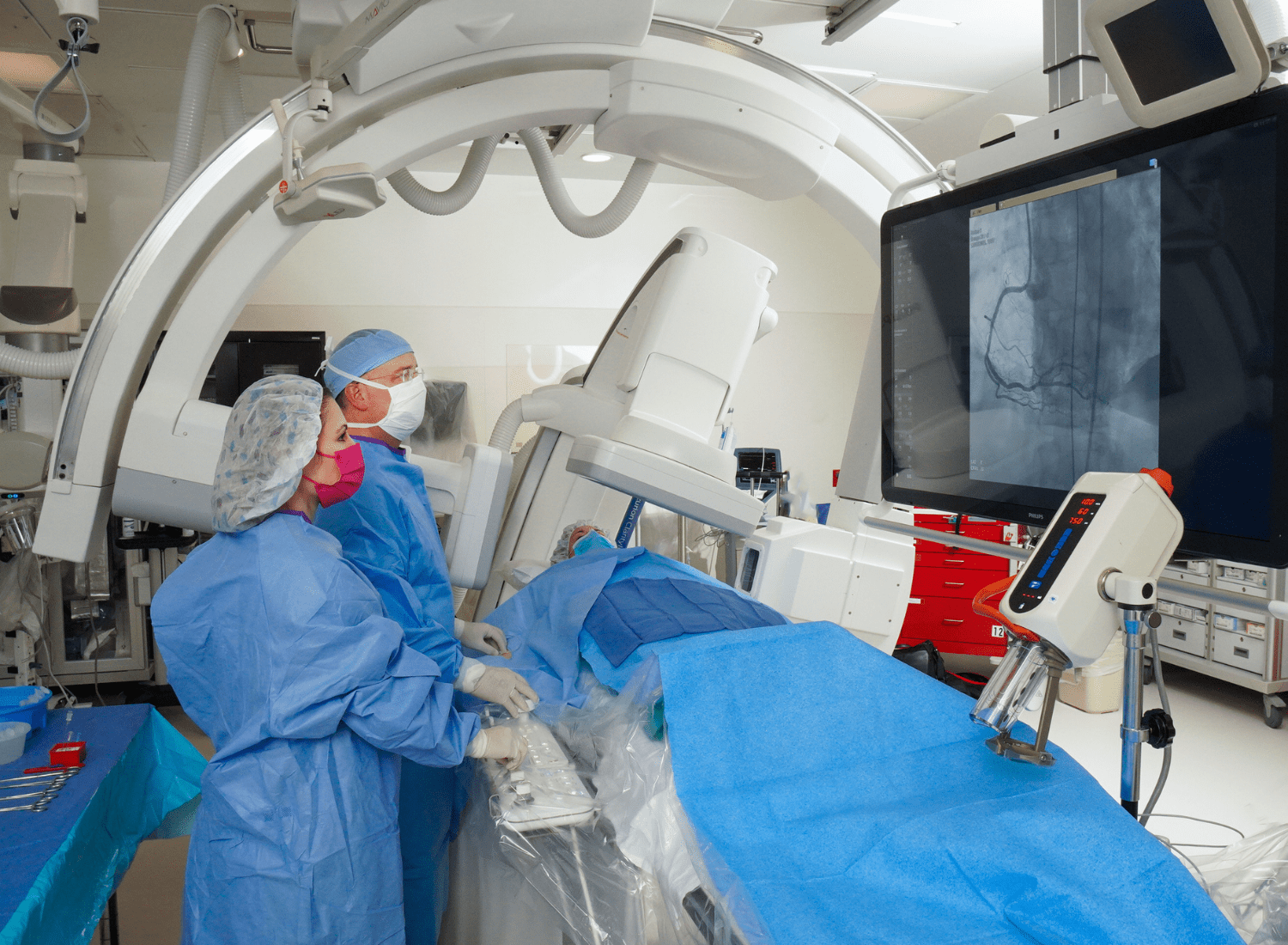
We’ve built meaningful partnerships to bring specialized care closer to home. For example, our long-standing relationship with Cooper University Health Care began with cardiology services and has since expanded to neuroscience. Our board is committed to keeping services local whenever possible.
Partnerships with Cooper have allowed us to attract cardiologists, neurologists and neurosurgeons who otherwise might not have joined a community hospital like ours. This ensures about 90% of services remain accessible locally, with only the most complex cases requiring travel. We’ve also expanded outpatient imaging services through AMI and improved pathology services through a national collaboration. These efforts enhance both care quality and speed, ensuring timely and specialized diagnoses. By focusing on what we do best and forming strategic partnerships where needed, we’re improving outcomes for our patients and strengthening our community.
Considering the current economic landscape, what are the key challenges in healthcare delivery today?
We’ve maintained a strong supply chain, avoiding issues like the recent IV fluid shortage. Adopting continuous improvement strategies has helped us stay agile and adaptable. As a relatively small organization in a billion-dollar space, we’ve leaned into technology to remain competitive. For instance, we use KateAI to provide real-time guidance for emergency nurses for triage and sepsis detection. This significantly boosts diagnostic accuracy and improves patient outcomes. Our staff has embraced AI as a second layer of assurance, enhancing, not replacing, human expertise, especially during workforce shortages. We’re also transitioning to Epic, a comprehensive medical record system to improve care coordination and adaptability.
What strategies are you using to navigate staffing challenges and recruit and retain employees?
In Cumberland County, we face a steep high school dropout rate – the highest in the state. To address this, we’ve partnered with Rowan College of South Jersey to offer GED support and higher education to employees with a 50% tuition discount, tuition reimbursement and other scholarships. Over two years, more than 700 people have benefited from this program, helping us recruit talent while supporting the community. We’re committed to growing our own talent.
One example is how we addressed the shortage of respiratory therapists. Three years ago, we noticed most of our team was in their mid-50s, with no pipeline of new talent. We partnered with our local community college to create South Jersey’s first respiratory therapy training program, which now has 30 slots, benefiting both Inspira and the region. Because we’re relatively small, we can take a personal approach to career growth. We identify promising employees — whether a transporter, an LPN, or someone in another role — and invest in their futures. It’s central to our vision for both Inspira and the community.
What emerging trends in healthcare do you see influencing Inspira Health’s future decisions?
Technology is driving change. I recently spoke with someone at Rutgers who mentioned that while AI is transforming healthcare now, quantum computing could be the next big thing.
At Inspira, we’re focused on connecting our community to these advancements.
For example, our head of research started as an LPN and is now a Ph.D. nurse. She’s passionate about bringing clinical trials to underserved communities and has partnered with pharmaceutical companies to ensure our diverse patients can access trials that meet their needs.
It’s about identifying patient needs and finding innovative solutions — through clinical trials, advanced technology, or partnerships. Encouraging like-minded individuals to reimagine their futures is also a key part of our approach.
How are you leveraging technology and innovation to advance health outcomes?
One of the tools we’ve adopted is the AngelEye Health camera system in our NICU. Babies in the NICU can spend six to eight weeks there, and being away during that time can be stressful for parents. AngelEye allows families to check on their baby in real-time through a secure video feed.
One mother shared how comforting it was to watch her baby while pumping breastmilk at night. Her mother, who lived in North Carolina, was also able to connect with her grandson using the system. Nurses can provide updates, reassuring parents. Cameras automatically shut off during treatments or for privacy, but families can otherwise watch their baby anytime. This technology has been a game changer for working moms, giving them peace of mind.
What steps are you taking to ensure diversity, equity and inclusion within your workforce and patient care practices?
We are committed to meeting our mission to provide a safe and compassionate experience that improves the health and well-being of everyone in our community. We serve a diverse community, particularly in Cumberland and Salem counties, where about 30% of the population are people of color. Our workforce reflects this diversity, and we are working to increase representation among managers and leaders to better mirror the community.
We also engage with the community through a Patient and Family Advisory Council, which helps us address patient complaints, suggest improvements and make follow-up calls to patients discharged from our hospitals. This enables real-time service recovery and continuous improvement based on feedback.
We prioritize local hiring, which naturally creates a diverse workforce. Additionally, we’ve been heavily involved in improving maternal health, aligning with the First Lady of NJ’s priorities. We work with federally qualified health centers to ensure expectant mothers receive prenatal care and necessary services. For mothers with substance use disorders, we focus on getting them into treatment while caring for their babies. For newborns impacted by substance use, we use an “eat, sleep, console” approach instead of methadone, gently weaning them off substances. This allows the baby to go home clean and supports the mother in recovery.
What is your outlook for the healthcare sector over the next few years, and what are Inspira Health’s top priorities?
We’re in a part of the state with one of the fastest-growing populations over 65, which means more patients with chronic illnesses. Advances in medical technology help people live longer with conditions like cancer and heart disease, but we must focus on wellness and preventive care. Our priorities include ensuring staff have the skills to manage increasingly complex cases. Patients today are far sicker than a decade ago, so education and ongoing skill development for nurses and doctors are critical.
We’re also committed to meeting patients where they are. Not all patients are comfortable with digital tools like patient portals, so we’re focusing on both digital solutions for tech-savvy patients and hands-on support for others. For example, we have teams ensuring Medicare patients complete annual wellness visits and follow-ups. We’ve also implemented automated systems to help bridge care gaps. If a patient visits the emergency department and needs follow-up care, we can automatically send reminders to encourage them to see their doctor.
For more information, please visit: