Spotlight On: Brian Neff, CEO, Sintavia
May 2025 — In an interview with Invest:, Brian Neff, CEO of Sintavia, discussed the company’s role in aerospace and defense, its recent expansion, and the advantages of operating in Hollywood. He also shared insights on industry challenges, workforce development, and the impact of federal budget decisions on long-term growth.
How would you describe Sintavia’s role in the aerospace and defense industry?
Sintavia is a digital manufacturer of aerospace and defense components, primarily for flight, launch, and sea vessels. Our components are digitally designed and additively manufactured, also known as 3D printing, at our facility in Hollywood, Florida. We do not have operations outside of Hollywood.
We collaborate with large aerospace and defense OEMs and lead systems integrators to address propulsion and thermodynamic challenges. Our work involves designing and producing heat exchangers, pumps, valves, combustors, inlets, and other highly complex mechanical systems for aircraft, launch vehicles, and submarines.
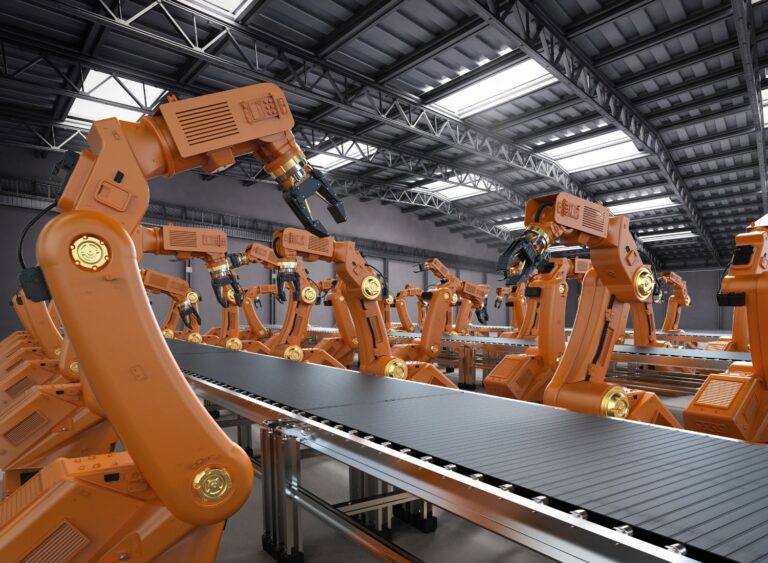
“Digital manufacturing” means using additive manufacturing technology to produce intricate, high-performance components. For example, we manufacture parts that manage heat within an engine, impellers used in nuclear submarines to cool steam from the primary reactor, and combustors that ignite propulsion in rockets and missiles.
Sintavia was founded in 2015, and we opened our Hollywood facility in 2019. Since then, we’ve been growing steadily. We currently have about 100 employees, with roughly half being engineers. Last year, our company grew by about 50%, and we expect similar growth this year. It’s an exciting time for us.
How does Sintavia’s recent expansion align with long-term goals?
Last year was a major investment year for us. We spent nearly $20 million on new equipment and expanded our facilities across the street. This expansion was a strategic move — we front-loaded our investment, so we won’t need to make significant capital expenditures for the next few years.
With the additional capacity, we can scale our revenue nearly fourfold compared to last year. The investment included acquiring the machines necessary to meet our future revenue goals, as well as increasing our floor space by about 50%.
The new facility, located right across the street from our main site, features high ceilings that accommodate large industrial metal printers. This additional space allows us to operate at a much greater scale, positioning us well for long-term growth.
How does Hollywood’s business environment support Sintavia’s growth?
Hollywood has been a great place to do business. South Florida is in high demand as a place to live and work, and the local business environment has been very supportive.
I previously founded a jet engine repair company in nearby Fort Lauderdale, and what was true then is still true now — it’s a business-friendly region with responsive leadership. Mayor Josh Levy, in particular, has been committed to economic growth and has worked closely with companies like ours to foster expansion.
South Florida’s population has surged, and traffic is noticeably heavier than when I moved here 15 or 16 years ago. Yet, despite rapid growth, the city remains functional and continues to support businesses effectively.
Geographically, Hollywood is ideal — centrally positioned between Miami and Palm Beach, with easy access to Port St. Lucie and other northern areas. The combination of location and strong leadership has been a significant advantage.
I’ve been surprised by how accessible political leaders are here. My experience with local, state, and federal officials has been overwhelmingly positive, everyone genuinely wants the region to succeed.
As challenging as running a business can be, it’s reassuring to have a strong foundation in Hollywood. Mayor Levy, in particular, is deeply invested in the community; he even drives around personally to check on development projects. That kind of leadership makes a real difference.
What strategies does Sintavia have in place to navigate potential headwinds?
Our additive manufacturing process, called powder bed fusion, replaces traditional casting, where molten metal is poured into molds. Casting has existed for thousands of years. We even named historical ages after it, like the Bronze and Iron Ages. In contrast, our technology is less than 20 years old, creating a key challenge: education.
Many aerospace and defense decision-makers are still unfamiliar with additive manufacturing or skeptical about its durability. If they don’t fully understand the technology, they may hesitate to adopt it.
To address this, we invest heavily in education. We operate on-site labs that provide customers with materials data, durability testing, and insights into the raw metal powders we use. Supplying reliable technical data helps build confidence in our technology. Otherwise, there’s a common misconception that 3D printing is just for small plastic prototypes rather than high-performance metal components.
What are some of the biggest challenges in scaling your operations, and how are you addressing them?
The supply chain remains a challenge, but for us, it’s manageable. Since we work primarily on defense programs, which tend to be steady and long-term, we can plan our material needs.
The bigger challenge is talent acquisition. Additive manufacturing is a relatively new field, so there aren’t many experienced professionals available locally. When we find qualified candidates, we often relocate them to South Florida. We do hire locally as well, but those employees tend to be recent graduates who require additional training.
Fortunately, Sintavia has a strong industry reputation, which helps us attract top talent. Plus, South Florida is an appealing place to live, making it easier to convince skilled professionals to relocate. Unlike some of the colder, more remote manufacturing hubs, we’re in a vibrant, desirable region, which has been a major draw for recruitment.
How could changes in the federal budget impact Sintavia’s operations?
This is the big question everyone is asking. The Senate and House have competing appropriations bills, and we have programs in both. At this point, we just have to be patient. The projects facing postponement or reevaluation tend to be outside of defense and, more specifically, outside the realm of small business suppliers like us. Everyone understands the need to keep our sector strong.
Our programs are all new and high-priority. For example, modernizing and expanding the U.S. nuclear submarine fleet is likely the Department of Defense’s top initiative, arguably even more critical than drone development and defense systems. We’re also involved in cutting-edge missile technology, which remains in high demand.
While we’re monitoring the situation, I’m not overly concerned. The appropriations bills are largely complete — it’s just a matter of reconciling the House and Senate versions. A vote almost happened in December, so it’s frustrating that it hasn’t moved forward yet. However, we expect a resolution by March when the next deadline approaches.
What is your outlook for Sintavia’s operations in Hollywood over the next five years?
We’re going to grow, both as a company and within Hollywood. Our expansion across the street was a strategic move. Right now, we’re one of only three tenants in that facility, but we brought in enough power to support additional growth. Our equipment, whether it’s industrial printers, capital machinery, or high-powered computing, requires significant electrical capacity, so we planned accordingly.
If we choose to expand our leasehold in that building, we won’t need to bring in more power, which makes future expansion much easier. We like being in Hollywood, and our team is deeply rooted here. I anticipate another major expansion around 2027, based on our current growth trajectory. This year and next year are looking strong, and by 2027, we’ll likely need to add more people and capacity.
For more information, visit: