






Spotlight On: Craig Richard, President & CEO, Tampa Bay Economic Development Council
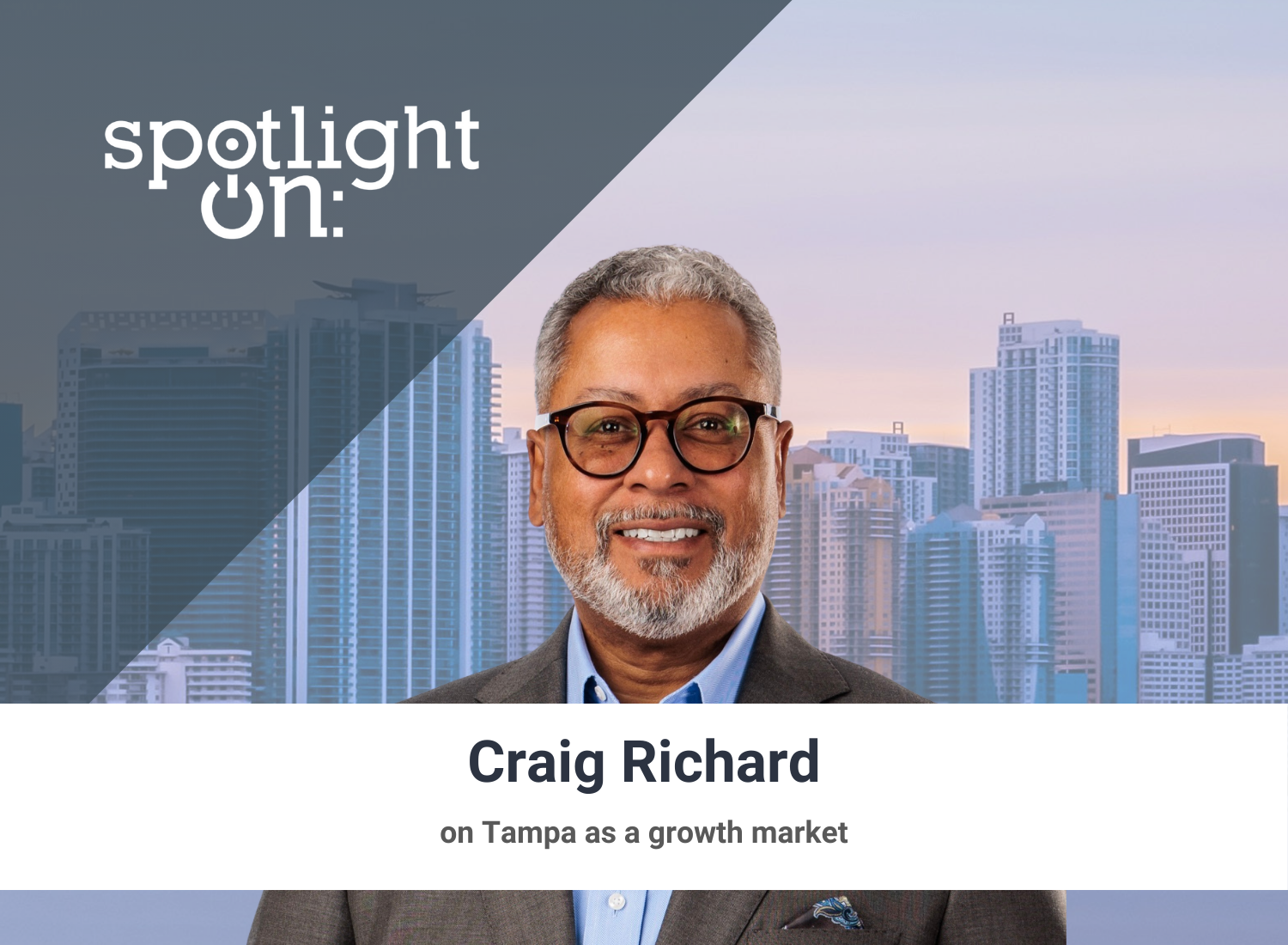 December 2025 — In an interview with Invest:, Craig Richard, president and CEO of the Tampa Bay Economic Development Council, discussed how Tampa Bay is bucking national headwinds with strong job growth, major corporate commitments, and a clear strategy around innovation and resilience. Richard also emphasized that Tampa’s challenges are growth challenges — affordability, skills gaps, and infrastructure — rather than those of decline, and that the EDC’s mandate is execution. “This is one of the most diverse areas in the country, and making sure all of our citizens and communities have access to opportunity is a key priority,” he said.
Join us at caa’s upcoming leadership summits! These premier events bring together hundreds of public and private sector leaders to discuss the challenges and opportunities for businesses and investors. Find the next summit in a city near you!
What changes over the past year have had the biggest impact on the EDC and the region’s momentum?
In spite of all the national uncertainty, we’ve had a really good year. We saw more than 29 companies announce either relocations or expansions in the Tampa area. That level of activity has generated a tremendous amount of interest from the private sector and reinforced the narrative that Tampa is a growth market. We had some significant announcements, like GEICO committing to employ about 1,000 people in our market and leasing roughly 190,000 square feet of office space in Westshore. That’s a major lease in today’s national office environment.
On the industrial side, companies like OrderlyMeds, a pharmaceutical manufacturer, leased about 50,000 square feet and are hiring around 100 new jobs here. NXTPoint Logistics announced a 193,000-square-foot, state-of-the-art logistics center in the county. Taken together, those projects speak to the growth and momentum we are seeing. Tampa is an outlier in the national economy. We are one of the few metros with single-digit office vacancy in downtown, and our job growth and GDP are still moving in the right direction. We’re bucking a lot of the national macro trends.
How will the Future Ready Strategic Action Plan and your catalyst initiatives translate into near-term impact?
The whole idea behind our catalyst initiatives is to identify trends where Tampa can truly compete and where we have a clear competitive advantage. AI, digital infrastructure, and other advanced technologies are great examples. When you look at what’s happening locally, we are well positioned. The University of South Florida (USF), for example, recently opened the Bellini College of Artificial Intelligence, Cybersecurity and Computing. When a nationally recognized university makes that kind of investment, it sends a strong signal that this region is serious about producing talent in the sectors that will matter for the long term.
At the same time, we already have companies here that are national leaders in these spaces. ReliaQuest, OPSWAT, Rapid7 — these firms have invested heavily in Tampa and built successful operations. When you combine an existing track record of successful companies with educational institutions that are investing in aligned programs, it gives us a powerful foothold. Our plan is to lean into those strengths, help grow and expand those sectors, and make sure the EDC is out front telling that story to prospective investors.
How are you working with education and training providers to strengthen local talent pipelines?
Our education partners are not on the sidelines — they are at the table with us. Many of the leaders of our higher education institutions serve on our board and sit shoulder to shoulder with us as we decide how to position our programs for the opportunities in the marketplace. That ranges from two-year degrees and certificates at Hillsborough College to technical and advanced degrees at USF and the University of Tampa.
We work with leaders like Dr. Ken Atwater, president of Hillsborough College, to make sure programs and credentials reflect what employers actually need, whether it’s upskilling existing workers through certificates or preparing students for cutting-edge roles in AI and cybersecurity. When you have that caliber of leadership hearing directly from the EDC about where the opportunities are, and you have them adjusting curricula and offerings accordingly, it makes us much more competitive as a region.
What broader trends are you watching, and how do you balance short-term responsiveness with long-term positioning?
It really comes back to preparing talent to take advantage of the opportunities that are emerging. Innovation is key. When you look across the educational programs in our region, they put us in a strong position to respond to new trends, especially in technology. At the same time, we’ve had to confront questions around resiliency, particularly after last year’s storms. There was quite a bit of concern and hand-wringing, and understandably so.
But our ability to bounce back quickly showed the market that Tampa is ready for these kinds of shocks. Downtown was up and running within days — in some cases within 24 hours — after those storms. We know how these events work, we know how to prepare, and we’re actively hardening our infrastructure to support that resilience going forward. We also have leadership in key areas with real experience in resiliency planning. All of that is part of the long-term positioning. We want investors to see Tampa as a safe, resilient place to put capital and as a place with the talent base to support their businesses over the long haul.
What are the most pressing challenges facing the region today?
In many ways, our challenges look like those of other major metros: affordability, skills gaps, and infrastructure — both transportation and digital. When you peel back the layers, these are growth challenges. I’ve told our leadership and anyone who will listen that I would rather have growth challenges than challenges related to decline.
That said, we cannot be complacent. We need to stay on top of these issues so they don’t become disadvantages. We have to make sure there is enough affordable housing for our workforce. We have to keep our educational institutions tightly linked with employers so we are teaching the skills that match the jobs that are actually available. And we have to invest in infrastructure, whether that’s transportation networks or the digital backbone needed to support innovation and technology, which are increasingly pervasive in every sector. Those are critical areas we have to be prepared for, and the good news is that both our elected and business leadership are very aware of them and actively engaged.
How does the EDC engage with communities, municipalities, and industry to drive inclusive, collaborative growth?
Our strategic plan is built around a three-pronged approach. The first piece is business development, which will always be at the core of what we do. The second is talent development. We know that without talent, we cannot be successful in business development. The third piece is placemaking — asking what our talent needs in order to be attracted to and stay in this community. A great sense of place is essential. That includes making sure areas that have not historically received the same level of investment as others get more attention.
We work to help direct investment into disadvantaged communities so they, too, can benefit from economic opportunities. Inclusiveness is one of Tampa’s hallmarks. This is one of the most diverse areas in the country, and making sure all of our citizens and communities have access to opportunity is a key priority. To do that, we engage with community organizations, municipalities, and industry partners to make sure growth is not just strong, but broad-based.
What are your top priorities for the EDC and the region over the next two to three years?
Our top priority is executing our strategic plan. That’s why we call it an action plan — it’s about doing, not just planning. This organization is known as a results-oriented organization. We get things done. As we execute that plan, it calls on us to lead in some areas and to support in others. We lead where it’s necessary, and we support other organizations that are working to position Tampa as a premier business destination.
Collaboration is essential. We work closely with educational institutions, regional partners, and elected officials, and we partner on the initiatives required to move our area forward. Leadership, collaboration, and results are really the hallmarks of the EDC. That’s how we intend to keep Tampa Bay competitive, investment-ready, and moving in the right direction in the years ahead.
Want more? Read the Invest: Tampa Bay report.