






Spotlight On: Dan Klapheke, Lead Managing Director/Shareholder, CBIZ/CBIZ CPAs
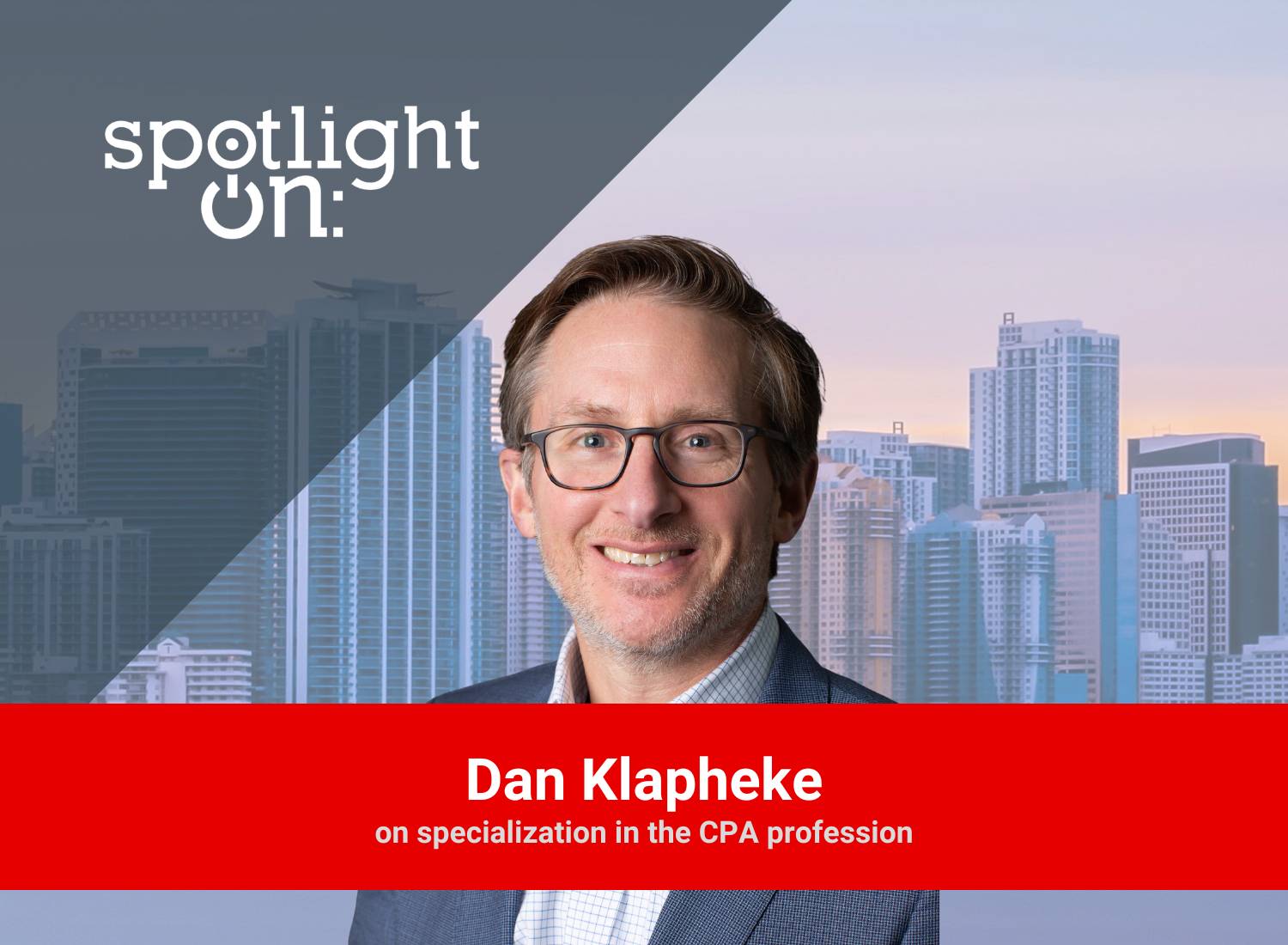 September 2025 – In an interview with Focus:, Dan Klapheke, managing director of professional services advisory firm CBIZ, discussed growth strategies, evolving client needs, cybersecurity risks, and the impact of its acquisition of Marcum LLP. “The success of the merger has earned us even more respect and has been fairly seamless,” he said, highlighting CBIZ’s momentum in Atlanta.
What change over the past year has most impacted your office, and in what ways?
CBIZ is a public company in the accounting space. We acquired Marcum, the 13th largest CPA firm. At the time, we were the 11th largest, so combined, we moved into the Top 10, which changed the dynamic for us.
A lot is happening in the CPA profession with consolidation and private equity entering the space. As a public company, we’re different. We’ve been doing this longer than most and operate more like the end-game. Doubling in size with the Marcum transaction was transformative. We’re still in the integration phase, but progress has come quickly. It’s been the most impactful change to our office and company overall in our history.
How does CBIZ leverage its national scale while maintaining a local, relationship-driven approach in Atlanta?
We need the full range of services CBIZ offers — state and federal tax credits and specific subject-matter expertise around industries and other topics like M&A transactions and technology — to support our local practice. Clients usually interact with a small group of contacts locally who draw on experts from the much larger business as needed. It’s critical for relationship managers to dive in and understand client businesses and pain points. Without our larger resources, it would be detrimental to our ability to serve our clients.
Generalists no longer exist in this profession. Even within audit or tax, specialists have specific niches. Despite specialization, relationships remain key. Meeting regularly with CEOs and CFOs is essential because they are moving as fast as we are.
Being a national firm matters, but face-to-face meetings truly drive service. Clients expect proactive support, and that comes through maintaining a personal touch with someone they know.
What shifts are you seeing in how companies approach risk management and financial reporting?
Technology adoption has accelerated. Clients are upgrading systems and increasingly adopting AI. It’s not about cutting headcount; it’s about moving people into more valuable roles. For example, one client automated manual data entry through AI, allowing employees to shift to higher-value tasks.
Broader technology adoption is happening as more clients realize AI is here to stay. Significant investments in new systems and upgrades have been made, especially over the past two years.
How are evolving accounting standards and regulatory updates changing client expectations?
This has been a lighter year for new standards. In past years, though, we saw major changes. For example, in recent years, a new revenue recognition standard impacted the timing of revenue recognition, and the lease standard added leases to balance sheets, changing bank loan covenant calculations. The CECL standard update changed how companies evaluate receivables and potential losses.
Clients are becoming more proactive. Many, especially private companies, are evaluating standards early and planning for their impact, rather than waiting until the effective date. They are now incorporating changes into their budgets sooner.
What broader trends in the midmarket sector are most impacting your clients today?
Uncertainty remains a major factor. Tariffs have forced companies to consider the full supply chain, including their vendors’ suppliers. The direction of the One Big Beautiful Bill has added some stability to the tax outlook, but could result in significant changes for some clients. For instance, one client relies heavily on energy credits that are now under debate, which could greatly impact their financial modeling.
Tax credits have become a much bigger part of the clients’ strategies. Clients are evaluating both state and federal credits. Having the right expertise is critical to take advantage of the credit opportunities.
Technology adoption also continues. Companies are managing headcount carefully, balancing retention with efficiency. Hiring remains difficult, especially as remote work expectations persist. In Georgia, the push for in-office work faced less resistance, but it has been tougher elsewhere.
M&A activity and private equity investment are still strong, though valuations and multiples have softened. Exit strategies and capital sourcing remain priorities. Family offices are also becoming more active in investing in midmarket companies.
To help clients, we quickly developed a solution and an online portal focused on supply chain and regulatory disruptions. A national action team provides analysis and proactive support. One small ripple can create enormous effects, and preparation is key.
What strategies are companies using to stay ahead in fraud prevention and cybersecurity?
Cybersecurity has improved, but phishing remains the primary vulnerability. It’s human error that often causes losses, like an email seemingly from the CEO requesting a fraudulent wire transfer. One client suffered a significant loss after a phishing attack allowed access to their systems and redirected customer payments to a fraudulent account.
Clients are adding controls, conducting penetration tests, and bringing in third-party security assessments. Internal phishing exercises are becoming more common to identify weak points. We do the same at CBIZ, combining security awareness training with regular phishing exercises. Even the best systems need constant staff education. Attackers study communication patterns to craft convincing phishing attempts. Training employees to recognize and report these threats is essential.
Cyber insurance continues to garner attention. Companies are reevaluating coverage to protect against real financial and reputational risks. In one case, a client’s failure to patch systems caused a breach that crippled a subsidiary for months, sending customers elsewhere.
It isn’t just a big-company issue anymore; it’s critical for midmarket businesses, too.
What services does CBIZ offer to help companies manage cybersecurity risks?
One key service we offer is third-party assurance through SOC (Systems and Organization Controls) examinations. There’s a lot happening in that space now, where CPA firms can help companies ensure they have the right controls in place to mitigate risks.
There are different types of SOC reports. SOC 1 is generally for companies like payroll providers, where services impact financial statements. Payroll, for example, is a large income statement item and involves cash processing, so there’s a direct financial assertion. SOC 2 is more security-focused and applies to organizations like data centers that host hardware and provide managed services. There’s overlap between SOC 1 and SOC 2, but SOC 1 is principles-based and broader, while SOC 2 is rules-based, with specific criteria around IT security, availability, confidentiality, processing integrity, and privacy. For example, if a company processes health claims with a third party, privacy becomes a concern, and that falls under SOC 2. SOC 1 focuses more on the transaction processing itself, while SOC 2 covers broader IT security and trust principles.
We also work with companies that require international ISO certifications for technology infrastructure. Especially for multinational organizations, many now need both ISO and SOC certifications to meet client and market expectations.
Looking ahead, what are your top priorities for the Atlanta office?
Growth is the top priority in Atlanta. It’s a competitive market, and we are serious about expanding. There has been significant private equity investment in local CPA firms in recent years, and that continues. Growth has to come in different ways. CBIZ is broad. Beyond audit, tax, and advisory, we also provide valuation, M&A, employee benefits, and property and casualty insurance.
Growth means more than expanding audit and tax. It’s about bringing in strong people, finding partner-level talent, and pursuing acquisitions that fit CBIZ’s culture.
The Marcum acquisition also positions us differently. We are a public company, not private equity, which typically has a three-to-five-year horizon to build firms up and look for an exit. CBIZ has been doing this successfully for more than 30 years. Bringing Marcum on board shows we can do this on a large scale. The success of the merger has earned us even more respect and has been fairly seamless.
From a client perspective, most of our clients are middle-market, privately held businesses. But Atlanta is also a hub for public companies, and we see real growth potential serving them in areas like tax, audit, and risk advisory.
For more information, please visit: