






Spotlight On: Gary Huttmann, Executive Director, MetroPlan Orlando
Key points:
• MetroPlan Orlando is shifting regional transportation planning toward safety-first, life-saving outcomes.
• Coordinated planning across counties and cities is aligning investment, policy, and public engagement.
• Technology and regional transit initiatives are expanding mobility options while improving efficiency.
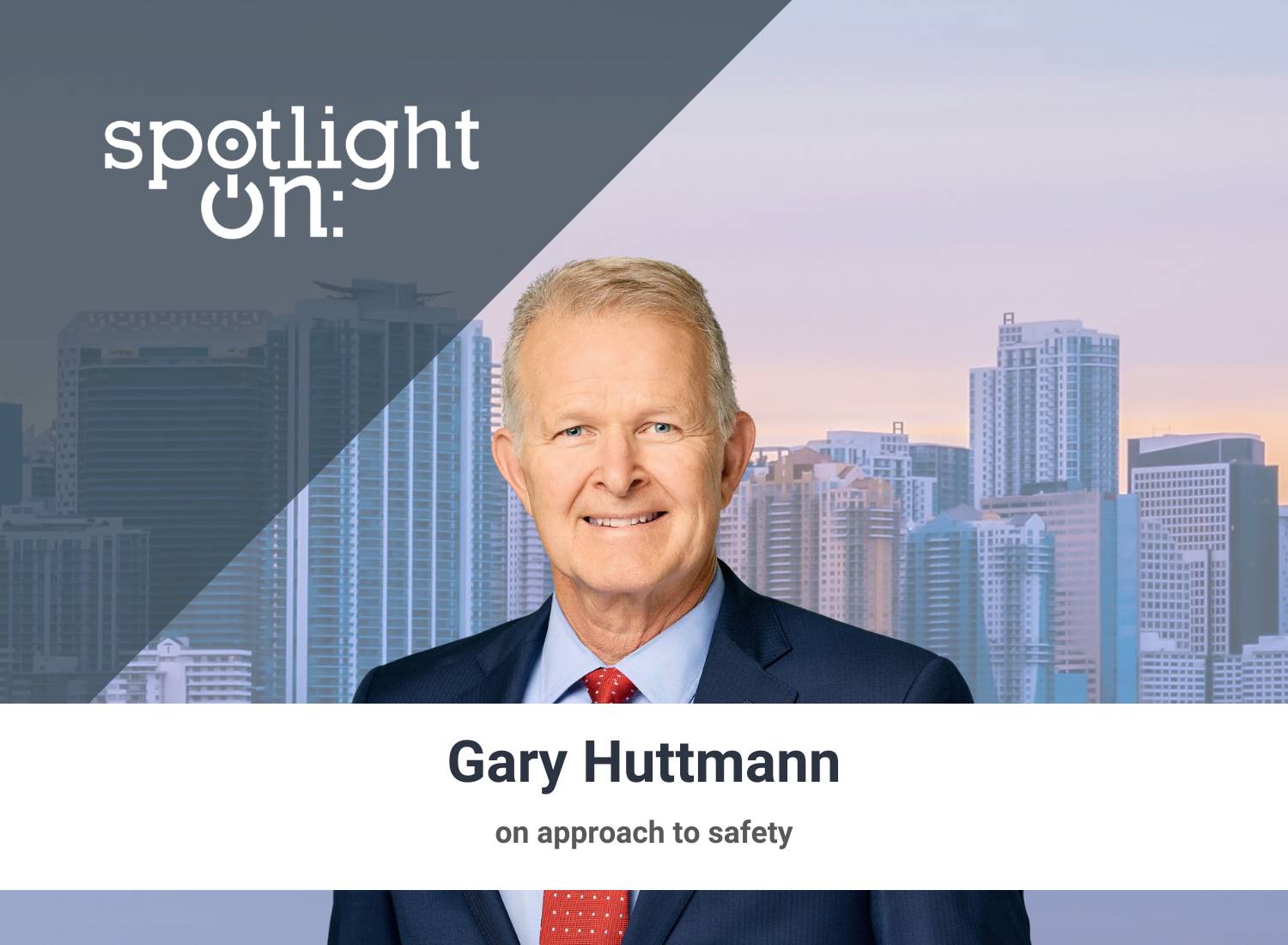 January 2026 — Invest: spoke with Gary Huttmann, executive director of MetroPlan Orlando, about the region’s safety-focused planning, evolving economic conditions, and the growing role of technology in mobility. “It’s amazing to me how the conversations have changed from talking about safety as an issue and asking why this is happening to very visible efforts to make it better,” Huttmann said.
Join us at caa’s upcoming leadership summits! These premier events bring together hundreds of public and private sector leaders to discuss the challenges and opportunities for businesses and investors. Find the next summit in a city near you!
What changes over the past year have most impacted MetroPlan Orlando, and in what ways?
Our biggest milestone has been our approach to safety. For years, Central Florida has been recognized as a dangerous place for bicyclists, pedestrians and other vulnerable road users, and we knew we needed a coordinated response. MetroPlan Orlando led a regionwide effort to develop safety action plans using what we call a top-down, bottom-up strategy. We created a single regional plan while working with Orange, Osceola and Seminole counties — and 19 cities — to develop their individual plans at the same time.
The result is that everyone is speaking the same language. When you cross jurisdictional lines, the focus is still on safety, and the strategies align. The work was done efficiently, but more importantly, it has changed the conversation. Instead of talking about safety as a chronic problem, we’re seeing visible efforts to make it better. It’s amazing to me how the conversations have changed from talking about safety as an issue and asking why this is happening to very visible efforts to make it better. That approach has gained statewide and national attention.
How is MetroPlan Orlando strengthening community-driven planning?
Community input is what pushed us to elevate safety in the first place. Everywhere we went, people told us they felt unsafe on the roads. That feedback made it clear we needed to move beyond analyzing crash statistics and start focusing on saving lives.
When we launched our Vision Zero work in 2023, we held a webinar highlighting the number of roadway deaths in the region. Instead of segmenting blame between pedestrians, motorists or speeders, we emphasized that the goal is to save lives. That framing shaped our engagement strategy. We visited every community in the region, using hands-on tools that showed people how speed narrows a driver’s field of vision or how a moment of distraction affects awareness. Teenagers learning to drive were especially engaged — they could physically see how their attention shifts.
People weren’t just sharing comments; they were participating and learning in ways that deepened their understanding of safety. It built trust, reinforced the importance of equitable planning and kept the public involved at every step.
How have economic conditions such as rising costs, workforce gaps, and shifting federal priorities affected transportation timelines and priorities?
Economic conditions influence everything we do. The Florida Department of Transportation created an Office of Safety in District 5 several years ago, which was an important step. But even when safety is the priority, resources are limited. Costs have risen dramatically, and agencies don’t always have the funding needed to implement improvements.
As we developed our new long-range transportation plan, which our board approved in December 2025, MetroPlan Orlando’s board voted to allocate a portion of our federal dollars specifically to safety improvements on the state highway system that are also scheduled to be resurfaced. That’s where most fatalities and serious injuries occur because state roads typically have higher traffic volumes that travel faster. It was a meaningful decision during a time of constrained budgets.
Local governments also face rising costs. From planning and right-of-way acquisition to design and construction, the cost of projects can increase significantly over time. We work closely with the state and our local partners to leverage federal dollars and stretch them as far as possible.
There’s also growing recognition that the next phase of transportation planning will be behavioral. Teaching people about the risks they’re taking — and the danger they pose to others — is essential. When I drive on I-4, I get the sense that there are fewer reckless drivers than there used to be, likely because safety is being talked about more openly. Changing behavior takes time, but when the majority of people drive responsibly, it influences everyone else.
What progress has been made on SunRail expansions and other premium transit corridors this year?
While MetroPlan Orlando is not a direct funding partner for SunRail — that responsibility belongs to the counties and the city of Orlando — we follow its development closely. Operations have shifted from the Florida DOT to the local commuter rail commission, meaning local partners are now financially responsible.
A major milestone this year was the agreement among the funding partners to pursue a new east-west corridor from Orlando International Airport to the attractions area and Disney. This route will also serve the Orange County Convention Center and major employment centers. The partners are funding a Project Development and Environment (PD&E) study and are working with Brightline, the private operator that runs from Miami to Orlando.
The long-term vision is that Brightline would extend from the attractions area to Tampa, creating a significant regional connection. In addition, Seminole County is piloting an on-demand transit model as an alternative to deploying large fixed-route buses into neighborhoods with lower ridership. Over the next year, they’ll evaluate how effective that pilot is.
How has technology reshaped transportation planning and influenced MetroPlan Orlando’s investment priorities?
MetroPlan Orlando was early in exploring technology’s role in transportation. We have a dedicated advisory committee — TSMO, or Transportation Systems Management and Operations — that brings technology into planning conversations.
Our board allocates a portion of our federal dollars specifically for technology-related improvements because they enhance safety, efficiency and user experience. We don’t treat technology as a standalone category anymore; we integrate it into everything we do.
SunRail’s evolution reflects that shift. When it launched 11 years ago, riders used an older tap-on, tap-off ticketing system. Now, almost all ticketing is mobile. Riders purchase and store tickets on their phones, and it streamlines operations by eliminating lines at machines and speeding up boarding.
Artificial intelligence is evolving quickly. Just two years ago, many organizations were cautious about using AI, especially given the legal and ethical considerations. Since then, agencies have begun using it for routine tasks, and its role will grow as data analysis and system management tools advance. For now, the full impact is still emerging.
Looking ahead two to three years, what is your vision for MetroPlan Orlando, and what metrics or goals will you be tracking?
Our board is shifting away from prioritizing roadway capacity and toward safety and mobility options. Trails are a major part of that shift. There’s a big emphasis on building off-road systems that allow people to walk or bike without interacting with car traffic.
Recently, our board approved a 150-mile regional trail that spans the entire three-county area. MetroPlan Orlando is taking the lead, thanks in part to a state law passed two years ago that empowers MPOs to drive these kinds of projects. It will be expensive and take time, but our board is committed to making it happen.
There’s also a broader movement toward regionalism. Across Florida, agencies are tearing down jurisdictional barriers and working together more closely. Rather than each county operating independently, there’s far more communication and coordination.
Over the next several years, we will be measuring progress through reductions in fatalities and serious injuries, expansion of mobility options, improved connectivity and stronger regional collaboration — all indicators of a safer, more integrated transportation system.
Want more? Read the Invest: Greater Orlando report.