
Spotlight On: Greg Achten, Managing Director and Market Executive for the South Market, UBS
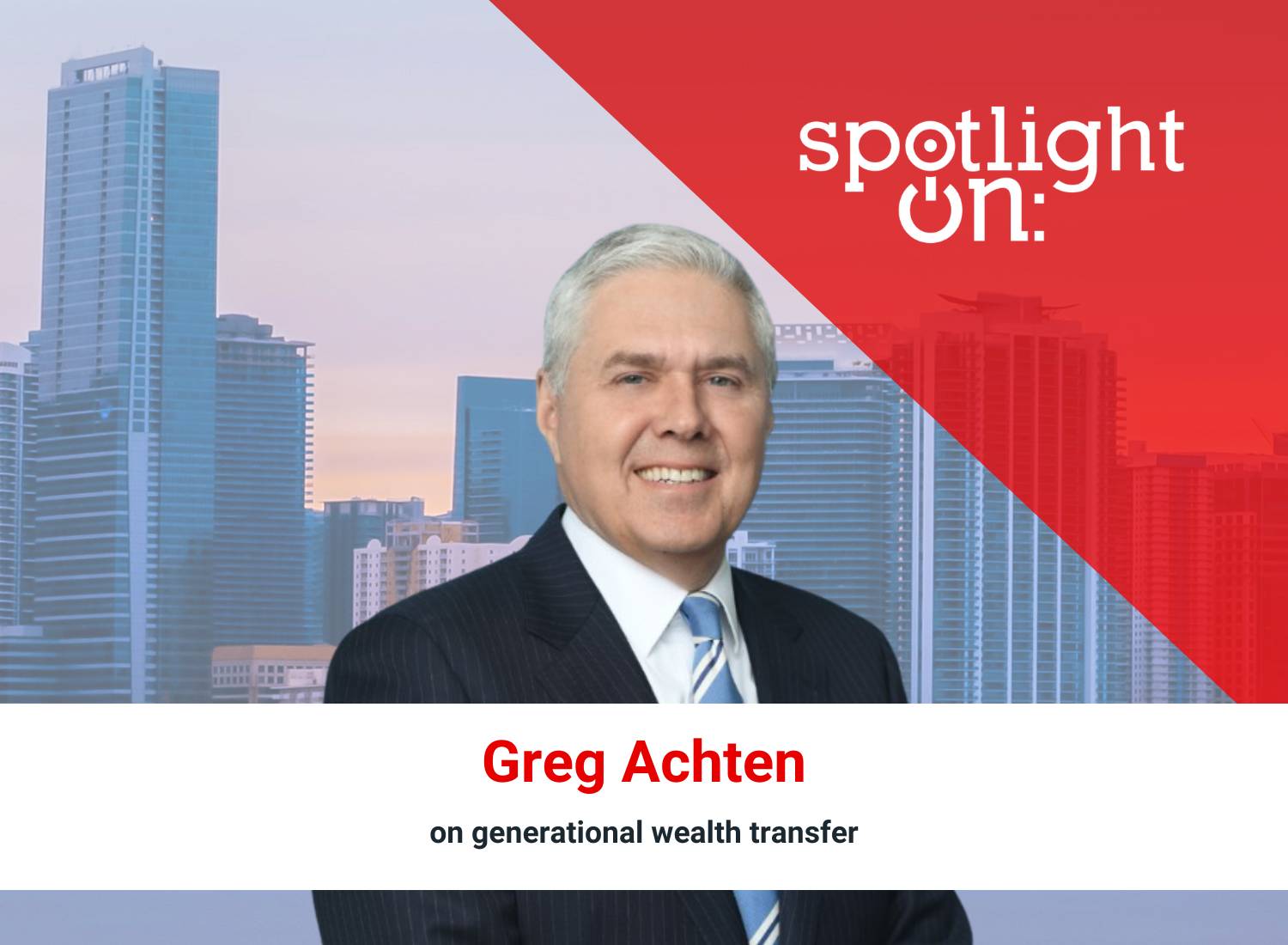 October 2025 — In an interview with Invest:, Greg Achten, managing director and market executive for the South Market at UBS, discussed evolving client sophistication, generational wealth transfer, succession planning, and regional growth. “Owners often underestimate how much more value they can realize with proper planning,” he said.
What opportunities and challenges are shaping the South Market today?
The challenges we face are similar to those across the broader wealth management industry. Clients today are far more sophisticated than they were 20 or 30 years ago. In the 1980s, people had to wait for the newspaper or call their advisor just to get market quotes. Now, information is instantly available — real-time quotes, news, and research, all accessible on their phones.
Because of that, the value we deliver as advisors must be more sophisticated as well. The world is more complex, with clients navigating AI, cryptocurrencies, tariffs, and more. Even though clients are more educated and informed, they still need advice and guidance.
Our geography is also a big advantage. People are moving to cities like Atlanta and Nashville, drawn by warmer weather and a high quality of life. These cities are vibrant, growing, and full of opportunity.
How are client expectations evolving, particularly among high-net-worth and ultra-high-net-worth individuals?
Clients today expect more from us. We’re in the midst of a massive generational wealth transfer, with some estimates saying close to $100 trillion will change hands by 2030. Many business owners are preparing for transitions, whether passing the reins to family or pursuing a sale. At the same time, they’re navigating heightened risks like cybersecurity threats and market volatility, largely driven by a handful of stocks.
Our approach centers on financial planning, focusing on liquidity, longevity, and legacy. Liquidity is about what clients need today to meet day-to-day expenses, longevity addresses retirement and long-term goals, and legacy is about what clients want their wealth to accomplish after they’re gone. This opens the door to more sophisticated conversations, including philanthropy and community impact.
What trends are emerging in succession planning and liquidity events among business owners in the region?
A lot of business owners are often focused on daily operations and growth, but many don’t plan for what comes next. Some assume they know what their business is worth and who might buy it, but that’s often based on assumptions rather than analysis.
There are two types of buyers: strategic buyers, who are in the same industry and want to expand, and financial buyers, like private equity firms, that aim to grow and eventually sell the business. Owners often underestimate how much more value they can realize with proper planning.
That’s where we come in. We provide access to investment bankers, either from UBS or from our network of boutique firms, to assess businesses, identify value drivers, and explore different exit options, such as outright or partial sales, or even ESOPs.
When owners plan early and run a competitive sale process, they often achieve a significantly better outcome.
How are higher interest rates, inflation, and shifting investor sentiment impacting client behavior?
For over a decade following the global financial crisis, interest rates were unusually low, benefiting borrowers, but made it difficult to generate income from fixed-income investments.
Now, higher rates are reshaping the landscape. In high-demand markets like Nashville and Atlanta, tight inventory and higher rates make moving complex. Purchasing a home today likely comes with twice the interest rate it had before. However, higher rates also create opportunities. Clients can now earn 4% to 5% on cash or money market accounts, favoring low-risk positions.
We expect the Fed to continue lowering rates, which will reduce those returns. As rates fall, cash may re-enter the market. The economy remains strong, and while hiring has slowed slightly, the U.S. remains close to full employment. We continue to see robust corporate earnings, supporting continued equity market growth.
How are clients approaching long-term trends like artificial intelligence, energy transformation, and demographic shifts?
Diversification across asset classes, sectors, stocks and the economy remains essential.
Artificial intelligence has been a major market driver recently, and companies involved in building AI infrastructure have seen tremendous growth. The key question is how traditional companies will adopt AI for efficiency.
From a diversification standpoint, it’s important not to chase short-term performance. While AI-focused stocks have gained significantly, putting too much into any one area increases risk.
Our goal is to help clients maintain balanced allocations across asset classes and sectors, managing risk while still capturing long-term opportunities.
How is UBS investing in talent development and advisor growth across the South Market?
We put a strong emphasis on education, both for advisors and support staff. Everything starts with understanding each client’s unique goals, then building a personalized financial plan. That applies whether someone is just beginning to invest or managing a complex ultra-high net worth portfolio.
We’re also investing in technology and AI to improve advisor and client experiences. One of the key teams driving this at UBS is our Smart Technologies and Advanced Analytics Team (STAAT). STAAT provides advisors with detailed insights into client behavior and preferences, enabling more relevant advice and stronger relationships.
We continue to train our teams on financial planning tools, investment strategies, and connecting clients to UBS’s investment banking capabilities, ensuring the best possible guidance and solutions.
What are your top priorities for UBS in the South Market over the next three to five years?
We aim to grow at a measured pace. UBS has around 6,000 financial advisors in the Americas, with almost 300 covering six states in the South Market. Capturing the increasing wealth moving into this region is a priority, as is welcoming new advisors relocating here.
UBS’s global reach is a significant advantage. When major events occur, we can quickly draw on insights from our teams worldwide and share timely analysis with clients.
Our focus is to apply global expertise locally, connecting our intellectual capital, research, and platform with what clients are trying to achieve.
How does UBS support clients in achieving their philanthropic goals?
Philanthropy is a key part of legacy planning. We work closely with high-net-worth and ultra-high-net-worth clients to help them shape and implement their charitable goals.
One way we do that is through the UBS Optimus Foundation, which focuses on health, education, environmental sustainability and humanitarian aid. UBS works with social impact and philanthropy partners to provide customized strategies and expert guidance to help clients maximize impact and achieve meaningful, measurable outcomes. If clients want to make significant contributions in these areas, UBS will often co-invest alongside them.
We also help facilitate family conversations about values and legacy. Parents want to ensure their children understand and align on the “why” behind their philanthropic goals. We facilitate those discussions and, in doing so, often earn the trust that leads to long-term relationships.
Locally, we live those values as well. Our teams across the South Market take part in hands-on community projects during the summer as part of our firm-wide “Season of Service.” In 2025, nearly 80% of our employees volunteered with charities, prepared meals, assembled care kits, and more – reflecting our commitment to the communities we serve.
What role does the UBS Tower in Nashville play within the broader organization?
While our focus here has been on wealth management, it’s important to highlight the broader presence UBS has in Nashville. The UBS Tower in Nashville is home to over 1,400 employees supporting the entire U.S. business, including teams in compliance, cybersecurity, financial planning, banking, and other critical functions. Nashville has become a major operational hub and strategic location for UBS, strengthening our success across the South Market and beyond.
Want more? Read the Invest: Nashville report.
The UBS Optimus Foundation is a global network of separately organized and regulated, tax-exempt, charitable organizations, founded by UBS, that make grants and other financial contributions to implementing partner organizations aligned with their values and objectives.
The information contained in this article is not a solicitation to purchase or sell investments. Any information presented is general in nature and not intended to provide individually tailored investment advice. The strategies and/or investments referenced may not be suitable for all investors as the appropriateness of a particular investment or strategy will depend on an investor’s individual circumstances and objectives. Investing involves risks and there is always the potential of losing money when you invest. Investors should be aware that alternative investments are speculative, subject to substantial risks (including the risks associated with limited liquidity, the use of leverage, short sales and concentrated investments), may involve complex tax structures, strategies and may not be appropriate for all investors. Asset allocation and diversification strategies do not guarantee profit and may not protect against loss. The views expressed herein are those of the author and may not necessarily reflect the views of UBS Financial Services Inc.
As a firm providing wealth management services to clients, UBS Financial Services Inc. offers investment advisory services in its capacity as an SEC-registered investment adviser and brokerage services in its capacity as an SEC-registered broker-dealer. Investment advisory services and brokerage services are separate and distinct, differ in material ways and are governed by different laws and separate arrangements. It is important that you understand the ways in which we conduct business, and that you carefully read the agreements and disclosures that we provide to you about the products or services we offer. For more information, please review client relationship summary provided at ubs.com/relationshipsummary, or ask your UBS Financial Advisor for a copy.
© UBS 2025. All rights reserved. The key symbol and UBS are among the registered and unregistered trademarks of UBS. UBS Financial Services Inc. is a subsidiary of UBS Group AG. Member FINRA/SIPC.