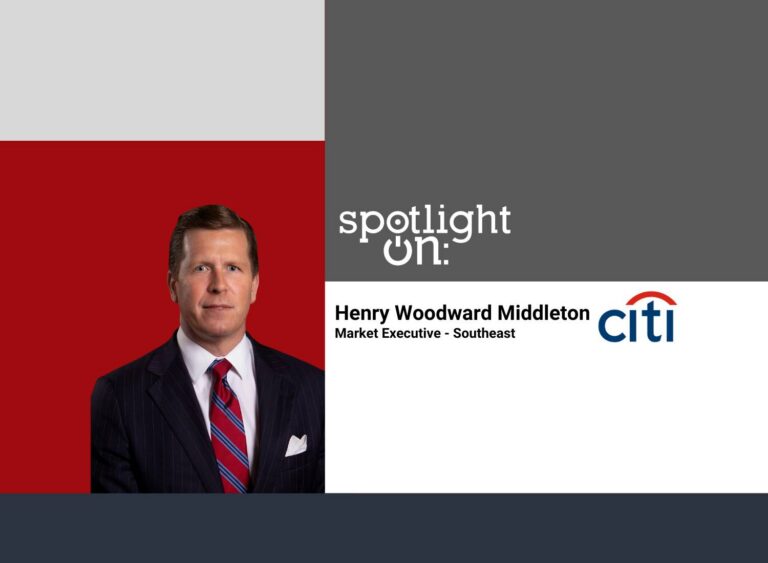




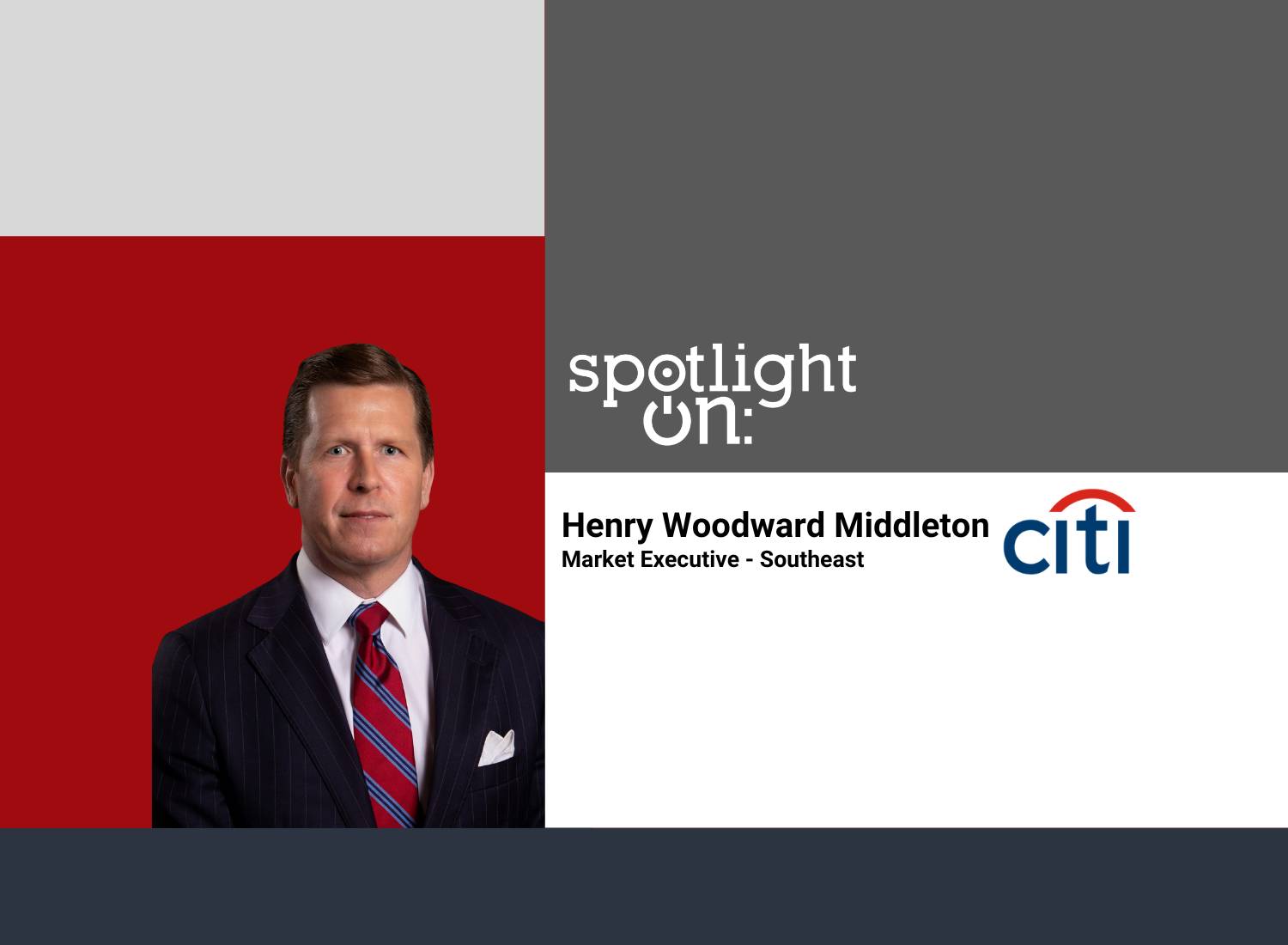
Spotlight On: Henry Woodward Middleton, Market Executive – Southeast, Citi Private Bank – North America
Key points:
- • Citi Private Bank is expanding leadership and deepening cross-border capabilities as Miami strengthens its role as a global wealth hub.
- • Ultra-high-net-worth clients are focused on 25–50 year legacy planning, multi-jurisdiction structuring, and full Florida residency transitions.
- • A high-touch advisory model, backed by Citi’s global platform and specialty expertise, differentiates the firm in the Southeast market.
 March 2026 — With Miami’s continued rise as a global wealth hub, Citi Private Bank is strengthening its leadership bench and deepening its advisory model to support the increasingly complex needs of ultra-high-net-worth families. Invest: spoke with Citi Private Bank’s Southeast Market Executive, Henry Woodward Middleton, about cross-border demand, migration trends, and the firm’s plan for its next phase of growth. “One of the defining features of the ultra-high-net-worth segment is the time horizon: many clients are thinking 25 to 50 years out,” Middleton shared.
Join us at caa’s upcoming leadership summits! These premier events bring together hundreds of public and private sector leaders to discuss the challenges and opportunities for businesses and investors. Find the next summit in a city near you!
Over the past year, what have been the most significant developments at Citi Private Bank, particularly in the U.S. Southeast and Miami?
Over the last year, the biggest change has been the caliber of talent we’ve been able to bring into the organization. We’ve added new senior leaders in North America and across key markets, and I joined in September to lead the U.S. Southeast. Together, we have a highly experienced leadership team that is aligned with where we want to take Citi Private Bank. Our focus is squarely on growing net new investment assets by staying close to clients, understanding their portfolios, and deploying the full capabilities of the firm on their behalf.
Looking ahead, what do you see as the main challenges and opportunities for Citi Private Bank in the Southeast, and in Miami specifically?
One of the dominant themes is rising economic volatility and the continued uncertainty created by tariffs and geopolitics. Those forces affect client confidence and capital flows, particularly for families with assets and businesses spread across multiple jurisdictions. At the same time, that environment plays directly to our strengths. Our global reach and ability to operate seamlessly across borders are key differentiators. For example, we recently set up a dedicated trading platform in India for a Miami-based client with significant operations there. There are not many firms that can execute something that specific, at scale, and in a highly efficient manner.
How is Citi leveraging Miami’s role as a bridge between the United States and international markets, particularly Latin America?
Miami is our Southeast headquarters for Citi Private Bank, but it is also the base for our Latin America private banking operation. For families primarily based in Latin America, Asia, or the Middle East, their day-to-day banking teams are based on the ground in those markets. Where Miami becomes particularly important is for clients with a meaningful U.S. presence and family, business, or investment ties in Europe, Asia, South America, Central America, or the Middle East. Because of how we are structured, we can mobilize teams across those regions to work together on a single relationship and offer a truly cross-border platform that reflects how these families actually live and invest.
How are you positioning Citi in the ultra-high-net-worth wealth management space in the Southeast, and how does this market differ from others?
A major differentiator is our specialty advisory group, which is built specifically for ultra-high-net-worth clients. In addition to traditional investment and credit solutions, we bring in philanthropic advisors, art advisors, art financing, aircraft financing, and even sports financing. During Miami Art Week, for example, we hosted clients alongside our art advisory team, who walked the fairs with them to identify pieces and help curate their collections. Most competitors will advise on a transaction or provide financing; far fewer are involved in shaping a collection over time.
Beyond the product set, we invest heavily in understanding each client’s lifestyle and family dynamics — the good and the challenging — so we can support them holistically. The Southeast, and Florida in particular, has seen a sustained migration of wealth from the Northeast and West Coast. That accelerated during COVID and has continued as families formalize relocations to Florida. That brings its own considerations around schools, infrastructure, and community that we need to understand if we are going to be a long-term partner.
Multi-generational planning is becoming more prominent. How is that trend influencing the way clients approach legacy management, and how do you support them?
Multi-generational planning is absolutely central to our business. Most wealthy families have some form of a plan in place, but what we often see is that it does not fully reflect the legacy they want to create or the level of detail required for multiple generations. One of the defining features of the ultra-high-net-worth segment is the time horizon: many clients are thinking 25 to 50 years out. Their goal is not just to preserve wealth but to institutionalize it so that it can be passed on in perpetuity.
Our role is to provide a framework for that conversation and help them translate values into strategy. We design investment plans that are built for long timeframes, anticipate transitions from one generation to the next, and address potential points of friction. We do that in close partnership with their CPAs and attorneys, making sure structures, governance, and controls align with their intentions. Ultimately, we want clients to feel confident that the wealth they have created will support their families and their causes over many generations.
How do you balance highly personalized, relationship-driven service with the scale and global reach of Citi’s platform?
It starts with the core delivery team around each relationship. Typically, that team includes a banker with deep experience in investments, credit, and banking — often with a commercial or investment banking background — paired with an investment counselor, essentially a dedicated portfolio manager. They are supported by a robust service team that handles account opening and day-to-day needs so the banker and investment counselor can focus on advice and strategy.
From there, we pull in additional specialists, as needed. Our investment counselors can craft capital markets trades locally based on a client’s views or risk management needs. We can tap our investment bank, consumer bank, and other product areas to structure solutions. And when a family’s footprint spans multiple geographies, we engage private banking teams in those regions to collaborate on coverage. That combination of a tight, relationship-led core team with global product and geographic reach is what allows us to scale without losing the personal, bespoke nature of the service.
What innovations in digital banking or wealth management technology are proving most valuable for your clients today?
Citi has a world-class technology platform, and our clients value the ability to connect with us digitally in a secure and convenient way. Everything we do in that space is highly encrypted, whether it is communications, reporting, or transaction capabilities. That said, for family offices and ultra-high-net-worth families, the relationship is still one-on-one and highly individualized. Technology is an enabler, but it does not replace the human element.
As artificial intelligence becomes more integrated into financial services, the mass affluent segment will see the most visible benefits, simply because their needs tend to be less complex at the balance-sheet level. When you are dealing with hundreds of millions or billions of dollars in assets and multi-jurisdiction structures, the complexity requires human judgment. For us, it will be about AI alongside human interaction — using technology to enhance insight and efficiency while keeping the advisor-client relationship at the center of what we do.
Beyond migration and succession planning, what other trends are shaping client needs in the Southeast that you believe are important to highlight?
Migration remains a critical theme, but we are now seeing a shift from families simply purchasing homes in the Southeast to fully transitioning their tax residency to Florida. Moving from a high-income-tax state like New York, Connecticut, New Jersey, or California to a no-income-tax state is not straightforward. There are layers of tax code and regulatory considerations that need to be addressed to avoid future exposure or penalties.
We work closely with clients and their tax advisors to map out that transition in detail — from how accounts are structured to how residency is documented. At the same time, municipalities across the region are working to keep pace with growth by investing in education, infrastructure, and services. For our clients, the intersection of tax, regulatory, and quality-of-life factors is increasingly central to their decision-making. Our job is to help them navigate that complexity in a way that supports both their financial objectives and the way they want to live.
Want more? Read the Invest: Miami report.