
Spotlight On: Hydi Webb, Director and CEO, PortMiami
 January 2025 — In an interview with Invest:, Hydi Webb, director and CEO of PortMiami, discussed key milestones, including record-breaking cruise passenger numbers, sustainable growth initiatives, innovative technologies, and workforce development, while highlighting the port’s integral role in Miami’s economy and community.
What were some key milestones for PortMiami over the past year?It’s been an incredibly busy year for PortMiami. Our fiscal year ended on Sept. 30, and Miami-Dade County Mayor Daniella Levine Cava announced that we set a world record for cruise passengers, with 8.2 million people passing through the Cruise Capital of the World. It was a global milestone for the cruise industry.
On the cargo side, we maintained our position as Florida’s top international cargo container port and ranked 11th in the nation. For the 10th consecutive year, we handled over a million TEUs (twenty-foot equivalent units), a benchmark we’re very proud of.
Additionally, a recent economic impact study showed that PortMiami generates $61 billion annually and supports over 340,000 jobs, underscoring our critical role in the region’s economy.
How does PortMiami balance its roles as a cruise and cargo hub?
A supportive local government is key. Miami-Dade County leaders understand our importance and are deeply invested in our success, which is invaluable.
Our location also plays a major role. Miami is a global destination where people live, work, and vacation, making it an ideal hub for both cruise and cargo operations. Cruise ships here have easy access to the Caribbean and the Bahamas, and our strongest cargo trade lanes are with Latin America and the Caribbean.
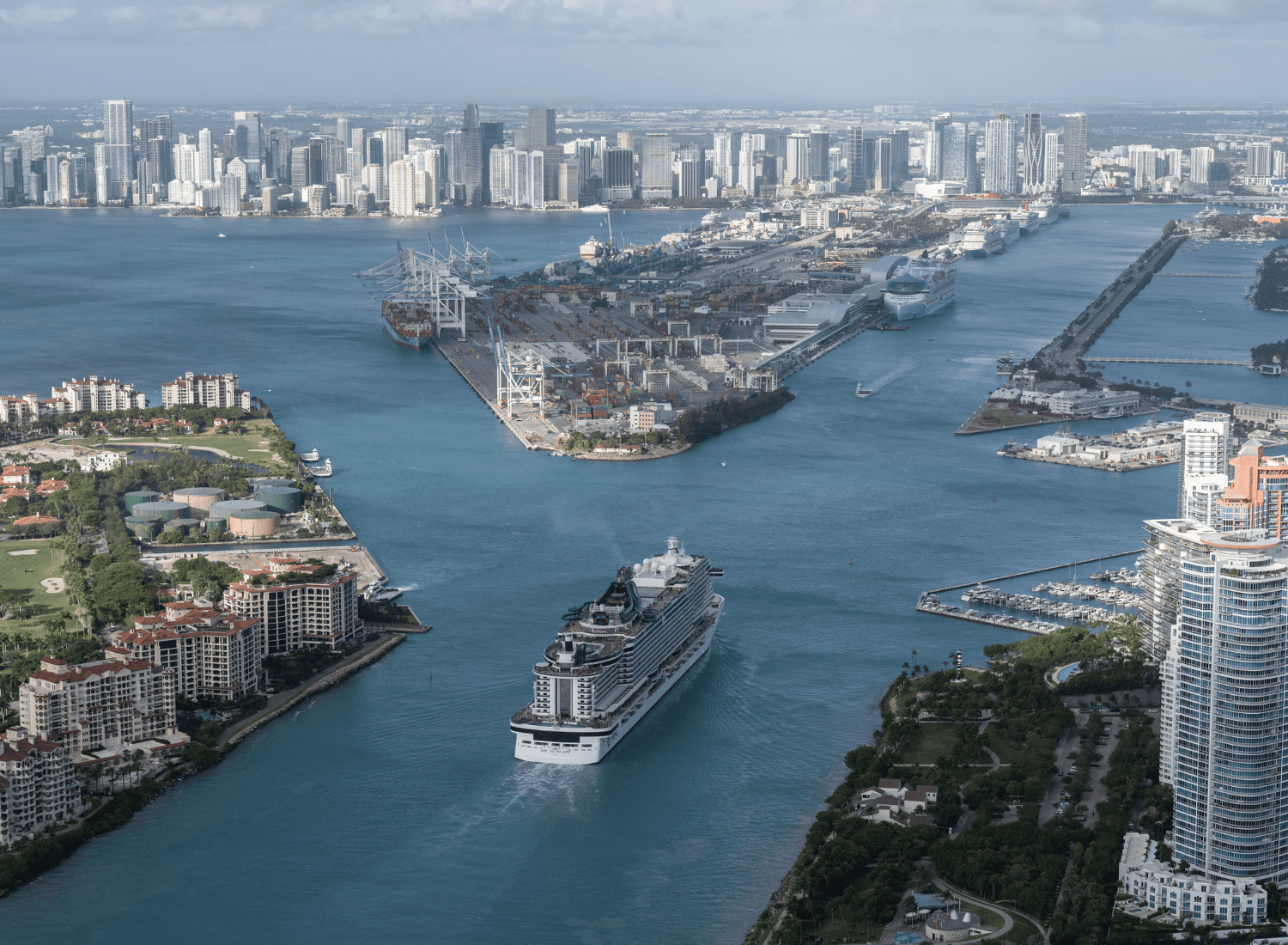
But it’s not just about geography. Strong partnerships also drive our success. We work closely with cruise and cargo partners to understand their needs and find creative solutions for mutual success. While cruise activities are on the port’s north side and cargo on the south, there are natural overlaps. For example, cruise ships — essentially floating cities — need provisions, many of which come from our cargo operations. This synergy helps us thrive in both sectors.
What trends are you observing in cruise passenger preferences, and how is PortMiami adapting?
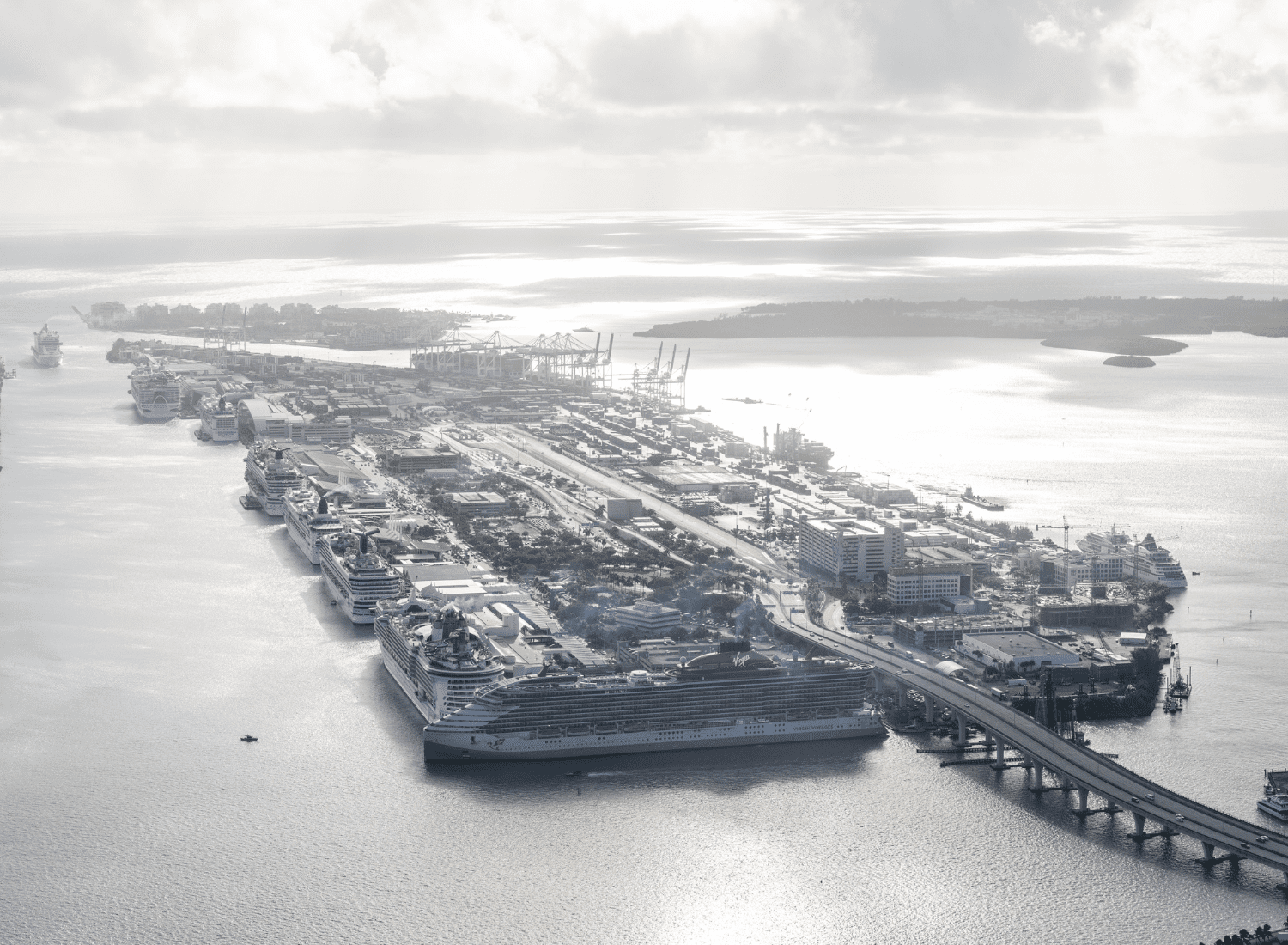
The cruise industry has evolved significantly. One of the biggest shifts is how cruise lines are embedding themselves in the local community. When you drive down the MacArthur Causeway, you now see branded cruise terminals lit up at night, reflecting their investment in our city.
This trend of cruise lines investing directly in port infrastructure is relatively new and began in 2018 with Royal Caribbean’s state-of-the-art terminal. During the pandemic, we continued construction despite halted operations, ensuring we were ready when the industry rebounded.
Since then, we’ve opened Cruise Terminal V for Virgin Voyages, expanded Cruise Terminal F for Carnival, and unveiled the new Cruise Terminal B for Norwegian Cruise Line. Looking ahead, MSC is building the world’s largest cruise terminal at PortMiami. This facility, at the far east end of the port, will accommodate three ships from two brands simultaneously. Additionally, we will soon be breaking ground on a new terminal for Royal Caribbean Group.
What are some of the key shifts in global trade patterns or consumer demands that are impacting cargo operations?
One of our key advantages is the diversity of our trade patterns, which helps insulate us from political or geographic disruptions. About 48% of our trade is with Latin America and the Caribbean, but we also have significant trade with Asia (31%) and Europe (20%).
This diversification is a strength compared to ports that rely heavily on a single region. It’s a trend we plan to build on as we grow while maintaining a balanced portfolio of trade partners.
How is PortMiami collaborating with its partners to support sustainability initiatives?
Sustainability is central to everything we do. A great example is our shore power program, a top priority for Mayor Levine Cava since she took office in 2020. We’ve since made it a reality.
We signed an MOU with five leading cruise lines — Royal Caribbean, Norwegian, MSC Cruises, Virgin Voyages, and Carnival — and FPL, our local energy provider, to bring shore power to the port. Shore power allows cruise ships, essentially floating cities, to turn off their diesel engines while docked and connect to the local power grid.
Launched this past June, the program will eventually provide shore power at five cruise terminals, with three ships able to connect simultaneously. This makes PortMiami the first seaport in Florida to offer shore power and one of just 35 ports globally with this capability.
To put it into perspective, using shore power at one terminal for a year reduces emissions equivalent to taking 7,500 cars off the road. It’s a major step in lowering our environmental impact.
How is PortMiami leveraging technology and innovation?
Miami’s reputation as a tech hub enables us to explore exciting opportunities. Recently, we partnered with the Miami-Dade Innovation Authority, a nonprofit that works with local governments to introduce cutting-edge technology.
The partnership aims to enhance operational efficiency. For example, we’re identifying bottlenecks in cargo movement and finding ways to improve metrics and flow. This initiative is part of a broader challenge with the Innovation Authority. While specifics will be announced early next year, four new tech-driven programs are in development to further improve operations.
How does the port work with local and state partners to maximize its economic benefits?
While we’ve invested heavily in infrastructure, we’re equally focused on people and workforce development. Not everyone knows what a port is or the opportunities it offers, so we’re addressing this at multiple levels.
We’re surveying cruise and cargo partners to identify in-demand jobs and have launched several programs with local organizations. For example, we’ve partnered with the Miami-Dade County Public School System on apprenticeship programs. Seaboard Marine, one of our cargo carriers, participates in paid apprenticeships for roles like maintenance and refrigeration technicians.
We’ve also partnered with Miami-Dade College to create a supply chain program that benefits both students and port employees, and we collaborate with CareerSource Miami to secure funding for workforce initiatives.
The county also launched WorkforceMiami.com, where private cruise and cargo partners post job openings. This collaboration raises awareness about the port’s role in the local economy.
Many people don’t realize how much of their lives depend on port operations. For instance, the asparagus or meat on your dinner table likely came through a port like ours. COVID highlighted the importance of the supply chain, and if there’s a positive takeaway, it’s the increased awareness of how ports like PortMiami keep goods moving and support the economy.
What challenges has PortMiami faced due to economic factors, and what strategies are in place to mitigate potential headwinds?
Strategic planning is essential as we navigate challenges, particularly limited space. PortMiami spans just 520 acres, making space a key constraint, especially for cargo. To address this, we’re optimizing vertical growth by building higher infrastructure.
Every capital project includes a net-zero component to ensure sustainable and resilient growth. Balancing infrastructure expansion with sustainability goals poses challenges, especially regarding funding. Still, we’re aligned with the county’s goal of reducing emissions by 50% by 2030.
We’ve made significant progress. Our ship-to-shore gantry cranes are fully electrified, and we’re working toward a net-zero supply chain. This includes hybrid or electric tugboats, electric yard equipment, and fully electrified gantry cranes.
We’re also enhancing rail infrastructure as a sustainable way to move cargo. A $16 million grant is expanding our rail system from three to five tracks, boosting efficiency and supporting our commitment to smart, resilient growth.
What are some key opportunities for PortMiami, and what are your top priorities for the next two to three years?
Our top priority is to continue growing the port with our stakeholders in a smart and resilient way.
PortMiami is seamlessly integrated into the local community. Operating a commercial business in the heart of downtown, adjacent to neighborhoods and the I-395 expressway, allows us to engage residents and highlight the port’s immense value.
One transformative project is the PortMiami Tunnel, which opened in 2014. The tunnel diverts about 80% of cars and trucks away from downtown streets, providing direct highway access to the port. As one of the first public-private partnership projects in the U.S., it was completed on time and under budget.
Without the tunnel, we couldn’t handle today’s volume — over 8 million cruise passengers annually and more than a million TEUs of cargo. It’s a perfect example of how local governments and communities can collaborate to support critical infrastructure.
Looking ahead, we aim to build on this momentum, strengthen partnerships, and ensure PortMiami remains vital to Miami’s economic and cultural landscape.
Images provided by PortMiami
For more information, please visit: