





Spotlight On: Johnny Wong, Executive Director, Hillsborough Transportation Planning Organization
Key points:
- Rapid growth and major mixed-use developments are increasing congestion pressure and reshaping long-term mobility planning priorities.
- I-4 express lane design and potential Brightline expansion signal major structural shifts in regional connectivity.
- Autonomous vehicles, climate resilience, and transit gaps are defining the next phase of transportation strategy.
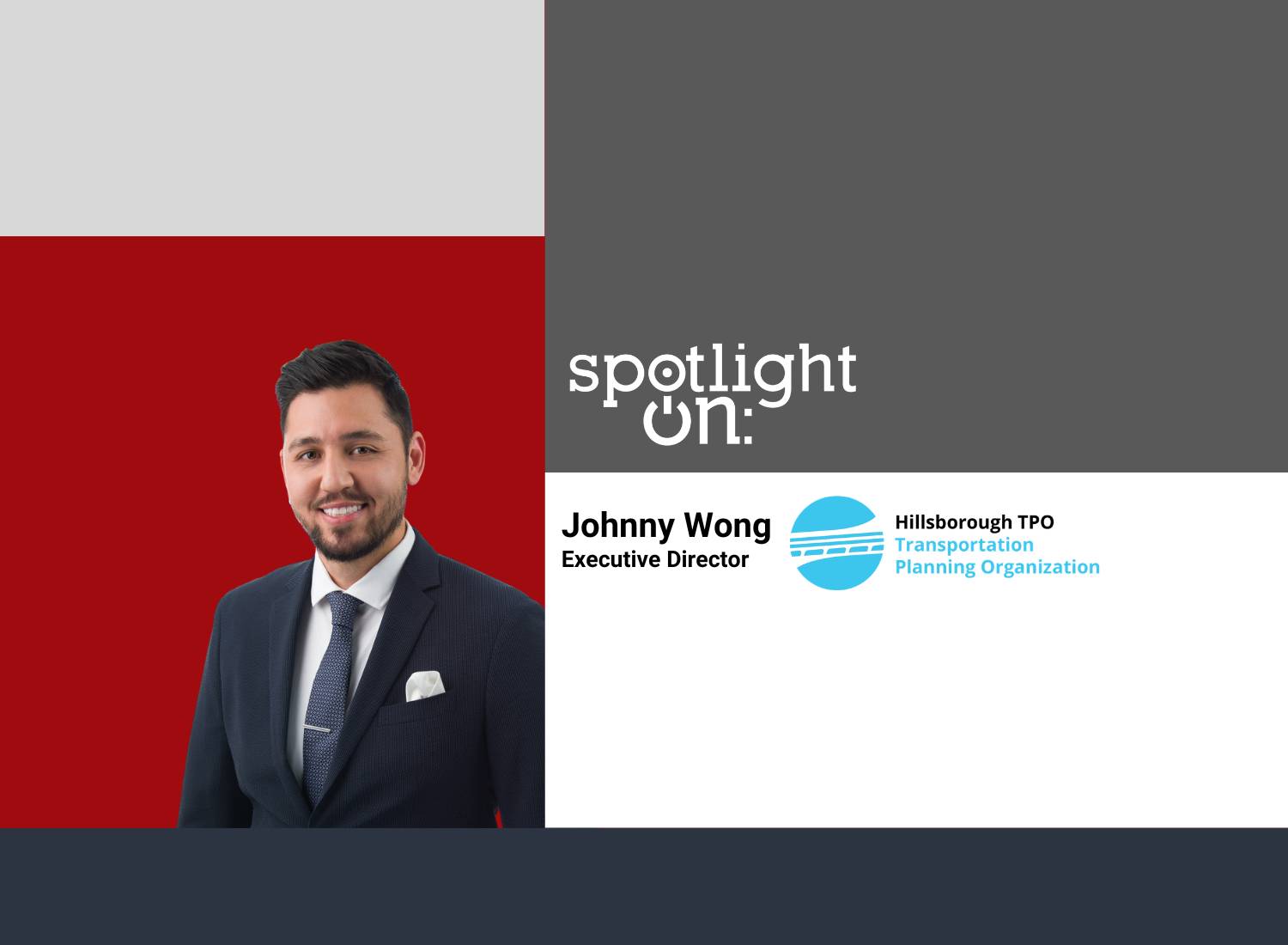 February 2026 — Invest: spoke with Johnny Wong, executive director of the Hillsborough Transportation Planning Organization, about how rapid growth is reshaping mobility priorities across Tampa and Hillsborough County. He shared how congestion, safety, resilience, and emerging technologies are influencing transportation planning as the region prepares for its next phase of economic expansion. “Ultimately, transportation is about more than moving vehicles. It supports economic growth, quality of life, and resilience,” Wong said.
Join us at caa’s upcoming leadership summits! These premier events bring together hundreds of public and private sector leaders to discuss the challenges and opportunities for businesses and investors. Find the next summit in a city near you!
Over the past 12 months, what key changes have most impacted the Hillsborough Transportation Planning Organization, and in what ways?
2025 was a really impactful year for the city of Tampa, and that affected the TPO directly. There was a report in the summer of 2025 showing that the city’s goods and services grew by almost 40%. That kind of growth shows that Tampa is a very attractive market for commercial and industrial investment, and entices people to relocate here.
The level of attention we are receiving places Tampa among other competitive metropolitan areas that are developing a national or even global profile. The connections to our work are inherent because when people consider moving to a new region, they consistently ask the same questions about the state of the local economy, quality of education, and transportation options. The transportation options are a critical dimension of that decision-making process that my agency can influence.
The economic stimulus and growth potential also creates added pressure for planners because while we are planning projects for existing residents and local government partners, we are forced to consider how transportation can support the conditions for continued population growth in a way that is sustainable.
Growth is not evenly distributed, either. Certain parts of the city,county, and region are experiencing it more intensely.Ybor City comes to mind as one of those areas where it is significantly more intense. The development and transportation decisions affecting that area will have ripple effects across the greater transportation network.
What developments stand out most right now, and what impacts are you watching closely?
The broader downtown, Ybor City, Midtown,Channelside, and even USF areas are a major focus. There have been ongoing conversations about potential stadium and mixed-use developments across those geographies, which would dramatically affect traffic patterns throughout the entire Tampa Bay region.
Beyond that, specific projects like Gasworx, across multiple phases, are reshaping land use and travel demand. Ybor City, in particular, has strong potential to become a gateway into and out of the Tampa Bay region.
When I say gateway, I am alluding to the possibility of Brightline. Once that project begins to advance, it would connect the Orlando metro to Tampa, with indications that a station would be located in the greater downtown area, which would include Ybor City.
That raises important planning questions, like how do we make Ybor City a welcoming and functional destination for visitors arriving by rail? And how do we ensure the transportation network allows residents and workers to move efficiently in and out of that area? For us, getting answers to those questions is materially about transportation, but beyond that, they are questions about how Tampa Bay can maintain and extend its economic competitive advantages, how it fits into the global economy, and how it preserves quality of life for those who live here.
What recent transportation decisions signal longer-term change for the region?
Late in 2025, the TPO Board approved funding for the design of I-4 express lanes. I-4 is recognized nationally as one of the most congested and dangerous roadways in Florida, but also the most critical for distributing goods throughout the state, so addressing those deficiencies is essential.
At the same time, those express lanes impact more than just roadway performance. Modernization of that interstate will help advance the conversation about future rail service, because any rail operator would likely operate within the I-4 corridor.
While there are still a lot of details outstanding about when, where, and how intercity rail will move forward, the design of the interstate adds some clarity to those conversations
How does the TPO support workforce development in transportation and planning?
We support workforce development, but mostly in an indirect way. As an agency with a very focused mission to do long range transportation planning, we are not responsible for training contractors or managing large workforces, but our plans influence the FDOT work program, which then influences the labor demands across the local development industry.
The most direct way that we support workforce development is for planners specifically. Succession planning is a real concern for transportation agencies as our staff ages into retirement, and training the next generation of professionals is critical. In planning specifically, we benefit from our relationship with the University of South Florida, which has a certified planning program, and the pipeline from education to employment is very direct in this region.
The TPO operates a very successful fellowship program with USF where we take two fellows each academic year and give them an opportunity to work with our staff and contribute to real projects that can shape the region’s future. That hands-on experience is valuable for both the students and the agency.
Beyond formal programs, transportation connectivity itself plays an important role in workforce development, attraction and retention. We have heard from employers that the labor market is constrained by travel time. Improving mobility expands access to talent and allows businesses to draw from a wider pool of specialized workers.
What transportation trends are shaping planning decisions today?
One major trend is the rapid advancement of autonomous vehicle technology. Electrification is becoming more affordable, and transportation and technology companies are working together to deploy new systems.
Companies like Waymo, Zoox, and many others are already operating in other U.S. markets and are now focusing on Tampa. Calling attention to just one for a moment, Waymo vehicles have been mapping streets in Hillsborough County and preparing for a launch, with the goal of becoming operational as early as 2026. While those vehicles are mostly available as part of a ridehailing or rideshare system, if autonomous vehicles can penetrate into the personal vehicle market, it would dramatically reshape how we think of personal mobility.
Tampa is attractive for these pilots because local and state leadership has been willing to work with private partners. With supportive leadership and policies, this region has positioned itself as a place where innovation can be tested, provided it helps address real transportation challenges.
What are the most pressing challenges facing transportation planning today?
Aside from everything else that we’ve touched on, climate risk is one of the biggest challenges, particularly heat. Florida’s climate discourages walking and biking for much of the year. A typical walkshed in a more temperate climate might be 20 minutes whereas here it is about 10 minutes, or roughly half a mile, and many daily destinations are located well beyond that distance.
There are many other factors playing a role in that, but with climate in mind, car reliance in Tampa Bay is extremely high. While local governments have done a commendable job investing in bike and pedestrian infrastructure, providing meaningful protection from heat and weather remains difficult.
Resilience to hurricanes is another serious concern. A major storm damaging critical infrastructure could significantly disrupt the regional economy and rebuilding bridges or highways after a catastrophic event could take months or years.
FDOT, Hillsborough County, and our cities have demonstrated a commitment to resilience by reinforcing infrastructure and tackling vulnerabilities, but those improvements are costly. As planners, our role is to be strategic about where investments are made to add redundancy while balancing risk, cost, and long-term benefit.
Looking ahead, what are your key priorities for the next few years?
Our priorities center on balancing the needs of different users while addressing congestion, safety, and growth. First and foremost, transit accessibility and availability remain major gaps in Tampa Bay’s transportation system and we need to find a way to address those deficiencies. The region only has a few fixed guideway systems but they are fairly localized connections that haven’t integrated into one large network. If Tampa Bay wants to compete with large metros and global cities, the transit network needs to grow substantially.
At the same time, congestion and safety issues remain a pain point and will continue to be a top priority for the TPO in the coming years.
I’ll close out by mentioning that transportation planning needs to be informed by industrial recruitment and residential development efforts. Bringing jobs closer to where people live, or bringing housing closer to employment centers reduces pressure on the transportation system. To reduce the number of vehicles on our roads, and all of the issues stemming from that problem, we need to abbreviate the longest trips of most people’s day, which are from home-to-work and work-to-home.
Ultimately, transportation is about more than moving vehicles. It supports economic growth, quality of life, and resilience. Our goal is to ensure that as Tampa Bay continues to grow, the transportation system evolves in a way that supports long-term success.
Want more? Read the Invest: Tampa Bay report.