






Spotlight On: Keith Costello, President & CEO, Locality Bank
Key points:
- • Strong regional growth continues, but affordability, rates, and labor constraints are shaping lending and business planning.
- • SBA lending is expanding as a key channel to support small businesses and improve access to capital.
- • Banks are investing in digital tools, but relationship-driven service remains central to community banking.
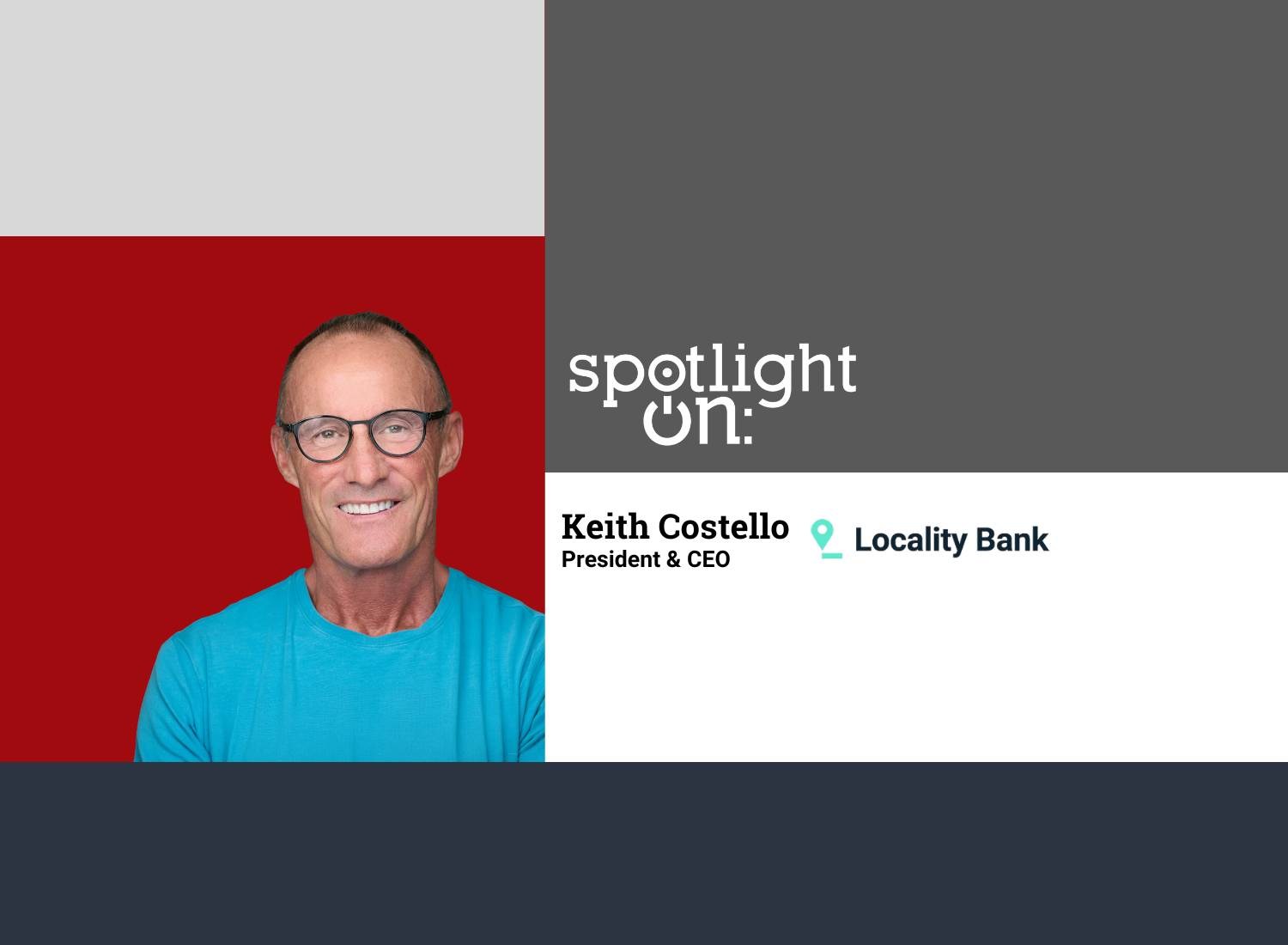 March 2026 — Invest: sat down with Keith Costello, president and CEO of Locality Bank, to discuss South Florida’s shifting credit landscape, the bank’s SBA growth strategy, and why community banking still needs a human touch. “Technology can make service more efficient, but it can’t replace relationship building. We want to keep meeting clients one-on-one and strengthening that personal, consultative role,” Costello said.
What changes have you seen in South Florida’s recent-term business environment, and how is that shaping how local companies approach banking and access to capital?
Over the last year or so, what stands out most is continued growth. The in-migration we’ve had from other areas and the level of economic activity remain strong, so overall I would describe the environment as very positive.
I recently heard an update on the Broward economy that was largely encouraging. If there’s an area where we’ve seen some slight drawbacks, it’s tourism, which seems tied to broader international dynamics. I think some of the softness in tourism reflects the fallout we’ve felt with Canadian visitors and other international travel patterns. Even there, the pipeline of projects and public investments matters, because it supports long-term confidence in the destination.
At the same time, there’s a lot of momentum locally. Projects like the convention center hotel and other downtown initiatives are helping re-energize Fort Lauderdale. From my perspective, there continues to be a lot going on in Broward County that supports business confidence.
How are interest rates, credit conditions, and broader economic uncertainty influencing lending activity among middle-market and small businesses?
With interest rates, no one can predict precisely where they’re headed. That said, the expectation right now is that short-term rates could trend lower over time, with a couple of cuts in the Fed funds rate anticipated, while longer-term rates have remained higher.
Longer-term rates matter because they influence things like mortgage rates and other long-duration financings. Housing affordability is still a concern in South Florida, not only because of mortgages, but also because of insurance and overall building costs. Home prices have risen to a point where many people who live here find it difficult to afford a home. We are seeing local leaders and the county look at ways to mitigate that, including affordable housing initiatives, but affordability remains a pressure point for the region.
On the small- and medium-sized business side, we’ve seen challenges driven by several factors. Tariffs have made planning and costs harder for certain companies. Immigration-related issues have also affected industries like landscaping, construction, and hospitality, where employers relied on foreign workers to fill positions.
Even with those pressures, many of our clients are doing very well. They tend to be optimistic about the local market, and because we’re focused primarily on South Florida, I remain optimistic overall. Still, uncertainty is a real part of the environment right now, especially as technology and AI accelerate change.
What are you seeing in SBA lending, and how is demand evolving among entrepreneurs looking to start, acquire, or expand businesses?
SBA lending has been picking up for us. We’ve invested heavily in building out that capability because creating an SBA program is almost like building another bank. It requires specialized skill sets and a dedicated back office to execute well.
We believe in the SBA program because it can help local companies that might not have access to credit otherwise. We continue to see strong demand, and we’re hiring additional SBA business development officers to help meet it.
What role do you see technology playing in community banking, and how do you balance digital efficiency with the relationship-driven model local businesses value?
We started the bank with a clear premise: do what community banks do best, which is relationship banking and focusing on local customers, but avoid the clunky technology that too many community banks have lived with for years.
As a newer bank, we were able to build with strong digital capabilities from day one. Our app allows customers to handle virtually anything they could do in a branch. We’ve invested heavily because people expect flexibility, speed, and a smooth experience.
We’re also planning to form a holding company and create a technology subsidiary. The goal is to have the bank alongside a technology entity that can build tools we can use internally and, potentially over time, develop in ways that serve specific markets and customer needs more precisely.
The broader reality is that the rate of change is extremely fast. AI is reshaping assumptions across industries, and the truth is, no one knows exactly how it will play out. In that environment, you need a moat, proprietary data, and leadership that’s mentally agile enough to adjust quickly. AI is one example, but we’re also seeing rapid developments in digital assets and stablecoins.
At the same time, the more technology expands, the more important the human side becomes. People still need human interaction and trusted advice. Technology can make service more efficient, but it can’t replace relationship building. We want to keep meeting clients one-on-one and strengthening that personal, consultative role.
What role do you see Locality Bank playing in supporting regional economic resilience and the community itself?
That mission is a big reason we started the bank. We saw the need for a truly local bank, meaning headquartered here, with local shareholders and a local executive team. There are very few banks left that are headquartered in Broward County, and being rooted in the community changes how you operate.
I don’t think people always recognize that banking choices have economic impact. Where they do their banking, and where they put their money, affects the local economy. Deposits placed with a bank headquartered here are used here. Those funds are lent to businesses in this community, not somewhere else.
For local businesses, that matters. We’re a local business, too, and we live or die by the local economy. The more customers and investors support local institutions and understand that connection, the better it is for Greater Fort Lauderdale and Broward County.
Looking ahead three to five years, what are your top priorities for Locality Bank?
The biggest priority is preparing for the scale and speed of change underway. When you plan as a business, you’re planning years out, and if you’re not investing in technology, you have to accept the risk that you may not be around in five years.
We’re also seeing shifts in the regulatory environment, which can create opportunity but also invites new entrants. You’re seeing fintechs and crypto-related companies pursue bank charters. From my perspective, competition is healthy. If a fintech becomes a bank, I’d rather compete with an entity operating under the same regulatory expectations.
We enjoy competition, but we also have to be disciplined. We don’t have unlimited capital, and the largest institutions spend enormous amounts on technology. So our strategy is to focus on the right niche, build differentiated capabilities in targeted areas, and then scale what works, including opportunities to take a successful approach into other geographies or industry verticals as the platform matures. And alongside that, we’re continuing to invest in SBA lending as a core growth engine.
Want more? Read the Invest: Greater Fort Lauderdale report.