





Spotlight On: Leesa LeClaire, President & CEO, Greater Nashville Hospitality Association
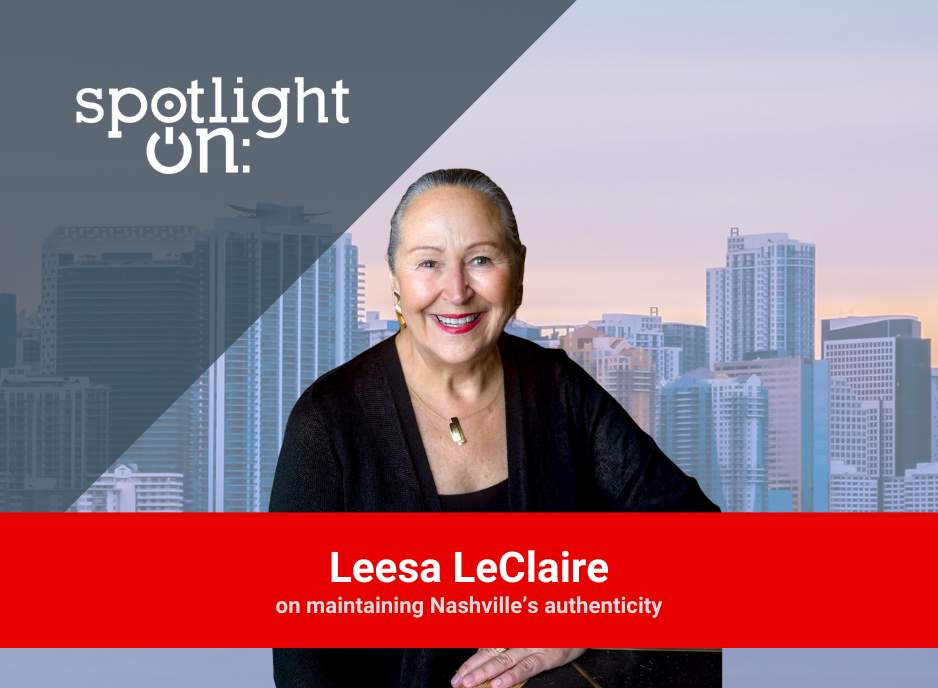
August 2025 — In an interview with Invest:, Leesa LeClaire, president and CEO of the Greater Nashville Hospitality Association, discussed how local growth, workforce development, and advocacy are shaping Nashville’s future as a tourism hub. “The authentic feel is just as important for residents and visitors. The economic impact of entertainment, dining, and sports shapes Nashville’s promising future for all,” LeClaire said.
Which changes have most impacted your organization and in what ways?
We’ve seen a major influx of new hotel rooms, which has helped the market catch up to demand. Combined with shifts in travel patterns and economic uncertainty, this has changed how we view growth and sales strategy.
With the new U.S. administration and some unpredictability around government and general travel, growth hasn’t leveled off, but it’s not increasing as it once did. The additional hotel supply is absorbing more of the demand.
Locally, the city’s growth continues to affect travel and transportation. GNHA strongly supported a transit initiative, a half-percentage sales-tax increase for Davidson County, because transportation is important for our workforce and visitors. As we attract more international travelers and new flights from places like Iceland, Ireland, and British Airways, having better public transportation is essential. Many European visitors expect strong public transit options, and Nashville still has progress to make in that area.
We’re encouraged that the tax passed, which is a solid 15-year plan, and although it will take time, it’s a step forward. On top of that, our airport expansion and added European flights help strengthen Nashville as an international destination.
What are the greatest opportunities for the hospitality and tourism industry to grow while balancing local community needs?
Our Convention Center’s recent study shows its current space likely needs to expand to stay competitive and match the growth in hotel rooms. While I’m not privy to all the data, they’re exploring how to make that work despite being somewhat landlocked, which will be interesting and challenging.
Sports also play a big role in tourism growth. We’re building a new domed stadium, set to open in 2027, which will allow for offerings to supplement the convention center’s space, plus assurances for entertainment and sporting events regardless of weather. Bridgestone Arena is expanding with a new rooftop and Broadway-facing entrance, creating even more opportunities for larger events and more activity downtown.
How is the GNHA working to support workforce development for the growing demand in hospitality?
Workforce development remains a top priority. GNHA hosted a legal symposium with our state hospitality association that included a workforce focus. Our state Department of Workforce Development sponsored this, and we’re setting up a local task force to address workforce needs for hospitality in Middle Tennessee, following successful efforts in East and West Tennessee.
We also work closely with local colleges like Nashville State Community College, Middle Tennessee State University, and Belmont University to support their hospitality programs. We partner with five high school academies with culinary and hospitality tracks.
On Sept. 4, we’ll host a Hospitality Business Day for about 200 high school students, covering career options, resumes, interviews, and essential workplace skills like punctuality, eye contact, and listening. It’s our first time doing this, and we’re excited to see its impact.
Additionally, we’re working to expand GNHA’s role in Junior Achievement BizTown, which teaches life skills to students in grades four through seven. Hospitality is underrepresented there, so we’re partnering with the state and other organizations to enhance that.
Our goal is to reach students early, support them through high school and into college, and help grow the local workforce our industry depends on.
In what ways is GNHA engaging with local and state policymakers to ensure hospitality businesses have a seat at the table as new regulations and taxes are considered?
We’re very engaged on this front. GNHA works with a lobbying firm to stay informed about policies that could impact our industry and has built strong relationships with the mayor’s office and City Council, which isn’t easy given that Nashville has the second-largest City Council in the country after Los Angeles.
Right now, we’re backing a piece of legislation coming up for a vote. We’re rallying members to send letters and attend the meeting to speak in support, so we stay hands-on at the local level.
At the state level, we work with our peers and their lobbying firm to support efforts like Day on the Hill, ensuring legislators understand how vital our industry is.
What other ways do you collaborate with city departments or the mayor’s office to benefit both residents and visitors?
Backing the transit program was a big win for the whole community, and we continue to monitor local conversations around affordable housing to see where we can help.
We also support local nonprofits that prepare justice-impacted youth and adults for culinary jobs. Pathways Kitchen, for example, helps young people gain culinary skills and workforce readiness, which strengthens the community while addressing our industry’s staffing needs.
As Nashville grows as a tourism hub, what steps is the association taking to maintain the city’s reputation for authentic experiences?
That’s always top of mind for GNHA. The legislation we’re supporting will benefit the Nashville Downtown Partnership, which manages a business district tax used to fund clean and safe efforts downtown.
The group is expanding into a second improvement district in the Gulch, and we back operating both areas together. The larger footprint, covering about 20,000 residents, will help keep these neighborhoods clean and safe for locals and visitors, protecting the city’s reputation for authentic, welcoming experiences.
What new member services, resources, or events are you prioritizing to increase your impact for both established businesses and new operators in the market?
This is a big focus for us. One priority is offering “Membership 101” sessions so new businesses know how to fully engage with GNHA’s resources. With so many new players, we want everyone to understand what’s available.
We’re also bringing back two key events this year. Stars of the Industry honors outstanding organizations and individuals across about 15 categories. Local winners then move on to compete at the state level.
The second is a Golf PAC Fundraiser to raise funds for our political action committee, which will help us support candidates who back policies that benefit our industry. With local elections coming up in 2027, we want to be prepared.
How do you see your role in helping the local community understand the economic impact and benefits of a thriving hospitality industry?
It’s so important to keep telling that story. We value any opportunity to show how the industry strengthens the tax base and benefits everyone. Recent figures from the state and our local Convention and Visitors Corp. show taxes collected on hotel rooms and vacation rentals generate about $3,000 per household in benefits by funding the general fund and covering costs locals would otherwise pay.
We’re always looking for ways to share this message, whether speaking at the Chamber of Commerce’s Welcome to Nashville sessions, local leadership programs, or community events. Any chance to explain what the industry contributes and why it matters is worthwhile.
What are your top priorities for growing your membership, amplifying your advocacy, and continuing to make Nashville a top destination?
Our Convention and Visitors Corporation does a great job marketing Nashville, so GNHA focuses more on advocacy and education for local officials, residents, and members. Sharing the industry’s impact and value to the community remains a top priority.
Since 2022, we’ve quadrupled our budget, expanding our reach as more hotels and restaurants open. We’re working to show new businesses how important their voices are in local discussions.
We’re also exploring partnerships with groups that face similar challenges. For example, I spoke with NVAN, a small entertainment venue association, which represents operators like Rudy’s Jazz Room and 3rd and Lindsley. Many aren’t yet members, but by partnering, we can align efforts and strengthen our collective advocacy for hospitality and entertainment.
How does GNHA help ensure Nashville’s hospitality industry remains both economically impactful and true to its local character?
Right now, Nashville has about 40,000 to 44,000 hotel rooms and over 9,000 vacation rentals and Airbnb units, all collecting a 7% tax. About 1% of that goes directly to the general fund, which adds up quickly and shows just how much our industry contributes.
The community must know how that revenue benefits everyone. Maintaining Nashville’s warm, authentic feel is just as important as its economic impact. Safety and reputation matter too. Our Convention and Visitors Corporation recently launched a campaign reminding visitors to have fun responsibly, so they enjoy themselves, respect locals, and leave with a positive impression and memory of Nashville.
For more information, please visit:
https://www.gnha.net/