






Spotlight On: Linda Ward, President & CEO, Gulfside Healthcare Services
Key points:
- • Gulfside Healthcare Services expanded into Hillsborough and Pinellas counties, extending hospice and palliative care across Tampa Bay.
- • The organization is addressing reimbursement pressures and regulatory changes across post-acute care.
- • Workforce recruitment, retention, and service access in underserved communities remain key priorities.
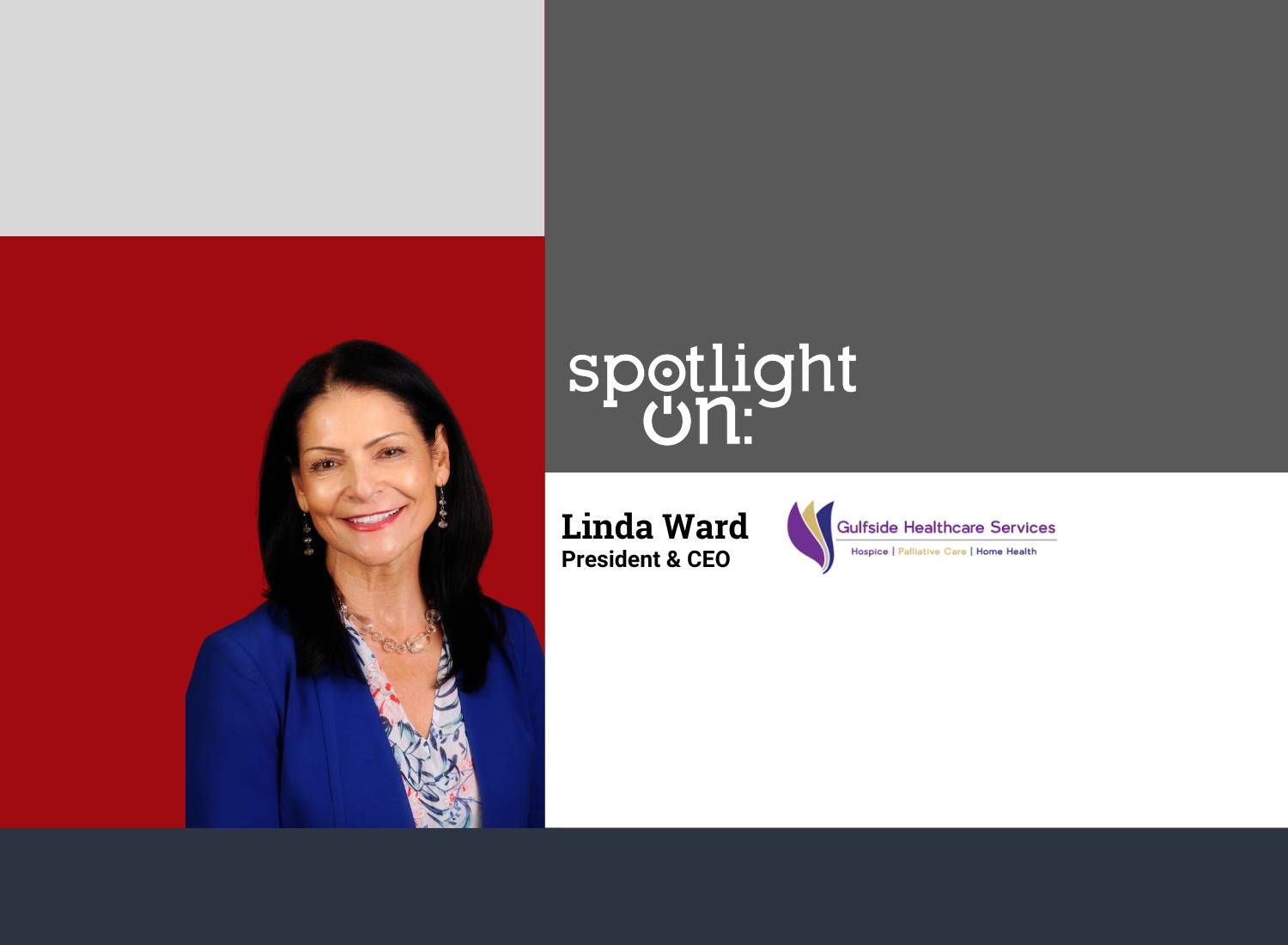 March 2026 — Linda Ward, president and CEO of Gulfside Healthcare Services, sat down with Invest: to discuss the organization’s strategic expansion across Tampa Bay, its commitment to underserved communities, and the evolving regulatory landscape shaping post-acute care. “Key trends in healthcare across the entire continuum, from acute to post-acute care, are increasingly focused on quality, compliance, regulatory risk mitigation, and fraud prevention. Whether you’re part of a healthcare system or a rehabilitation facility, it’s critical to stay informed about evolving regulations and understand what is expected of us,” Ward noted.
Over the past year, what significant shifts have most impacted Gulfside, and how have you adapted the organization’s strategy or operations in response?
We’ve experienced significant internal shifts here, driven by growth and change. Over the past year, we secured two certificates of need, first in Hillsborough County and most recently in Pinellas County. We’re now proudly serving the tri-county area of Tampa Bay. We are embracing the entire Tampa Bay market with our hearts, hands, expertise, love, care, concern, and compassion. While that might sound hokey, it’s truly what people want and need. They want to feel cared for and know they have consistency, continuity, compassion, and expertise, and I’m deeply passionate about delivering that.
Championing the team at Gulfside is my top priority. Everyone here is incredible. They work hard, strive for excellence, and deserve recognition for their efforts. This past year has been exhausting due to the pace of our expansion, building a new care center, opening two campuses, and converting to a new electronic health record system. These have been major undertakings.
Externally, the biggest challenge in healthcare right now is reimbursement and regulatory change. On the home health side, we’ve seen more than a 16% decrease in reimbursement over the past six years. That’s a significant hit. Even as a nonprofit, we must generate a surplus to sustain our business lines, and that’s been a struggle. However, growth in other service areas and ongoing advocacy for increased palliative care reimbursement are helping to balance things on the post-acute side of healthcare.
Economically, one of the most critical issues we’re watching is the carve-out of the Medicare Part A benefit for hospice. Hospice has been exempt from managed care reimbursement for the past 20 years, but if that carve-out ever changes, it could result in up to a 10% annualized revenue decrease. We’re always projecting for that possibility, based on the broader shifts happening in healthcare
.How is Gulfside engaging with rural and minority communities to ensure equitable access to hospice and palliative care?
Pasco County was once a predominantly rural area, and although it has become more urban over time, many communities here remain underserved. At Gulfside, we’ve been committed to serving rural populations in Pasco for decades. In my 21 years with the organization, I’ve seen firsthand that the need still exists. When patients are underserved or when gaps in care emerge, a certificate of need (CON) can be pursued to expand services. In our Hillsborough County application, we identified underserved, underinsured, and uninsured populations using a variety of indicators. We’ve since begun serving those patients and will follow the same approach in Pinellas County.
Many of these individuals live in low-income senior housing, receive subsidized home support, or reside in communities with limited access to care. Minority groups are often among the most underserved, many are unfamiliar with hospice or hold misconceptions about what it offers. That’s why education is a key part of our outreach. We’re working to help these communities understand how hospice can improve quality of life and overall health outcomes. We officially began serving Hillsborough County on Aug. 18 and currently care for about 25 patients. Our focus is on reaching rural areas and minority populations, and we’re committed to expanding access and awareness in every community we serve.
How is Gulfside approaching workforce development, training, and staff retention?
If you had asked me two years ago, I would’ve told you we were struggling significantly with staffing. There was a high number of vacancies, and the nationwide nursing shortage, currently at 41%, continues to be a major challenge. In the Tampa Bay market, I believe the shortage still hovers around 18%. Despite that, Gulfside has built a reputation for excellence in staffing and retention. We work hard to stay competitive with salaries, but that’s just the baseline. The real question is: What can Gulfside do differently? How can we be creative and strategic in building a retention foundation that encourages people to stay and grow with us?
The community has seen our growth, and there’s a natural curiosity building. Word is getting out. That’s thanks to a unified effort across human resources, clinical leadership, operational leadership, and our public relations team. Together, we’re reaching the market through a mix of conventional and unconventional strategies. When you invest in outreach, you get results.
One initiative that has made a big impact is our biweekly in-person hiring fairs. Many organizations moved away from these events. We did too for a while, but about 18 months ago, we brought them back to help fill 30 to 50 positions in Hillsborough before opening. Since then, we’ve hired more than 100 employees in just six months. These hiring events are thoughtfully executed. Our clinical and operational leaders attend the events, greeting candidates with refreshments and warmth. HR meets with attendees and directs them to individual interviews with team leaders. It’s a full-circle experience.
We also have an exceptional recruitment team. One of our nurse recruiters is a former Army nurse, and I’ve never worked with anyone like her. She’s dynamic, compassionate, and builds lasting relationships with candidates. Some still ask about her years later. Heather’s work on the PR side has been transformative. She’s elevated our visibility through media, advertising, and strategic messaging, all while listening closely to what our team needs. It’s been a godsend. Once people experience Gulfside, once they feel the culture and the care, they want to be here. It’s a true team effort, using every communication tool at our disposal to reach the right people in the right way.
What key trends are you watching most closely right now?
Key trends in healthcare across the entire continuum, from acute to post-acute care, are increasingly focused on quality, compliance, regulatory risk mitigation, and fraud prevention. Whether you’re part of a healthcare system or a rehabilitation facility, it’s critical to stay informed about evolving regulations and understand what is expected of us. These changes add significant operational demands.
One recent development is the HOPE Tool, which was introduced for hospices on Oct. 1. Although its implementation is currently paused due to the government shutdown, it represents a much higher standard of documentation and reporting. This tool will likely require additional staffing to meet its complex requirements. Failure to comply could result in reimbursement changes and regulatory penalties. Compliance is becoming the central theme in healthcare, especially as managed care continues to push for more efficient spending and reduced waste. This shift is one of the most impactful trends we’re all navigating, regardless of our role or setting within the industry.
As you look ahead to the next two to three years, what key priorities or goals are guiding Gulfside Healthcare Services?
Our focus moving forward is to maximize the utilization of hospice care, remain the provider of choice in Pasco County, and become the provider of choice in Hillsborough and Pinellas counties. At the same time, we’re committed to sustaining a strong, healthy, and satisfied workforce and hope to increase retention and reduce turnover.
The past 18 months have been marked by significant expansion. Because of that, I believe it’s important not to pursue additional growth in the immediate future. This is a time for concentrated effort. We must ensure we meet all of our projected goals, adhere to budgetary guidelines, keep our units filled, and prevent other providers from entering any of our three service territories. Achieving this will require hard work, dedication, and strategic focus. We have plenty on our plate, and I believe we should hold off on further expansion for at least the next two years.
Want more? Read the Invest: Tampa Bay report.