






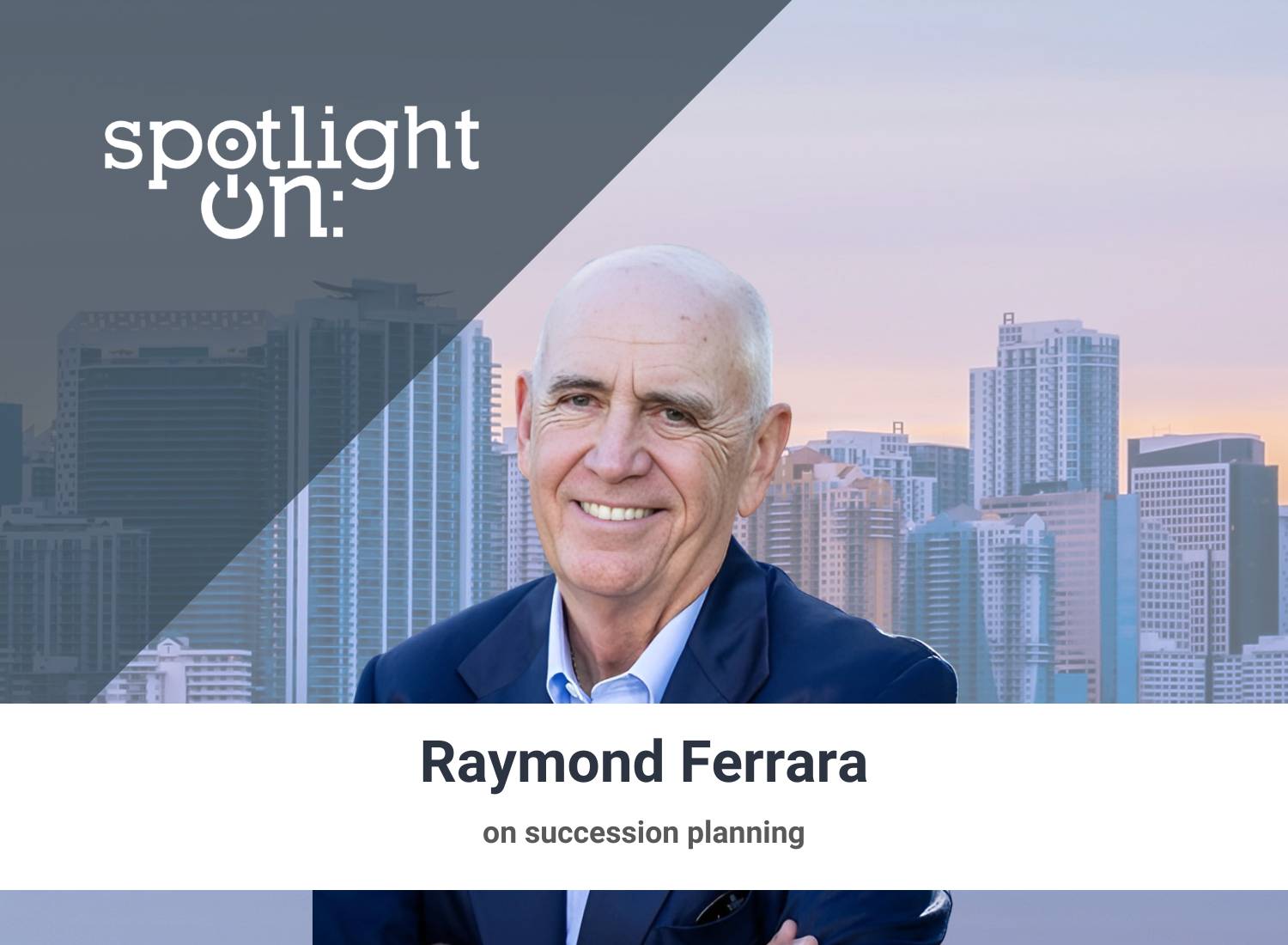
Spotlight On: Raymond Ferrara, Founder and Executive Chair, ProVise Management Group
 January 2026 — As the Tampa Bay region continues to grow and evolve, so do the financial planning needs of its residents. Comparatively, whether it is AI or regulation, the financial planning and advisory sector continues to evolve with the times. In an interview with Invest:, ProVise Management Group founder Raymond Ferrara highlights the evolution of the industry, the growth of the firm and outlook for the Tampa Bay region.
Join us at caa’s upcoming leadership summits! These premier events bring together hundreds of public and private sector leaders to discuss the challenges and opportunities for businesses and investors. Find the next summit in a city near you!
What key developments have shaped the company’s current strategies?
We continue to focus on succession planning. In 2026, the firm will celebrate its 40th anniversary, and we now manage more than $2 billion. We’re passing the torch to the next generation, and I’m eager to see the business continue to thrive beyond my day-to-day involvement. I plan to slow down this year, and we’ll also be relocating our Clearwater office.
Two years ago, I stepped down as CEO, with the President assuming that role and another partner becoming President. After two months, I realized I was still performing CEO-level duties. I met with both partners and reminded them that titles come with responsibilities — I had to stop doing their jobs. They said they didn’t want to step on my toes, and I told them, “Well, stomp as hard as you want, and when it hurts, I’ll let you know. Until then, start doing what the job requires.” A bit of mentoring was needed, but everything is going very well.
Our leadership pipeline is strong — the CEO is 14 years younger than I am, the President is 14 years younger than him, and the Executive Vice President is 14 years younger than the President. We have succession planning lined up for years to come.
In what ways have you identified AI to improve advising and client service?
From an industry standpoint, one of the biggest roadblocks to using AI is that there are so many potential applications, but we can’t use it when any personally identifiable information is involved. Certain prompts could expose customer Social Security numbers or other sensitive data. The industry is still grappling with how to use AI without violating privacy regulations — and that’s a major issue.
Ideally, I’d love to use AI in meetings to capture conversations, write up notes, and outline action steps. We recently found a program that appears to meet regulatory requirements, and we’ll be testing it soon. The key is preventing personal information from entering the mainstream and ensuring it stays securely within our servers.
The industry remains constrained by the need to protect information while also striving to modernize processes. I’m confident we’ll get there. When it comes to research, we’re fully engaged with AI. We have clear policies and procedures in place, and staff must verify, modify, and update all AI-generated reports. We’re moving in the right direction.
What trends are currently influencing the advisory space?
The unfolding story is the administration in D.C. with a new SEC commissioner who seems more business-friendly. I see regulators as wanting to keep all of us in line, but they should also develop policies and procedures that help us. The former administration created regulations through enforcement, which caused a lot of disruption in the profession. The current regulators seem more business-friendly. That doesn’t mean they’re regulating less, it means they’re being more sensible about how they’re doing it.
This is a dramatic shift. Compliance is a huge expense in terms of people, software, and the many moving parts involved. We work hard to stay on top of it all. Regulation tends to focus on the lowest common denominator, which means those of us doing things right still have to carry the full burden. It’s a key part of our business, but we’re resilient.
As the region grows, how is your client base changing or evolving?
Florida continues to see about 1,000 new residents daily, many of them coming from the Northeast and Midwest — and a significant share moving to the five-county area surrounding Tampa Bay. There has been substantial construction of both residences and apartments, which has strained pocketbooks due to the strong rental market. That rapid pace of growth appears to be easing slightly, which I believe is a good thing.
When thinking about residential housing, there are two ends of the spectrum. Home prices have accelerated because of low supply, creating a seller’s market. With rising interest rates, many homeowners who would like to move up are finding themselves stuck since their current mortgage may be at 3%, while new loans are closer to 6% or higher. That’s a big jump, and it has slowed the market. Where homes once sold in days, they may now stay on the market for 45 days or more which, compared to the past few years, feels long.
On the other end, workforce housing remains a key challenge. We’re making progress, but it’s a slow grind. It’s top of mind for many, and numerous organizations are working on it. Locally, the governments of Clearwater, St. Petersburg, and Tampa have made workforce housing a priority.
Looking ahead, what are your key goals and priorities?
The Tampa Bay area aims to become the tech hub of the East Coast. The region is working hard toward that goal with support from the University of South Florida, several growing innovation districts, and organizations assisting startup companies. We’ve attracted many investors and investment management firms, particularly from New York and Connecticut, and we expect that trend to continue thanks to strong government and community support. This growth is creating better-paying jobs than we’ve traditionally seen in the past.
From ProVise’s standpoint, we’re looking forward to celebrating our 40th anniversary — a major milestone for us. As I continue to slow down, I look forward to seeing the company grow over the next 20 years into an $8 billion firm.
Want more? Read the Invest: Tampa Bay report.