






Spotlight On: Richard Bryant, Founder & CEO, Capital Investment Companies
Key points:
- • AI and new technologies are reshaping financial services, pushing middle-market firms to stay nimble and efficient.
- • Capital Investment Companies is focusing on generational transition, mentoring younger advisers, and expanding its talent pipeline.
- • The firm plans to grow its family office and advisory platform to capture generational wealth transfer opportunities.
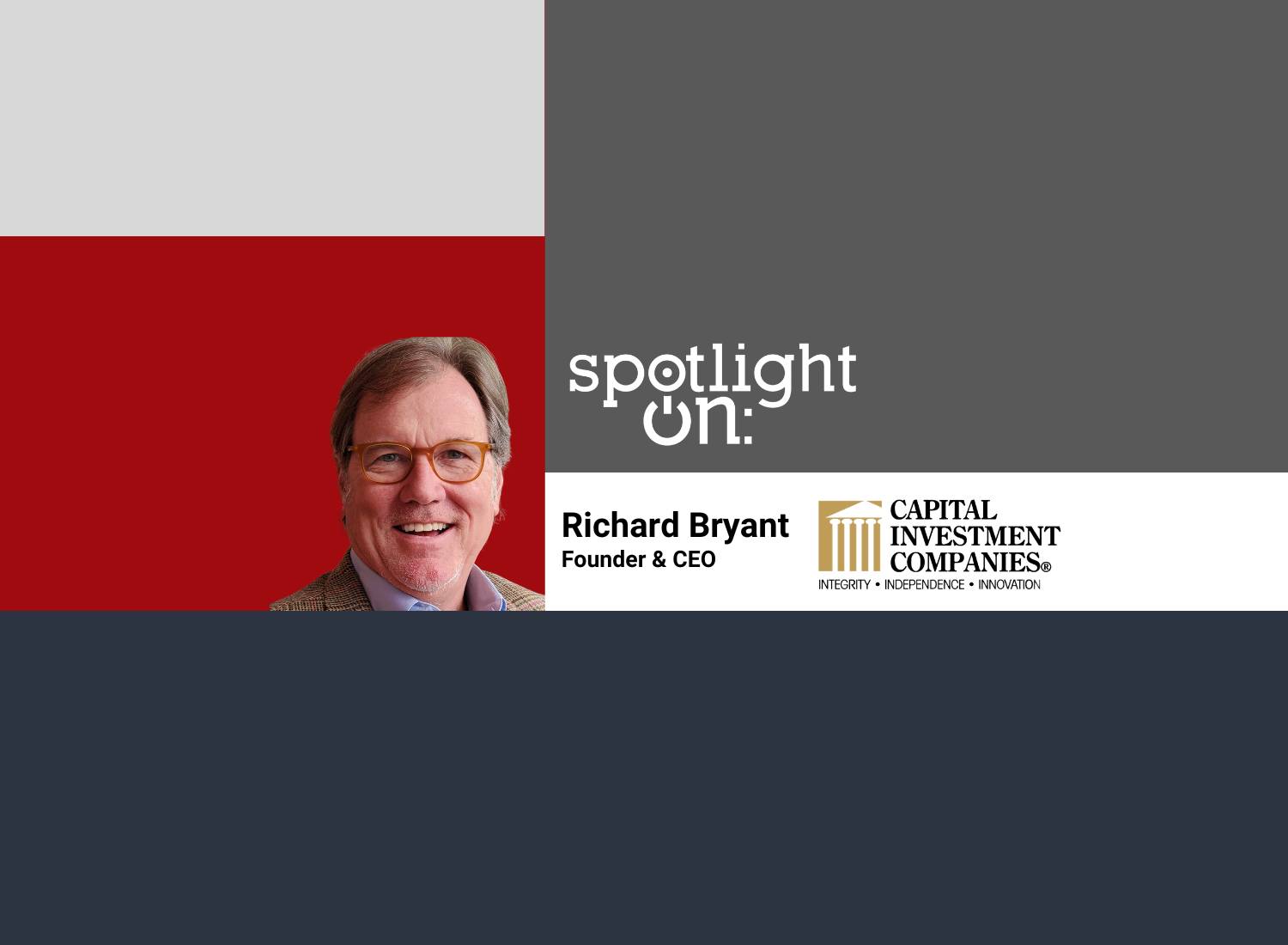 March 2026 — In an interview with Invest:, Richard Bryant, founder and CEO of Capital Investment Companies, said that staying nimble and embracing innovation, especially around artificial intelligence, is key to remaining competitive in the middle-market financial sector. “The biggest change, which is probably the same answer you’re hearing from everyone, is artificial intelligence and how it’s impacting our business. It’s all about not getting left behind,” Bryant said.
Join us at caa’s upcoming leadership summits! These premier events bring together hundreds of public and private sector leaders to discuss the challenges and opportunities for businesses and investors. Find the next summit in a city near you!
Over the past 12 months, what have been the most significant changes for Capital Investment Companies?
The biggest change, which is probably the same answer you’re hearing from everyone, is artificial intelligence and how it’s impacting our business. It’s all about not getting left behind. That’s definitely the main thing.
Another major development is my son joining the firm. That has been a great addition for us and me, personally. Capital Investment Companies now manage over $9 billion. While that may not seem massive compared to the industry giants, it’s substantial for a middle-market player like us. To stay competitive, especially in the middle market, you need to be nimble, attentive, and consistent. I’ve been doing this for 42 years, and that adds up to a lot of days showing up and staying relevant.
We’re also getting younger, which I find energizing. I think of Capital like a puzzle that’s worked from the inside out: there are no boundaries, just continuous expansion. That puzzle is growing not only in size but in youth. Some of my senior advisers are aging out. We oversee roughly 190 brokers across 13 states, most of whom are independent. Some of them are nearing retirement, so a big part of my focus has been on passing the torch to the next generation. That transition has actually been one of the more rewarding parts of the job over the last few years.
How is Capital Investment Companies leveraging technologies like AI or data-driven platforms to streamline operations and enhance the overall client experience?
As a mid-tier firm in a rapidly evolving industry, we must be cautious not to overreact to every new tech product that comes our way, and there are a lot. I get weekly emails promoting the “next big thing” for our reps or our firm. I usually save them and review them when the time is right, especially since we have so many vendors — companies like BlackRock and First Trust — that think ahead on our behalf. We have also recently formed a Technology Committee composed of advisers, management, and compliance individuals.
I’ve realized I don’t want to be on the leading edge of innovation. The flow of new tools is relentless. Still, we’ve adopted a few technologies recently that have helped. Some of these apps can record a client meeting, transcribe it, summarize the conversation, and even flag emotional cues, such as if the client appears tense. One app can even schedule follow-ups automatically. These tools have been game-changers, especially for independent advisers without support staff. They’ve improved productivity by over 50% in some cases.
That’s crucial because in this industry, you’re expected to “know your customer,” and taking notes all day can wear you down. It’s a great business with strong earning potential, but staying sharp is essential, and IT helps us do that.
We don’t yet fully grasp where AI will ultimately take us. Markets have been booming lately, and we’re helping people take advantage of the opportunities at hand, but we also know a pullback is coming. That’s inevitable.
What has been your approach to managing the generational divide, and have you noticed any distinct differences in how the various generations operate in the workplace?
It’s almost like being a parent to these younger professionals. They definitely expect more from their jobs, their leadership, and the technology they work with. I have employees from multiple generations, and they all engage in different ways. I even have a nephew in his mid-40s who didn’t know what iTunes was for the longest time. Meanwhile, younger and older generations around him did.
We’ve developed a mentoring program with NC State University in Raleigh, and we’re bringing in interns from their College of Management. These students are bright, eager, and they want to learn. Youth is definitely being served in the Raleigh-Durham area, with schools like NC State, Duke, and UNC producing some impressive talent. Personally, I’m partial to NC State — the students from there are hard workers and don’t have the entitlement mentality that we encounter at times.
They’re also highly tech-savvy. When we bring someone in to help with our digital footprint or marketing collateral, they can execute it in no time. Meanwhile, we’re still debating to what extent we want to implement. They help to push us forward, and if you don’t listen to them, they may leave. This generation tends to “job hop” until they find something that really clicks.
However, the market’s shifting. With AI-related layoffs happening, job security is back in focus. People are holding on tighter to the jobs they have. I was shocked when I saw that Amazon laid off 14,000 people. It made me wonder, where were they even working? All we see are the delivery trucks and apps, but clearly, there’s much more behind the scenes.
It’s unsettling, especially with government layoffs too. But I remember the 2008 recession, and people found ways to land on their feet. New industries emerged out of necessity. American ingenuity always finds a way.
When it comes to Gen Z, how are you seeing them approach wealth creation and investing?
Platforms like Robinhood have empowered Gen Z to be self-sufficient investors. But that self-sufficiency only lasts until the stakes get higher. I read a stat that said nine out of 10 Americans with more than $500,000 to invest believe they’ve done — or would do — better with a financial adviser. That tells you something. Once people accumulate real wealth, they want someone else to manage it because it’s overwhelming, and they already have full-time jobs.
My younger son is a perfect example. He’s got his own trading account. He’s doing his thing. And a lot of people are, until something goes wrong. I remember during the last crash, everyone, from waiters to bartenders, had some “hot” penny stock. But when the downturn hit, many of them lost everything. That’s how it goes. Investing can feel like gambling for some, but it shouldn’t be treated that way.
The reality is that if you buy, hold, and stay disciplined, you can average 10% to 15% annually and benefit from long-term capital gains, which are taxed less. I’m seeing more of this long-term mindset emerging in younger investors now. It’s as if they’re starting to resemble their parents in their investment behaviors. When we find people like that, we try to bring them into the firm because they’re the future.
Looking ahead two to three years, what is your vision for Capital Investment Companies, particularly in the Raleigh market?
We will continue to build out our family office offering. We already provide a wide range of services — stocks, bonds, insurance, annuities, managed money, alternative investments, real estate — you name it. But I want to better define and market our Ensemble Platform, especially for the next generation.
I’d love for our younger team members to help shape how this looks, to make it something their peers can relate to. We’re in the middle of a massive generational wealth transfer, and we need to meet that moment with a clear, compelling offering. We have access to world-class services because of our size and independence, and I want to make sure people know that.
One big challenge is public perception. Some potential clients think we’re too big for them. I’ve had people say, “I only have $500,000, so I didn’t think you’d be interested.” Well, I’ll take that any day. We need to do a better job getting the word out about who we are and who we serve. We’ll also continue leveraging technology to improve our operations and client experience.
On a personal note, I’m focused on legacy. At 66, some people are asking if it’s time for me to retire, but I don’t think that way. My dad was active well into his 90s. I’ve spent 42 years building this company, and I want the Capital name to stay on the building. I’m not looking to cash out. I want to make it even better for my family and the team that’s helped build it.
Want more? Read the Invest: Raleigh-Durham report.