Spotlight On: Rob Shaw, President & CEO, Echelon Bank (I/O)
Key points:
- • Regulatory approval and capital raise validate Echelon Bank’s launch and market demand.
- • Culture-first hiring and employee ownership are central to attracting and retaining talent.
- • Strategy blends digital tools with relationship banking, emphasizing trust and local service.
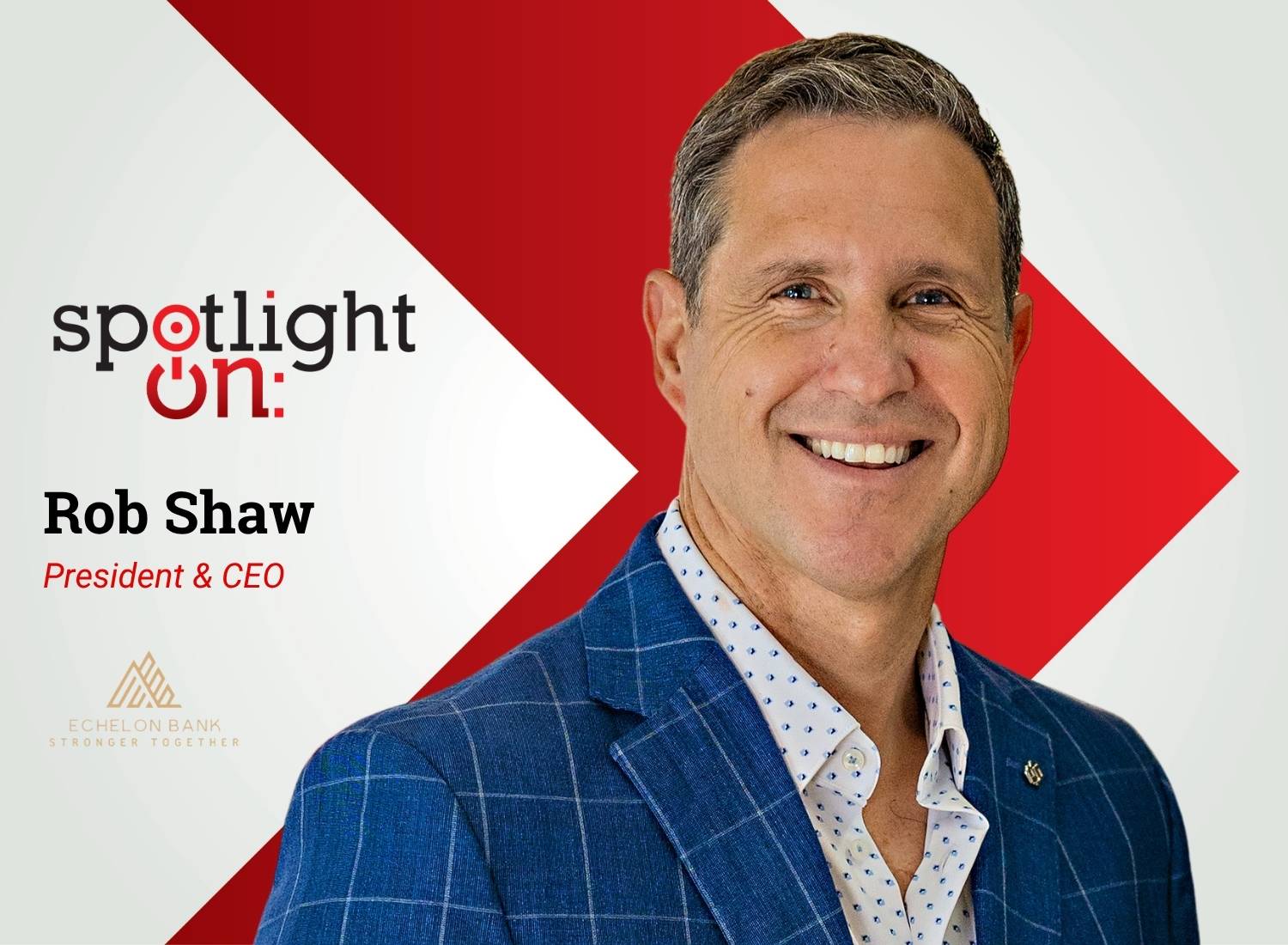 April 2026 — Invest: spoke with Rob Shaw, CEO of Echelon Bank (I/O), about securing regulatory approvals, assembling a culture-first team, and building a high-touch community bank. “Even with all of the technology, I still believe there’s a return to old-fashioned relationship banking. Humans are social creatures. Nothing replaces real interaction and trust,” Shaw said.
Join us at caa’s upcoming leadership summits! These premier events bring together hundreds of public and private sector leaders to discuss the challenges and opportunities for businesses and investors. Find the next summit in a city near you!
What do the recent regulatory approvals and capital-raise milestones mean for you and your team as you prepare to launch in Tampa Bay?
Regulatory approval is huge. Banking is a regulated industry, as it should be, and it’s a very serious business. When you start a bank, you’re making loans and taking deposits, and you need to make sure you know what you’re doing. I welcome, respect, and value our regulatory partners.
The fact that they approved us for a new charter is a source of tremendous pride and it makes me feel like we’re on the right track. Sometimes we’re in the weeds day to day, but having outside experts tell us they believe in what we’re doing and giving us their approval means a lot.
Reaching the minimum capital is another major milestone because you can’t open a bank without it. It’s also meaningful because we now have almost 200 investors. That tells us our message is resonating. Not only are we checking important boxes, we’re getting validation that we’re doing the right things and that others see the need for a great new local bank, just like we do. I couldn’t be more proud to have the regulatory approval and to have met the minimum required capital.
What are the most important steps when opening a bank, ahead of opening day?
Don’t rest on your laurels. Don’t take your foot off the gas. We want to keep raising capital and continue working with the regulators.
One big initiative is standing up our core operating system. The due diligence and selection process took us four or five months, and we went with a very strong provider, FIS, using a system called Horizon. The core is like the engine underneath the hood of a car.
Another major focus, and the most fun part for me, is continuing to build out the team. I love banking. It’s what I’ve done since I got out of the Army, and I want to build a team of fellow bankers who share that passion and who care deeply about Tampa Bay. We want to serve local businesses, especially small and midsized companies that can fall through the cracks. We want to support them with loans, deposits, lines of credit, treasury management services, and the kind of white-glove, high-touch approach local banks are known for.
In a competitive banking market like Tampa Bay, how are you attracting and retaining top financial talent?
We’re big on culture. We want to create an incredible place that is employee-centric. I’ve been in this market since 1999, so I know a lot of great bankers, and many of them know me and other members of our team. They know our leadership style and the culture we want to create, and that matters.
We’re also focused on ownership. We want team members to be able to invest their own capital into the bank, and we want to provide stock options so they can build a meaningful ownership stake. When people think and act like owners, it’s not just a job anymore. It becomes a career and an organization they have pride in.
In banking, the best people, the ones with the most passion, can also be the most frustrated if the culture isn’t right and they can’t serve clients the way they expect of themselves. Those are the people we want. It’s a competitive industry, and I have tremendous respect for other institutions in this market, but we’re having success because culture is at the center of what we’re building.
What key trends are shaping the banking sector right now, especially in Tampa Bay, and how are you positioning yourself to stay ahead?
The name Echelon Bank is tied directly to our culture. I’m passionate about cycling, and echelon is a French word for how the peloton rides in a diagonal staggered formation through crosswinds. It’s all about teamwork and being stronger together. No individual can ride farther or faster than an echelon working together, and that’s exactly the idea we want inside the bank.
On the industry side, there’s a clear push away from traditional brick-and-mortar. More banks are moving to electronic delivery models with mobile and online tools. We’ll adopt that, too, but we’re not giving up on brick-and-mortar entirely. We believe a limited, strategic physical presence still matters, especially for a local community bank.
Artificial intelligence is another major trend. Everyone is looking for ways to be more efficient. We’ll use AI strategically, including where it can support underwriting and improve speed and consistency, but we also want to keep the fundamentals of relationship banking. At the end of the day, we still bank people.
Crypto and stablecoins are also evolving parts of the financial landscape. With appropriate regulatory oversight, we’ll look for responsible ways to integrate that world where it makes sense, but we’ll be selective. As a local bank, our priority is serving local businesses and doing it well.
Even with all of the technology, I still believe there’s a return to old-fashioned relationship banking. Humans are social creatures. Nothing replaces real interaction and trust. I’m Gen X, so I’ve embraced new tools as they’ve emerged, but I don’t want to lose touch with the fundamentals of human connection.
Looking ahead two to three years, what are your key goals and priorities for the bank?
Initially, we want to gain scale to achieve profitability, but my goal isn’t to set a record for getting profitable as fast as possible. My goal is to build the strongest, most robust foundation we can, so we can support long-term growth.
We also want to capture market share. When I started my career in Florida in 1999, there were more than 300 banks. Now there are fewer than 70. Nationwide, there were over 15,000 banks and now there are fewer than 5,000. That consolidation creates opportunity for a strong new local bank.
Tampa Bay is a big, small town, and word travels. If we execute, people will know. The region has over $200 billion in deposits. Even a small slice of that represents meaningful scale, and I believe this market can support a multi-billion-dollar local bank. The most successful organically built bank I’ve seen here was U.S. AmeriBank, which sold in 2017 at about $4.5 billion. The market is bigger now, so building a billion-dollar bank is even more feasible today.
But I don’t want to lead with big numbers. I want to focus on execution. Do the basic blocking and tackling. Make the phone calls, call people back, follow up, underwrite quickly. If it’s not a good deal, tell people no quickly. If it fits, get it done and close it rapidly. Great service becomes the best source of marketing, and that’s how momentum builds.
Want more? Read the Invest: Tampa Bay report.