






Spotlight On: Tim Brewer, President, Mitchell Community College
Key points:
• Mitchell Community College is pivoting toward adult learners and short-term, workforce-driven programs as demographics shift.
• Employer demand is shaping expanded training in healthcare, advanced manufacturing, IT, logistics, and public safety.
• The college is focusing on flexible delivery, targeted technology use, and programs that drive economic mobility.
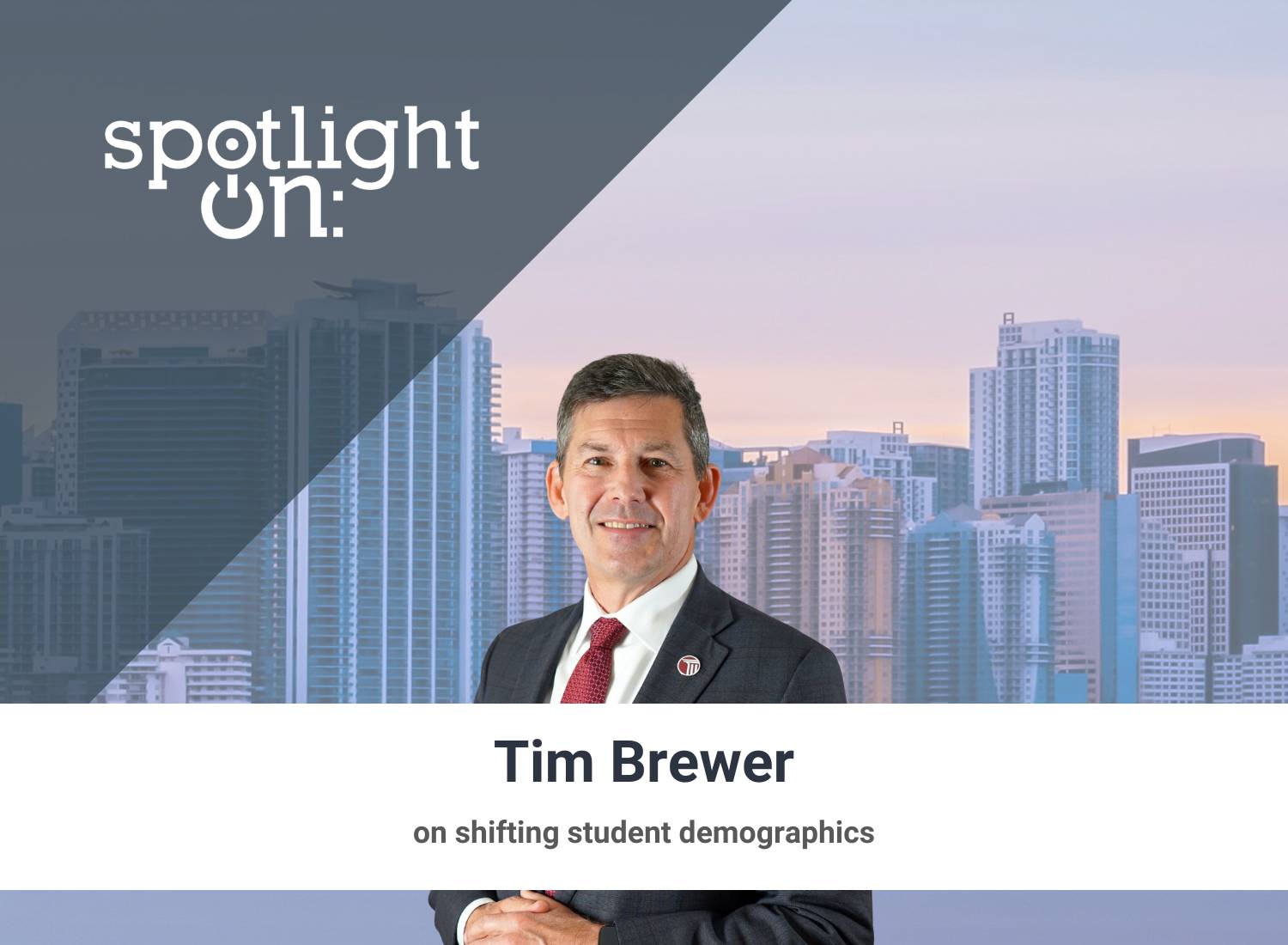 February 2026 — Invest: sat down with Tim Brewer, president of Mitchell Community College, to discuss how shifting student demographics, workforce demand, and regional growth are shaping the college’s priorities. “There should be a porous boundary between what goes on in the classroom and what happens in the real world,” Brewer said.
Join us at caa’s upcoming leadership summits! These premier events bring together hundreds of public and private sector leaders to discuss the challenges and opportunities for businesses and investors. Find the next summit in a city near you!
What changes or shifts over the past year have had the greatest impact on Mitchell Community College and how it serves the region?
Over the past year, we have seen a growing sense of urgency around several trends that are affecting community colleges across the country. One of the most significant is the shift in the traditional student population. We talk a lot in higher education about the enrollment cliff, and while our region is still growing and we are not experiencing it as sharply as some other areas, we know it is coming. That means the pool of recent high school graduates is changing, and we have to pay close attention to how that will affect enrollment, programming, and services.
At the same time, we are seeing much more emphasis on the adult learner. These are individuals who are beyond the traditional college age and are looking to retool, reskill, or change careers. Along with that comes increased demand for short-term educational opportunities that allow people to get into the workforce more quickly. For us, that means taking a hard look at our program portfolio, investing in high-demand, career-oriented programs, and being willing to sunset programs that are not providing clear pathways for students.
We also have to think about our positioning as a community college within the region. Today’s learners have grown up in a digital world, and we have to meet them where they are while still emphasizing strong learning outcomes. We have to build a culture that values outcomes and stays data-driven, but we also cannot be blinded by data and miss what is happening on the ground with our students. It is an exciting time for this region and for higher education, but it comes with a responsibility to respond to change with focus and urgency.
How would you describe demand from employers in the region, and how are you adjusting programs to stay aligned with those needs?
Our strategic plan is built around three tenets. One is teaching and learning: how we teach and how our students learn. There should be a porous boundary between what goes on in the classroom and what happens in the real world. The second is partnerships, meaning how we work with businesses and industries, nonprofits, and community organizations. The third piece is social and economic mobility for our students, and that is the lens we use to evaluate whether we are delivering on our mission.
We lean heavily on business and industry input into what we offer and how we offer it. We use data to understand labor-market demand and to identify the career paths that provide the best opportunities. From there, we have to do the operational work: building programs, funding them, planning for facilities and equipment, and hiring faculty who can deliver instruction aligned with industry needs. We also have to ensure programs meet accreditation and credentialing requirements so that students leave with relevant, recognized qualifications.
Our service area is Iredell County, but we know our students are working throughout the region and that talent flows both ways. If we are doing our work correctly, our programs will serve local employers while also staying relevant to broader regional needs.
Explore more from our Charlotte coverage:
Spotlight On: Teresa Campo, Director of Economic Development, City of Monroe
Spotlight On: Matt Donato, Partner, Echelon Risk + Cyber
Spotlight On: James Meacham, CEO, Rowan County Tourism
Which sectors are showing the most growth, and how is Mitchell preparing students to meet future workforce needs?
Our programmatic focus aligns closely with statewide workforce priorities and the needs we see emerging locally and regionally. Healthcare continues to be a major growth sector, anchored by our strong nursing program. We are also expanding capacity in high-demand allied health fields, including respiratory therapy, physical therapy technician, and occupational therapy technician.
Advanced manufacturing is another key area of growth. Mitchell Community College offers programs in mechatronics, advanced integrated machining systems, and machining technologies, all designed to meet the evolving needs of modern manufacturing. Our fastest-growing skilled trades program is welding, supported through a unique partnership with our public schools and a centrally located, state-of-the-art welding facility.
Information technology is also a priority, with our program participating in the North Carolina Cyber Network and emphasizing cybersecurity and networking. In addition, we are strengthening our focus on supply chain and logistics to support the region’s distribution and manufacturing infrastructure.
Public safety remains a critical workforce need. Mitchell provides extensive public safety training in Iredell County, including basic law enforcement training that attracts students from across the region. We are also preparing to build a new public safety training facility that will serve Iredell County and the broader region.
Across all of these sectors, the common thread is a commitment to high-demand, career-oriented pathways that prepare students to enter the workforce quickly, meet employer needs, and support the region’s continued economic growth.
How are you using technology to provide flexibility for adult and working learners while maintaining strong learning outcomes?
Technology is a broad topic, and we try to approach it intentionally. We are paying close attention to AI, and we have worked to train faculty and staff on responsible use of AI in the classroom and across campus. We also know the students coming to us are digital natives. They are bringing technology with them and using many of these tools already, so our job is to help them use technology in ways that strengthen learning, not replace it.
For adult learners and working adults who need to adapt to this digital landscape, Mitchell offers resources like its continuing education computer classes, which are in demand among adult learners (especially for specialty skills like Excel). Additionally, the Library’s Technology Tuesdays provide an open format for any student (with a focus on adult learners) to bring any technological question to the session, and they’ll help walk them through it.
Like most community colleges, we are heavily involved in distance learning and HyFlex models to provide flexibility for working learners and adult learners. But technology also includes what we need for training inside specific programs. In health sciences, for example, there are significant technological and equipment needs, and those tools change over time. The same is true in advanced manufacturing and other technical fields.
We cannot chase every trend. We ask what technology best supports our strategic plan: what improves teaching and learning, what strengthens partnerships, and what helps students achieve social and economic mobility. That framework helps us stay focused and make decisions that support long-term outcomes.
What are your top priorities for the next two to three years, particularly in terms of economic impact and student success?
We have to continue investing in high-demand, career-oriented programs and supporting that investment through how the college operates. A big priority is shifting our recruitment and retention strategies to focus more on adult learners, especially those outside the 18-to-24 range who want to retool, upskill, or earn new credentials. Alongside that is our continued emphasis on short-term training programs that provide a quick turnaround so people can enter or re-enter the workforce more quickly.
Historically, Mitchell is unique. Chartered in 1852 as a college for women, it has long been woven into the fabric of Iredell County. The building that now houses the President’s Office—constructed in 1856—was conceived as the heart of the new institution: a place for administration, learning, and living. Its stately Roman-deco columns still rise along the front façade, forming a proud colonnade that opens toward the panorama of downtown Statesville, as though the building itself extends a timeless welcome to the community it faces.
Over 170 years later, Mitchell’s footprint has expanded to include several classroom and administrative buildings at our historical campus, plus a Continuing Education/Workforce Development Campus, a Health Sciences location, the Mooresville Campus, and the anticipated Public Safety Training Facility with future infrastructure expansion planned. Joining the North Carolina Community College System (NCCCS) in 1973, Mitchell built a reputation for transfer education, supported by three early colleges and a robust dual enrollment program.
Looking forward to the future, strategically, we have to think about our program portfolio and ensure we are investing in programs that create mobility for students and value for employers. We have to think about enrollment strategies that recognize where the student population is going, and we have to ensure our culture shifts along with those priorities. We have a Board of Trustees that is aligned with that direction, and we are fortunate to be in a region that continues to prosper. But prosperity takes work, and it takes an institution that is willing to be transformational in how it serves students and the community.
Want more? Read the Invest: Charlotte report.