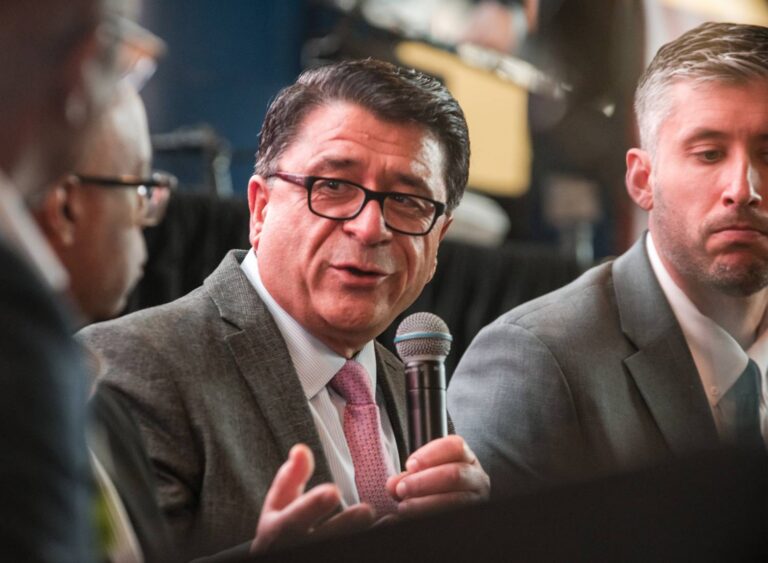







Thomas McGonigle & Michael Zogby, Barnes & Thornburg LLP
 Barnes & Thornburg has moved decisively into the Philadelphia–New Jersey corridor over the past three years, building a fast-growing platform that serves life sciences, healthcare, technology, manufacturing, and financial clients across Pennsylvania, Delaware, and New Jersey. In an interview with Invest:, Thomas McGonigle (Wilmington and Philadelphia Partner-in-Charge) and Michael Zogby (Partner-in-Charge of the New Jersey office, Co-Chair of Trial and Global Disputes, and Philadelphia Partner-in-Charge from 2022-25) discuss how regulatory shifts, litigation trends, and rapid technological change are shaping their strategy — and how the firm is investing in people and culture to support clients in a complex, tech-driven legal environment.
How have regulatory or policy shifts in Pennsylvania and Delaware over the past year changed the kind of legal issues your clients are bringing to you?
Michael Zogby: In Pennsylvania, what we are seeing is driven by the courts, venue decisions, and the pace and volume of litigation. We handle significant commercial litigation, product liability, life sciences, and mass tort matters, and we’re involved in all of the major mass torts in the Philadelphia court system. Alongside that, we’re also seeing activity in environmental, white-collar investigations, business disputes, and other complex issues.
On the policy side, we’re closely tracking legal reform initiatives that are priorities in Pennsylvania — including potential limitations on verdicts and punitive damages, decisions on personal jurisdiction, and reform options for broader lawsuit abuse issues. Those discussions are tied to judicial decisions, forum shopping, and who’s in government and the judiciary after recent elections and how they view legal reform. What’s very clear is that trials are picking up. Cases are being fast-tracked, courts are giving us more trial time, and we have seen courts moving out of the pandemic slowdown phase. We’re not seeing the level of legal reform you might see in some other states, which isn’t entirely surprising, but it does shape the risk environment clients are facing.
Thomas McGonigle: On the litigation front, we also continue to see Delaware as a place where businesses want to resolve their disputes, in addition to litigation in Pennsylvania. From a regional perspective, we’re seeing the digital economy drive legal needs. For example, supply chain/logistics expansion regionally has led to an uptick in real estate, land use and complex commercial real estate transactions. The cost of energy, coupled with the need for more generation to support the IT/data-driven economy, often fueled by data centers, are becoming pressing issues.
That means more legal work at the intersection of regulation and permitting for infrastructure, and energy projects, as well as public-private financing structures. Our job is to help our clients navigate these evolving issues across various regulatory regimes and to help them keep pace so they can stay ahead of emerging risks.
How are you adapting your strategy to keep pace with the complexity in these fast-evolving sectors?
Zogby: A big part of our strategic story is that we decided to expand to Philadelphia in 2022. We saw it as a critical market for life sciences, healthcare, and technology — and for our national trial and regulatory practices. You can’t just parachute into the Philadelphia courts or into the ecosystem and expect to be effective; you need people on the ground who know the judges, the courts, the regulators, and the business community.
Since launching the Philadelphia office, we’ve grown significantly in precisely those sectors. We’ve also invested in very targeted hires who sit right at the intersection of technology, regulation, and risk. One example is Vineet Gauri, who joined us from the U.S. Attorney’s Office for the Eastern District of Pennsylvania, where he led cybercrime, served as Deputy Chief of the Criminal Division, and oversaw national security matters. Cybercrime, national security, and data issues are top-of-mind for life sciences, healthcare, and tech clients, so his experience is directly aligned with their needs.
We also brought in Joe Tate and his team; Joe now leads eDiscovery for the firm nationally. Technological advancements, including artificial intelligence, eDiscovery, data privacy, information governance, and knowledge management, are central to modern litigation and investigations, especially in highly regulated industries. Those investments mean we’re not just talking about technology; we’re embedding it into how we litigate, investigate, and advise.
McGonigle: Beyond individual hires, we’re very intentional about cross-practice and cross-office collaboration, so that we can leverage our existing resources. Our teams in Philadelphia, New Jersey, and Wilmington work closely with colleagues across the firm in regulatory, IP, litigation, white-collar, and transactional practices. That lets us bring national subject-matter depth and experience to region-specific matters, which can be of great value to our clients.
For fast-moving sectors like life sciences and tech, the issues don’t sit neatly in one box. You might have regulatory questions, IP strategy, data and cyber issues, employment, and litigation exposure intertwined in a single matter. Our strategy is to bring those disciplines together seamlessly for clients so we’re delivering solutions, not just answers to isolated legal questions.
How are you helping clients think more proactively about the intersection of compliance, risk management, and reputation in an AI- and tech-driven world?
Zogby: We’ve built our approach around cross-group collaboration anchored to AI and technology. Our AI-focused team includes lawyers from intellectual property, regulatory, litigation, and transactional practices, alongside people who really understand the underlying technology. That mix lets us sit down with clients and have a very practical conversation: what are you trying to build or deploy, how do you want to use AI or new tools, and how can you do that ethically, efficiently, and safely, protecting proprietary data?
On the client side, that often means helping them design internal policies for AI and data use, navigating cyber insurance questions, and structuring technology-transfer and vendor agreements. We’re helping clients ensure that any data they share or ingest is handled under appropriate data protection regimes and reflects current AI risk and ethics considerations. The tools are powerful, but they also create security and regulatory risk; our role is to help clients capture the upside while mitigating the downside.
We’re doing the same work internally — launching systems that protect proprietary information while leveraging AI and technology to manage costs and timelines for our clients. So we’re advising on these issues and also living them in our own operations.
McGonigle: We try to take advantage of the fact that these issues are not unique to Philadelphia, Delaware, or New Jersey. Our clients across the country are facing similar challenges, and so are we as a firm. Because of that, we can draw on the insights from multiple offices and industries and then bring those lessons proactively to clients in this region.
Rather than waiting for a crisis or a regulatory problem, we’re using that firmwide experience to help clients stay ahead of the issue, helping them adjust policies, contracts, and governance structures before issues become public-facing problems or reputational hits. That proactive, cross-practice approach is where we can add real value for our local and regional clients.
What has made the biggest impact in strengthening Barnes & Thornburg’s position in the Philadelphia–New Jersey corridor, and what is your vision for the next few years?
Zogby: The biggest impact has been how quickly and smoothly we built a meaningful presence on both sides of the river. When we opened in Philadelphia in August 2022, there were three of us. We were able to move clients and matters into the new offices, plug into the courts, and start operating at full speed with strong support from the firm.
Growth followed very quickly. In Philadelphia, we went from those initial three people to more than 30 attorneys and professionals, and it is a diverse, strategic team that supports the entire firm. We outgrew our space almost immediately and are already at the point where we need a larger footprint. Over the past year alone, headcount in Philly increased by more than 50%, and revenue grew by over 25%. It’s become one of the busiest offices in the firm.
New Jersey has followed a similar trajectory — again, we went from a small group to more than 30 attorneys and legal professionals, and in both offices we are extremely active in the legal and civil justice communities. Across both markets, we’ve been very intentional: we’ve invested in business professionals, marketing, client development, recruiting, and other business roles to build the infrastructure for long-term growth. The key is that it’s not growth for growth’s sake — it’s cultivated growth, with the right people and the right fit.
McGonigle: Looking ahead, we’re building on a foundation where we focus on the fundamentals, providing great client service, running our business in a fiscally responsible manner and making needed long-term investments in the firm. We have been successful by focusing on executing on our plan, not getting distracted by the “flavor of the month.” To that end, we plan to double down on what the firm already does well. In this region, that means prioritizing litigation, public finance, labor and employment, healthcare, and life sciences, and recruiting lateral partners who both bring strong practices and align with our culture. When we recruit lateral partners, we seek great lawyers who embrace these fundamentals and value the steady, thoughtful leadership that has been a significant part of our history. We also spend a lot of time on integration when laterals join our firm, being very deliberate about bringing them into the firm’s fabric. Because we’re careful on the front end and serious about integration, our lateral retention rate is around 90%, which is quite high in this industry. Ultimately, we want people who join us for the long-term, whether it be in Philadelphia, Delaware or New Jersey. That disciplined approach has worked for us nationally, and we expect it to continue to work in the Philadelphia market and regionally.
Any final thoughts you’d like readers to take away about Barnes & Thornburg’s role in the region?
Thomas McGonigle: Our Philadelphia office is very well positioned for continued growth and for serving clients across the Northeast corridor. This is a very important market for us and we’re excited about how we can contribute to the firm’s national momentum from this region.
Michael Zogby: And we’re starting to see that recognized externally. Publications are noticing, clients are noticing. Our product liability team in Philadelphia was ranked Band 1 by Chambers this past year. For a team that wasn’t even in this market before 2022, that’s a significant signal. We are involved in the major cases and the most significant mass torts and commercial litigation cases. The brand is growing, the work is sophisticated, and the feedback from clients, the legal industry, and the life sciences and business communities has been very positive. It’s been exciting so far and we feel like we’re just getting started.