






Trade tensions deepen as investors struggle with uncertainty

Writer: Ryan Gandolfo
 3 min read March 2025 – Business leaders and investors have been on edge this week as the Trump administration dangles a trade war over its North American neighbors. From price swings in financial markets to warnings of price hikes from businesses, cross-border trade and tariffs have become the latest water cooler talk — with people having more questions than answers.
Trade tensions escalated on March 4 when President Donald Trump imposed 25% tariffs on a wide range of Canadian and Mexican goods, which triggered retaliatory measures from both countries. Canadian Prime Minister Justin Trudeau responded that the country would levy reciprocal tariffs targeting over $100 billion worth of American products while Mexican President Claudia Sheinbaum said Mexico would announce products to target on Sunday, as cited by AP news.
The United States has also imposed a further 10% tariff on Chinese goods, prompting Foreign Ministry Spokesperson Lin Jian to say, “if war is what the U.S. wants, be it a tariff war, a trade war or any other type of war, we’re ready to fight till the end.” Lin also urged the United States toward dialogue and cooperation.
Just days after initial U.S. tariffs on Canada and Mexico went into effect, Trump declared temporary adjustments for goods included in the 2020 North American trade agreement, known as USMCA, until April 2. The trade agreement covers about 50% of Mexican imports and 38% of Canadian imports.
The White House cited the anticipated disruption to the U.S. automotive supply chain as the reason for the adjustment. But with a monthlong adjustment period, the automotive industry and other key stakeholders are still bracing for potential impacts.
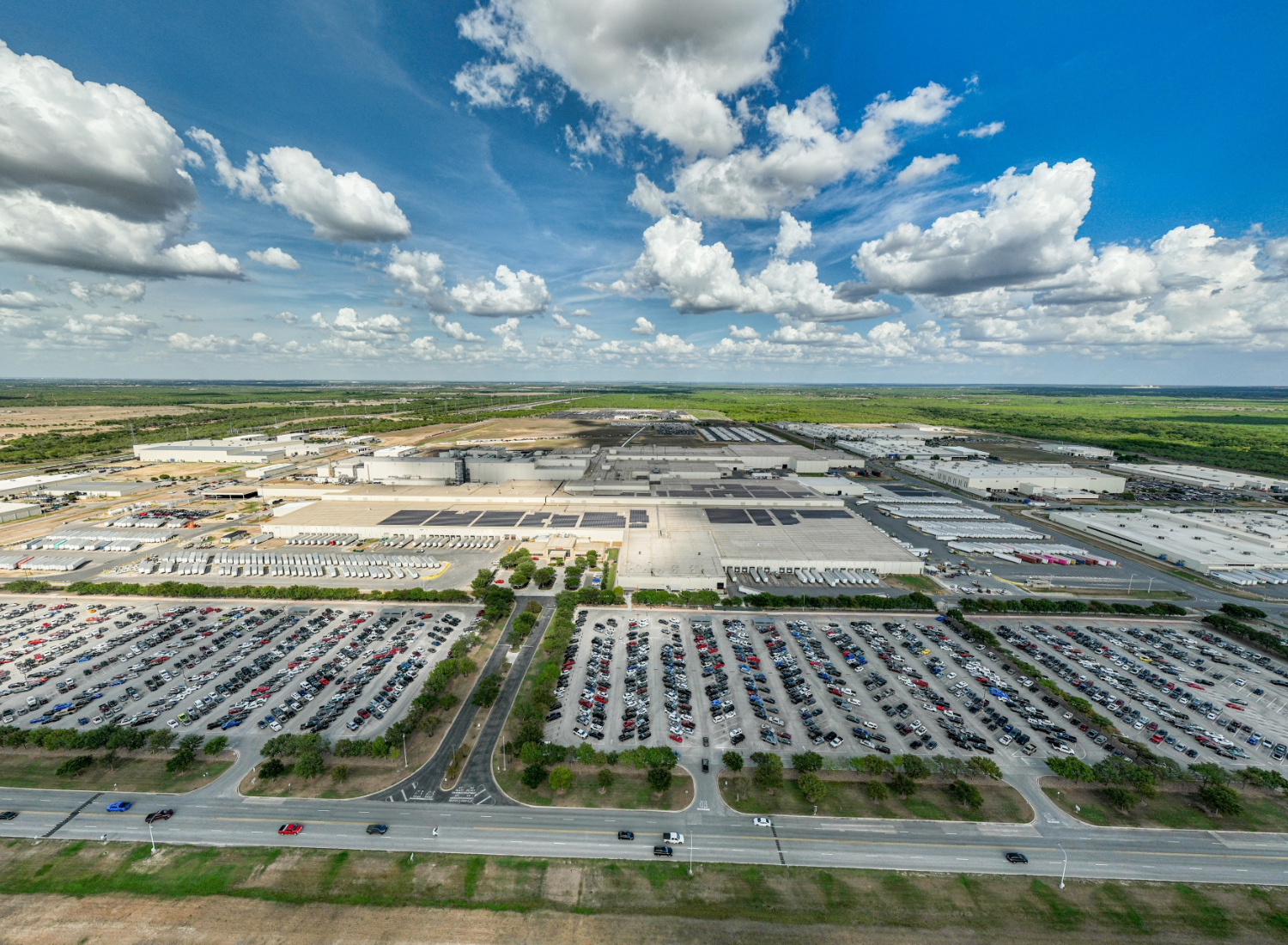
“With Toyota’s presence in San Antonio and some of its manufacturing in Mexico, the temporary pause on vehicle production announced (on Wednesday) is something we’re watching closely,” city of San Antonio City Manager Erik Walsh told Invest:.
In 2024, Toyota Motor Manufacturing Texas expanded its footprint with a $531 million investment in San Antonio that includes a 500,000-square-foot facility for drivetrain parts production. The automaker’s output in North America rose 3% in January, year-over-year, with production in Mexico making up for falls in the United States and Canada, Reuters reported.
“We need to be mindful of potential impacts, but also recognize that economic reactions to policy changes play a role in shaping outcomes,” said Walsh.
These developments come amid broader market volatility as shown by recent stock market declines. The Nasdaq Composite dropped 4.5% from the start of trading Monday through Thursday’s close, while the S&P 500 and Dow Jones Industrial Average each fell by more than 3%.
For some industries, the effect of tariffs and trade policy shifts are already surfacing. “We’ve already seen many companies say that these tariffs will affect their business, leading to price increases,” Laura Manion, president and CEO of Chester County Chamber of Business and Industry, told Invest:.
Four in five (80%) Americans also anticipate rising costs due to import tariffs, according to a national public opinion poll conducted by Elon University last month.
“That said, we have manufacturing members who have made it clear this will impact their business. Our role is to provide support, primarily through advocacy — sharing real stories with legislators about how these policies affect businesses directly,” Manion added.
In the housing sector, the impact of reciprocal tariffs from Canada could adversely affect construction materials like lumber. According to the latest published trade data from the U.S. International Trade Commission in 2021, the United States imported $28 billion worth of forest products from Canada, nearly half the value of all trading partners. (Mexico was No. 4 at $2.8 billion.)

In response to import tariffs on building materials, the National Association of Home Builders said they will “continue to seek a tariff exemption for building materials,” adding that the tool touted by the Trump administration acts as a “tax on American builders, homebuyers, and consumers.”
The wave of uncertainty could also have long-lasting effects on investment, particularly infrastructure. “Investors struggle with uncertainty — understanding the structure of the market and how to navigate it. Higher tariffs pose greater challenges than lower ones, so duration and unpredictability are key concerns,” said John Beckham, managing director of the North American Development Bank (NADBank) to Invest:.
The NADBank provides financing to support the development and implementation of infrastructure projects as well as technical assistance for actions that preserve the environment between the United States and Mexico.
“The degree of that impact is still uncertain because this situation is relatively new,” Beckham said. “Regarding energy, particularly in Mexico, there are interesting developments to consider. However, the overall impact of these trade disputes will largely depend on how long they last.”
Despite current tensions, North America’s economic interdependence remains the same. “One thing we emphasize at the bank is that the United States and Mexico will always be neighbors. The challenge is how to strengthen that relationship. Many issues on the agenda are legitimate, including shared concerns about border security and illicit trade. We need new, collaborative approaches to address these challenges,” Beckham said.
Additional reporting by Andrea Teran, Eleana Teran, and Mirella Franzese
Top image via Toyota Texas
For more information, please visit:
https://www.whitehouse.gov/
https://www.sa.gov/
https://www.chescochamber.com/
https://suncoastpermits.com/
https://www.nadb.org/