



How Atlanta leaders are building a city that outlasts the World Cup

Key points:

  • • Infrastructure and development are aligning to support Atlanta’s growth ahead of global events like the World Cup.
  • • Housing affordability and access near job centers are emerging as critical challenges.
  • • Downtown is shifting toward mixed-use density, with mobility seen as a key constraint on future growth.
AtlantaApril 2026 — Infrastructure and large-scale development are converging to reshape how Atlanta grows, both in preparation for global events and in defining the long-term future of its urban core. As investment accelerates across the region, public and private leaders are increasingly aligned around how to support growth while ensuring it remains accessible and economically sustainable.


Join us at caa’s upcoming leadership summits! These premier events bring together hundreds of public and private sector leaders to discuss the challenges and opportunities for businesses and investors. Find the next summit in a city near you!


“Atlanta is not a rookie city when it comes to hosting events,” said Michael Russel, CEO of H.J. Russell & Companies, during the Focus: Atlanta Leadership Summit in March. “From an infrastructure point of view, not just physical assets but public safety, technology, and transit, we are working to make sure the city is ready.”

That preparation is already influencing development decisions across the metro. With the FIFA World Cup approaching, infrastructure investments are being treated as long-term assets that will determine how residents and businesses move through the city.

At the airport, the region’s primary entry point, the focus has shifted toward filling specific gaps in how workers get around. Gerald McDowell, executive director of the ATL Airport Community Improvement Districts, pointed to microtransit as one example with the launch of Shift On Demand last year.

“Instead of waiting 30 to 40 minutes for a bus, you can request a ride through an app and get to your destination much faster,” McDowell said. “That is a life-changing solution.” 

Since its launch, the pilot has already exceeded expectations, signaling that demand for flexible transit exists and that leaders must rethink how mobility systems support major employment centers.

The connection between transportation and access is also pushing housing conversations in a new direction. As job centers expand and workers travel farther to reach them, where people live relative to where they work is carrying more weight in development decisions across the metro.

“The average first-time homebuyer in Atlanta is now 40 years old,” said Booker Washington, founder and CEO of Techie Homes. “That changes how we think about affordability, access, and the path to building wealth through housing.”

For many developers and housing providers, those challenges are compounded by rising costs and regulatory constraints.

“There is a shortage of roughly 100,000 affordable units across the region,” said Larry Padilla, CEO of Decatur Housing. “At the same time, development costs continue to rise, making it harder to deliver housing that working families can actually afford.”

A broader mix of housing types, from micro homes to condos to single-family, is needed near employment hubs like the airport, where much of the workforce still rents and has few paths to building equity.

From global readiness to downtown transformation

These same pressures are redefining Atlanta’s urban core. What might look like preparation for global events are also decisions that will define the region for years to come, rethinking how downtown gets built, activated, and tied to the neighborhoods around it.

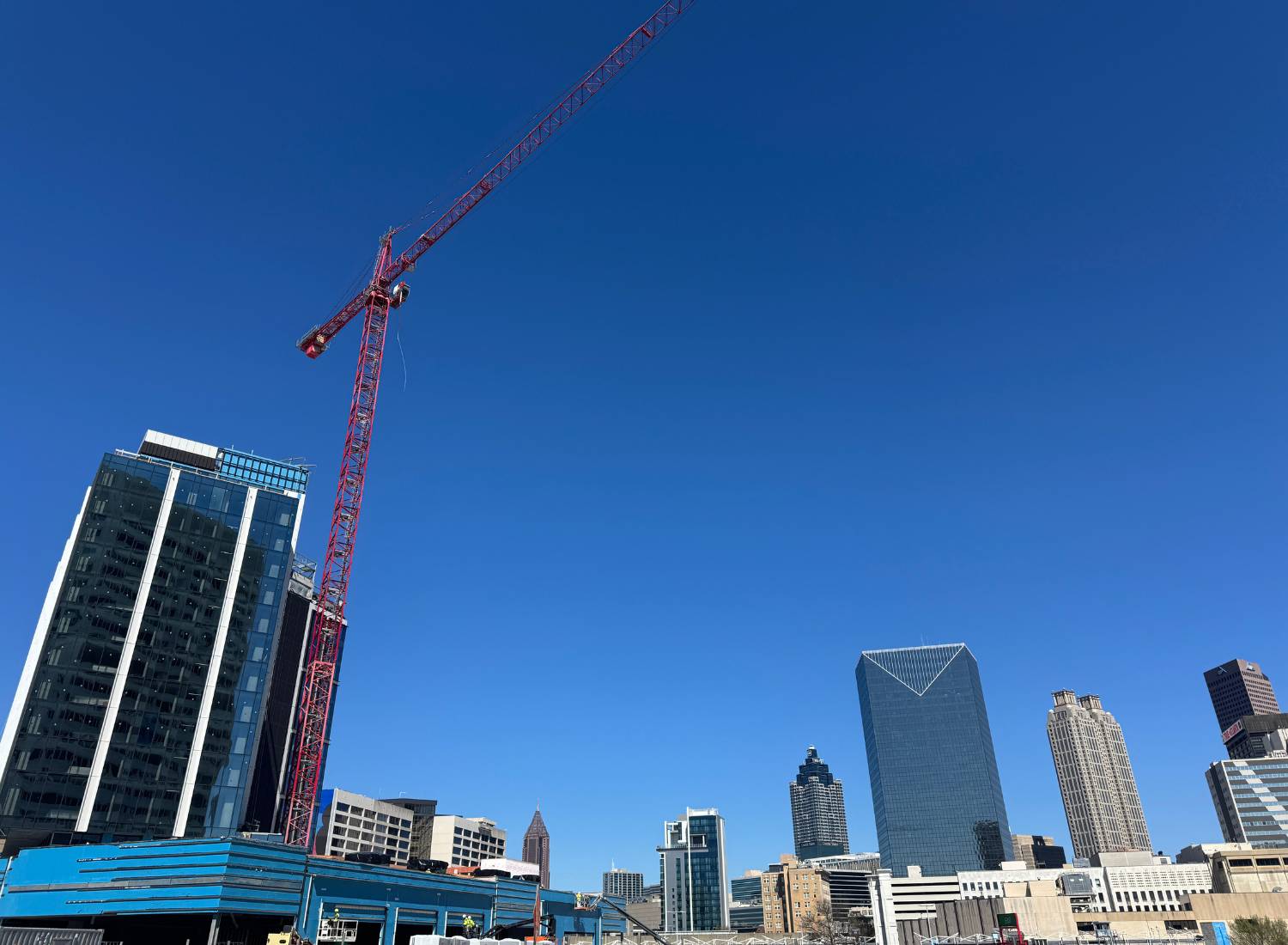
“You’re seeing construction cranes in downtown Atlanta again. That hadn’t happened in decades,” said Brian McGowan, CEO of Centennial Yards. “We’re moving from a place that was largely inactive outside of major events to one that is being built as a true mixed-use district.”

That shift is being driven in part by Centennial Yards, a $5 billion redevelopment transforming a long-underutilized stretch of downtown into a dense, mixed-use district. Early phases are already taking form. The Mitchell, a 300-plus-unit residential tower that opened in 2025, brought new density to an area previously dominated by surface parking, while ground-floor retail and restaurant space are beginning to activate the street level.

Across the street, Hotel Phoenix has opened close to Mercedes-Benz Stadium and State Farm Arena, adding nearly 300 rooms and a bar-driven hospitality concept to the district. The hotel, which hosted the Focus: Atlanta Leadership Summit, reflects a wider push to create destinations that draw people downtown outside of major events.

It’s part of a longer transition, as downtown Atlanta moves from an event-driven environment toward something closer to a functioning neighborhood.

That push toward activation is also visible at the street level, particularly in projects like Underground Atlanta. Shaneel Lalani, CEO of Lalani Ventures, said one of the biggest gaps in downtown has been the lack of a consistent residential base.

“What’s missing is people living downtown,” Lalani said. “Historically, people have come for events and then left.”

Lalani noted that Underground Atlanta alone has already drawn more than 2 million visitors over the past year, a signal of growing interest in the area. The next phase, he said, is converting that activity into a more permanent presence, supported by housing, retail, and everyday amenities.

Running parallel to it is continued investment along the Atlanta Beltline, which has become one of the city’s biggest economic drivers. Roughly $900 million in public investment has helped generate more than $9 billion in private development, according to Clyde Higgs, president and CEO of Atlanta Beltline. 

“When you look at the return on public investment, it is significant,” Higgs said, pointing to the project’s role in driving job creation and new development.

Leaders were clear, though, that growth at this scale must be paired with deliberate thinking about who benefits. “It is not about balancing growth and affordability,” Higgs said. “If you approach affordability proactively, it actually fuels growth rather than constraining it.”

That view is gaining ground among both public agencies and private developers, especially across downtown and surrounding districts where several major projects are moving at once. Invest Atlanta is guiding more than $3 billion in potential development, spanning projects like the conversion of 2 Peachtree Street into residential units and the revitalization of Underground Atlanta, alongside the continued buildout of Centennial Yards. Together, they are expected to add thousands of residential units and hotel rooms to the urban core, much of it timed around the 2026 World Cup but designed to outlast it.

“What we see today is not going to be the downtown of the future,” said Eloisa Klementich, president and CEO of Invest Atlanta. 

Pointing to a pipeline of projects already funded or underway, she emphasized that the scale of investment will change Atlanta over the coming years, bringing new housing, retail, and public space into areas that have historically lacked consistent activity.

“These are not projects sitting on a shelf,” Klementich said. “They are already moving forward and will change how downtown functions.”

Mobility as a lever for growth

As Atlanta looks toward 2030 and beyond, mobility stands as a potential constraint on regional growth. With Metro Atlanta expected to add close to 2 million residents over the next two decades, transportation systems will need to expand in both capacity and reach to keep pace.

“You cannot grow your economy if you cannot move people, goods, and information,” said McGowan. “Mobility is going to be a natural growth restrictor if we don’t address it.”
That challenge is already visible in how people move in and out of downtown, where much of the existing infrastructure was designed long before the scale of development now underway.

“The freeway system that connects downtown was built in the ’60s and ’70s,” McGowan said. “It wasn’t designed for the level of activity we’re adding today.”

No single fix will be enough. Higgs pointed to trails, transit, and regional coordination as pieces of a larger puzzle, arguing that connectivity between districts and access to alternative modes of transportation are just as important as expanding roads or adding capacity.

“The ability to move through the city is going to require more than one solution,” Higgs said.

Interested in reading the Focus: Atlanta report? Sign up today!

For complete conference panel discussions, tune in to our YouTube Channel.

Spotlight On: Heiko Dobrikow, Executive Vice President & General Manager, The Las Olas Company & Riverside Hotel

Key points:

  • • Riverside Hotel’s renovation and rising rates reflect a shift toward upscale, experience-driven hospitality.
  • • Convention expansion, cruises, and major events like FIFA are fueling strong 2026 demand.
  • • Long-term growth depends on infrastructure, workforce stability, and attracting higher-spending visitors.

Heiko Dobrikow Spotlight onApril 2026 — In an interview with Invest:, Heiko Dobrikow, executive vice president & general manager of The Las Olas Company and Riverside Hotel, shared how hospitality investment, infrastructure, and workforce strategy are shaping Greater Fort Lauderdale’s future. “We worked very hard over the last 20 years in order to really ripen all of our economic engines for our county,” Dobrikow said.
What major developments at the Riverside Hotel stood out over the past year, and how do they reflect broader trends in the local hospitality market?

The Riverside Hotel completed a full guestroom renovation last year, representing an $8 million investment. We also renovated portions of our conference center. The goal was to reposition the Riverside as an upper-upscale property and remain competitive in a market where thousands of new hotel keys are entering the pipeline.

Downtown Fort Lauderdale, in particular, has become the darling for visitors. Las Olas Boulevard has continued to evolve into a true shopping, dining, and entertainment corridor, and travelers increasingly want to stay where they can walk to restaurants, galleries, and nightlife. That energy is real, and it’s one of the reasons we felt confident making a major investment in the product.

From a performance standpoint, last year was relatively flat across the hospitality industry, and that was influenced by broader geopolitical messaging and uncertainty that affected certain feeder markets. We saw some softness in international demand, particularly from Canada, but we’ve already seen signs of that business rebounding.

How is demand shaping up for 2026, particularly with major events and seasonal trends?

We feel very optimistic about 2026. We’re already seeing record pace in the first quarter, and a lot of that is driven by strong winter travel patterns. When it’s cold and snowy in the Northeast, people want to be somewhere warm, and South Florida benefits.

The second quarter is also booking well, and we’re focused on building strategies that strengthen demand during the summer months. July, August, and September are always the months where the industry has to work hardest, and we’re collaborating with Visit Lauderdale to develop a joint market strategy that drives more business into that period.

Major events will also help. With FIFA-related activity in June and July, we expect meaningful demand, and since teams and locations were announced, we’ve already seen an uptick in reservations. Soccer fans are loyal travelers, and there should be overflow business coming into Fort Lauderdale even when games are played nearby.

How have rate and occupancy trends shifted as the market becomes more competitive?

We increased our rates significantly year over year, close to 10%. We took a more aggressive position because we believed the renovated product could support it, and we wanted to attract a more upscale traveler. Downtown competitors largely followed suit, increasing rates as well, which was good to see.

Occupancy was slightly down year over year, but our decline was heavily influenced by renovation logistics. During the summer, we had to take rooms out of inventory, which impacted occupancy. Once the renovation finished in September, the fourth quarter was outstanding. It felt like somebody turned on a faucet and travel demand surged.

What role does the new Omni Fort Lauderdale and the convention center expansion play in the region’s future?

The Omni Fort Lauderdale is a major milestone for the destination. For years, the market discussed the need for a true convention center hotel, and now it’s here. It’s an 801-room, convention-centric property, and it positions the destination to compete differently for larger meetings and citywide conventions.

The brand choice matters. Omni is a strong fit for a convention center environment, and the combination of the hotel, the convention center expansion, and new leadership on the sales side creates real momentum. The goal is to attract 18 to 25 citywide conventions that generate compression across the market, bringing spillover business to properties throughout the county.

How has group business evolved in recent years?

The most notable change is the booking window. Meeting planners are planning within a shorter horizon than they used to, often inside a 12-month window. That shift makes the business feel more short-term and sometimes more volatile, because you don’t always know how group demand will materialize until later in the cycle.

That said, group business remains essential. It provides base demand, stabilizes performance, and supports year-round occupancy. We’ve seen that the market can still deliver, but the planning behavior has changed and the industry has had to adjust.

What trends are you seeing across key demand drivers like air travel, cruises, and short-term rentals?

Air travel through Fort Lauderdale-Hollywood International Airport has been steady overall, with slight declines in certain periods. Over time, improvements like the international terminal expansion can make it easier for international travelers to access the market, and that matters for long-term growth.

Cruise demand has been a major positive story. The recovery has been impressive, and projections show millions of passengers coming through Port Everglades. Those passengers generate pre- and post-cruise hotel demand and create meaningful economic activity. A key point is that many of the ships in this market attract travelers who spend, which aligns with the region’s broader shift toward an upscale-to-luxury visitor profile.

Vacation rentals have also been steady and tend to mirror hotel seasonality. An interesting shift is that some short-term rental owners have been more confident in rate positioning, including during summer months, which suggests they are prioritizing higher-quality guests and stronger yield.

Downtown Fort Lauderdale has transformed dramatically. What stands out most from your perspective?

Downtown has become vibrant in a way that’s unmistakable. The return to office has been strong, and you can feel it in restaurants, retail, and street activity. There’s been meaningful job growth, population growth, and continued investment in public space and development.

Las Olas, in particular, has become a destination corridor. Since 2018, visitor counts have grown significantly, and demand for space has increased. As part of The Las Olas Company, we own and operate a sizable footprint along the corridor, and what we see is consistent demand across retail, restaurants, and office space. There’s a waiting list for many categories, and that is a strong signal about the market’s health and trajectory.

How is the workforce landscape evolving in Broward County, particularly for hospitality?

Workforce remains a defining issue for every industry, including hospitality. Employers have become more intentional about retention because replacing trained employees is harder than it used to be. The pandemic taught operators that retention needs to be a constant priority.

Wages have adjusted in response to cost-of-living realities, and employers have been more thoughtful about where pay increases are needed most, role by role. At the Riverside, our turnover is just over 27%, which is well below national averages for the industry. That reflects a deliberate focus on employee stability and culture.

From a broader labor perspective, there are periods where supply is higher than demand, which can benefit employers in terms of recruiting and selectivity. But the long-term success of the region depends on continuing to develop and reskill the workforce, especially as technology changes the nature of work.

What impact have immigration policy changes had on hospitality staffing?

It has had an impact, particularly on hotels that rely heavily on contract labor. Hospitality is required to use verification processes, and there have been instances where certain legal statuses changed or were revoked, which affected the available workforce. Properties that depend on contract staffing had to shift and find alternative labor partners to maintain operations.

Overall, the industry adapted, and while there was disruption, it was not as severe locally as some expected. The bigger point is that workforce planning now requires more flexibility, stronger partnerships, and a more proactive retention strategy.

Looking ahead, what gives you the most confidence in Greater Fort Lauderdale’s future?

We worked very hard over the last 20 years in order to really ripen all of our economic engines for our county. Investments in the port, the airport, convention infrastructure, and intermodal connectivity created the foundation for sustained growth.

The region has sharpened its focus on targeted industry development. Technology, marine industries, life sciences, and advanced manufacturing are becoming increasingly important, and whoever wins the technology game will be a major driver of future economic success. That means workforce development must keep pace with the skills those sectors require.

The final component is smart development. Growth has to be supported by infrastructure, mobility planning, and workforce housing strategies. Broward County has been thoughtful in pursuing those priorities, including planning for resilience and sea-level rise. When you look at all of those ingredients together, the outlook is very strong, not just for a good year, but for a stronger long-term future.

Hosting IPW 2026 in Greater Fort Lauderdale will serve as a transformative catalyst for the region’s tourism economy, showcasing its vibrant hospitality sector, world‑class beaches, diverse cultural offerings, and unparalleled accessibility to a global audience of travel buyers and media. The heightened international exposure generated by IPW is projected to significantly increase visitation over the following three years, driving an estimated $1.5 billion in federal tax revenue and $1.8 billion in state and local taxes. Beyond the immediate economic boost, the event strengthens the destination’s competitive positioning, fuels job creation across multiple industries, and reinforces Greater Fort Lauderdale’s reputation as one of America’s premier gateways for international travel and commerce.

Want more? Read the Invest: Greater Fort Lauderdale report.

Spotlight On: Joel Samuels, Executive Vice President for Academic Affairs & Provost, University of Miami

Key points:

  • • The University of Miami is advancing interdisciplinary research and aligning academic programs with regional needs.
  • • Investments in faculty, grant support, and global partnerships are strengthening research and innovation capacity.
  • • Strategy focuses on community impact, AI integration, and long-term student career development.

Joel Samuels spotlight onApril 2026 — Invest: spoke with Joel Samuels, executive vice president for academic affairs and provost of the University of Miami, about South Florida’s higher education growth and the university’s push for interdisciplinary research, talent, and community impact. “We’re driven by excellence,” Samuels said.

How would you assess the current higher education landscape in Miami, and how is the university positioning itself to thrive within this context?

Like much of the region itself, Miami’s higher education landscape is growing quickly, attracting new talent, and coalescing around a focus on impacting the lives of our community members.  At the University of Miami, we are aligning student success, research productivity, scholarly achievement, and outstanding patient care in ways that serve South Florida’s needs.

Our focus is on strategically driving excellence in everything we do. Practically, that means growing in intentional ways and building pathways that connect the work we do across the university. For example, we can take top-ranked programs related to real estate and urban development from across our business school, school of architecture, college of engineering, and school of law, and unite them in a focused way, ensuring that the university remains a strong partner in Miami’s continued growth.

We are preparing students and advancing research to reflect the interconnections across fields and disciplines, and doing so in a way that has a tangible impact on the community. That kind of alignment helps students see how knowledge intersects in careers and in civic life.

What steps are being taken to elevate the university’s research profile, expand federal grant funding, and foster innovation across different disciplines?

We are investing heavily in supporting grant-funded research, including the internal capacity that helps faculty compete for and manage major awards. At the same time, we are building an ecosystem that brings together researchers across disciplines, supporting scholarship that is more connected, more ambitious, and more relevant.

The goal is impactful work that will attract funding, but even more importantly, work that creates enduring change by helping solve some of the world’s biggest challenges.

Following the centennial milestone, how do you plan to build on that momentum to drive academic and research initiatives over the next few years?

I am a relative newcomer to Miami. I joined the University of Miami in August of 2025, and the centenary was one of the driving forces for me to come here, because shaping the next 100 years of the university’s legacy is powerful.

As a community that spans three campuses, we are deeply embedded in this region and are now shifting from celebrating the first 100 years to imagining what comes next. A central focus is excellence in our academic endeavors and bringing together diverse disciplines to develop solutions that address major problems. For a long time, universities and industries often approached problem-solving in silos, but more recently, we have seen real progress when expertise is intentionally connected.

One concrete step is creating a new leadership position on my team: a vice provost for interdisciplinary and international programs. That role will focus on interdisciplinary research and the design of interdisciplinary student-facing programs, while also advancing international partnerships that reflect the university’s role as a gateway not only hemispherically, but across the globe.

How are you encouraging interdisciplinary collaboration across schools and colleges to strengthen teaching, research, and societal impact?

My background is in interdisciplinary research and program development. At the University of South Carolina, I built a center of 60 faculty members dedicated to the rule of law around the world, and I saw how faculty from predictable discplines such as law and political science, and other disciplines like public health, business, education, and the visual arts could come together to advance access to justice in places like West Africa, South Asia, Ukraine, and Moldova.

Having witnessed the power of that collaboration first-hand, I hope to bring a clear understanding to Miami of how interdisciplinary approaches can help us make impactful scholarly contributions to complex problems, and how they can translate into stronger programs for students to prepare for careers.

What strategies will you prioritize to attract, develop, and retain top faculty talent in support of academic excellence and research growth?

Faculty are the lifeblood of any university. For the University of Miami, that means identifying models that make it feasible for top talent to build a sustainable life in an expensive region, while also building communities of practice where scholars can thrive. Interdisciplinary collaboration plays a key role in retention of top talent.  We are prioritizing models that support faculty in creating communities of practice where faculty can build research portfolios and catalyze student-facing priorities around the topics that brought them into academia

Many are drawn to the career because of the opportunity to develop an intellectual agenda, find a problem worth pursuing, and pour into it, whether that becomes a lifelong focus or evolves over time.

As an institution, our responsibility is to create the space, support, and environment for faculty and staff to succeed in everything they do, including the ability to find partners, build momentum, and extend the impact of their scholarship.

How can the university further connect its academic mission to community needs and real-world challenges through research, clinical service, and partnerships?

The University of Miami has two active offices whose sole function is to focus on community engagement and community connection. Community-engaged research is a cornerstone principle of the work we do, and I view it as a fundamental responsibility of every institution of higher education.

For us, it is imperative to connect the work we do on our campuses in Coral Gables, on Virginia Key, and in downtown Miami to the lived experiences of communities across Miami and South Florida. That can show up through research partnerships, clinical services that meet community needs, and collaborations with public and private organizations that can translate scholarship into practical outcomes. Because of this approach, we are able to generate solutions that are both academically rigorous and practically meaningful – ensuring that the university contributes directly to the well-being and resilience of the communities we serve.

How do philanthropic partnerships and major gifts factor into your strategy for advancing academic and research priorities that benefit students and faculty?

Philanthropic partnerships play a key role in advancing academic excellence and research growth, whether through individuals or foundations. They are a cornerstone for successful research and academic achievement. Strategially, major gifts help strengthen areas such as faculty recruitment and interdisciplinary research.

We are fortunate to have philanthropic partners across Miami, the country, and the world who support the work we do here every day.

Looking ahead to the next two to three years, what is your vision for elevating the university’s national and global recognition and influence?

We are driven by excellence, and as we move forward with our strategic vision, we hope that will place the University of Miami in a prominent position nationally and globally. We are not driven by recognition. We are driven by the work itself, and I expect recognition will flow from that.

One example is that we are developing an entirely new model for career services for our students. Instead of focusing only on the first job out, we are building a holistic model that begins when a student is admitted and carries through the life cycle of a career, preparing students not just for a career but for life.

On the research side, we are taking an aggressive approach to AI and its role within a university framework, using it to support research and teaching, and preparing students for a world where it will be integral to nearly any career path. Recognizing that developing skills and competence in that space will be a benefit to our students is an important part of the strategy.

Want more? Read the Invest: Miami report.

Houston real estate enters a new phase of stability

Key points:

  • • Houston’s housing market is shifting toward balance as rates stabilize and inventory increases.
  • • Supply is rising and the lock-in effect is easing, giving buyers more leverage.
  • • Affordability is improving slightly, but costs continue to limit demand and slow sales.

HoustonApril 2026 — Houston’s housing market is settling into a more balanced phase as mortgage rates hold above 6% and inventory expands, shifting conditions away from the volatility that defined the past several years.


Join us at caa’s upcoming leadership summits! These premier events bring together hundreds of public and private sector leaders to discuss the challenges and opportunities for businesses and investors. Find the next summit in a city near you!


Rates reshape demand

The average 30-year mortgage rate is hovering near 6.3%, remaining just above the psychological 6% threshold that has recently influenced buyer behavior across U.S. markets. In Houston, that level is proving sufficient to bring some buyers back into the market after a prolonged slowdown in late 2025.

Rate volatility has persisted. Mortgage applications declined 10.9% in one week in mid-March, driven largely by a drop in refinancing activity as rates moved higher, according to the Mortgage Bankers Association. Purchase applications, however, remained slightly above last year’s pace, indicating stable underlying demand.

Nationally, economists continue to point to the 6% range as a threshold where affordability begins to improve. Even modest rate declines have increased purchasing power, with Zillow estimating a roughly $30,000 improvement for median-income households over the past year.

Inventory expands as lock-in effect eases

Supply conditions are gradually improving. National inventory rose about 5% year over year in February, according to Zillow, as more sellers entered the market and new construction added units.

The long-standing lock-in effect is beginning to loosen. In Houston, homeowners held properties for an average of 8.4 years at the end of 2025, the longest tenure on record, reflecting reluctance to sell during the low-rate period. Recent data show early signs of change, with pending sales in the region rising 8.5% year over year in January, according to the Houston Association of Realtors.

At the national level, Redfin reports a significant shift in market balance. There were roughly 630,000 more sellers than buyers in February, the largest gap on record, with the South —  including Texas — showing some of the strongest buyer-favorable conditions.

Rita Santamaria, founder and CEO of Champions School of Real Estate, said the transition reflects a broader normalization across the industry.

“The market is moving into a balanced market, not just in Texas but across the United States. We follow the data closely, especially from the National Association of Realtors and research sources such as Texas A&M University, because those signals help us anticipate what kind of education professionals will need,” Santamaria told Invest:.

Prices hold as market rebalances

Despite improving supply, home prices remain relatively stable. Nationally, the median existing-home price increased only 0.3% year over year in February to $398,000, according to the National Association of Realtors, extending a multi-year streak of annual gains.

In Houston, pricing trends are more moderate. The median home price is approximately $322,078, down about 0.9% year over year. At the same time, inventory growth in the region has outpaced many major metros, rising nearly 15% annually, based on Zillow estimates.

The combination of rising supply and steady pricing reflects a transition toward equilibrium. Homes are taking longer to sell, and price cuts are more common nationally, with roughly 20% of listings seeing reductions in February.

“A balanced market is a good thing. Historically, it could take around 180 days to sell a residential home. Before 2024, many people got used to homes moving in 30 to 60 days, but that was not a balanced market,” said Santamaria.

Affordability improves, remains constrained

Affordability is improving incrementally, though it remains a primary barrier to entry. The National Association of Realtors reported that its housing affordability index has increased for eight consecutive months, supported by slower home price growth and rising incomes.

In Houston, affordability metrics show a similar trend. Approximately 44% of households can afford a median-priced home, up from about 40% a year earlier, according to the latest Housing and Rental Affordability Report from the Houston Association of Realtors. 

Monthly costs continue to weigh on buyers. Purchasing a median-priced home in the Houston area requires an estimated annual income of about $91,200, with total monthly housing costs near $2,280 when taxes and insurance are included.

Buyers are adjusting accordingly. Demand is shifting toward suburban and exurban areas, where lower prices and new construction offer more attainable entry points.

Houston reflects broader Sun Belt shift

Houston’s housing trends align with broader shifts across the Sun Belt. Markets in the South are increasingly characterized by higher inventory levels and more balanced or buyer-leaning conditions, following several years of rapid population growth and construction activity.

Redfin data indicates that Houston is firmly in buyer’s market territory, with sellers outnumbering buyers by 102.4% in early 2026. Similar conditions are present in other high-growth metros across Texas and the Southeast.

This shift reflects both increased supply and a moderation in demand as affordability constraints limit buyer participation. Elevated mortgage rates and economic uncertainty continue to temper transaction volume, even as underlying demographic demand remains intact.

“Texas has remained relatively resilient compared to other states. It continues to be an attractive place to live and do business, and that supports the real estate sector,” Santamaria stated.

Want more? Read the Invest: Houston report.

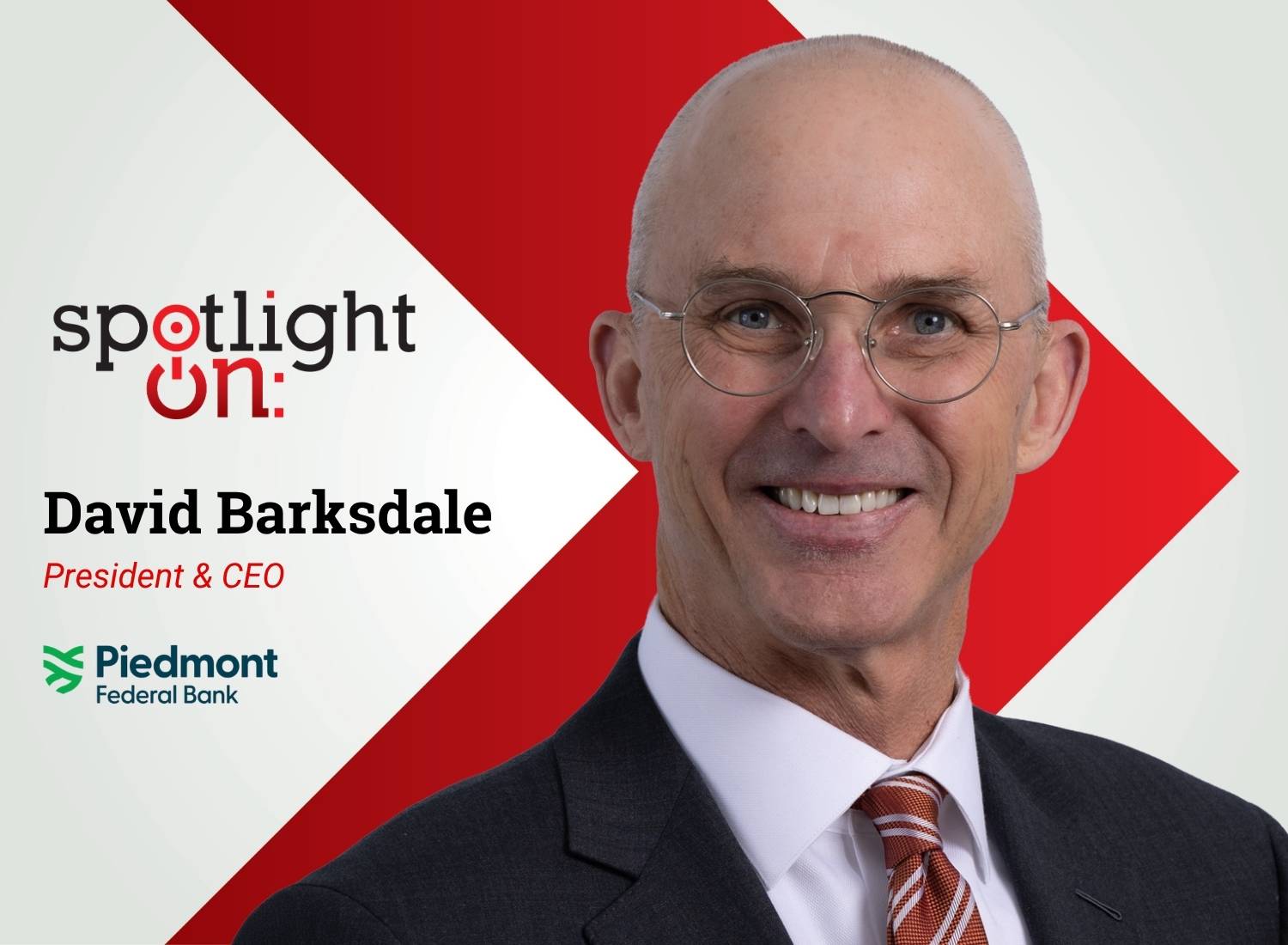
Spotlight On: David Barksdale, President & CEO, Piedmont Federal Bank

Key points:

  • • Community banks compete through local relationships and reinvestment in their markets.
  • • Housing affordability and rates continue to limit mortgage activity.
  • • AI, fraud risk, and consolidation are shaping the industry’s future.

David Barksdale Spotlight onApril 2026 — Invest: spoke with David Barksdale, president and CEO of Piedmont Federal Bank, about the outlook for community banking, the pressures shaping housing affordability, and the balance between innovation and relationship-driven service. “We gather deposits and provide financial solutions for small businesses, mid-sized businesses, and consumers. And then we turn around and lend that money back out into the community,” Barksdale said.
How would you describe the current economic environment for community banks, and what trends are shaping lending and investment activity in your market?

The opportunity for community banking is strong right now. Credit quality across the industry remains solid, and we have not yet seen major cracks emerge, even though cycles tell us that some kind of credit event will eventually come. In the meantime, community banks are well- positioned because many clients choose us for very specific reasons. They want to work with local decision-makers, and they want their bank to reinvest in the same communities where they live and do business.

That is especially true for us as a mutual bank. We are owned by our depositors, not by outside shareholders, so we are not sending dividends off to distant investors. We are using our resources to hire bankers, support local businesses, and serve our communities. That structure keeps us focused on the long term.

The regulatory environment is also becoming more favorable for banking, particularly for community banks. We know regulation is necessary, but there has to be common sense in how it is applied. A $1.3 billion bank should not be regulated the same way as a $1.3 trillion bank. When regulation is better tailored, it allows us to devote more resources to what we do best.

What do community banks do best in this environment?

At our core, community banks are deposit gatherers and lenders. We do not have large investment banking operations or major fee-income engines. Our job is straightforward but important. We gather deposits and provide financial solutions for small businesses, mid-sized businesses, and consumers. Then we turn around and lend that money back out into the community.

That mission still resonates. Business owners and families want a banker who understands their market and can make decisions with local knowledge. That is why I remain bullish on community banking.

One area we are watching closely is stablecoin. It has real potential as a payment tool, but if it becomes a stored-value instrument that pays interest, it could pull deposits away from community banks. That would matter because community banks depend on deposits to fund lending in the local economy.

What changes are you seeing in how businesses approach borrowing, expansion, and capital planning in today’s climate?

Small and mid-sized businesses are trying to combine two things that both matter today: speed and personal service. They want the convenience of technology, including automated payments and faster money movement, but they also want a trusted banker when something becomes more complex.

That is why relationship banking still matters. Technology is excellent when everything is working as designed, but businesses still want a real person when there is a problem, when fraud is suspected, or when a transaction is not straightforward. In our experience, most business owners want that banker to come to them, understand the business, and help solve the issue.

We are also seeing heightened concern around fraud. Faster payments create efficiency, but too much frictionless movement can create openings for fraudsters. A little friction can be a good thing when it helps protect the client.

Mortgage lending has long been one of your core services. What trends are you observing in housing demand and mortgage activity across the communities you serve?

Housing activity is still suppressed across much of North Carolina, including the Triangle, Charlotte, and the Triad. The first reason is supply. We simply do not have enough housing, especially at the entry level. What used to be a starter home at $150,000 or $200,000 is now often priced around $400,000 in markets like Winston-Salem. That is a hard number for first-time buyers to reach.

The second factor is changing consumer behavior. Younger generations are not always following the same path of graduating, getting married, buying a house, and settling into one place. Many are more mobile and more comfortable delaying homeownership.

Then there is the rate environment. Mortgage rates in the 6% range are historically reasonable to many of us who have been in the market for decades, but for younger buyers who became familiar with 3% rates, 6% feels dramatically different. That shift has kept many people on the sidelines. At the same time, many existing homeowners are holding onto low mortgage rates and do not want to move.

How are banks and local stakeholders working to address housing affordability and expand access to homeownership?

Affordable housing is a huge issue with a lot of moving parts, and there is no single solution. Banks are trying to identify the lanes where we can be most effective. For us, that includes supporting organizations such as Habitat for Humanity. It also includes participating in housing trust fund efforts that can provide bridge or gap financing for projects serving low- to moderate-income households.

Many banks also offer first-time homebuyer programs with lower down payment requirements and more flexible structures that can help people enter the market sooner. Credit counseling and down payment assistance are also critical. There are many would-be buyers who may have had setbacks in their credit history, and partnerships with cities, counties, and agencies can help them become mortgage-ready.

It is a multifaceted challenge, and community banks are working to determine where they can bring the most value.

Technology is changing the way community banks operate. How are you balancing innovation with strong customer relationships?

That is one of the biggest questions in banking today. Community banking has always innovated, but the challenge now is deciding how to invest in technology without losing the personal touch that defines the sector.

Branches still matter, even though they are being used differently. People are not coming in as often to make routine transactions, because most of that now happens on a phone. But they still come in for meaningful decisions, such as buying a first home, financing equipment, or deciding whether to lease or purchase a building. Those moments still require conversation and trust.

For smaller banks, the challenge is scale. Large banks can spend enormous sums on research and development and build their own tools. Community banks often rely more on core operating systems and partnerships with fintech firms. That can work well, but it requires careful judgment about timing, investment, and client needs.

How do partnerships with local organizations and community groups help strengthen economic opportunity and financial inclusion?

Partnerships are essential. Financial inclusion does not happen in isolation. If you use affordable housing as an example, real progress depends on banks, local governments, community groups, and other institutions all working together. Homeownership remains one of the main ways families build wealth and pass it to the next generation, so improving access has a direct connection to long-term economic mobility.

We also work through programs aimed at the unbanked and underbanked. One example is BankOn, which offers simple, lower-cost checking products designed for people who may not be comfortable with traditional banking. These products can help people avoid costly alternatives such as payday lenders and provide a more predictable pathway into the financial system.

Across the industry, banks often work collaboratively on these issues. It is not really about competition. It is about creating solutions that expand access and help more people participate in the economy in a healthy way.

Looking ahead, what trends do you believe will most shape the banking industry and local economies over the next several years?

Technology will continue to be the biggest force, and AI is going to be a game changer. It will not replace good employees, but employees who know how to use AI effectively will have a significant advantage over those who do not. Used properly, it can improve productivity and accuracy, which matters in every industry, including banking.

At the same time, banks have to be cautious. We handle sensitive client data, and any use of AI has to be done securely and responsibly. The other major trend will be continued consolidation. The number of banks has declined over time, and the pressure of technology costs and compliance costs will keep driving mergers and acquisitions.

Even so, I hope we maintain a banking system with room for large banks, mid-sized banks, and smaller community institutions. That mix is healthy for the economy and healthy for customers.

How do you see Piedmont Federal continuing to support economic growth and financial stability in the communities it serves?

Our entry into Raleigh-Durham through the partnership with Wake Forest Federal was a major step for us. It gave us a presence in one of the strongest markets in the Southeast, and it brought together a talented team of bankers with deep expertise in small-business banking and homebuilder finance.

That matters because housing and small business are major drivers of economic growth. In Raleigh-Durham, we are particularly well positioned to support homebuilders and to offer deposit and treasury solutions that help local businesses operate more effectively. We are not trying to be everything to everyone. We want to be good at the areas where community banking can make the greatest impact.

It is a great market, and we are fortunate to be part of it. Our responsibility now is to build on that opportunity by doing what we do best as a mutual community bank and continuing to invest in the people and businesses that make the region strong.

Want more? Read the Invest: Raleigh-Durham report.

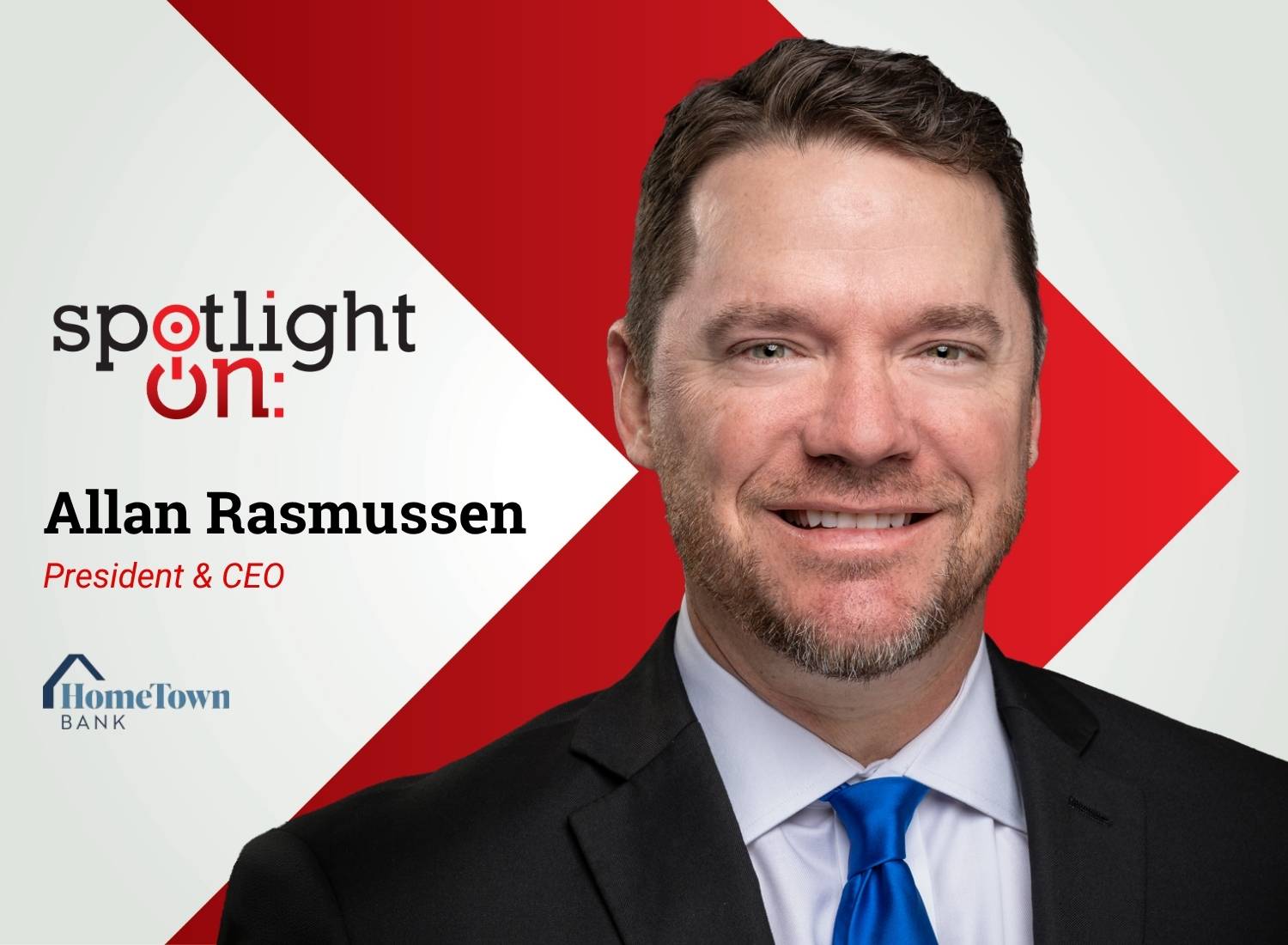
Spotlight On: Allan Rasmussen, President & CEO, HomeTown Bank, N.A.

Key points:

  • • HomeTown Bank is leveraging strong regional growth to expand selectively while maintaining its community-focused model.
  • • Investment in technology and AI is enabling scale without sacrificing relationship-driven banking.
  • • Future priorities include managing fraud risks, adapting to digital trends, and sustaining disciplined growth.

Allan Rasmussen Spotlight onApril 2026 — In an interview with Invest:, Allan Rasmussen, president and CEO of HomeTown Bank, discussed how the company is building on a strong 2025 by expanding into new markets, investing in technology, and staying closely rooted in the communities it serves. “We are not trying to be everything to everyone. We are trying to be the right fit in the right places,” said Rasmussen.
What trends have had the biggest impact on HomeTown Bank over the past year?

We had a strong year in 2025. It was a record year for loans, which was a big accomplishment for us, and our earnings were up significantly over 2024. We also introduced and launched some new products and services, and we are expanding into new markets. That has given us a lot of momentum going into 2026.

We feel fortunate to be in the Houston area because the regional economy is so diverse and resilient. Population growth continues, and both residential and commercial development remain strong. That creates opportunities for banks like ours to grow alongside the communities we serve. Our priority is to take advantage of that growth in a way that aligns with who we are as a community bank.

How is Houston’s growth influencing your lending strategy?

We are a community bank, and our culture fits best on the outskirts of Houston rather than in the downtown core. We are in a lot of smaller cities around the Greater Houston area, and when we look at potential new locations, we are studying the communities carefully. We look at school districts, family life, local businesses, and whether that area is a place where our culture can make an impact.

That shapes our lending strategy as well. We are focused on markets where we believe relationship banking still matters and where people want a bank that is part of the community. We are not trying to be everything to everyone. We are trying to be the right fit in the right places.

How are you balancing growth, credit quality, and profitability in the current environment?

We have been fortunate from an asset quality standpoint. Our losses have been minimal, if any, and that comes down to underwriting, communication, and knowing our customers. Sometimes there is a little bit of luck involved because life happens and circumstances change, but disciplined underwriting and strong relationships make a big difference.

Communication is probably our biggest strength. We stay in touch with customers through social media, through direct outreach, and simply by being present in the communities we serve. Because we are local and accessible, people know where to find us, and we know them. We know our customer. That is something community banks talk about a lot, but for us, it is more than a slogan. It is a practical advantage that helps us manage risk and maintain long-term relationships.

How are you thinking about scale as the bank expands?

Technology is the equalizer. That is the biggest thing. We are investing heavily in technology both for our internal operations and for customer-facing products because it allows us to compete on a much larger scale than we could have five or ten years ago.

We recently invested in a new credit and lending platform that includes an artificial intelligence component, and we are evaluating other tools with similar capabilities. Those investments help us improve efficiency, improve service, and create a stronger experience for both customers and employees. For a bank of our size, technology is one of the most important ways to scale thoughtfully without losing what makes us a community bank in the first place.

How are customer expectations evolving, particularly among small businesses and commercial clients?

Everything is moving in a more digital direction. Customers expect more functionality through their phones, their apps, and their online banking experience. That has been a big area of focus for us. We want to make sure our digital channels are keeping pace with what people expect from their bank today.

Zelle is a good example. When the standalone Zelle app went away, banks had to move quickly to integrate it into their own systems. We were able to launch that in the fourth quarter, even though there was a bottleneck across the industry. We also launched a secondary market for mortgages in the fourth quarter, which is something our bank had never had before.

We believe that is going to be a major benefit as we continue growing in communities with a lot of new residential development. Our Board of Directors wants to grow and expand, and my job is to make sure we have as many tools in the toolbox as possible so we are ready to meet those needs.

What is your approach to attracting and retaining talent?

Culture is a huge part of it, and that starts with leadership. It starts with me, with management, and with the board. Communication is central to that culture. When people feel informed, trusted, and empowered to make decisions, they become much more invested in what they are doing.

We have been fortunate with turnover. It has been low for years. We recently had a few employees retire who had, collectively, been with the bank for 70 years. We also have a 50-year employee and several people who have been with us for 20 or 30 years. That kind of longevity says a lot about the environment we try to create.

You have to be fair to people. You have to provide competitive pay, good benefits, and a workplace where they want to come every day. Just as important, you have to give them ownership. When people are only repeating the same task over and over again, they are less engaged. When you empower them and promote from within whenever possible, they start to feel that the bank’s success is their success too. That has been a big part of our growth.

What markets are you targeting for expansion?

We recently executed a lease in Mont Belvieu, which is on the east side of Houston. That is the type of market we like — a growing community with small businesses, residential growth, some light industrial activity, and a character that fits our brand and culture.

We have looked in all directions around Greater Houston, but we are being selective. We are looking for areas where we believe we can thrive as a community bank, not just add another location. That means communities where relationship banking still matters, where growth is happening, and where there is an opportunity for us to support families and local businesses over the long term.

What are your top priorities for the next two to three years?

A few themes are front and center for us. One is digital assets and stablecoin. I think the banking industry is still a ways off from where all of that may eventually go, but it is important that we stay informed. We are working closely with our state and national banking associations and making sure we are educating ourselves as the landscape evolves.

Artificial intelligence is another major area of focus. AI is changing every industry, including banking, and the question for us is how to use it safely and responsibly. It has the potential to improve efficiency and customer service, but it also introduces new risks.

That leads directly to fraud, which is one of the issues that keeps me up at night. I am not just talking about cybersecurity in the traditional sense, but also spear phishing, voice spoofing, face spoofing, and the increasingly sophisticated ways criminals try to deceive both employees and customers. We do ongoing employee training, a lot of social media education for our customers, and we have invested in technology to help reduce fraud risk. AI is going to make that environment even more complex, so vigilance is essential.

What is your outlook for the near term?

I am bullish on 2026. We made a number of strategic moves to our balance sheet that we think will benefit earnings this year, and we have budgeted for a record year. There is a lot of volatility in the world right now, and the interest rate environment still shifts quickly, so we try to focus on what we can control rather than what we cannot.

What gives me confidence is what we are seeing locally. Development is moving. New housing is coming online. Jobs are being created throughout the region. What is happening in Galveston with the cruise industry and shipbuilding, what is happening across the broader Houston economy, and the amount of residential growth all point to more opportunities ahead.

There are thousands of new residents coming into this area, and with that comes demand for homes, services, banking, and local businesses. All of those things support one another, creating optimism and paving the way for HomeTown Bank, N.A. to make an impact for generations. We have momentum from 2025, we made the right strategic moves, and we believe 2026 can be another strong year.

Want more? Read the Invest: Houston report.

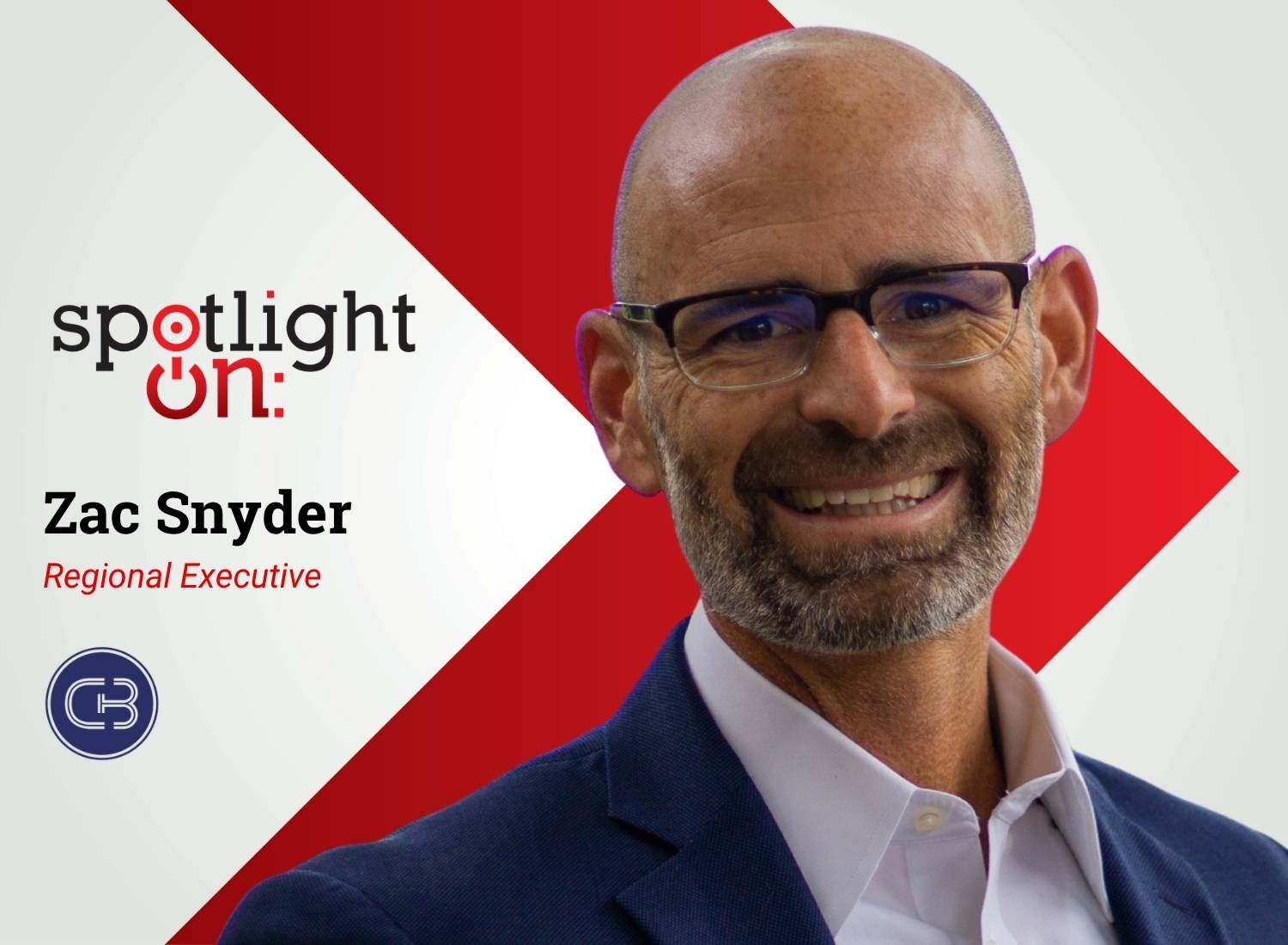
Spotlight On: Zac Snyder, Regional Executive, Carter Bank

Key points:

  • • Banking strategy is shaped by uncertainty, with AI, regulation, and digital assets in focus.
  • • Capital demand remains steady, but underwriting is more selective across sectors.
  • • Technology, fraud risk, and talent define competitiveness alongside relationships.

Zac Snyder Spotlight on MainApril 2026 — Invest: spoke with Zac Snyder, regional executive of Carter Bank, about what’s shaping banking strategy in 2026, where Charlotte’s growth is driving demand, and how community banks can compete through cycles. “Organizations that stay disciplined, informed, and client-focused are well positioned to succeed,” Snyder said.


Join us at caa’s upcoming leadership summits! These premier events bring together hundreds of public and private sector leaders to discuss the challenges and opportunities for businesses and investors. Find the next summit in a city near you!


How would you reflect on the past year, and what trends are informing your strategy for the year ahead?

If I had to summarize the business environment in one word, it would be uncertainty. The past 12 months have been defined by disruption, opportunity, and a persistent need for clarity. From a banking standpoint, digital assets and blockchain continue to move from headline territory into practical regulatory conversations. Anything that can change the plumbing of the financial system matters, and the industry has to watch for unintended consequences as frameworks evolve. I’m optimistic we’ll find common ground, but it’s a space to monitor closely.

On the regulatory side, there has also been reflection on the post-GFC era and the impacts of Dodd-Frank. Industry advocates have done a strong job telling the story of why community banks matter. We are fortunate to have thousands of banks across the country. Competition is healthy, and a diverse banking system supports a resilient economy.

We are also seeing meaningful M&A activity, and I expect that to continue. Part of that is more confidence that deals can be processed and completed without extended delays. Layered on top are issues every bank is navigating: AI, security, and cybersecurity. These are foundational concerns.

Whether it’s tariffs or policy shifts, uncertainty makes it difficult for business owners to plan long term. The more certainty we have, the better businesses can invest and grow.

Locally, the Carolinas and Charlotte in particular are a remarkable place to live and build. Population growth is rapid, the talent pool is strong, and the region continues to attract jobs and household formation. For a bank, that means expanding client needs. Our focus is to meet those needs with consistent execution, local decision-making, and a long-term mindset.

What sectors in the region are showing the strongest demand for capital right now, and where are you seeing more caution?

Commercial real estate remains a major area of activity, especially for community and commercial banks that operate in the construction-to-permanent space. The key is to stay granular, because the story shifts by asset class and submarket.

Multifamily, including build-to-rent, has been a defining theme. Charlotte delivered an outsized amount of new supply, and absorption has been impressive. That said, we are seeing heavier concessions and flatter rent growth in certain pockets. Areas that carried a larger share of supply have tighter fundamentals in the short term. The takeaway is not to overreact, but to underwrite with discipline and adjust assumptions around lease-up and rent growth. The upcoming leasing season will be an important indicator of the next phase of the cycle.

Industrial has been another strong performer. Historically overlooked, the sector has benefited from e-commerce, demographic growth, and shifting supply chains. Onshoring and reshoring trends could add additional tailwinds, and the Carolinas are well positioned to capture that activity.

Retail is more nuanced than many assume. Grocery-anchored centers continue to show demand, and retailers are following household growth across the region. The opportunity is real, but tenant strength and location remain critical.

Office continues to generate debate, but Charlotte has seen encouraging absorption tied to professional services growth. Like every asset class, performance varies widely depending on building quality and location.

Across these categories, one practical issue is tenants requesting higher levels of tenant improvements. That can work if structured correctly, but it increases break-evens and leverage for owners. Banks must stay nimble and underwrite accordingly.

Beyond real estate, we are focused heavily on commercial and industrial lending. Operating businesses, manufacturers, and service providers need not only loans but also strong cash management, payment tools, and fraud protection. As business owners express optimism about revenue growth and expansion, we want to support them with the right capital structure and services.

How is Carter Bank approaching acquisitions, and how do you help clients navigate competition and consolidation?

Carter Bank is active on the acquisition side. We are a $4.8 billion community bank with deep roots in Virginia and North Carolina, and we have recently expanded into South Carolina. We completed a two-branch acquisition last summer, including locations in Winston-Salem and Mooresville.

In terms of competition, many products look similar from the outside. The difference is how you deliver and whether clients can rely on you through the cycle. Our approach centers on execution, knowledge, and consistency. Business owners want to know their bank will do what it says, communicate clearly, and make decisions efficiently.

We also add value beyond the transaction. Many business owners are navigating succession planning or evaluating acquisition opportunities. Our role is to connect them with the right advisors and help them evaluate options thoughtfully.

During the early days of COVID, many clients faced real operational uncertainty. We worked closely with customers to find solutions and navigate challenges. That type of partnership builds trust that lasts beyond a single transaction.

How are technology investments changing the way you compete, especially with AI and crypto in the conversation?

Fraud and cybersecurity are especially important. Many institutions offer similar products, but the differentiator is how well you help clients use them and how much education you provide. Attackers are sophisticated and patient. Strong procedures matter just as much as strong software. A practical example is verifying wiring instructions. Businesses should have disciplined callback procedures using verified contact information, not details embedded in an email signature. As AI advances, impersonation becomes easier, so awareness and internal controls must evolve as well.

Banks must invest consistently in both technology and people. A major focus for us is strengthening our cash management platform so businesses can move money faster and more securely. We continue to enhance fraud protection tools and roll out capabilities such as same-day ACH.

It is not if, but when, and that reality shapes how we advise clients. Our goal is to pair technology with education and consistent habits to reduce risk.

How would you describe the talent market for banking in Charlotte, and how are you building and retaining strong teams?

Talent remains a challenge across industries, and banking is no exception. The industry can do a better job promoting banking as a career path, especially to younger professionals. We touch every sector of the economy, and the opportunities are significant.

For us, retention comes first. If you cannot keep your people, you cannot build momentum. Taking care of your team creates stability and fosters advocacy. Strong teams tend to attract other strong professionals.

Our expansion into Gastonia is a good example. As we increased our presence in that market, we connected with a team of bankers who were open to change. Bringing them on board has been a strong cultural fit and reinforces our belief that growth begins with people.

We are also expanding into Greenville, South Carolina, a market with compelling demographic growth and economic momentum. We have onboarded bankers there and are building our footprint thoughtfully. My role centers on driving organic growth, and that means identifying the right markets, hiring the right people, and building the right culture.

What differentiates Carter Bank in a competitive market like Charlotte?

A detail that reflects our culture is our stock symbol: CARE. It aligns with how we approach our work. We strive to be a trusted financial partner, and that starts with genuinely caring about clients and communities.

We are large enough to offer the products and services clients expect, but we maintain a personal, relationship-driven approach. Local decision-making and local knowledge are central to how we operate. When you understand your market and your clients, you can make better decisions for everyone involved.

Execution, responsiveness, and consistency matter, particularly when the cycle turns.

Charlotte’s growth story is real, and it extends across the broader region. Organizations that stay disciplined, informed, and client-focused are well positioned to succeed. Our role is to help businesses and families navigate decisions with clarity and confidence, and to stand beside them through every phase of the cycle.

Want more? Read the Invest: Charlotte report.

Justin Hall, District Secretary, Florida Department of Transportation

Justin HallApril 2026 — In an interview with Invest:, Justin Hall, district secretary for the Florida Department of Transportation (FDOT) District 7, discussed how the agency is accelerating project delivery, investing in workforce development, and planning for the next generation of transportation technologies. Hall also emphasized the importance of balancing large-scale infrastructure improvements with community-focused initiatives. “With billions of dollars in construction underway, we need a strong pipeline of skilled workers to support those projects,” Hall said.

What key changes over the past year have most significantly impacted FDOT’s work in District 7?

Over the past year, one of our biggest areas of focus has been improving how we deliver projects. Revenues have plateaued somewhat, so we have to be smarter about how we maximize the resources we have. That has meant looking closely at procurement methods and finding ways to deliver infrastructure faster and more cost-effectively.

One of the approaches we have adopted is a procurement model called Modified Phase Design-Build. This process allows us to move projects into construction more quickly while also identifying opportunities to reduce costs. We have already seen substantial savings using this method, along with meaningful time reductions in project delivery.

That focus aligns with a broader priority from the state: providing congestion relief now rather than decades from now. Florida continues to grow rapidly, and residents want to see improvements that make an immediate difference in their daily travel. By changing how we procure and manage projects, we can get construction underway faster and begin delivering those benefits sooner.

Which major infrastructure initiatives do you see having the biggest impact in the Tampa Bay region?

There is a tremendous amount of activity underway right now. In District 7 alone, we have approximately $12 billion in active construction projects.

One of the most significant projects is the Howard Frankland Bridge expansion. That project is just under $1 billion and will add additional capacity across Tampa Bay, including express lanes that provide more reliable travel times for commuters. About 200,000 people cross that bridge every day, so improving that connection between Hillsborough and Pinellas counties is extremely important.

Another major initiative is the Tampa Westshore Interchange project, which is now getting underway. This project strengthens the connection between Tampa International Airport, Pinellas County, and Hillsborough County. It is a critical link in the region’s transportation network and represents more than $1 billion in investment.

We are also constructing the Downtown Tampa Interchange project. This one is particularly complex because it involves building above an active interstate while maintaining daily traffic flow. It requires extensive coordination with the City of Tampa and Hillsborough County, but it will significantly improve mobility in one of the region’s busiest areas.

In addition, the state launched the Moving Florida Forward initiative, which accelerates major transportation projects that otherwise might not have been completed for 20 to 30 years. One example in our district is the widening of Interstate 275 in Pinellas County. That corridor serves as a critical backbone connecting St. Petersburg and Tampa and carries traffic volumes that are comparable to the Howard Frankland Bridge.

How is FDOT working with partners to develop the skilled workforce needed to deliver projects at this scale?

Workforce development is one of the most important issues facing our industry. With billions of dollars in construction underway, we need a strong pipeline of skilled workers to support those projects.

At the statewide level, FDOT has launched several workforce development initiatives. One example is a mobile classroom program that provides commercial driver’s license training. This allows individuals to gain hands-on experience operating heavy equipment and commercial vehicles, which are essential skills for transportation construction.

The program is designed to lower the barrier to entry for individuals who want to pursue a career in the industry. Many people are interested in these careers but cannot access the training or licensing required. By bringing the classroom directly into communities, we make it easier for people to participate and begin building a career.

In the Tampa Bay region specifically, we also created a program called Onboard Tampa Bay. This initiative connects job seekers with transportation construction opportunities through job fairs and direct engagement with employers.

We also partner with organizations such as the Department of Corrections to help individuals reenter the workforce after incarceration. Providing stable employment opportunities is one of the most effective ways to reduce recidivism, and transportation construction offers long-term career paths.

Another major milestone is the creation of the Florida Transportation Academy, which was funded by the state legislature. This academy provides comprehensive training, education, and licensing so that graduates are ready to enter the workforce immediately. It represents a transformational step in building the next generation of transportation professionals.

What broader trends are shaping transportation and infrastructure planning today?

One of the most exciting developments in transportation right now is advanced air mobility. Many people are familiar with the concept of air taxis or electric vertical takeoff and landing aircraft, and Florida is positioning itself at the forefront of that technology.

FDOT is developing a first-of-its-kind testing and research facility called SunTrax Air. This builds on the existing SunTrax Ground facility, which has been used for testing connected and autonomous vehicles. SunTrax Air will focus specifically on advanced air mobility.

The facility already has one vertiport constructed, with another nearing completion. These vertiports will allow manufacturers and technology companies to test and refine new aircraft systems in a controlled environment.

What is particularly interesting about this initiative is that it generates new research opportunities across multiple fields. For example, aviation meteorology has traditionally focused on high-altitude conditions because commercial airlines operate at those levels. Advanced air mobility aircraft operate much closer to the ground, so we need entirely new datasets that track weather conditions at lower altitudes.

How is FDOT strengthening community engagement when planning large infrastructure projects?

Community engagement is a critical part of how we plan and deliver transportation projects. We still use traditional engagement methods such as public meetings, hearings, and workshops to gather feedback and keep residents informed.

We are expanding how we communicate with communities. Social media has become an increasingly important tool for sharing updates and reaching people who may not attend public meetings.

One initiative we are particularly proud of is something we call Transportation Talks. Instead of presenting a finished project to the community, we meet with residents early in the process and ask them directly about their transportation concerns.

This approach allows us to incorporate community feedback into our planning process before projects are finalized. Sometimes the solutions are large infrastructure improvements, but other times they are small changes that make a big difference.

For example, during one meeting in East Tampa, a resident raised concerns about damaged sidewalks near her home that made it unsafe for children walking to school. Within a week, our team repaired the sidewalks, trimmed trees, and improved the area. It was a relatively small project, but it had a meaningful impact on that community.

Moments like that demonstrate the value of listening and responding quickly to residents’ concerns.

What are FDOT’s key priorities for the next two to three years?

Our priorities focus on three main areas: innovation, efficiency, and community impact.

From an innovation perspective, advanced air mobility and emerging transportation technologies will play an increasingly important role in the future of our transportation network.

We will continue refining how we deliver projects so we can build infrastructure faster and more efficiently. That includes procurement innovations such as Modified Phase Design-Build and other strategies that maximize the value of every dollar invested.

Finally, we remain focused on maintaining the right balance between large-scale infrastructure improvements and local community projects. In District 7, our five-year work program includes approximately $5 billion in planned investments that address both regional mobility and neighborhood-level needs.

The growth of the Tampa Bay region makes these investments essential. By expanding capacity, improving connectivity, and engaging communities throughout the process, we can ensure that the transportation system supports both economic growth and quality of life for residents across the region.

Tampa Bay is building the infrastructure for the next 50 years

Key points:

  • • Tampa Bay is investing billions in infrastructure to reduce congestion and support long-term growth.
  • • Major projects and new procurement models are accelerating timelines and improving regional connectivity.
  • • Workforce development and emerging mobility initiatives are positioning the region for future demand.

Tampa BayMarch 2026 — Tampa Bay has outgrown its own roads, and the race to catch up is now one of the most consequential economic stories in the Southeast.


Join us at caa’s upcoming leadership summits! These premier events bring together hundreds of public and private sector leaders to discuss the challenges and opportunities for businesses and investors. Find the next summit in a city near you!


Justin Hall, district secretary for the Florida Department of Transportation’s District 7, which covers the Tampa Bay area, is at the center of that effort. His agency currently oversees approximately $12 billion in active construction, reflecting both the scale of the region’s ambitions and the urgency behind them. 

“Revenues have plateaued somewhat, so we have to be smarter about how we maximize the resources we have,” Hall said, in an interview with Invest: Tampa Bay. That has meant rethinking what gets built and how, adopting a procurement model called Modified Phase Design-Build that compresses timelines and cuts costs without sacrificing scope.

Megaprojects reshaping regional connectivity

The projects underway across Tampa Bay are structural investments in the region’s long-term competitiveness. The Howard Frankland Bridge expansion, a nearly $1 billion project, will add express lanes serving those 200,000 daily commuters linking Hillsborough and Pinellas counties. The Tampa Westshore Interchange — exceeding $1 billion in investment — strengthens the connection between Tampa International Airport and both counties, a critical node for the region’s logistics network and corporate travel ecosystem.

Meanwhile, the Downtown Tampa Interchange project is being built above an active interstate, requiring deep coordination with the City of Tampa and Hillsborough County. It is among the most technically complex projects in the region’s history, and its completion will directly improve mobility in one of Tampa Bay’s highest-traffic corridors.

These projects are being fast-tracked through Florida’s Moving Florida Forward initiative, which is accelerating major congestion relief work decades ahead of the original schedule. The I-275 expansion in Pinellas County alone is expected to reduce travel delays by up to 85% and generate more than $1.4 billion in regional economic value. 

Statewide, Florida has committed more than $68 billion to transportation improvements over the next five years. For businesses evaluating Tampa Bay, these investments translate directly into reduced friction from shorter commutes for employees and faster freight movement to improved access to the region’s major employment and logistics centers.

A workforce pipeline built for scale

Transportation investment at this magnitude requires human capital to match. “With billions of dollars in construction underway, we need a strong pipeline of skilled workers to support those projects,” Hall said.

FDOT is addressing this through a layered workforce strategy. A mobile classroom program brings commercial driver’s license training directly into communities, removing barriers to entry for careers in transportation construction. The Onboard Tampa Bay initiative connects job seekers with construction employers through targeted outreach and job fairs, while partnerships with the Department of Corrections create reentry pathways into the trades.

The capstone is the Florida Transportation Academy, a state-funded institution that delivers comprehensive training, education, and licensing. Hall called it “a transformational step in building the next generation of transportation professionals.”

Positioning Tampa Bay for the next era of mobility

Beyond roads and bridges, FDOT is making a longer-term bet on Tampa Bay’s relevance in emerging transportation sectors. The agency is developing SunTrax Air, a first-of-its-kind research and testing facility for electric vertical takeoff and landing (eVTOL) aircraft — the foundation of the commercial air taxi market. With one vertiport already constructed and another nearing completion, the facility will allow manufacturers and technology companies to test new systems in a controlled environment, generating research activity and attracting investment from an entirely new industry vertical.

The initiative also creates spillover opportunities. Low-altitude aviation meteorology, for example, is an emerging field with no existing data infrastructure, the kind of greenfield research opportunity that draws university partnerships and federal funding alike.

Infrastructure as a competitive signal

Large-scale public infrastructure investment serves as a forward-looking signal about a region’s trajectory. Tampa Bay’s growth is the outcome of long-horizon investment and aligned economic fundamentals. 

FDOT’s community engagement model reinforces that picture. Through its Transportation Talks initiative, the agency works with residents before projects are finalized, gathering input that improves planning outcomes and reduces costly revisions. In one instance in East Tampa, a resident raised concerns about damaged sidewalks near a school, and FDOT repaired them within a week. It is a small example of a broader governing philosophy that prioritizes responsiveness.

“By expanding capacity, improving connectivity, and engaging communities throughout the process, we can ensure that the transportation system supports both economic growth and quality of life for residents across the region,” said Hall.

Want more? Read the Invest: Tampa Bay report.

Spotlight On: Ashley Loute, Executive Director, Lake Nona Chamber of Commerce

Key points:

  • • Lake Nona’s growth is driven by a dense ecosystem of health, tech, and innovation anchors.
  • • Workforce development focuses on early pipelines, internships, and stronger education partnerships.
  • • The chamber’s role centers on connecting businesses, talent, and institutions to sustain growth.

Ashley Loute Spotlight on mainApril 2026 — Invest: spoke with Ashley Loute, executive director of the Lake Nona chamber of commerce, about the community’s expanding innovation ecosystem and its long-term workforce strategy. “Our role is to be the connector,” Loute said.


Join us at caa’s upcoming leadership summits! These premier events bring together hundreds of public and private sector leaders to discuss the challenges and opportunities for businesses and investors. Find the next summit in a city near you!


How would you describe the economic momentum within the Lake Nona community?

Lake Nona is experiencing sustained and intentional growth. We have built a concentrated hub of leaders across health care, sports performance, technology and innovation, and that ecosystem continues to expand.

Significant commercial development is underway, including new retail and mixed-use projects led by Tavistock. As residential density increases, so does economic opportunity. More residents and visitors create stronger demand for small and mid-sized businesses, fueling a healthy cycle of growth.

What makes this momentum unique is that corporate expansion, entrepreneurial activity and community development are happening simultaneously and reinforcing one another.

What makes Lake Nona’s business ecosystem distinct from the wider Greater Orlando region?

Lake Nona has an unusually concentrated mix of global anchors and emerging innovators within a compact footprint. Siemens is establishing operations here. AdventHealth is expanding with a new emergency department. Nemours Children’s Hospital anchors pediatric care. KPMG’s Lakehouse, the GuideWell Innovation Center and the USTA National Campus are all located within minutes of each other.

That proximity matters. Education, health care, entrepreneurship and technology intersect daily rather than operating in silos. Companies view Lake Nona as a strategic location where collaboration happens naturally.

Quality of life is also a differentiator. Lake Nona blends business and lifestyle in a walkable, master-planned environment with trails, green space and integrated amenities. When professionals can live, work and engage within the same community, it strengthens both talent attraction and retention.

With Lake Nona’s reputation as a hub for innovation and healthtech, what trends are shaping the future of this mixed-use, innovation-driven community?

One major trend is demographic growth among young families and early-career professionals. College students and emerging talent are choosing Lake Nona intentionally, which influences demand for housing, services and community programming.We are also seeing stronger identity formation across specific business communities, including veterans, minority-owned businesses and emerging entrepreneurs. Our first Veterans Business Networking event sold out, demonstrating how much momentum exists when we create intentional spaces for connection.

The opportunity now is being intentional about convening. If we create more points of connection, businesses and community leaders can collaborate more easily and build prosperity together.

What recent developments have had significant influence on the region’s economic landscape for new businesses, especially startups and entrepreneurs?

Lake Nona has several innovation hubs that help companies test, build, and scale. One example is the MS2 Accelerator lab, which functions like a curated co-working environment for companies aligned with Lake Nona’s growth priorities. It attracts entrepreneurs focused on niche and applied technologies.

We also have the GuideWell Innovation Center, which houses Plug and Play Health. That model is solutions-based: large organizations bring challenges, and startups develop and pitch solutions through an incubator pathway. That structure helps strengthen the entrepreneurial pipeline and keeps innovation close to major health institutions.

From the chamber’s perspective, the goal is to connect those assets into a pipeline that starts earlier than college. If students begin building skills in high school, they are better positioned to launch startups, connect to incubators, and partner with major employers as they move through UCF or Valencia.

What industry sectors are driving the most activity and opportunity right now?

Technology, especially AI, and the medical space are driving a lot of activity. At the same time, we are seeing pressure on the workforce pipeline.

Across the region, leaders consistently raise shortages in health care roles, including nursing, and in professional services, including accounting. In tech, the challenge is helping students start early enough so they can advance quickly once they reach college or the workforce.

Access is a major factor. There are programs and career pathways available, but many students, especially those without exposure, do not know what options exist. When young people can see careers firsthand, whether in medicine, coding, or skilled trades, they can make more informed decisions and prepare earlier.

As workforce development remains a regional priority, how are you working with educational partners or employers to keep talent in the region?

We are building a clear approach around three priorities: visibility, internships, and advocacy.

First, we are focused on access and visibility. We are inviting local high schools to participate in Nona Fest as a showcase. The idea is to put programs like culinary, robotics, medical tracks, and Innovation High in front of employers, so business leaders can see what is being built locally and where talent is emerging.

Second, we are working to expand internship pathways with UCF, Valencia, and Crummer. When students can access meaningful experience close to home, it creates early buy-in and makes it more likely they will stay in the region after graduation.

Third, we are emphasizing advocacy. We launched a legislative series to focus on issues that matter most to Lake Nona, including education and transportation. We are neutral and do not lobby, but we do inform our members and create platforms where education partners and employers can share what they need and align around solutions.

How are you positioning the chamber to support both established employers and small businesses as the community grows?

Our role is to be the connector. Lake Nona has large anchors, but growth has to translate into opportunity for local entrepreneurs and service providers, too. We focus on convening decision-makers, sharing information, and creating programming where relationships can turn into contracts, mentorships, and collaboration.

That includes bringing people together around specific themes, like health innovation, veteran entrepreneurship, or emerging professional networks, and making sure small and mid-sized businesses have access to the same rooms and conversations as larger employers and institutions.

You have been in this role for a short time. What leadership priorities are you bringing to the chamber right now?

I stepped into this role with ambitious goals and a strong focus on generational leadership.

Executive transitions are accelerating across industries. When succession happens without intentional overlap, organizations can experience culture shock. There is an opportunity to improve that process.

As a Gen Z executive director, I am focused on bridging generational leadership styles. My priority is creating environments where Gen X through Gen Alpha can collaborate effectively, and where emerging leaders can build executive presence while maintaining authenticity.

Strong succession planning and cross-generational alignment will be essential as Lake Nona continues to grow.

Looking ahead, what are the biggest opportunities and challenges you see for Lake Nona’s next phase of growth?

The opportunity is continuing to deepen what already makes Lake Nona distinct: the concentration of health, education, innovation, and quality of life in one connected community. When those pieces stay aligned, Lake Nona can keep attracting investment and talent.

The challenge is managing growth responsibly, especially around transportation and infrastructure, and ensuring access to opportunity keeps pace. If we can keep building strong talent pipelines, connect generations of leaders, and keep the community engaged, then growth can be both sustainable and inclusive.

Want more? Read the Invest: Greater Orlando report.