




Business leaders signal steady outlook across major US markets: I:BSS

Key points:

  • • Business sentiment remains stable, but confidence is softening and hiring plans are slowing.
  • • Strong company performance contrasts with cautious consumer behavior and workforce challenges.
  • • Declining confidence in local government and regulatory hurdles are emerging concerns.

BusinessApril 2026 — Business sentiment across major U.S. metro areas held steady in the first quarter this year, but cracks are emerging as hiring plans are cooling and confidence in local government support is slipping, according to the latest Invest: Business Sentiment Survey (I:BSS).


Join us at caa’s upcoming leadership summits! These premier events bring together hundreds of public and private sector leaders to discuss the challenges and opportunities for businesses and investors. Find the next summit in a city near you!


The score for regional economic sentiment dropped to 3.89 out of 5, down from 3.98 in the fourth quarter of 2025.

Business

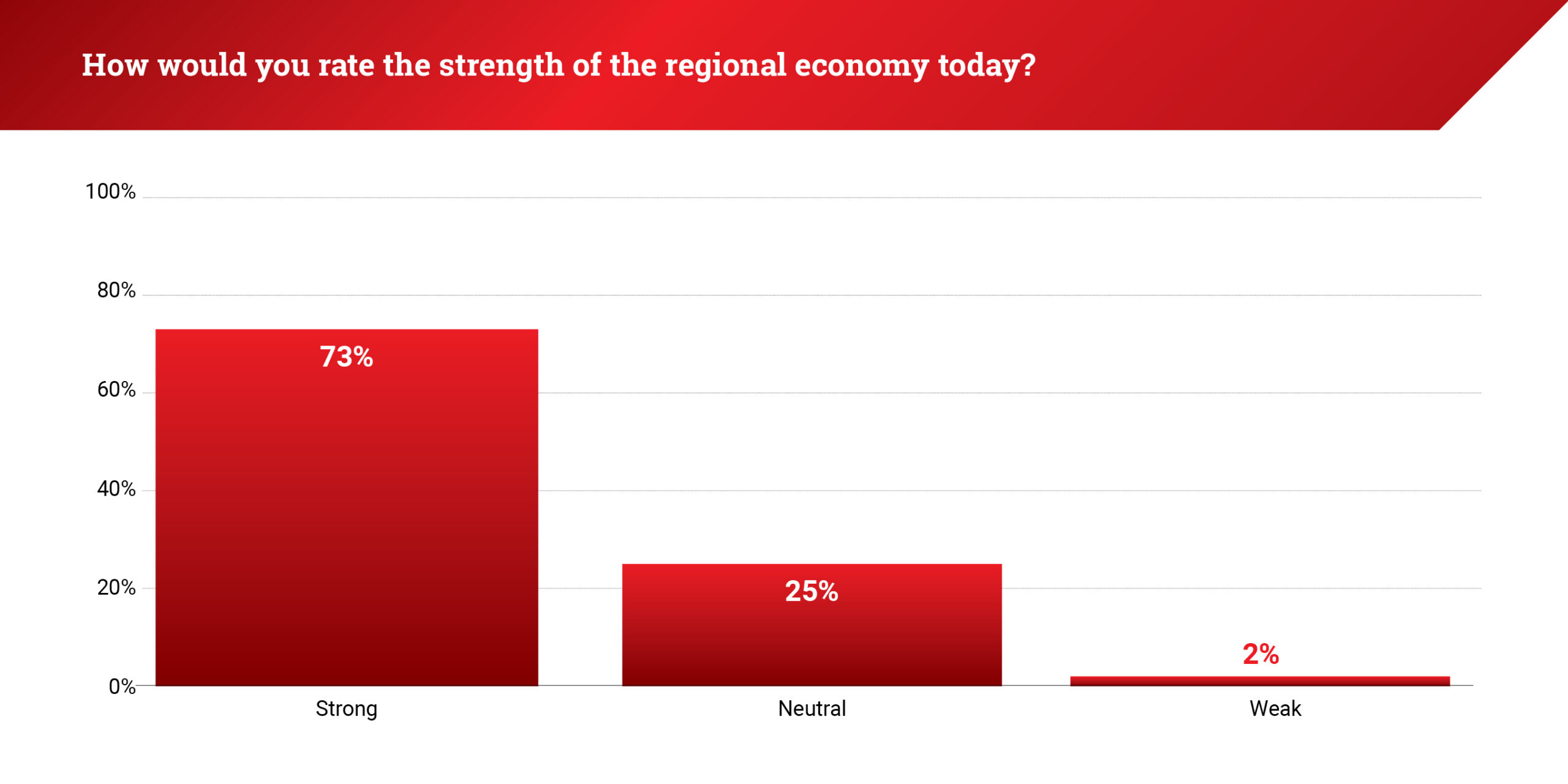
Some 73% of respondents rated their regional economy as strong, flat from last quarter but down from 78% a year ago.Business
“Client sentiment across most industries is positive… People continue moving here every day, which supports our clients, the broader economy, and both commercial and retail banking,” a banking leader in Charlotte shared with caa.

High-growth markets in the Southeast continue to benefit from population inflows and sustained demand.

“Florida is exceptionally well-positioned… The state remained open for business, attracted significant corporate relocations, and maintained economic momentum,” said a real estate executive in Orlando.

Energy-driven markets also continue to report steady activity.

“Houston continues to experience growth… Client demand remains strong, and business activity continues at a healthy pace,” an accounting leader in Houston said to caa.

Federal Reserve officials continue to describe the U.S. economy as resilient, supported by steady consumer spending and business investment, even as policy uncertainty and external shocks complicate the outlook. 

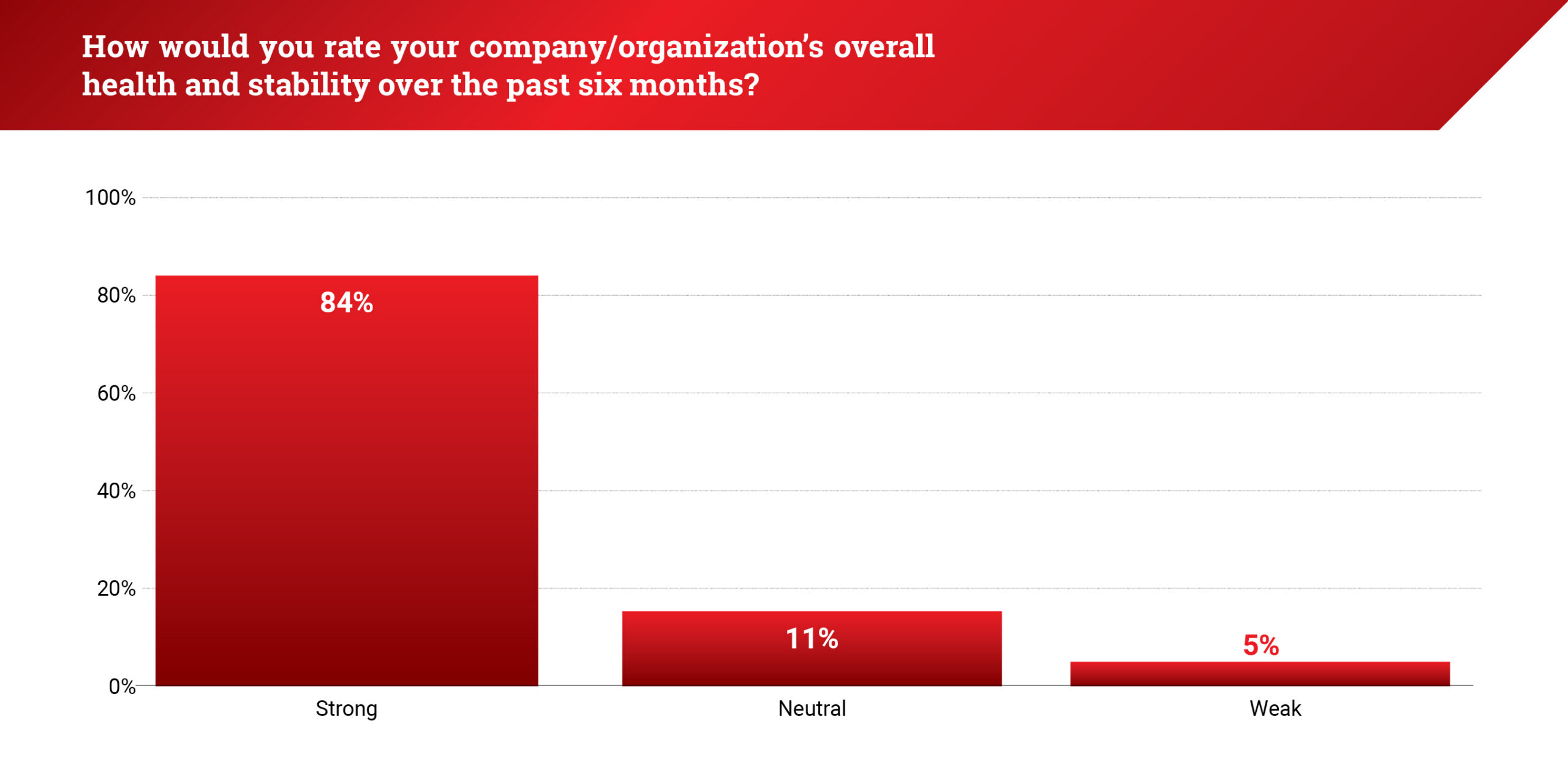
Company-level performance remained a bright spot: 90% of respondents rated their organization’s health and stability as strong over the past six months.
Business

“We were able to grow our loan book substantially… expand certain segments of our commercial loan book, and continue identifying new, attractive, and profitable prospects,” a banking executive in Charlotte said.

Yet some executives are seeing consumers pull back.

“Demand remains strong… we are at 7.8% year-on-year growth… At the same time, families are more cautious,” an education leader in Houston said.

Recent commentary from the Federal Reserve points to a gradual cooling in hiring activity, as businesses adjust to higher financing costs and slower growth expectations, even as layoffs remain contained and overall labor market conditions stabilize.

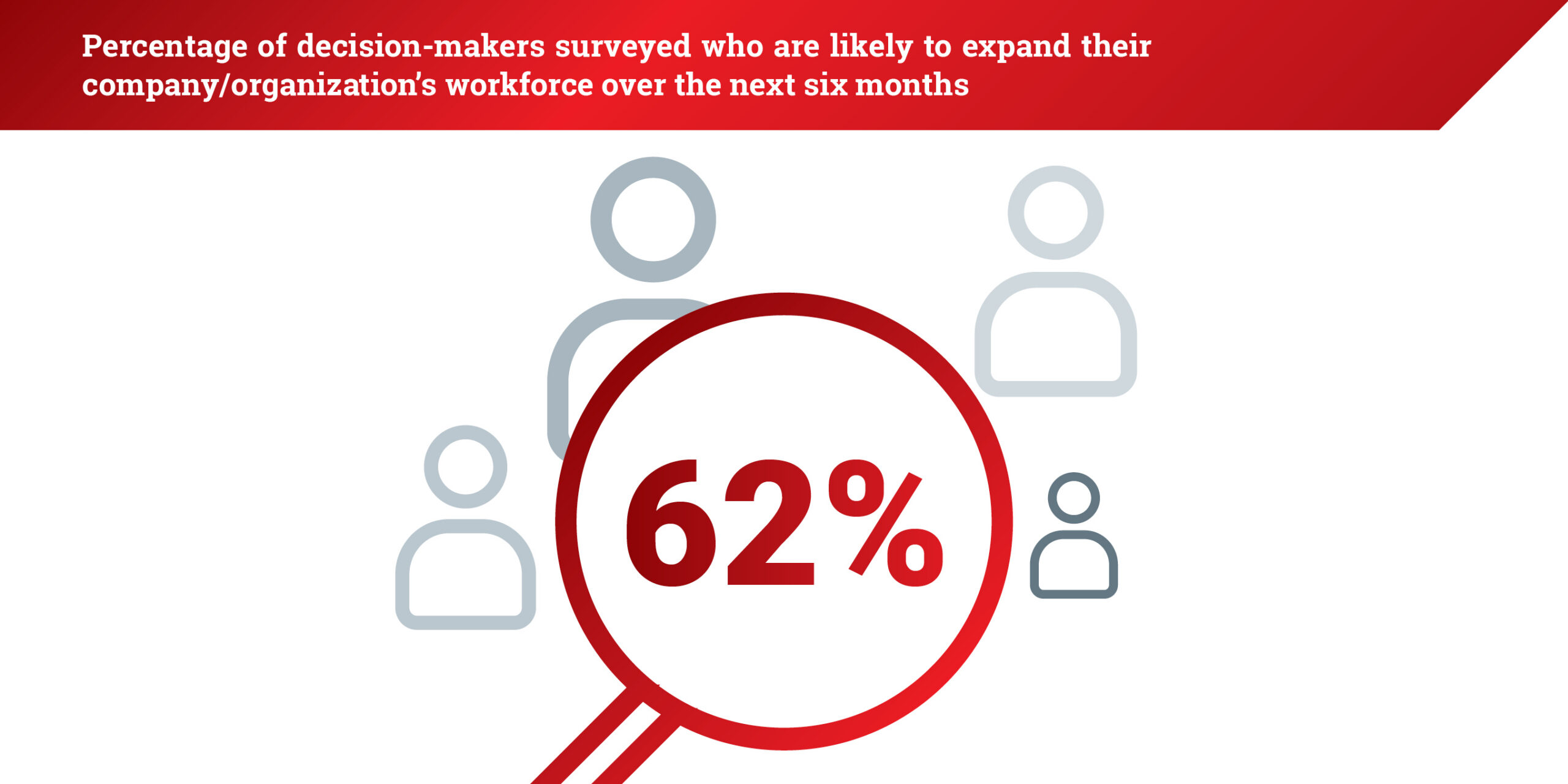
Hiring appetite is fading. Just 69% of respondents plan to expand their workforce in the next six months, down from prior quarters.
Business

“Labor is one of the biggest challenges… Identifying and attracting the right talent has become even more complex,” a real estate executive in Orlando said.

Structural shifts in workforce expectations are also reshaping hiring strategies. Researchers at the Stanford Institute for Economic Policy Research call it a “low-hire, low-fire” equilibrium, with job levels stable but fewer being created. Through the first three months of 2026, the U.S. unemployment rate has hovered between 4.3% and 4.4%.

“The accounting profession is experiencing both retirements and workforce shifts… professionals value flexibility more than ever,” an accounting executive in Houston told caa.

“The speed of change fundamentally shifts how people think about their careers… we must train people for what the workforce demands now,” a technology leader in the Triangle market said.

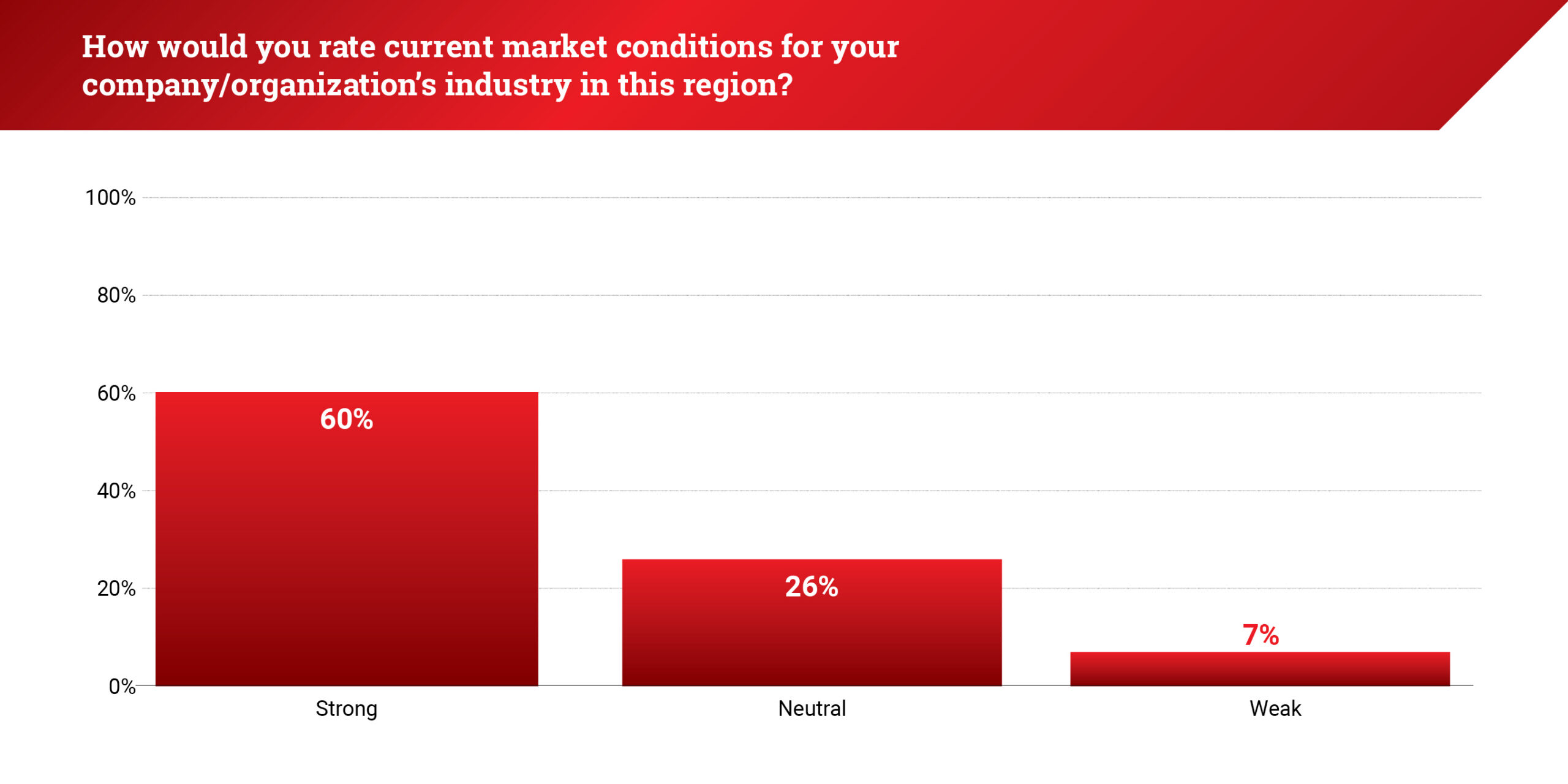
Market conditions held steady. Sixty-seven percent of respondents rated current industry conditions as strong, 26% as neutral, and 7% as weak, consistent with prior survey results.
Business

“Inflation is tangible… business owners feel it in labor, materials, and supply chains… tariffs and increased sourcing costs are forcing price adjustments,” an accounting leader in Houston shared with caa.

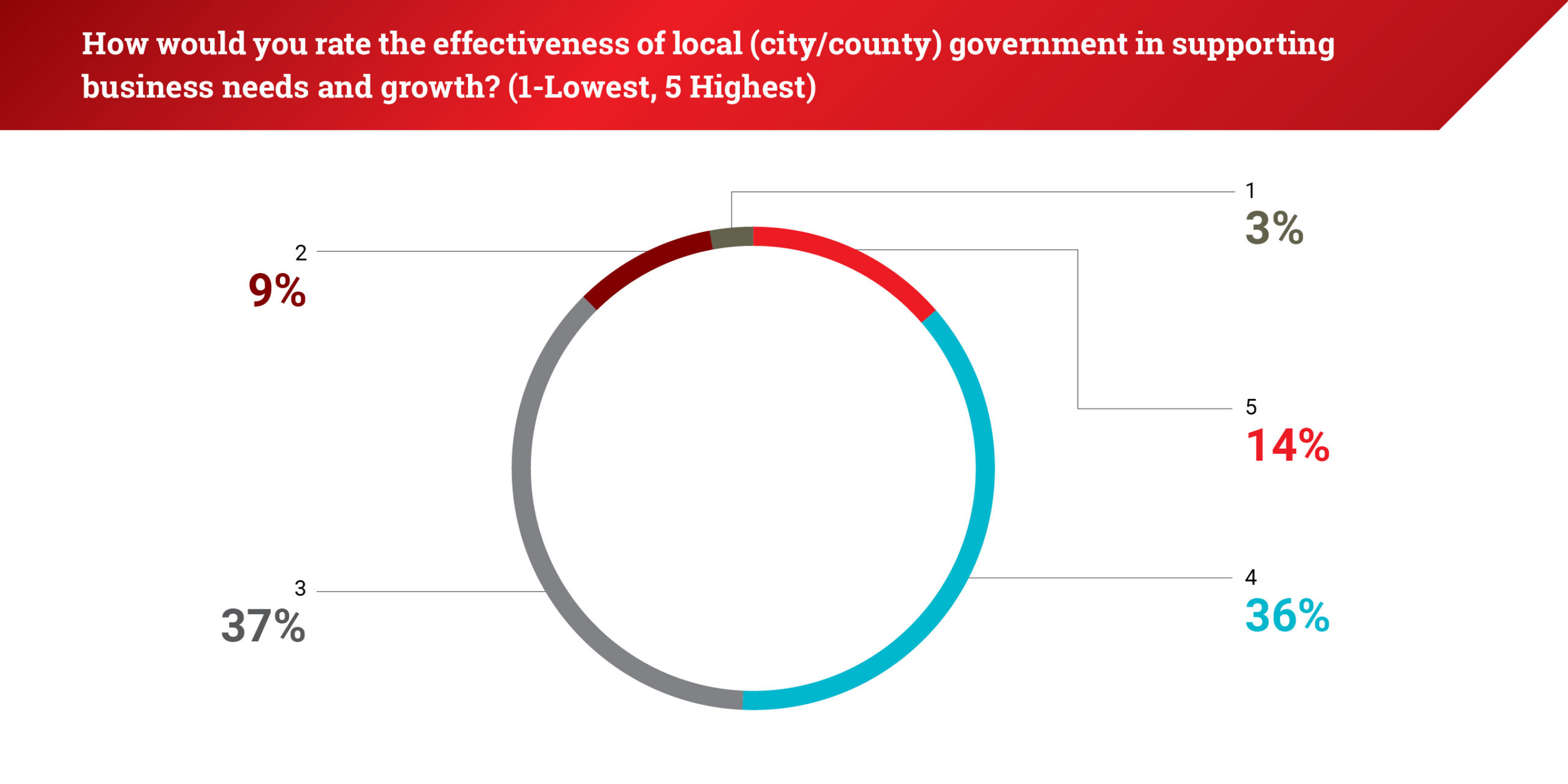
Views on local government support split sharply. Fifty percent of respondents rated government effectiveness as strong (scores of 4 or 5), though sentiment declined slightly from the previous quarter and varied across regions.Business
“We’ve made changes that allow small businesses to upgrade facilities more efficiently… that saves time and money,” a government leader in the Fort Lauderdale market said.

However, leaders continue to point to permitting and regulatory processes as areas for improvement.

“Streamlining permitting and development processes is one way local governments can help,” another public-sector leader in the Fort Lauderdale market shared with caa.

For more I:BSS reports, click here.

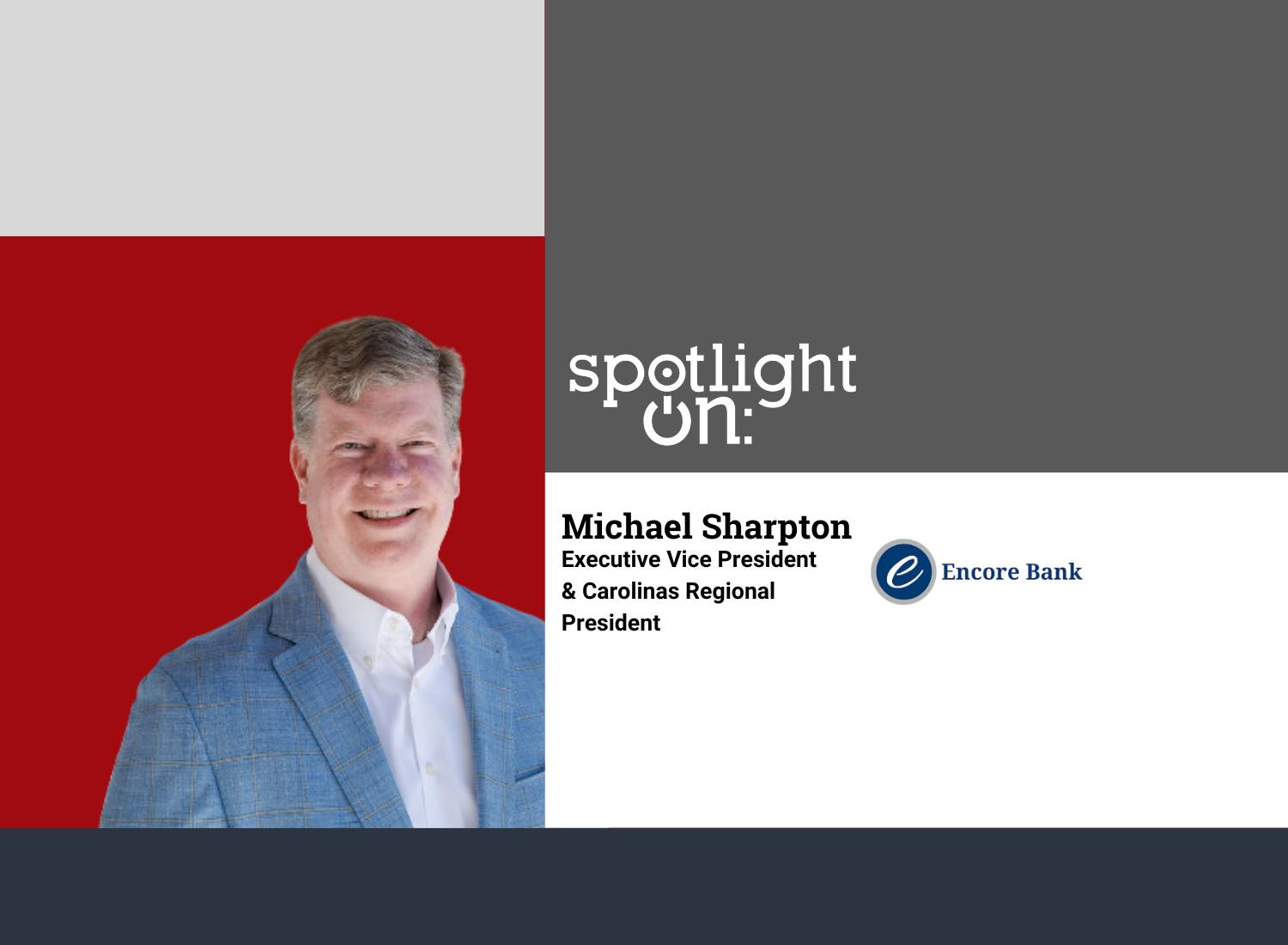
Spotlight On: Michael Sharpton, Executive Vice President & Carolinas Regional President, Encore Bank

Key points:

  • • Rising rates and regulatory pressure pushed banks to shift from lending-focused models to deposit and liquidity strategies.
  • • Encore differentiates through high-touch, relationship-driven banking supported by strong technology investments.
  • • Growth is centered on scaling relationships, referrals, and efficient operations rather than expanding physical branches.

Michael Sharpton spotlight onApril 2026 —In an interview with Invest:, Michael Sharpton explained how rapid interest rate increases and heightened regulatory focus have reshaped banking strategy across the Carolinas, pushing banks to prioritize deposits, liquidity, and customer engagement. “We are willing to work hard because we believe in what we are building in the Carolinas — and we believe clients will feel that commitment in how we show up every day,” Sharpton said.

What economic trends have had the biggest impact on Encore Bank in the Carolinas over the past year?

Banking has been hard for the last two years, but especially the last year. Interest rates increased quickly. Then, regulators increasingly shifted their focus toward liquidity ratios and deposit numbers. Like most banks, we had to pivot hard from being a loan and lending bank to being more balanced as a deposit-gathering bank. We were fortunate to be strong financially, so we were able to do that fairly easily, but it was still a big shift for our people.

That shift meant asking different questions — where do customers bank, where they bank personally, and where their friends, family, and employees bank. Broadly, profitability in banking has suffered over the past two years, and while it is starting to come back, it was driven by an extreme lack of loan demand and rapid rate increases. There just were not many loans out there that worked cash flow-wise.

Banks ultimately make money on the spread between deposits and lending, so when you aren’t lending, that gets tougher. We weathered it, and I would say we came out stronger, but it required clear communication and a lot of hard work — going out, talking to customers, explaining the new world, and finding ways to generate revenue without generating a lot of loans.

In a banking hub like Charlotte, how do you differentiate Encore Bank?

We are a service-focused bank. To me, it is about the people. Banking products are regulated, so they are pretty common — everybody has roughly the same tools. That means having outstanding people calling on outstanding prospects and customers, taking care of them, and being responsive.

We have a high-touch boutique feel because that is how we think we fit the market. Even though there are plenty of banks in the Charlotte area, we find that there is a niche of business owners who are still underserved. Bigger banks, due to costs, regulation, and sheer size, are not always able to deliver the customer service that smaller banks can.

That does not necessarily mean small businesses are our only focus. We bank some large revenue companies, but they bank with us because of the customer service, the touch, and the feeling of being valued as a client. We have also invested significantly in technology. That allows our customers to bank how they want to bank, in a sophisticated and efficient way.

Which sectors are driving demand for your services, and how are you approaching lending in this cycle?

The mix of clients we are bringing on is diverse. It ranges from mom-and-pop-owned companies to businesses with a couple of hundred employees. We do a lot with professional services, manufacturing, and specialized segments — law firms, architecture firms, accounting firms — but I cannot say it is one particular industry. It is broad and diverse across the board. Most of that has to do with our outstanding bankers and partners.

We have worked all of our careers to establish networks of customers. Those customers believe in what we are doing and introduce us to other people, but there isn’t a size limit on referrals. We want people we bank to introduce us to others. Word of mouth is a strong part of our culture.

Part of that customer diversity is also because some banks have shifted their focus upstream to larger customers or larger areas. They have not abandoned markets, but they may not service the outlying areas of Charlotte or places like York County in South Carolina or Monroe County in North Carolina the way they planned to or even used to.

Another factor is turnover. Banking is about people, and if you have had the same banker for 10 years and that person retires or moves on, sometimes that becomes a catalyst to consider changing banks. We want to be consistent in our approach, with veteran bankers and low turnover, so we can win business when clients are looking for a more stable, relationship-based experience.

We are also referral-based, as I mentioned earlier. Referrals from current clients are critical, and sometimes they cross county lines and business segments. Every time we think we are getting into one or two segments, it widens, because relationships do not stay neatly inside one category.

How is technology changing how you operate, and where are you investing?

We fundamentally think banking is changing, like a lot of industries. For us, that means we do not build brick-and-mortar branches all over a market. In our opinion, that isn’t how people bank as much anymore. We build one office in every city. We are currently in Charlotte and Winston-Salem in North Carolina, and Charleston and Greenville in South Carolina. We make it a centralized place easy to get to or describe to someone in a sentence or less. But people are banking with technology — their phones and laptops — and less in branches. Most banks don’t have decision makers in branches anyway, so with our model, local decision-making is also important.

We take the money we would typically invest in a branch network and invest it in technology. We do some of that in a proprietary way by developing systems internally, but more importantly, we partner with over two dozen financial technology companies. That lets us plug and play with the latest and greatest tools, rather than getting stuck with a legacy system we have spent millions on and cannot move away from. Our client experience through technology is strong, and we feel like we function as well as a big bank in that regard because we have made the investment.

Technology also matters on the fraud side. Fraudsters stay ahead, and having good technology to combat that is essential. Our goal is to give clients the ability to bank the way they want to bank — some may never come into a branch — while still delivering a relationship-driven experience, backed up by outstanding technology and tools to help them run their business.

What are your top priorities for the next three to five years in the Carolinas?

We are absolutely in growth mode. Being four and a half years into the Carolinas means we have a lot of the heavy expense behind us — the buildout, the technology, the foundational infrastructure. Now it is about building scale and developing relationships that help us grow as a bank and help companies grow, too.

Our focus is on deepening existing relationships and developing new ones. We tell our story in a personal way — one-on-one conversations — and we do not rely on big, broad advertising. We grow through referrals, reputation, and being present in the market. We also want to keep our model of efficiency and relationships. People are the most important element — internally and externally. We want to know the businesses in this area, which ones do it well, and how we can partner with them.

Sometimes that partnership is educational. We host events and speak on topics that help business owners plan — succession planning, navigating fraud, or even how to become more bankable. A lot of people have great ideas, but if they cannot run the business, they will never get their product and knowledge out there. If someone is open to learning, we are willing to take the time to help educate them on how to use a line of credit effectively, how to manage a cash conversion cycle, and how to grow in a sustainable way.

What is one element of Encore’s culture or model you want business leaders to understand?

A lot of banks are measured by earnings and market share. Earnings are important — that is true for any business. Encore isn’t beholden to a quarterly earnings call, pivoting strategy every few meetings. We want to grow, but we do not focus on being the biggest bank in Charlotte. We already know we cannot be; there are lots of great banks here already. Our job is to create one of the best banks, especially around customer service and local decision-making. We give boutique banking a name and a face, creating an outstanding customer experience. That means we keep you out of the 800 number, automated service, and let you talk to a real person.

Another unique aspect is that 83% of Encore employees have invested in Encore Bank. We are privately held, and most of our employees have written a check to join because they believe in the model, the mission, and their ability to execute. That is real skin in the game. Our people have bet on themselves to deliver a fantastic banking experience. It is not easy, but we are willing to work hard because we believe in what we are building in the Carolinas — and we believe clients will feel that commitment in how we show up every day.

Want more? Read the Invest: Charlotte report.

Miami’s tax experts discuss navigating changing regulations

Key points:

  • • Tax and wealth management firms are navigating evolving regulations with a mix of compliance and strategic planning.
  • • Technology and data systems are critical to tracking rule changes and matching them to client needs.
  • • Migration and global expansion are increasing demand for coordinated, cross-border advisory services.

TaxApril 2026 — As tax laws continue to evolve, CPA and wealth management leaders across Miami are helping clients navigate an increasingly complex regulatory landscape. From shifting compliance requirements to new planning opportunities, firms are balancing technical expertise with strategic insight to ensure businesses and individuals stay aligned with current rules while positioning themselves for long-term success.


Join us at caa’s upcoming leadership summits! These premier events bring together hundreds of public and private sector leaders to discuss the challenges and opportunities for businesses and investors. Find the next summit in a city near you!


Effective tax and wealth management today requires not only staying current on legislation, but also understanding each client’s unique goals, risks, and growth strategies in a rapidly changing environment.

CPA and wealth management business leaders in Miami, including Alberto Guzman, partner and managing director of AbitOs; Mike Morroni, president of global expansion at H&CO; Ryan Morris, partner at Sheppard Morris CPA; and Curt Edwards, managing director at Wilmington Trust, shared how their respective firms are advising clients on changing tax regulations, rules, and compliance in Florida.

Alberto Guzman TaxAlberto Guzman, Partner & Managing Director, AbitOs
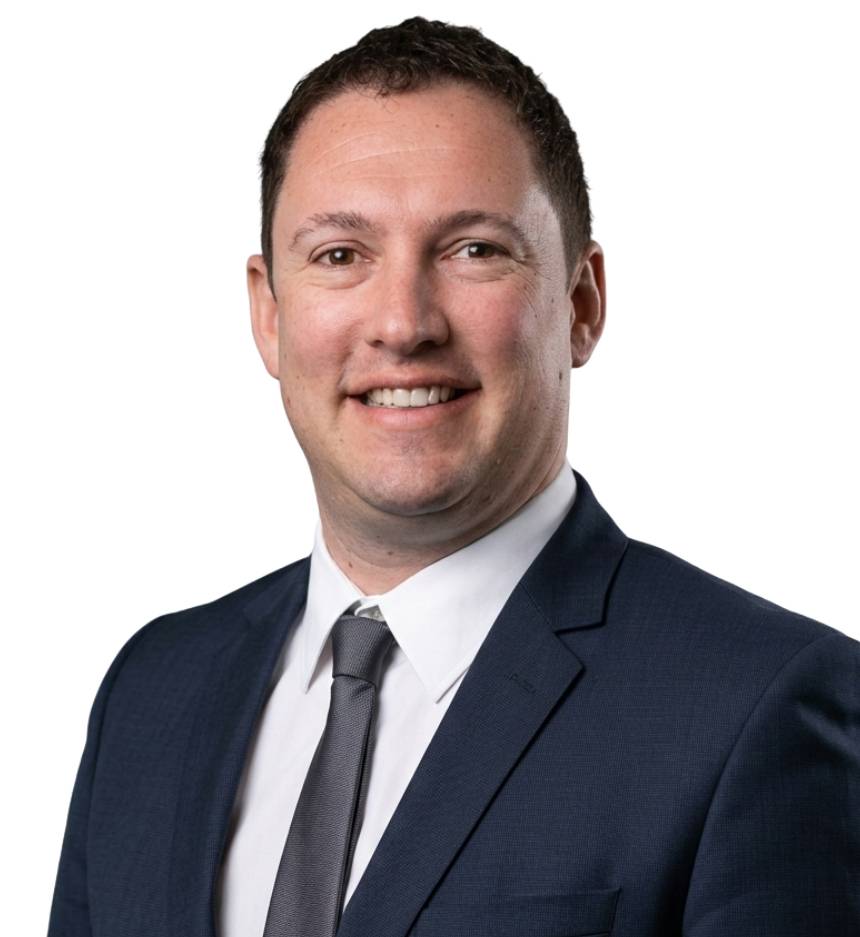
Staying current with tax regulations is an ongoing process. We monitor rule changes through professional resources and share updates regularly. But knowing the rules is only part of the challenge. The harder part is identifying which clients are affected. Large clients are easier to track, but smaller entities can still be impacted by changes that aren’t immediately obvious. That’s why we invest heavily in our internal systems and databases so that we can match new rules to the right clients.

Compliance requires constant attention, investment in technology, and experienced people who understand how the rules apply in real-world situations.

Mike Morroni TaxMike Morroni, President of Global Expansion, H&CO
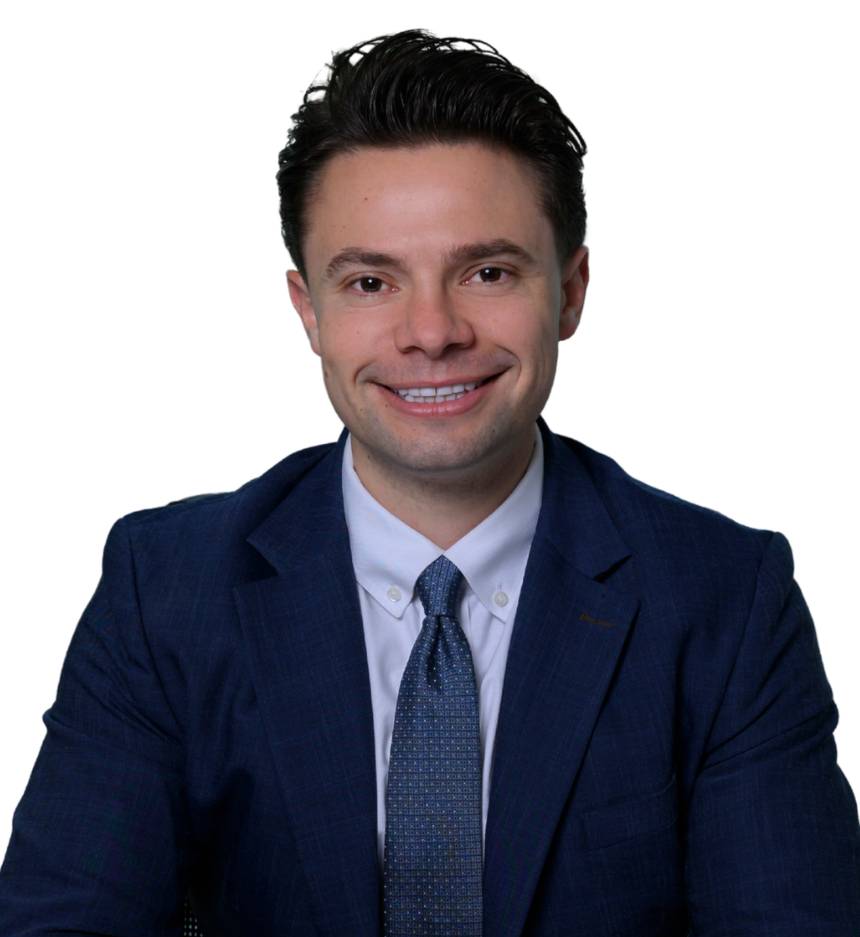
Tax compliance is essential. Payroll, filings, and local registrations are foundational for operating in a country. But we start with a broader question: what is the client trying to achieve in that market?

Some clients are expanding to drive sales and access customers. Others are expanding to access labor, whether for technical talent, shared services, or call center operations. In many cases, a client is expanding because their own customer needs them to be set up in a country by a specific date, so timing and execution become critical.

Once we understand the goal, we can connect the right steps and resources to help them succeed. Sometimes, that is direct support from our teams. Sometimes it is coordinating with partners to fill gaps. The key is helping clients avoid basic misses that can derail progress. Incorporation alone is not a success if the company cannot hire, cannot operate, or is not registered properly for what it actually needs to do.

Ryan Morris TaxRyan Morris, Partner, Sheppard Morris CPA
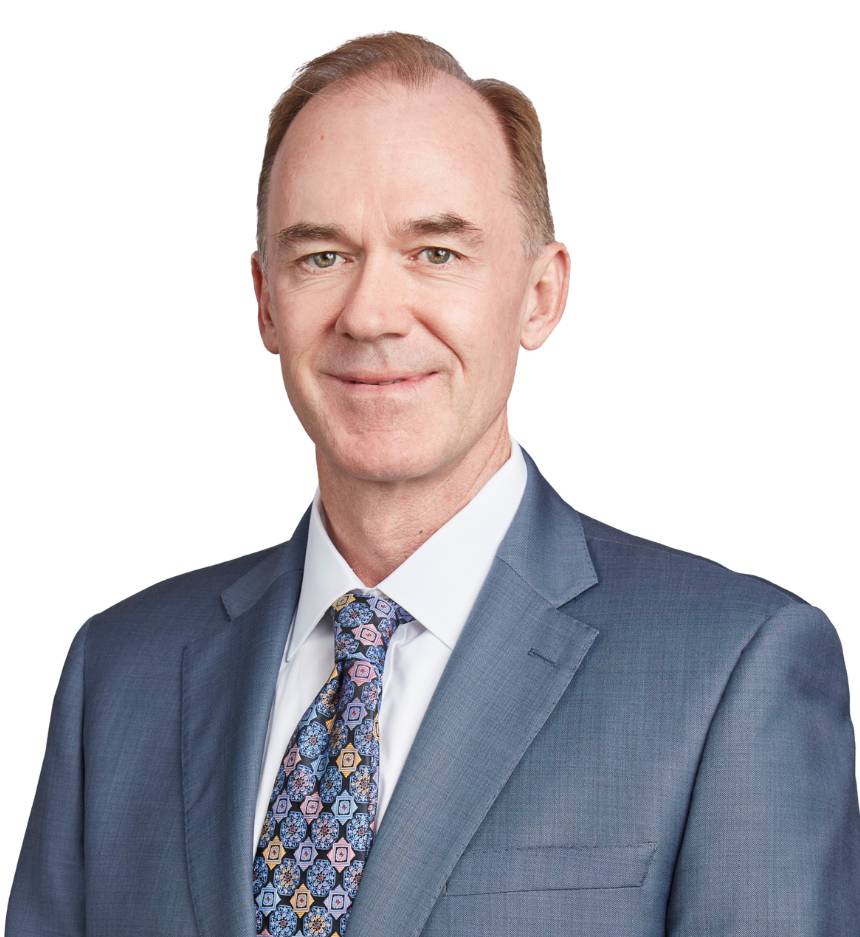
The new tax bill has created a lot of opportunities. Changes to qualified small business stock, bonus depreciation, and higher lifetime exemptions all present planning advantages. It comes down to understanding a client’s risk appetite — whether they want exposure to real estate, acquisitions, or other investments — and tailoring a tax strategy around those goals. Every family faces different challenges, and our job is to stay adaptive and aware of how new legislation affects them.

Curt Edwards TaxCurt Edwards, Managing Director of Wealth Management – Southeast Region, Wilmington Trust

We have teams that stay focused on what’s changing in tax planning and wealth strategy. Internally, we have a dedicated group that tracks developments in the estate planning world and translates them into practical guidance for clients and their advisory teams.

In South Florida, we’re seeing a sustained migration from New England, the Midwest, and other northern states. That trend hasn’t been limited to individuals. Increasingly, business owners are asking how to move companies, not just households.

That shift changes the work. Relocating or selling a business pulls in M&A attorneys, tax counsel, and trust and estate attorneys. Our role is to keep the planning process organized, help clients understand tradeoffs, and make sure the strategy fits their broader balance sheet and long-term goals. We’re often coordinating the flow of information so the client’s decisions match what the legal and tax realities will allow.

Want more? Read the Invest: Miami report.

How Atlanta is closing the gap between school and work

Key points:
  • • Employers and educators are aligning to close the widening gap between workforce skills and AI demands.
  • • Demand is shifting toward adaptability, critical thinking, and experiential learning over purely technical skills.
  • • Uneven AI adoption is accelerating the need for retraining and stronger public-private talent pipelines.

AtlantaApril 2026 — Atlanta‘s employers and educators are facing the same problem from different directions, as the talent AI demands does not yet exist. Schools are racing to build it while companies are focusing on retraining, but the partnerships they build together will define a successful transition.


Join us at caa’s upcoming leadership summits! These premier events bring together hundreds of public and private sector leaders to discuss the challenges and opportunities for businesses and investors. Find the next summit in a city near you!


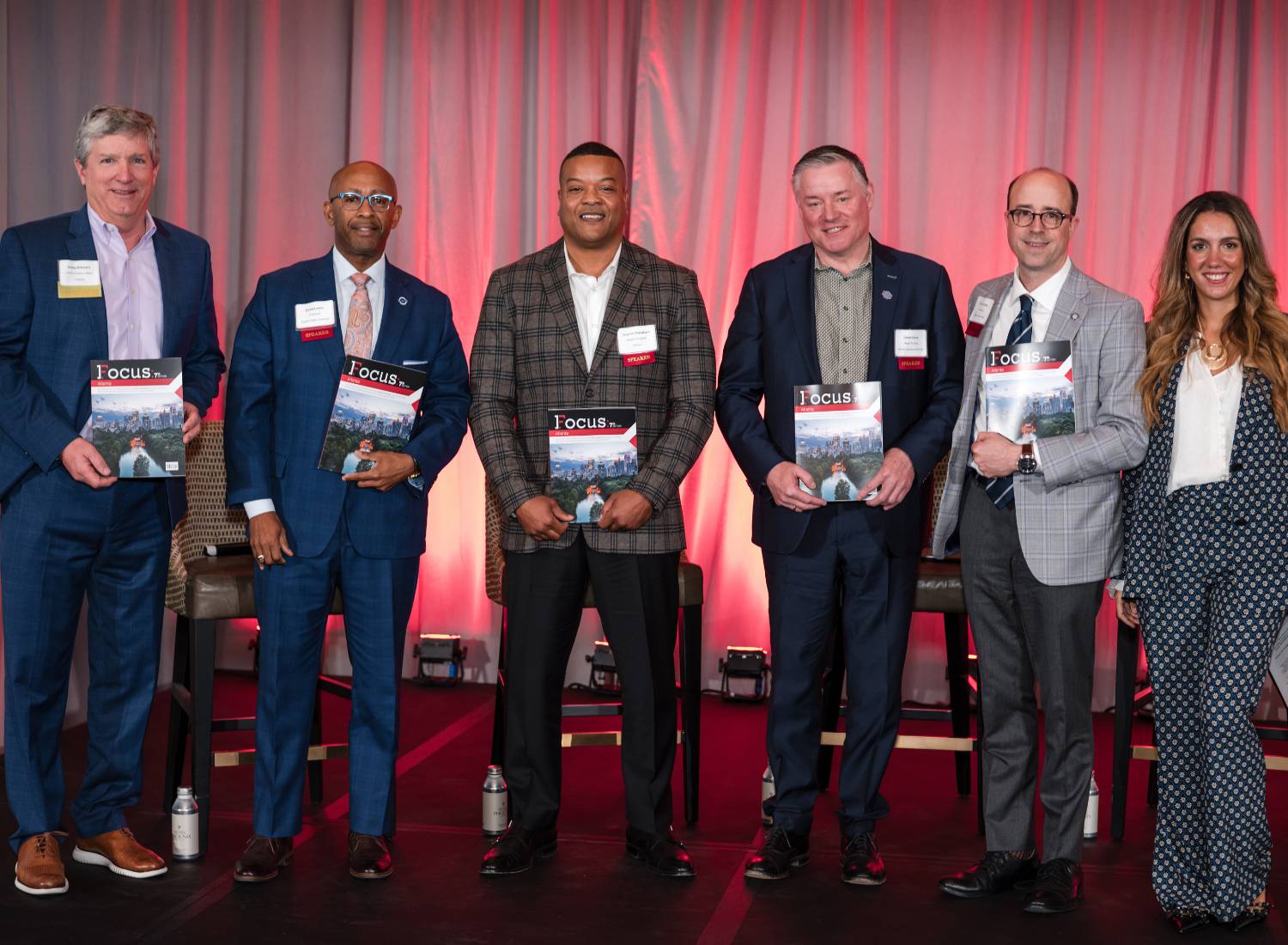
“Talent has always been at the center of what drives things,” said Doug Blizzard, chief solutions officer at Catapult, at the Focus: Atlanta 7th Leadership Summit last month. “But what talent looks like and what it needs is evolving faster than it has in years.”

While technical knowledge remains important, employers are focused on competencies that allow workers to adapt in real time. The World Economic Forum estimates that 39% of the workers’ core skills will change by 2030. Employers are already responding, prioritizing adaptability, analytical thinking, and collaboration over narrowly defined technical competencies.

“There’s a heavier balance now between technical and durable skills,” said Jerome Cheatham, region president at Verizon. “Learning agility, curiosity, and collaboration are becoming just as important in how we evaluate talent.”

For companies operating at scale, those dynamics are already showing up in how roles are defined and how people are trained. Nearly half of all workers will require retraining by 2030, whether through upskilling within their current roles or reskilling entirely into new ones. In North America, employers expect that need to be even higher, with two-thirds of the workforce needing additional training over the same period.

That pressure is also showing up within higher education. Students are arriving with more information at their fingertips than ever, but panelists argued that access to information isn’t the same as readiness to work.

“There is a gap between what businesses truly need and what we in education think we should be providing,” said John Fuchko, president of Dalton State College.

Closing that gap is increasingly tied to experience. Institutions are placing greater emphasis on internships, applied learning, and real-world exposure to ensure students can contribute from the start.

“At Clayton State, you cannot graduate unless you have some form of experiential learning,” said Georj Lewis, president of Clayton State University. “That experience is what helps students be ready on day one.”

New tools, new expectations

AI is accelerating that shift, altering how work itself is structured and the tools people use to do it. “I don’t look at AI as just a tool,” Cheatham said. “It’s a broader shift in how work gets done.”

Across industries, companies are using AI to automate routine tasks and augment how decisions get made, but the rollout is not happening evenly. 

Nearly half of U.S. workers reported never using AI at work, according to a Gallup survey from the fourth quarter of 2025 — even as 12% said they used it daily, up from 10% earlier that year, and another 26% reported using it several times a week.

The organizational level shows a similar pattern. Just 38% of respondents said their company had integrated AI in some form, while 41% reported no implementation at all. Use also varies by industry, with higher uptake concentrated in technology, finance, and professional services, and a more limited approach in retail, manufacturing, social services and government.

The uneven adoption is influencing how those abilities are applied, especially as routine tasks become more automated while others continue to rely on human judgment and creativity.

“If we’re just using AI to substitute for our own thinking, we’re not learning anything,” said Kevin Glass, head of school at Atlanta International School. “The goal is to use it to challenge thinking and get to higher-order skills.”

Talent as a shared responsibility

Atlanta’s density of employers, universities, and civic institutions is creating opportunities for collaboration, and the pressure to make good on them.

“We are connected so many times greater now than at any point in human history,” said Glass. “The opportunity is how we use that interconnectedness to build stronger partnerships between businesses, schools, and communities.”

Employers are advising on curriculum and investing earlier in the talent pipeline, with some of that investment reaching students long before they set foot in a college classroom. Verizon’s Innovative Learning Labs embeds STEM and AI education directly in Atlanta communities, reaching students well before they face career decisions.

“To give that to a kid to broaden their horizons at an early age is important,” said Cheatham.

Educators are also pushing for greater accountability on their end. Partnership with employers matters, but so does what happens inside their institutions.

“It’s our responsibility to identify what the problem is, put things in place to shrink that gap, and implement,” Lewis said. “So that when they show up at your place of employment, you’re satisfied with the product you’re getting.”

Interested in reading the Focus: Atlanta report? Sign up today!

For complete conference panel discussions, tune in to our YouTube Channel.

Central Florida is building the workforce for the next space age

Key points:

  • • NASA’s Artemis II mission is driving job creation, investment, and aerospace growth in Central Florida.
  • • Education, healthcare, and industry partnerships are strengthening the region’s talent pipeline.
  • • Aerospace innovation is expanding into adjacent sectors like medicine, research, and advanced manufacturing.

Central FloridaApril 2026 — The recent launch of NASA’s Artemis II mission marked more than a milestone in space exploration. It reinforced Central Florida’s position as a driving force behind the most ambitious crewed lunar program in half a century. The mission is also accelerating economic activity and long-term investment across the region.


Join us at caa’s upcoming leadership summits! These premier events bring together hundreds of public and private sector leaders to discuss the challenges and opportunities for businesses and investors. Find the next summit in a city near you!


Florida has already seen tangible benefits from the Artemis program, with more than 13,000 jobs and roughly $3 billion in annual economic impact tied to the initiative, alongside a growing network of contractors, suppliers, and specialized companies supporting its development. 

The ripple effect is being felt across industries, as aerospace-related activity continues to attract businesses, talent, and capital into Central Florida. In Lake Nona, for example, research institutions and healthcare leaders are leveraging space exploration to drive innovation in fields such as aerospace medicine, studying how microgravity, radiation, and isolation affect the human body and translating those findings into real-world medical advancements.

Invest: spoke to local government officials, educational institution leaders, and industry executives that are aligning strategies to meet a growing demand for specialized talent. From infrastructure planning to workforce development programs, the region is preparing for a long-term role as a hub for innovation, research, and advanced industry.

Central Florida Mike BlakeMike Blake, Mayor, City of Cocoa

We are near major aerospace assets, including the Kennedy Space Center and Port Canaveral, and we continue to build relationships that support workforce needs, logistics, and tourism.

We also benefit from having major space industry players nearby, including Vaya Space and Blue Origin. Those relationships support workforce development, scholarships, and exposure for students to high-growth careers. When we connect young people to opportunity, we strengthen our local talent pipeline and create reasons for families to stay and build long-term roots in Cocoa.

Deborah German Central FloridaDeborah German, Vice President for Health Affairs and Dean, University of Central Florida – College of Medicine

Our aerospace medicine group is working with NASA and private aerospace companies to improve the health of space travelers. We monitor astronauts’ health before and after flights, and we are working on a clinical model that supports pilots. We see the airport as part of the broader ecosystem around Lake Nona, and we talk about that area not just as a Medical City, but as an aerotropolis, a metropolis that includes an airport.

Shaun Germolus Central FloridaShaun Germolus, Director of Aviation, Kissimmee Gateway Airport

We are strategically planning to redevelop more than 200 acres to primarily support aeronautical uses, create jobs and further enhance the economy.

One of the most significant steps forward was signing a memorandum of understanding with the Kissimmee Airport Development Company to study the redevelopment of our former 18-hole municipal golf course. Closed in 2018, that land is now being evaluated for aeronautical uses and job-generating development. The group is assessing surveys, environmental conditions, stormwater plans, grading and utilities to bring the property to a “site-ready” condition for construction. We expect a full report, including financial considerations, by March 2026, which will guide discussions for a master development agreement.

Amanda Livermore Central FloridaAmanda Livermore, Founding President & CEO, Cristo Rey Orlando High School

Representatives from Lockheed Martin recently visited campus to speak with our students about aerospace careers and a team from Accenture offered an engaging presentation about utilizing AI in the workplace. We also host hands-on learning opportunities. On Fridays, students can participate in programs within our Florida Blue Innovation Lab, where they explore emerging technologies. One popular activity has been drone piloting, where students learn the math and technical concepts behind operating drones. It is a practical way to connect classroom subjects like mathematics with real-world applications and potential career paths.

John Nicklow Central FloridaJohn Nicklow, President, Florida Tech

To stay aligned with the regional economy, I work closely with our local economic development commission and frequently meet with companies considering a move to the Space Coast. Those conversations translate directly into new and refined programs. We have designed industry-specific master’s degrees with partners like Northrop Grumman, L3Harris and Patrick Space Force Base.

Our economic impact study showed that statewide, jobs in engineering and aerospace manufacturing in Florida are expected to grow by 17% by 2033, but on the Space Coast that growth is projected at 112%. Florida Tech already generates about $1.6 billion in annual economic impact through the university, its students and its alumni, including roughly half a billion dollars in wages and salaries. Each graduating class adds more than $1 billion to Florida’s economy over three decades.

George Recktenwald Central FloridaGeorge Recktenwald, County Manager, Volusia County

We’ve seen numerous additions to the economic landscape, including a new Boeing presence in Daytona Beach in partnership with Embry-Riddle Aeronautical University that is expected to bring more than 400 engineers into the market. We’ve also attracted the French aircraft manufacturer, AURA AERO, that will establish a U.S. manufacturing and research facility at Daytona Beach International Airport.

Daytona State College, which sits just steps away, is collaborating with us on training programs that will eventually be located directly on airport property to support aerospace manufacturers. Our goal is a balanced economic structure: major employers, midsized firms, and a strong base of smaller companies. Many businesses with 50 to 150 employees are doing innovative work in sectors like space technology, medical manufacturing, and insurance services, contributing to a diverse and stable economy.

Want more? Read the Invest: Greater Orlando report.

Jerry Demings, Mayor, Orange County

Jerry Demings, Mayor, Orange CountyInvest: sat down with Jerry Demings, mayor of Orange County, to discuss record tourism, fast-moving population growth, and the infrastructure investments and diversification efforts designed to protect quality of life. “As goes Orange County, so does the entire region,” Demings said.
How would you characterize Orange County’s performance as a growing economic and population center?

Orange County continues to grow. The most recent full-year figures show our population at about 1,556,000, and that sustained in-migration creates real pressure on infrastructure and public services.

Growth has strengthened our economic vitality. We remain the top tourist destination in North America and one of the Top 5 in the world. Last year, we welcomed more than 75 million visitors, and hospitality and tourism generated an estimated $95.4 billion in economic impact.

Tourism also produces revenue that we can reinvest. Through our hotel tax, paid by visitors staying in our hotels, we had a record year, bringing in more than $385 million. We use those  funds to reinvest in the visitor economy, expand our convention and sports facilities, and keep the destination competitive.

We have a few major projects already underway: a $560 million expansion of the Orange County Convention Center, which is among the three largest convention centers in the United States; a $400 million expansion and renovation of Camping World Stadium with the city of Orlando; more than $200 million in upgrades to our downtown Orlando arena, the Kia Center; and a $90 million investment tied to an expansion of the stadium at the University of Central Florida. These investments support year-round demand, create new experiences, and continue to attract major events, conferences, and investment that ripple into small businesses and local employment.

How are you adapting your strategies to meet new trends in transportation, affordability, workforce access, and related priorities?

We are diversifying the economy while continuing to strengthen tourism. One emerging focus is advanced air mobility. The technology exists today, and we are working to position the Orlando International Airport as a test site, in coordination with the Federal Aviation Administration, to support testing of aircraft that will make short regional trips, including pilotless aircraft.

We are also preparing for growth in semiconductors. In neighboring Osceola County, the NeoCity area is attracting semiconductor manufacturing investment, and that activity will have meaningful spillover benefits for Orange County and Central Florida.

Another long-standing strength is modeling, simulation, and training. We have more than $7 billion in Department of Defense procurement connected to this work, much of it tied to Research Park near the University of Central Florida, where industry and government partners are advancing training capabilities.

Healthcare is also expanding rapidly. We now have three medical schools in our community: the University of Central Florida College of Medicine; the Florida State University College of Medicine at Orlando; and the Orlando College of Osteopathic Medicine, located in west Orange County. That pipeline supports growth across the healthcare sector.

Major systems like AdventHealth and Orlando Health have expanded significantly, including opening new freestanding emergency centers that can improve access to emergency services throughout the county and region. We are also producing more healthcare professionals through nursing and related programs, which are essential to meeting demand.

On transportation, we created the Accelerated Transportation Safety Program, a five-year, $100 million commitment to improve pedestrian safety, upgrade lighting, enhance safety features at high-traffic intersections, and strengthen connectivity across trails and bicycle networks. It also supports better interoperability between city and county traffic engineering systems so signals and transit-related systems communicate more effectively.

From these priorities, what do you consider to be the major challenges, and how are you working with partners to navigate them?

Managing growth is the biggest challenge. Growth requires new infrastructure, but residents also care deeply about how we protect the environment while we expand.

The Board of County Commissioners has made a $100 million, five-year commitment to buy preservation land. We also created the county’s first chief sustainability and resiliency officer role, with staff support, to work across departments and with community partners on sustainability priorities.

Through our utilities department, we have implemented the largest floating solar array in the Southeast. We are also investing in alternative energy, protecting our aquifer, and improving water quality.

We have adopted regulatory provisions designed to protect water bodies, including reducing impacts associated with septic tanks. We have a program to convert septic systems to sewer connections so that, as we grow, we are not continuing to degrade water bodies. We also maintain an air quality monitoring system to continuously gather data and better understand environmental impacts over time.

Traffic congestion is another pressure point. Between visitation and population growth, traffic is increasing, and we are exploring alternative funding methods to expand SunRail. We also want to improve connectivity between key destinations, including better links between the airport and the tourism corridor through public-private efforts.

Housing affordability is also a major concern. We created a locally controlled housing trust fund and committed at least $160 million over 10 years to stimulate workforce and affordable housing.

Partnerships are essential. We have partnered with Universal Orlando Resort  on a 1,000-unit workforce housing development in the tourism corridor near International Drive. Disney is also developing a 1,400-unit workforce affordable housing project near its footprint.

We are working with Habitat for Humanity as well, on the construction of new homes. Orange County contributes land from our surplus county lots, and Habitat works with construction partners and lenders to keep costs down. Qualified residents can contribute sweat equity, which helps create attainable ownership opportunities for low-income and very low-income households.

We are also focusing on “the missing middle.” We have updated regulations to allow accessory dwelling units, sometimes called garage apartments or granny flats, to increase options and add supply in ways that can help reduce cost pressures.

Workforce development is tied to all of it. We are partnering with CareerSource Central Florida and private-sector employers to build job skills pathways, including technology-focused apprenticeships that allow people to earn while they learn and move into roles that pay well without requiring a four-year degree.

Looking ahead, what other developments will shape the region’s trajectory?

Space and aerospace remain major regional strengths. NASA and the Kennedy Space Center are part of the broader ecosystem, and the University of Central Florida supplies significant talent that supports NASA and private partners. We are seeing continued investment from Blue Origin and others, along with ongoing activity tied to satellite deployment and launches.

We are also seeing continued investment tied to the theme parks and the visitor economy, which helps sustain demand and local revenues. As goes Orange County, so does the entire region, and our focus is to keep growing the economy while protecting what makes this community work for residents and businesses.

We are also approaching a period of leadership transition locally. My term will conclude due to term limits, and voters will also see an expansion of the county commission, which will reshape governance and priorities in the years ahead.

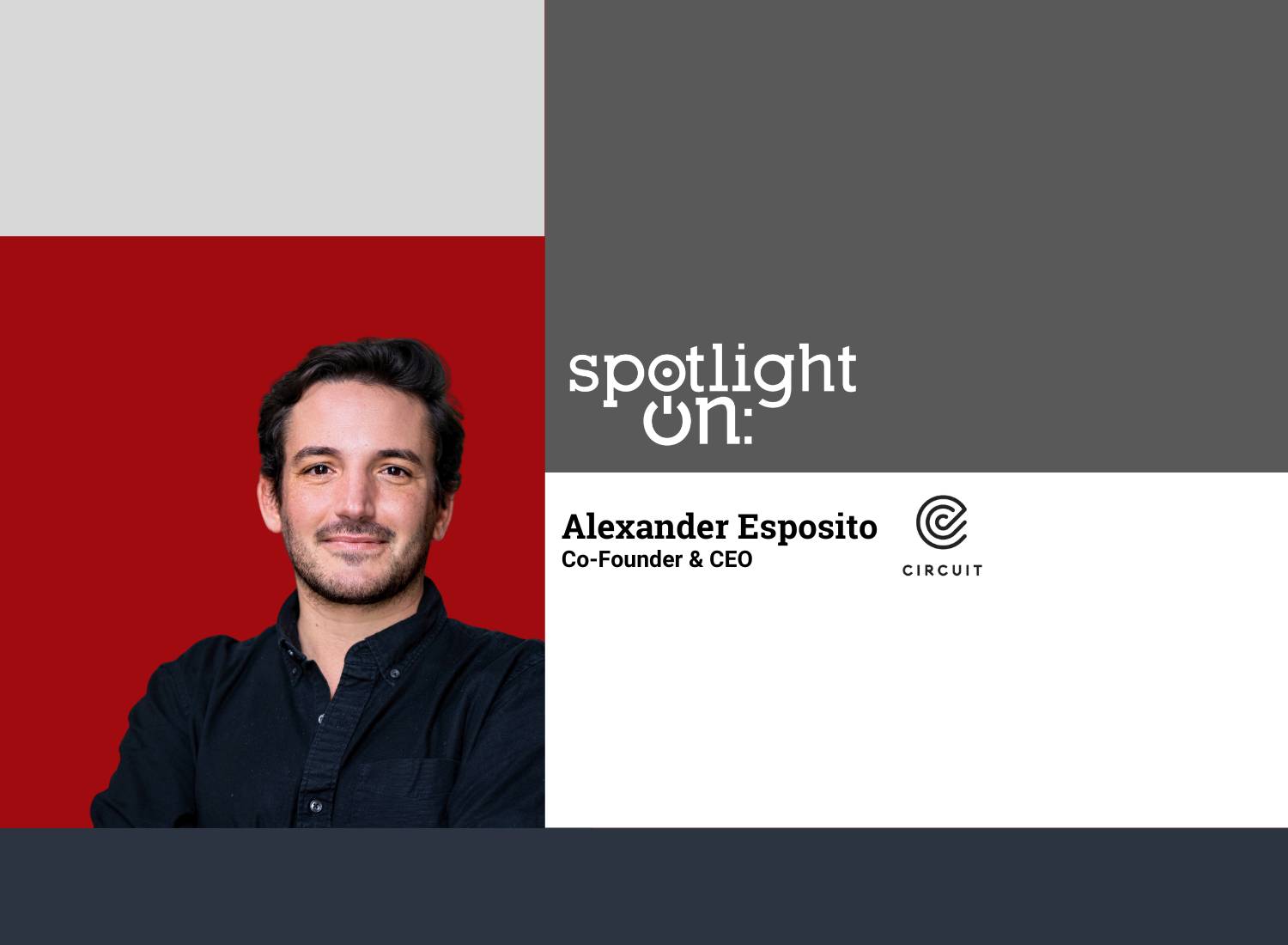
Spotlight On: Alexander Esposito, Co-Founder & CEO, Circuit

Key points:

  • • Microtransit is shifting from pilot programs to essential infrastructure for access and mobility.
  • • Success depends on clear use cases, strong public-private alignment, and tailored service design.
  • • Cities are prioritizing outcomes, cost efficiency, and real-world impact over innovation hype.

Spotlight on Alexander Esposito mainApril 2026 — Invest: spoke with Alexander Esposito, co-founder and CEO of Circuit, about how cities are rethinking short-trip mobility, and what it takes to scale shared, electric, on-demand service without chasing innovation for its own sake. “Microtransit and solving the last-mile problem are becoming more of a necessity than a novelty,” Esposito said.

Join us at the Invest: Greater Fort Lauderdale 8th Edition Leadership Summit! This premier event brings together hundreds of Atlanta’s business and regional leaders to discuss the challenges and opportunities for businesses and investors. Buy your ticket now!


What shifts have occurred over the past year in how cities and transit agencies think about short-trip mobility?

It has been an encouraging year, and the biggest shift is that microtransit and solving the last-mile problem are becoming more of a necessity than a novelty. In fast-growing markets, leaders are viewing short-trip mobility as infrastructure that supports access, jobs, and the experience of moving around a district, not as a pilot program that is nice to have, and that’s been a really exciting evolution for the industry and for us at Circuit.

When we look at the impact these services can make, it connects people to transit hubs, connects people to jobs, and reduces demand for parking. That has real downstream effects for local economies, equity, access, and emissions reduction, and it matters even more in places where growth is driving congestion.

I also think the industry has matured. Years ago, the conversation was often innovation for the sake of innovation. New mobility appeared, and the question became what is new, what is flashy, and what is trending. Now, we see cities and properties spending more time on use cases and outcomes. What are we trying to solve, and what tools make the most sense? That includes software, service design, and vehicle mix. It is not just assuming an app fixes everything.

Where are you seeing the most traction for shuttle-based solutions, and where does the model still face limitations?

We have always been intentional about complementing public transit rather than trying to replace it. The shared goal is reducing single-occupancy vehicles and reducing congestion, and you do that by making it easier for people to choose alternatives.

One area of traction is first- and last-mile connections. If someone has to walk too far to reach a transit stop, they may overlook buses and trains as viable options. If we solve that access gap, we can help more people use fixed-route services, which lowers the number of cars on the road.

Parking is another overlooked driver of traffic. A meaningful portion of congestion comes from people circling for parking. If someone can request a ride and get where they need to go without bringing a car into the district, it reduces both parking pressure and vehicle miles traveled. It also encourages economic activity as people may be more prone to explore, shop, and dine for longer periods of time. 

Another lever is pooling. Many people call transportation network companies (TNCs) ride-sharing, but very few rides are actually shared. We use pooling in our app so that if there are empty seats and another group is on the way, we can pick them up and combine trips. That increases passengers per vehicle hour and helps lower the cost per rider.

Limitations typically show up when a program is not set up around a clear problem statement, or when expectations are not matched to the service design. If you try to solve too many different needs at once without aligning coverage, hours, and fleet, performance can suffer. The model works best when the use case is clear and the service is designed specifically for it.

As far as limitations go, more broadly, there’s really no shortage of places where parking, traffic, and last-mile problems exist. That said, we do have supply limitations in some of our markets where the service is incredibly popular and there just aren’t enough vehicles as part of the service contract. Unfortunately, that may lead to higher wait times. That said, it’s a good problem in that it shows the services are highly utilized and creates clear data that the services are effective and that Cities and partners should continue to invest in these types of services. 

When do public-private partnerships work best in delivering shared mobility, especially around risk, procurement, and performance expectations?

Many stakeholders share similar goals. Cities, hotels, offices, and shopping areas all generally want less vehicle congestion and fewer parking headaches. The challenge is that even with shared goals, each group has different incentives, budgets, and customers, so coordinating one unified program can be difficult.

We have seen strong outcomes when each party can commit in a way that directly supports its own objectives, while still aligning with the broader community benefit. For example, a hotel might be reluctant to simply contribute funding into a city program, but it may be willing to fund a dedicated vehicle that serves guests, carries hotel branding, and improves the guest experience. If that service is designed thoughtfully, it can also indirectly add supply to the public system by absorbing a portion of trips that would otherwise pull from shared capacity.

Common threads across the work we do with cities are alignment, transparency, and flexibility. Define what success looks like, set performance expectations early, and make sure there is a shared understanding of what the service is designed to do. If everyone is measuring the same outcomes, it is easier to manage performance and risk. If the service is set up to be flexible, it allows partners to adjust the program when conditions change.

In the markets where Circuit has been successful, what are the most common policy or planning decisions that set cities apart?

Growth is a major catalyst. When cities are growing, congestion and parking issues appear quickly, and leaders who plan ahead are often the ones who move first. They recognize that if they wait until the problem is severe, the community experience deteriorates and the cost of fixing it increases.

We also see a strong relationship between transportation access and real estate dynamics. Central locations often have the highest rents. If residents move farther away from central downtown areas, to manage housing costs, transportation costs increase. That tension makes access and connectivity more important, and it pushes cities to look for solutions that reduce friction for short trips.

In some regions, policy goals also shape adoption. In parts of Southern California, for example, there is a strong emphasis on emissions reduction, air quality, and access, and those priorities can accelerate interest in electric, shared mobility. In South Florida, FDOT and the Broward MPO have some great programs to promote new mobility solutions.

There is also a momentum effect. When one city launches a program and demonstrates results, other cities nearby want to understand how it works and whether it can fit their context. That is not just a trend dynamic. It is a response to visible outcomes and an attempt to address shared challenges.

Looking ahead three to five years, what are your priorities in expanding Circuit’s footprint and sustaining long-term success?

Our priority is continuing to invest in the right technologies and service designs, guided by first principles. We are moving riders, and riders care about a straightforward set of outcomes. They want the service to be easy to use, cost-effective, and reliable. Technology should support those outcomes, not distract from them.

I also expect more scrutiny across the industry around performance, particularly cost per rider and utilization. Some microtransit programs were not set up the right way, and that can create negative perception. It is important that a few weak examples do not define the entire category. The way to address that is measurement, transparency, and continuous improvement.

Public transit is rarely profitable as a standalone service, but it is essential. The real ROI is the impact transportation has on productivity, economic activity, and job creation. Cities need mobility to support jobs, tourism, and access to opportunity. That makes the questions about spend and outcomes more important than the question of profit. If a city can measure what it invested and what results it achieved, it can evaluate programs more holistically and build confidence in the outcomes.

For us, that means continuing to strengthen operations, focusing on metrics that matter, and making investments that drive real outcomes rather than digital gloss. We believe the market is moving toward more mature expectations, and we want to be the partner that helps cities and districts meet those expectations with data, planning support, and service design that fits the problem.

Want more? Read the Invest: Greater Fort Lauderdale report.

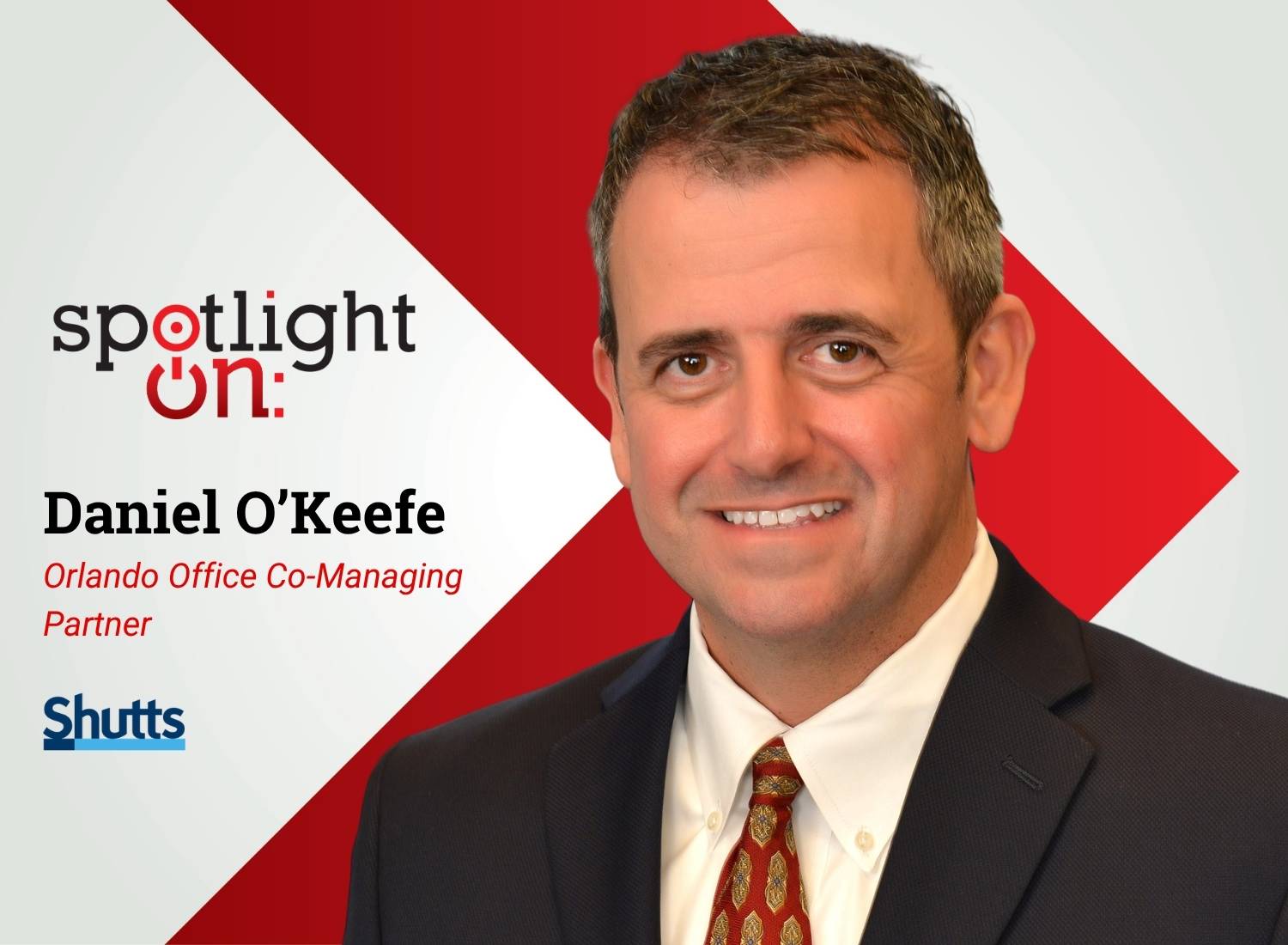
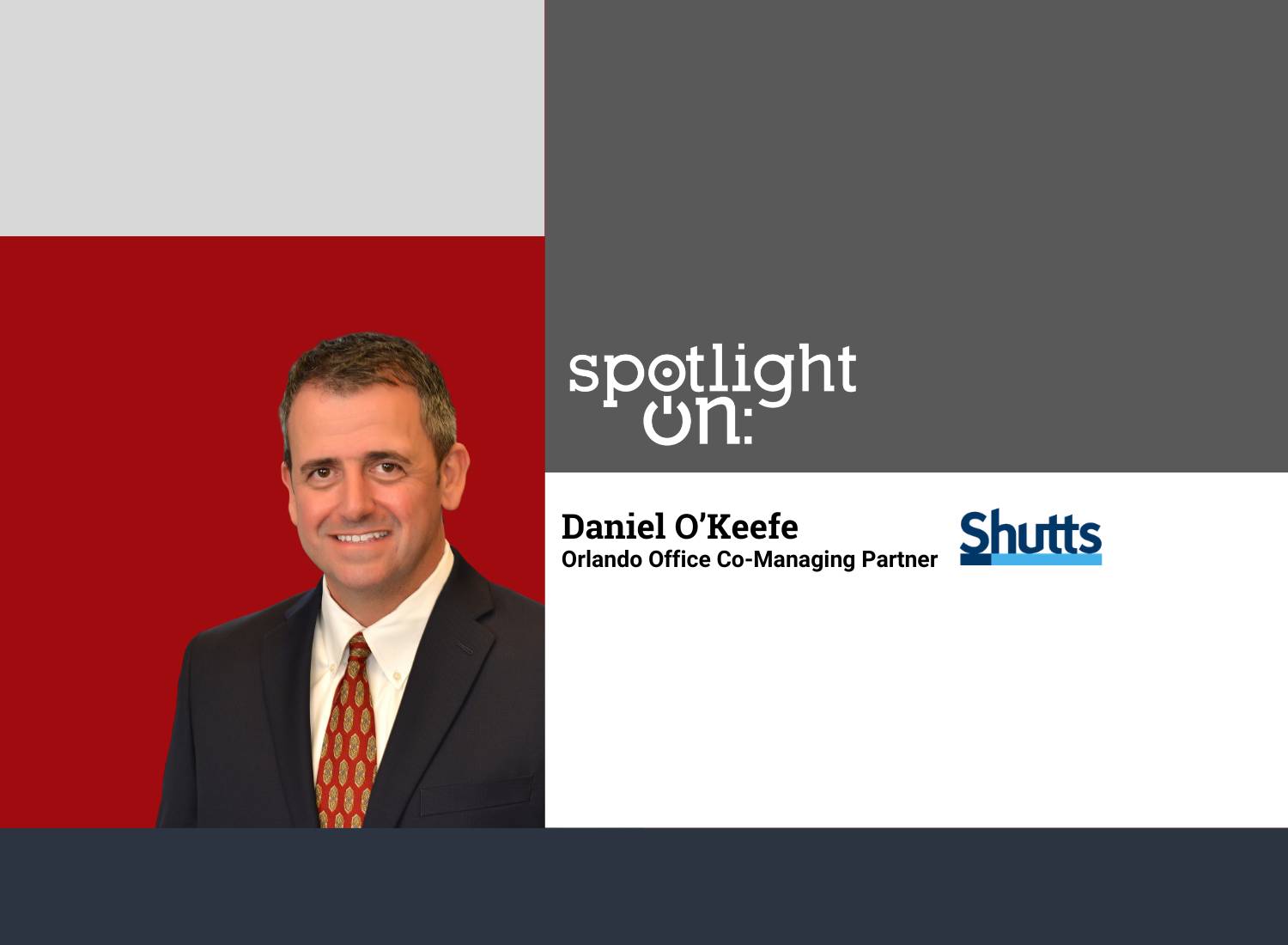
Spotlight On: Daniel O’Keefe, Orlando Office Co-Managing Partner, Shutts & Bowen LLP – Orlando

Key points:

  • • Strong population and development growth in Central Florida is driving demand for legal services.
  • • Large-scale projects face longer, more complex approval timelines across jurisdictions.
  • • Law firms are expanding alongside clients, with real estate, corporate, and IP leading demand.

Daniel O'Keefe Spotlight on mainApril 2026 — Invest: spoke with Daniel O’Keefe, Orlando Office Managing Partner at Shutts & Bowen LLP, about Central Florida’s development pipeline, the approval dynamics shaping major projects, and how demand for legal services is evolving with the region’s growth. “We’re forecasting continued growth and profitability for both our clients and our firm,” O’Keefe said.


Join us at caa’s upcoming leadership summits! These premier events bring together hundreds of public and private sector leaders to discuss the challenges and opportunities for businesses and investors. Find the next summit in a city near you!


How would you describe the current legal and business climate in Greater Orlando, and what major milestones have had the biggest impact for Shutts & Bowen in Orlando?

It’s been a great year for our firm because it’s been a great year for our clients. We are very fortunate to be in Florida, where businesses want to locate, grow, and feel like they are treated well. We have a business-friendly climate, and we’re continuing to see growth.

That includes both population growth and tourism growth, and that momentum is driving a strong local economy. We’re seeing activity across tourism-related projects, hotels, multifamily, home builders, and industrial. Industrial in particular has been an important driver as businesses expand and new companies come into the market.

We also see competition to be in this market, and that’s true across Florida. When I talk to fellow managing partners in our other offices, we’re seeing continued growth and businesses being successful in all of those markets. Our footprint across Florida, including Miami, Orlando, Tampa, West Palm Beach, Fort Lauderdale, Jacksonville, and Tallahassee, gives us a good read on how demand is shifting by region, and we grow with our clients’ needs. We’re forecasting continued growth and profitability for both our clients and our firm, and we expect 2026 to be even stronger than 2025.

When it comes to recent successes for the firm, which come to mind?

We have been extensively involved with a number of large master-planned communities throughout Central Florida, including major work in Horizon West. It is a 30,000-acre master-planned community, or really a series of communities, and we have been involved from the beginning. As it gets closer to buildout, the continued development, including a town center, has brought significant economic activity and jobs.

Right across the county line in Lake County, leaders have created a vision for Wellness Way, and we have been very involved there as well, from single-family and multifamily development to commercial. There is also a large sports complex referred to as the Olympus Project. We’re excited to help Lake County build out that vision because it’s a community people want to be in, and it is generating momentum.

A related piece is infrastructure. There has been substantial investment connecting Lake County and Wellness Way to Orlando and Orange County. We also work with the Expressway Authority on large road projects. Those projects are critical to long-term prosperity, and it’s a well-run organization that plans ahead and is a good steward of the revenue it generates. We assist on property acquisition for road networks, and on permitting and approvals for construction.

We have also seen a tremendous impact from theme park expansion in Central Florida. When companies invest multiple billions of dollars here, it drives jobs, infrastructure, and broader prosperity, and it has a meaningful effect on the local economy and tourist development taxes. We expect more expansion, and a predictable regulatory environment is part of what helps keep that investment coming.

Where do you see the most demand for legal services across Central Florida right now?

Real estate and land use are very strong, along with corporate and employment. Job creation drives needs across housing, commercial, retail, and the agreements and risk management that follow those projects. We also see meaningful demand in intellectual property, especially as new businesses enter the region and existing businesses expand.

What role does the firm play in supporting large-scale regional projects like the ones you mentioned?

We are often asked to represent new businesses as they come to invest in Central Florida, including purchases of large parcels of land and the development plans that follow. Those plans can include commercial, office, retail, housing, entertainment, tourism, and hotels.

When that happens, we assist across the lifecycle: forming entities, handling purchase and sale work, and then navigating approvals. That approval process can take two to three years and can involve comprehensive plan amendments, rezonings, site plan and engineering approvals, Water Management District and Army Corps of Engineers issues, and coordination with planners, engineers, and environmental consultants.

We often act as a coordinator among those consultants so the client’s vision can move through the process efficiently and in compliance with the applicable rules. Sometimes the client is a national home builder, but often it is a master plan developer who will ultimately sell pieces of the project to different end users.

Have you seen an increase in M&A activity in the region due to capital market conditions?

In Orlando, we have not seen a major spike. Our corporate M&A work has been steady, with a moderate level of activity. In markets like Miami or West Palm, the increase may be more notable, but in Central Florida it has been relatively consistent.

Have you noticed any specific challenges that businesses are facing?

Some local jurisdictions have become more difficult to navigate in the approval process. Several years ago, approvals might have taken a year to a year and a half. Now it is more likely to take closer to three years.

Part of that is volume as staff at governmental entities are busy. Part of it is increased regulatory review. Some jurisdictions are cooperative and help you move through their process while staying compliant. Others have become more resistant to additional growth or development, which can make approvals more challenging.

How is the firm incorporating technology to enhance operational efficiency as clients and projects move faster?

We are continually improving our technology, and we are integrating artificial intelligence into the practice of law. The key is responsible use. We have all seen examples where AI was used improperly and led to filings citing cases that do not exist.

We use AI software designed for law firms that keeps confidential client information confidential. Used correctly, it can improve efficiency, speed, and cost-effectiveness, and it can be a strong tool to support the delivery of legal services.

Looking ahead three to five years, where do you see demand for legal services going, and how does that align with the firm’s priorities in the region?

As the region grows, we expect to continue growing with it. We have approximately 70 attorneys in Orlando, which makes us one of the larger business-focused commercial law firms in Central Florida. Our work spans healthcare, corporate, real estate, and a significant commercial litigation practice.

Our growth has been organic. Over roughly 25 years, we have gone from 15 attorneys in Orlando to approximately 70, and that has largely tracked client demand. We do not have a goal to grow for the sake of growing. We focus on being business partners to our clients and meeting whatever legal needs they have, including supporting Central Florida-based companies as they expand around the state and the Southeast, often in coordination with local counsel in other states.

Want more? Read the Invest: Greater Orlando report.

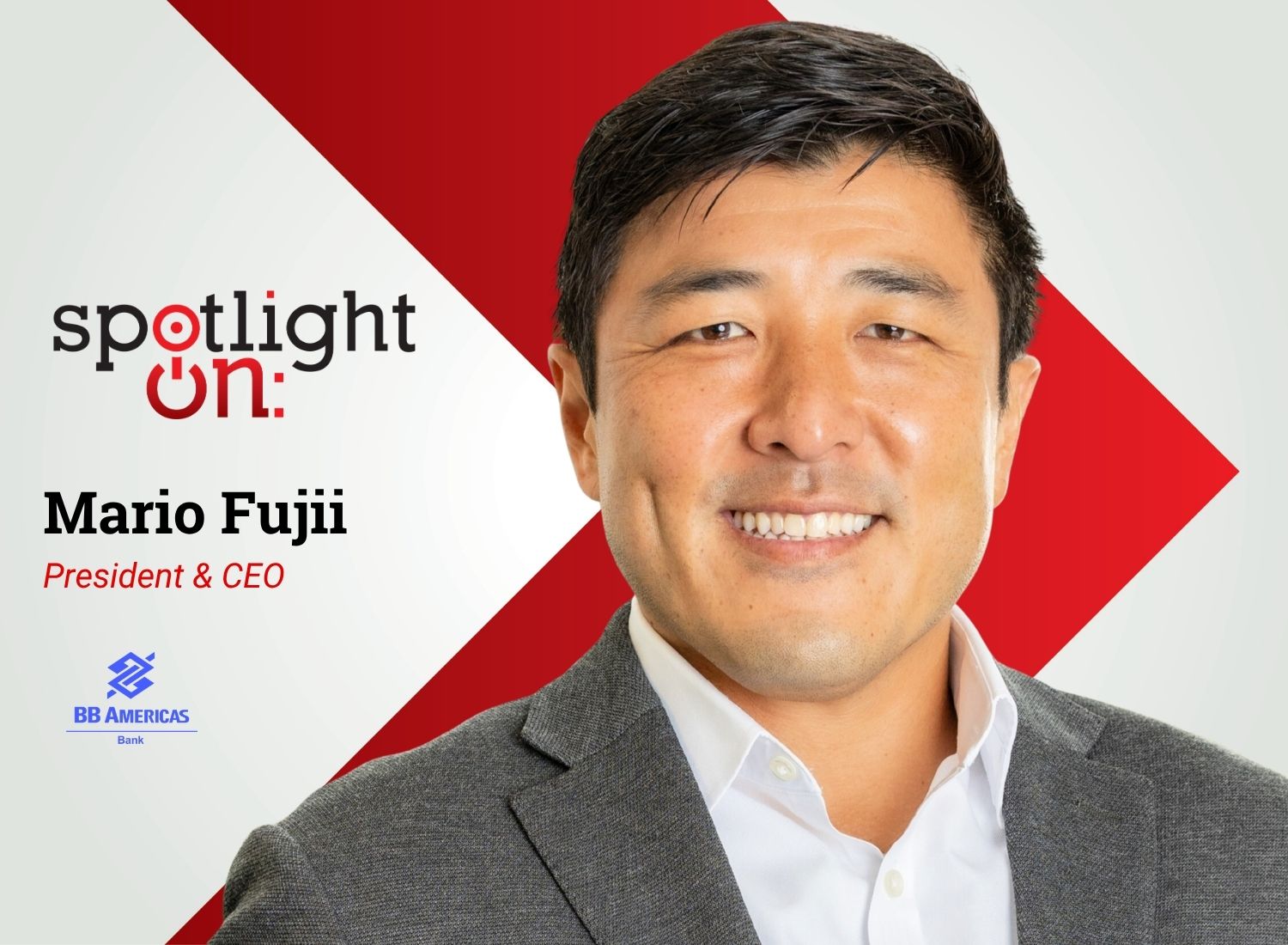
Spotlight On: Mario Fujii, President & CEO, BB Americas Bank

Key points:

  • • Demand is shifting toward experience-driven events, with organizers prioritizing dynamic, walkable destinations.
  • • Partnerships across venues and downtown stakeholders expand capacity and competitiveness.
  • • Smaller convention centers compete through flexibility, service, and seamless execution.

Mario Fujii MainApril 2026 — Invest: spoke with Mario Fujii, president and CEO of BB Americas Bank, about how the institution leverages Banco do Brasil’s global footprint to serve customers in the U.S., with a particular focus on Miami as a gateway for Latin American clients. “Our objective is to align the user experience across markets while delivering the functionality expected in the U.S. banking environment,” Fujii said.
How would you describe BB Americas Bank’s mission and its role as a U.S. financial institution, delivering innovative banking solutions rooted in a global heritage?

To understand BB Americas, it helps to start with our parent company, Banco do Brasil. It is Brazil’s most traditional financial institution, with 216 years of history and a footprint covering more than 95% of the country’s territory. We serve almost 90 million clients, and our market share is broadly segmented across companies, individuals, and agribusiness.

Because Brazil is in our name and our DNA, we follow Brazil around the globe. Our clients do business internationally, and international markets want to do business with Brazil. Our strategy is to follow what we often call the Brazilian flavor, supporting cross-border needs wherever they arise. In that context, the U.S. market is especially important.

Florida—especially Miami—is a key center for private and international banking, serving many Brazilian and Latin American clients. Banco do Brasil expanded in Florida by acquiring and rebranding a local bank as BB Americas, highlighting its strong connection to its parent company. 

Our mission is aligned with that strategy. Many Banco do Brasil clients in Brazil have international needs, including banking needs in Florida. BB Americas is positioned to serve them in a way that is familiar, trusted, and connected to their financial lives in Brazil. At the same time, we are an American bank and serve U.S.-based customers who benefit from our platform and capabilities.

How has Banco do Brasil’s 200-plus years of experience influenced the bank’s offerings, operational strength, and customer trust in Miami and in the United States?

One of our key differentiators is that we are a long-term relationship bank. In Brazil, we build relationships across generations, serving families over time and understanding their needs deeply. That legacy translates into trust when Brazilian clients come to the U.S. and want a banking partner that understands their expectations and habits.

Clients value stability and tradition, especially when entering a new market. The Banco do Brasil brand reinforces a sense of safety and continuity. That trust carries into our U.S. operations and strengthens our positioning in Miami’s international banking environment.

You mentioned Brazilian banking culture. How does that culture influence the way you carry out your U.S. operations?

Brazilian banking is relationship-driven, and that shapes how we think about service. Clients want to feel understood, and they expect a personalized approach. At the same time, Brazilian clients are accustomed to a highly developed digital banking environment, with advanced technology and intuitive mobile experiences.

When they come to the U.S., they may encounter a different system. Our role is to bridge that transition by maintaining strong digital capabilities while also preserving a relationship-focused model. We believe that nothing substitutes for the human relationship. Digital tools are essential, but the personal connection remains central to the value we deliver.

What digital capabilities have you implemented to simplify everyday banking and cross-border needs?

Banco do Brasil’s mobile app is consistently one of the highest-rated banking apps in Brazil, and millions of clients use it daily. Over the past few years, we have focused on connecting BB Americas with Banco do Brasil’s ecosystem in Brazil. This allows clients to access U.S. services through a familiar digital journey, reducing friction and improving the cross-border experience.

We also provide a dedicated U.S. mobile and online platform for customers who are not Banco do Brasil clients in Brazil. Our objective is to align the user experience across markets while delivering the functionality expected in the U.S. banking environment.

In addition to digital services, we offer a full range of products, including checking and savings accounts, debit and credit cards, and person-to-person payment capabilities such as Zelle for individuals and businesses.

How does the Miami banking landscape shape BB Americas’ strategy and positioning?

Our relationship with Banco do Brasil underpins our strategy, but we are also a solid and regulated U.S. institution. We are FDIC-insured and have surpassed $3 billion in assets, reflecting meaningful scale and stability.

Our loan portfolio is close to $2 billion, with a strong focus on real estate lending. Miami continues to attract international buyers, and we support clients purchasing residential property, including those who may not yet have established U.S. credit histories. Our relationship-based approach allows us to understand clients beyond traditional metrics.

We also see a significant opportunity in further integrating Brazilian clients into the Miami financial ecosystem. There remains strong potential to expand awareness among Brazilian individuals and businesses about the benefits of maintaining a U.S. banking relationship.

In what ways does providing service in English, Portuguese, and Spanish enhance your ability to serve clients?

Language plays a critical role in building trust. Even when clients are comfortable in English, complex financial discussions can be more effective in their native language. Being able to communicate clearly and confidently reduces friction and strengthens relationships.

We provide multilingual support across our branches and through our call center, offering service in Portuguese, Spanish, and English. This capability has been a deciding factor for many clients who value being understood without barriers.

Are there any final themes you would like to highlight?

We see meaningful opportunity in deposits, investments, and lending, particularly in real estate. We have a strong balance sheet and are well-positioned to support our clients’ growth.

Digital transformation remains a strategic priority for us, and we continue to invest in technology. At the same time, our culture emphasizes people. If we take care of our employees and create an environment where they feel supported and engaged, that culture translates directly into better service for clients.

We are proud to have achieved our highest results to date and to be recognized as a great place to work, with a 95 out of 100 rating. Strong culture, strong relationships, and disciplined growth are interconnected, and they define how we move forward.

Want more? Read the Invest: Miami report.

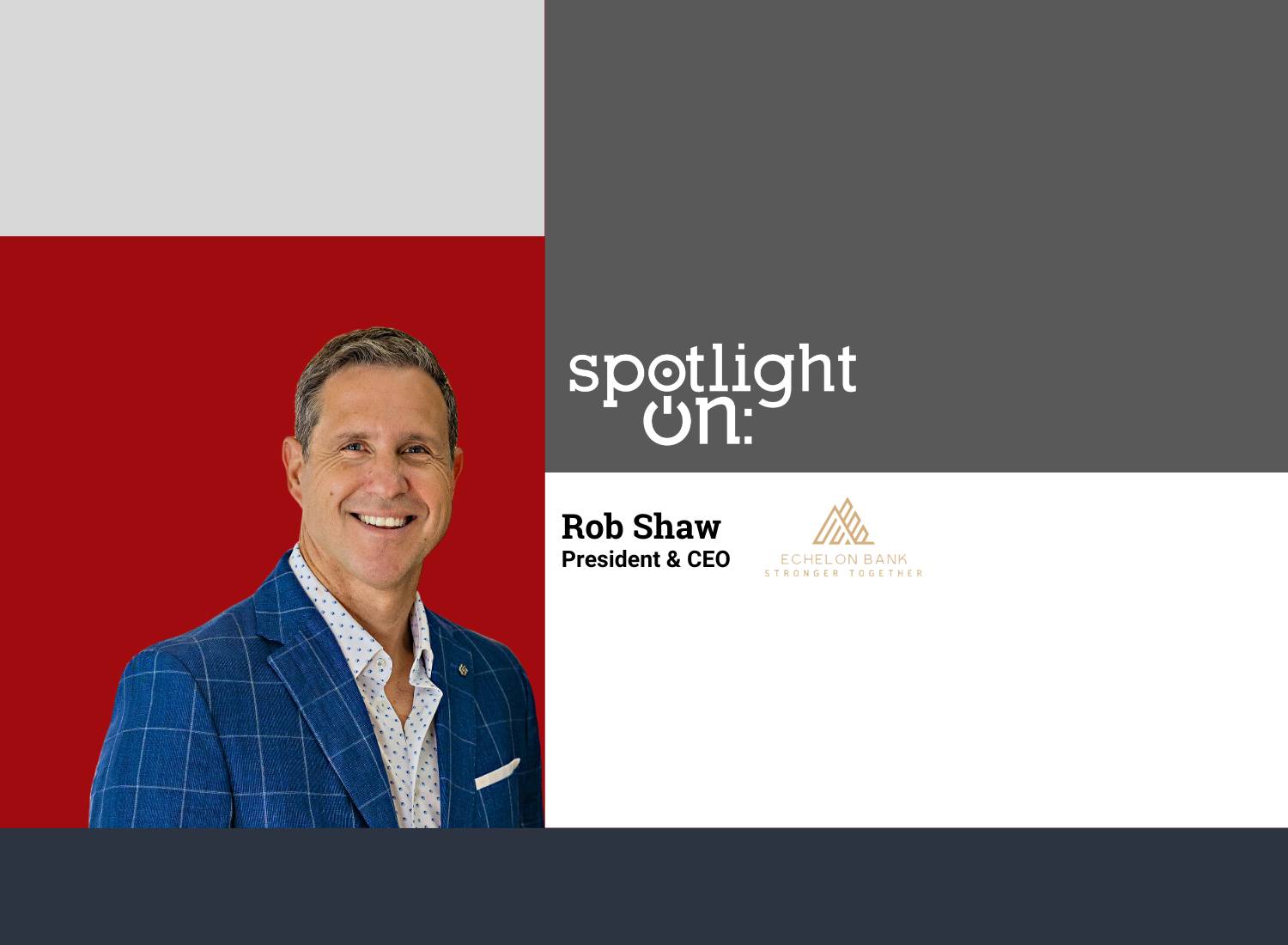
Spotlight On: Rob Shaw, President & CEO, Echelon Bank (I/O)

Key points:

  • • Regulatory approval and capital raise validate Echelon Bank’s launch and market demand.
  • • Culture-first hiring and employee ownership are central to attracting and retaining talent.
  • • Strategy blends digital tools with relationship banking, emphasizing trust and local service.

Rob Shaw Spotlight on mainApril 2026 — Invest: spoke with Rob Shaw, CEO of Echelon Bank (I/O), about securing regulatory approvals, assembling a culture-first team, and building a high-touch community bank. “Even with all of the technology, I still believe there’s a return to old-fashioned relationship banking. Humans are social creatures. Nothing replaces real interaction and trust,” Shaw said.


Join us at caa’s upcoming leadership summits! These premier events bring together hundreds of public and private sector leaders to discuss the challenges and opportunities for businesses and investors. Find the next summit in a city near you!


What do the recent regulatory approvals and capital-raise milestones mean for you and your team as you prepare to launch in Tampa Bay?

Regulatory approval is huge. Banking is a regulated industry, as it should be, and it’s a very serious business. When you start a bank, you’re making loans and taking deposits, and you need to make sure you know what you’re doing. I welcome, respect, and value our regulatory partners.

The fact that they approved us for a new charter is a source of tremendous pride and it makes me feel like we’re on the right track. Sometimes we’re in the weeds day to day, but having outside experts tell us they believe in what we’re doing and giving us their approval means a lot.

Reaching the minimum capital is another major milestone because you can’t open a bank without it. It’s also meaningful because we now have almost 200 investors. That tells us our message is resonating. Not only are we checking important boxes, we’re getting validation that we’re doing the right things and that others see the need for a great new local bank, just like we do. I couldn’t be more proud to have the regulatory approval and to have met the minimum required capital.

What are the most important steps when opening a bank, ahead of opening day?

Don’t rest on your laurels. Don’t take your foot off the gas. We want to keep raising capital and continue working with the regulators. 

One big initiative is standing up our core operating system. The due diligence and selection process took us four or five months, and we went with a very strong provider, FIS, using a system called Horizon. The core is like the engine underneath the hood of a car. 

Another major focus, and the most fun part for me, is continuing to build out the team. I love banking. It’s what I’ve done since I got out of the Army, and I want to build a team of fellow bankers who share that passion and who care deeply about Tampa Bay. We want to serve local businesses, especially small and midsized companies that can fall through the cracks. We want to support them with loans, deposits, lines of credit, treasury management services, and the kind of white-glove, high-touch approach local banks are known for.

In a competitive banking market like Tampa Bay, how are you attracting and retaining top financial talent?

We’re big on culture. We want to create an incredible place that is employee-centric. I’ve been in this market since 1999, so I know a lot of great bankers, and many of them know me and other members of our team. They know our leadership style and the culture we want to create, and that matters.

We’re also focused on ownership. We want team members to be able to invest their own capital into the bank, and we want to provide stock options so they can build a meaningful ownership stake. When people think and act like owners, it’s not just a job anymore. It becomes a career and an organization they have pride in.

In banking, the best people, the ones with the most passion, can also be the most frustrated if the culture isn’t right and they can’t serve clients the way they expect of themselves. Those are the people we want. It’s a competitive industry, and I have tremendous respect for other institutions in this market, but we’re having success because culture is at the center of what we’re building.

What key trends are shaping the banking sector right now, especially in Tampa Bay, and how are you positioning yourself to stay ahead?

The name Echelon Bank is tied directly to our culture. I’m passionate about cycling, and echelon is a French word for how the peloton rides in a diagonal staggered formation through crosswinds. It’s all about teamwork and being stronger together. No individual can ride farther or faster than an echelon working together, and that’s exactly the idea we want inside the bank.

On the industry side, there’s a clear push away from traditional brick-and-mortar. More banks are moving to electronic delivery models with mobile and online tools. We’ll adopt that, too, but we’re not giving up on brick-and-mortar entirely. We believe a limited, strategic physical presence still matters, especially for a local community bank.

Artificial intelligence is another major trend. Everyone is looking for ways to be more efficient. We’ll use AI strategically, including where it can support underwriting and improve speed and consistency, but we also want to keep the fundamentals of relationship banking. At the end of the day, we still bank people.

Crypto and stablecoins are also evolving parts of the financial landscape. With appropriate regulatory oversight, we’ll look for responsible ways to integrate that world where it makes sense, but we’ll be selective. As a local bank, our priority is serving local businesses and doing it well.

Even with all of the technology, I still believe there’s a return to old-fashioned relationship banking. Humans are social creatures. Nothing replaces real interaction and trust. I’m Gen X, so I’ve embraced new tools as they’ve emerged, but I don’t want to lose touch with the fundamentals of human connection.

Looking ahead two to three years, what are your key goals and priorities for the bank?

Initially, we want to gain scale to achieve profitability, but my goal isn’t to set a record for getting profitable as fast as possible. My goal is to build the strongest, most robust foundation we can, so we can support long-term growth.

We also want to capture market share. When I started my career in Florida in 1999, there were more than 300 banks. Now there are fewer than 70. Nationwide, there were over 15,000 banks and now there are fewer than 5,000. That consolidation creates opportunity for a strong new local bank.

Tampa Bay is a big, small town, and word travels. If we execute, people will know. The region has over $200 billion in deposits. Even a small slice of that represents meaningful scale, and I believe this market can support a multi-billion-dollar local bank. The most successful organically built bank I’ve seen here was U.S. AmeriBank, which sold in 2017 at about $4.5 billion. The market is bigger now, so building a billion-dollar bank is even more feasible today.

But I don’t want to lead with big numbers. I want to focus on execution. Do the basic blocking and tackling. Make the phone calls, call people back, follow up, underwrite quickly. If it’s not a good deal, tell people no quickly. If it fits, get it done and close it rapidly. Great service becomes the best source of marketing, and that’s how momentum builds.

Want more? Read the Invest: Tampa Bay report.