


U.S. employers prioritize skills as college degree ROI varies

Writer: Mariana Hernández
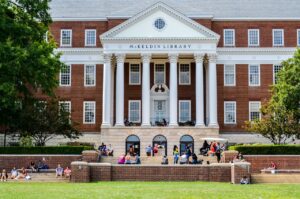
April 2025 — As college tuition rises and student debt remains a concern, U.S. employers and prospective students are reassessing the role of a four-year degree for workforce readiness.
A report released this month by the Federal Reserve Bank of New York found that while a college degree yields a positive return on investment (ROI) for most students, outcomes vary based on the field of study and post-graduate earnings.
Even in the higher education space, some leaders see rising tuition costs as a burden to overcome.
“Many families struggle to afford tuition, and students are increasingly questioning whether college is worth the investment — especially if their degree does not lead to a stable job,” Nariman Farvardin, president of Stevens Institute of Technology, said in an interview with Invest:.
According to the New York Fed, the internal rate of return for a bachelor’s degree has remained between 12% and 13% since 1990, outperforming the long-term return on stocks, which averages 8%. The average annual income for college graduates is about $80,000, compared to $47,000 for workers with only a high school diploma.
However, the report noted each additional year adds an estimated $92,000 opportunity costs, bringing down ROI to 7% for six-year completion. Graduates in the bottom income quartile see an ROI of 2.6%, on par with the median earnings of high school graduates.
Degrees in engineering, computer science, and health-related fields tend to yield the strongest return, while those in arts, leisure and education typically result in lower financial gains.
For employers, placing greater emphasis on skill-based hiring practices are important.
“We help employers navigate with skills-based qualifications for jobs as opposed to just a certain number of years of experience or a certain level of education,” Carol Hylton, president and CEO of CareerSource Broward, told Invest:.
In addition, short-term certifications have bridged the gap between workers and employers to some extent. “Some major companies are even offering alternative credential programs that allow students to enter the workforce without a traditional four-year degree,” Farvardin noted.
Frequent collaboration between educational institutions and regional employers remains a focus point, as City of Jacksonville’s Office of Economic Development Executive Director Ed Randolph pointed out. “We’re also holding monthly meetings with collaborators in the workforce ecosystem, including nonprofits, to ensure that we have programs in place to train workers at all levels, not just for white-collar jobs,” Randolph told Invest:.
While a college degree still holds meaningful value — especially in high-demand fields, it doesn’t necessarily guarantee financial freedom in the future, and may even inhibit it with rising tuition costs.
Top image via rainesUMD/Pixabay
For more information, please visit:
https://www.jacksonville.gov/oed
https://careersourcebroward.com/





