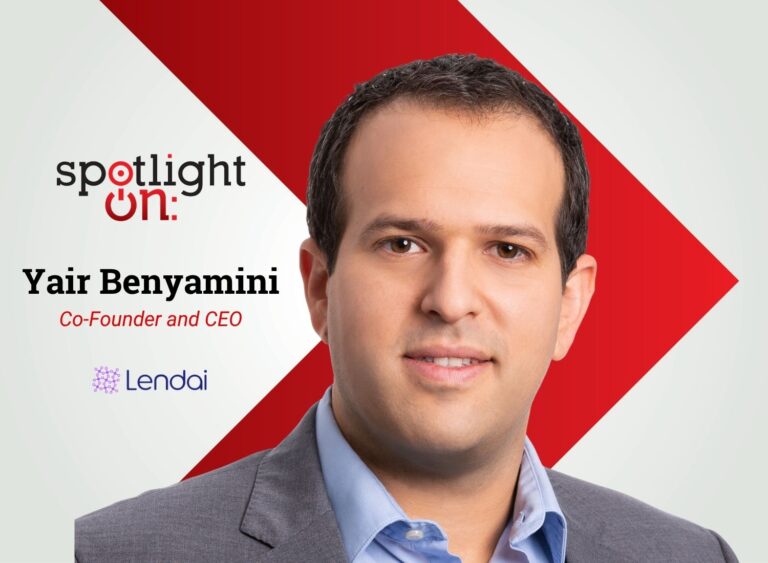




Spotlight On: Yair Benyamini, Co-Founder and CEO, Lendai
Key points:
- • Lendai uses technology to bridge cross-border real estate financing gaps.
- • Global partnerships drive the company’s international lending growth.
- • Expanding non-QM products is diversifying Lendai’s borrower base.
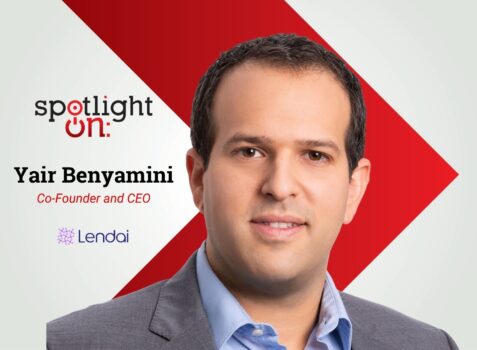 September 2026 — Invest: spoke with Yair Benyamini, co-founder and CEO of Lendai, about the market gap the company was built to solve, how it uses technology to underwrite cross-border real estate loans, and why Miami is a strategic base for growth. “The traditional banking system simply shut the doors, because it cannot overcome this information gap when the client is in one country and the property is in another country,” Benyamini said.
Join us at caa’s upcoming leadership summits! These premier events bring together hundreds of public and private sector leaders to discuss the challenges and opportunities for businesses and investors. Find the next summit in a city near you!
What market gap originally led you to build Lendai?
Like many businesses, it started with a personal problem. I was living in Israel at the time and working as a lawyer on global transactions, many of them related to real estate. Around 2019, a friend of mine, a finance professor, told me he owned three single-family homes in the U.S. that he had bought during a sabbatical year there. He was happy with the investment, but when he wanted to buy more, he no longer wanted to pay all cash.
He went to a U.S. bank, where he already had an account, and asked where he could sign for a mortgage. The answer was basically: We know the property, but we do not know you. You have no U.S. credit score, no residency, no W-2, so we cannot lend to you. Then he went back to his bank in Tel Aviv and got the exact opposite answer. They knew him well, but they did not know how to finance a property in another country.
That was the moment we saw the gap. There were good investors overseas, and good cash-flowing properties in the U.S., but the two sides could not be connected through the traditional banking system. The traditional banking system simply shut the doors because it cannot overcome this information gap when the client is in one country, and the property is in another country. We saw an opportunity to use technology to connect those dots.
How does Lendai solve that cross-border underwriting challenge?
What we built is a system that takes data from both sides of the transaction and connects it into one decision-making mechanism. On one side, we underwrite the U.S. property: its value, projected income, expenses, and net cash flow. On the other side, we assess the investor in their country of origin.
The idea is that the data already exists. A bank in Canada knows how to lend to a Canadian. A U.S. bank knows how to lend against an American property. The challenge is combining those data points into one risk framework. That is what Lendai does. We built technology that evaluates both the borrower and the asset, and then funds a deal based on that combined risk analysis.
What were the biggest challenges in building that system?
The first challenge was building a strong model for the U.S. property side. We needed to understand not only market value, but also likely income, operating expenses, and overall cash flow. That required a dedicated effort to analyze the U.S. asset side properly.
The second challenge was adapting borrower-risk models country by country. You cannot take one model and assume it works everywhere. Cultural and financial behavior differ widely. In Israel, for example, not having a credit card is a red flag because banks give credit cards as a matter of course. In Australia, many people simply prefer debit cards, so using the same signal would lead to the wrong conclusion.
Employment patterns also differ. In Australia, truck drivers can represent a stable borrower profile because the country depends heavily on inland transportation. That same assumption would not necessarily hold elsewhere. So we had to build models that reflect the specific characteristics of each market rather than forcing every borrower into the same framework.
Speed is a major differentiator for Lendai. How do you balance fast decisions with prudent risk management?
Speed matters a great deal in real estate because good deals do not wait. Investors need to know quickly whether financing is available, roughly how much they can borrow, and what the economics will look like before they decide whether to make an offer.
Our goal is to provide that initial indication quickly so the borrower can act. Then, before the loan is originated, we move into the deeper underwriting process, including the appraisal, title work, and the other steps needed to finalize the credit decision. Speed is really about giving the client clarity early enough to compete for the deal, while still preserving full underwriting discipline before closing.
What have you learned as you expand across Latin America?
Latin America is not one market. Argentina, Brazil, Colombia, Peru, and Mexico all have their own characteristics, but there are a few broader themes. One is the source of funds. In many Latin American markets, money moves through structures and channels that are unfamiliar to U.S. lenders, such as casas de cambio. We had to build compliance processes that account for how funds are transferred locally while still meeting KYC and AML requirements in the United States.
Another important difference is education around mortgages. In many Latin American countries, mortgage penetration is much lower and interest rates are much higher, so people are less familiar with how mortgage products work. For some clients, a U.S. mortgage may be the first mortgage they have ever taken. That means we have to spend more time explaining the process and making sure expectations are clear.
Language also matters. Even highly sophisticated investors are more comfortable discussing financial decisions in their native language. That is why it is important for us to have loan officers who speak Spanish and Portuguese, in addition to English.
How important is your partner ecosystem to the business?
It is central to our business. More than 80% of our volume comes through our partner network, which includes more than 500 partners globally. Those partners range from individual real estate professionals to large turnkey providers, builders, and even financial institutions that want a way to serve clients investing in the U.S.
We built the company as a B2B2C platform. Our partners can integrate financing into their offering, sometimes through white-label or co-branded solutions. That is powerful because financing can significantly expand a client’s buying power. It creates a win for the borrower, the partner, and for us.
We are careful not to compete with that ecosystem. Instead, we support it. When investors come to us directly and say they want to invest in the U.S. but are not sure what type of property fits their goals, we can help match them with the right partner based on budget, target market, and strategy.
Do you see Lendai evolving beyond lending?
It is something we are actively discussing. Today, our focus has been on the debt side, but because we see so many deals and maintain such a broad network, there is a natural opportunity to do more. If we have a partner acquiring or developing a multifamily asset, for example, we may be able to provide the senior debt, but they may also need equity.
Because we already know the partner, the property, and the underwriting, there is logic in helping connect that equity as well. We are still in the early stages of thinking through that, but it is certainly an area we are considering as part of a more comprehensive investment platform.
What will be the biggest inflection point for Lendai’s growth over the next few years?
A major driver will be the broader growth of the non-QM market. The market for non-qualified mortgages has expanded significantly in recent years, and that includes much more than foreign nationals. It also includes self-employed borrowers, non-permanent residents, and others who do not fit into traditional credit boxes.
We started with foreign-national lending, and that remains a major part of the business, but we have already expanded into more products and more domestic borrower segments. Today, around 30% to 40% of our business comes from domestic borrowers who need specialized solutions, whether for fix-and-flip projects, primary residences, or other scenarios that fall outside standard agency guidelines.
Our goal is to build a business that can perform across cycles. If the U.S. market is strong, we can grow through domestic demand. If it softens, foreign capital may see better entry points and become more active. We want to make sure we always have the right products and the right client mix, regardless of where the market is in the cycle.
Want more? Read the Invest: Miami report.