Key points:
- • Business confidence rebounded in 2Q26, with the Regional Economic Sentiment Index climbing to 4.13 — its highest reading in three quarters.
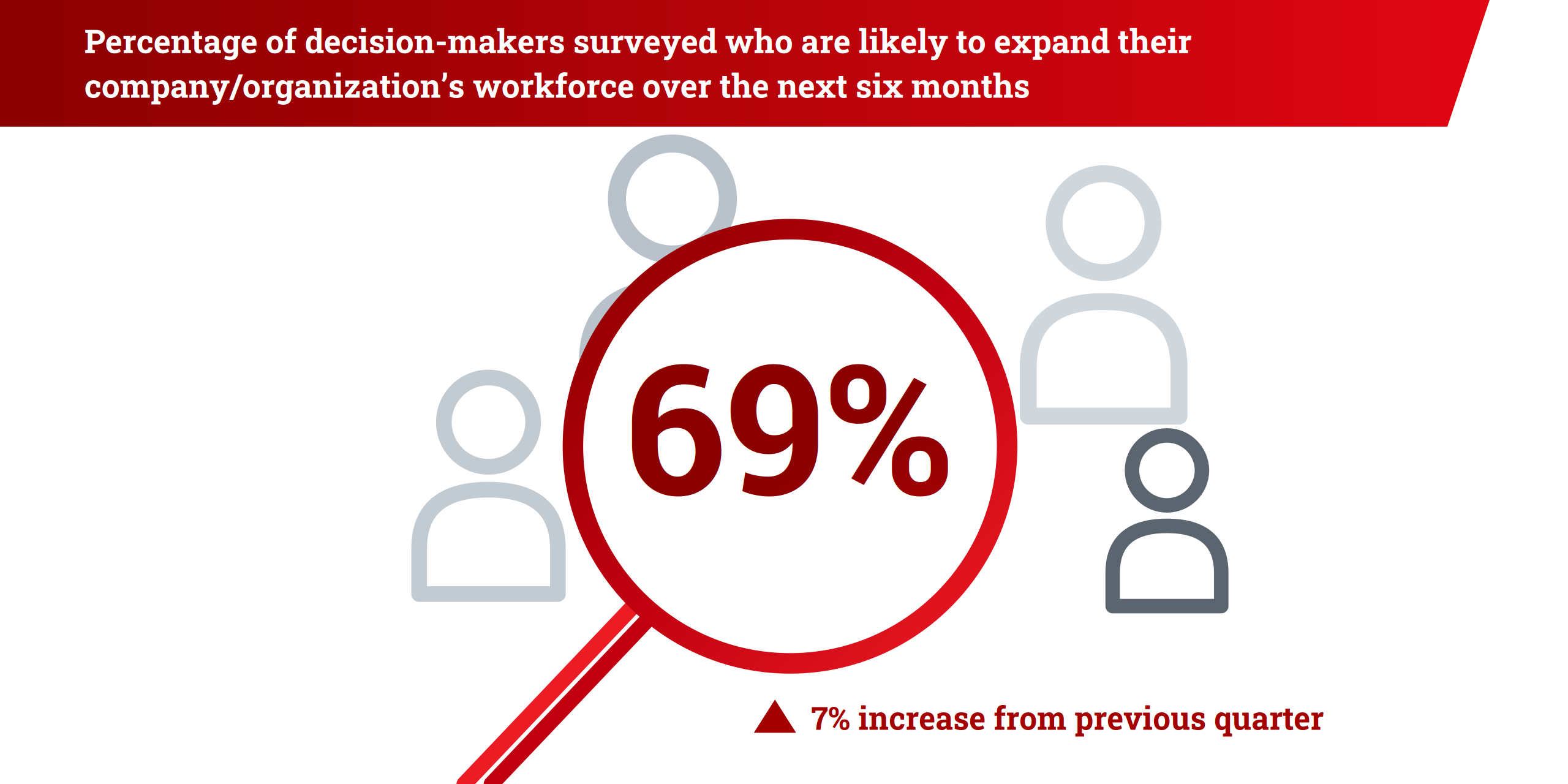
- • Hiring expectations recovered sharply, with 69% of executives planning workforce expansion over the next six months, up from 62% in 1Q26.
- • Local government sentiment posted its biggest single-quarter gain in the survey’s history, rising from 50% to 61%.
 July 2026 — Business confidence across major U.S. metro areas rebounded in the second quarter as executives reported stronger regional economic conditions and healthier organizations despite continued uncertainty surrounding interest rates, geopolitics, and global markets, according to the latest Invest: Business Sentiment Survey (I:BSS).
Join us at caa’s upcoming leadership summits! These premier events bring together hundreds of public and private sector leaders to discuss the challenges and opportunities for businesses and investors. Find the next summit in a city near you!
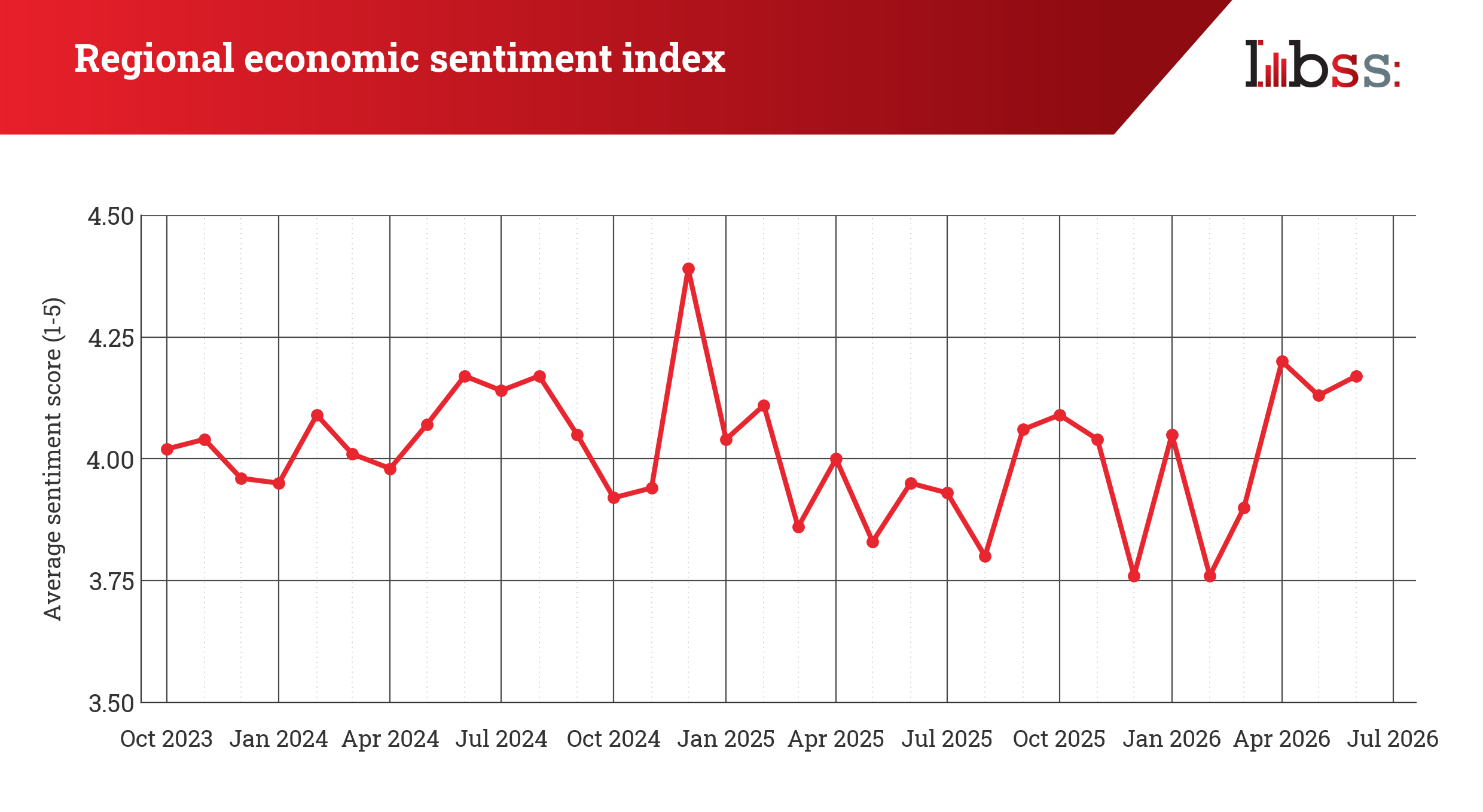
The Regional Economic Sentiment Index climbed to 4.13 out of 5, up from 3.89 in the first quarter.
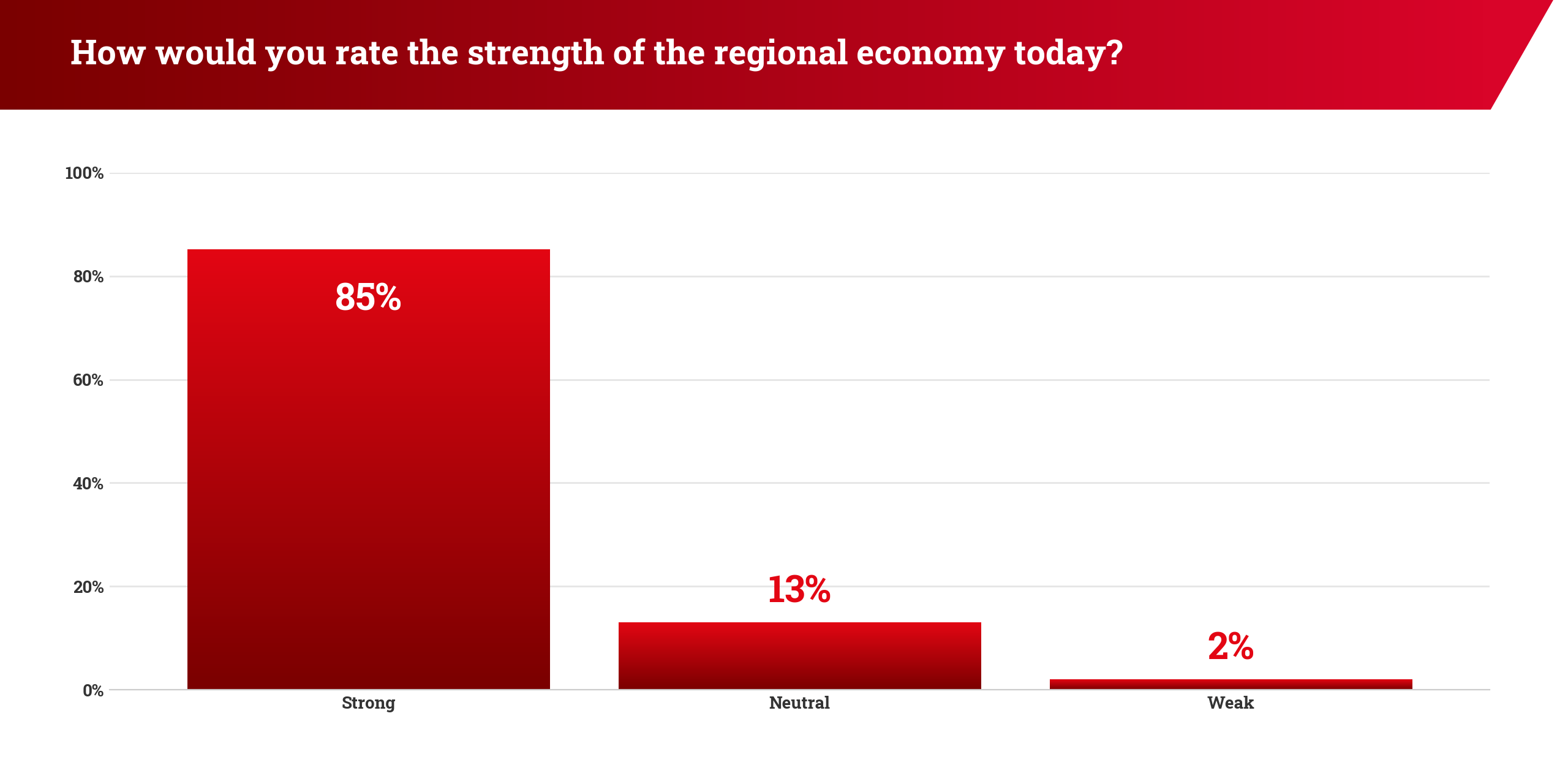
Nationwide, 85% of respondents rated their regional economy as strong, up from 73% in 1Q26.
“The business climate continues to grow. I would not describe it as robust, but we are seeing opportunities, business expansion, and hiring among our clients and customers,” a banking executive in San Antonio shared with caa.
Business leaders largely described resilient local economies even as elevated borrowing costs and global events continued to influence investment decisions. The I:BSS rebound stands in contrast to national readings for large corporations. The Conference Board Measure of CEO Confidence fell to 47 in 2Q26 from 59 in Q1, pushing back into negative territory as optimism among leaders of large firms plunged. That divergence reflects a pattern consistent with prior I:BSS cycles: executives at regional and mid-market firms — closer to local demand signals — tend to read conditions differently than the large-firm cohort the Conference Board tracks.
“The biggest concern is uncertainty. International conflicts, inflation, and their impact on energy prices all contribute to caution among business owners,” another banking executive in San Antonio said.
The survey period coincided with heightened geopolitical tensions in the Middle East, followed by ceasefire talks, while AI-driven investment continued supporting U.S. equity markets. The NFIB Small Business Optimism Index fell to 95.3 in May 2026, its lowest reading since October 2024, as fuel price spikes and inflationary pressure squeezed margins on Main Street. Against that backdrop, the I:BSS resilience among regional leaders reflects confidence rooted in local fundamentals rather than macro signals.
“We have the best of both worlds right now: a healthy, growing economic environment and industry disruption that is leading to faster organic growth,” a banking executive in Houston told caa.
Company performance remains strong
Confidence in organizational performance remained one of the survey’s strongest indicators. Nationally, 88% of respondents rated their company’s health and stability as strong over the past six months, up from 84% in the previous quarter.
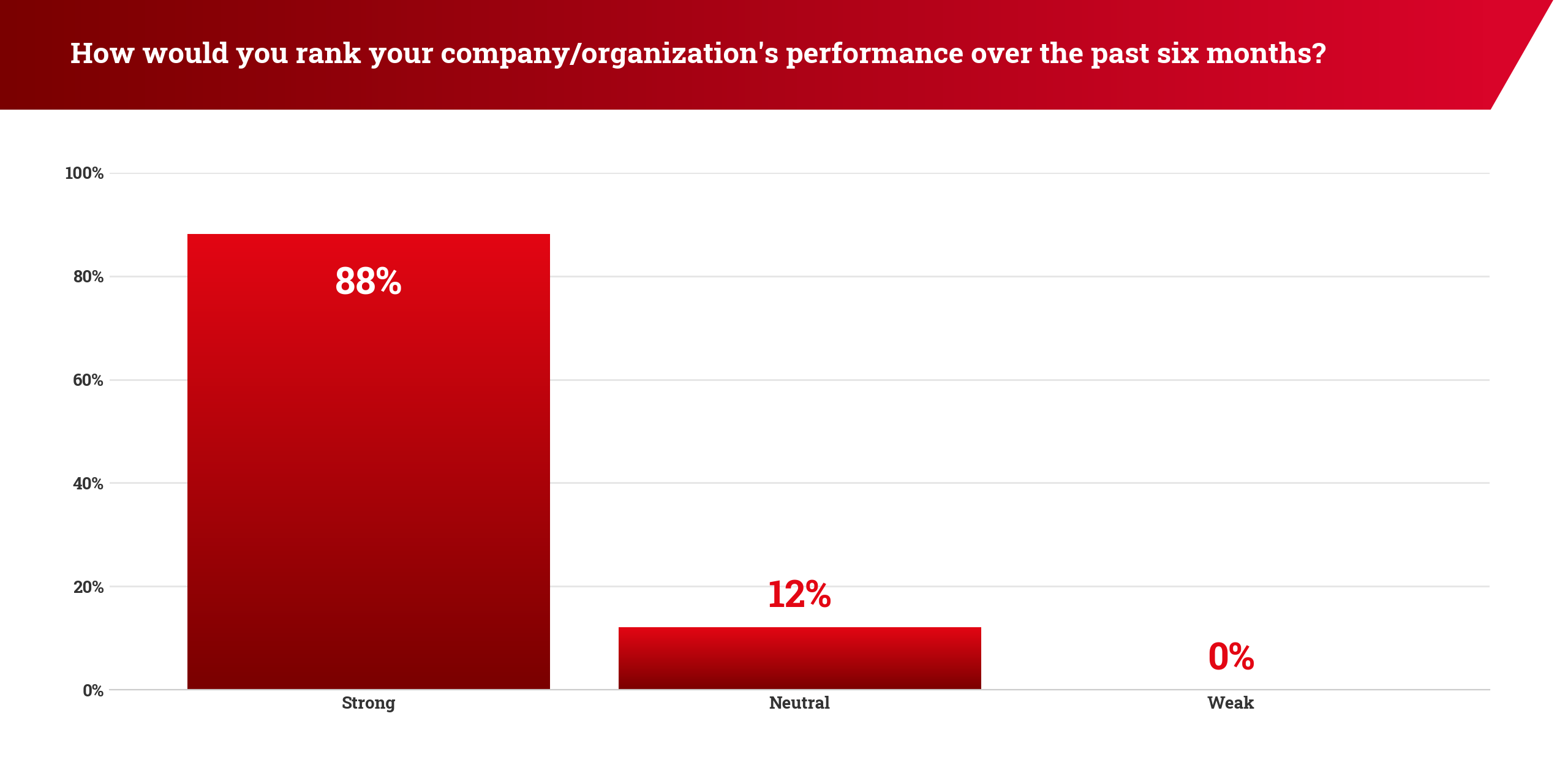
Even as executives remained cautious about the broader economy, many said their own organizations continued performing well. The Business Roundtable’s Q2 CEO Economic Outlook Index rose two points to 91 — its highest reading since 4Q24 — driven by stronger CEO expectations for sales and capital investment plans, a signal that company-level resilience is holding across firm sizes even where macro outlooks diverge.
“Companies would rather outsource certain functions than make major commitments to infrastructure and staffing when the outlook is uncertain,” an advisory executive in Houston told caa.
A wealth management professional in Houston reinforced the point: “Clients are looking for clarity. There is a massive amount of uncertainty, and being able to calm turbulent emotions is one of the biggest reasons clients seek us out.”
Hiring recovers
Hiring expectations improved after reaching their lowest level since the I:BSS launched in 2023. Nationally, 69% of respondents expect to expand their workforce during the next six months, up from 62% in the first quarter.
Executives said labor availability remains one of the biggest operational challenges.
“People are going to continue to be important in our business. We are in the relationship business,” a banking executive in San Antonio told caa.
“We are still seeing a skilled trade shortage show up among our subcontractors and in the skilled trades market,” a construction executive in Raleigh said.
Technology and AI emerged as a consistent thread across hiring and operations conversations. “We are starting to implement a lot of AI tools that help aggregate the immense amount of data we have within the construction market,” the Raleigh-based construction executive said. An education executive in the Triangle region framed adoption as a matter of responsible preparation: “AI is not going away, and it will continue to become an important tool in education and the workforce.”
Market conditions strengthen
Industry sentiment also improved during the quarter. Nationally, 71% of respondents rated market conditions as strong, compared with 66% in 1Q26. Another 25% described conditions as neutral and 4% as weak.
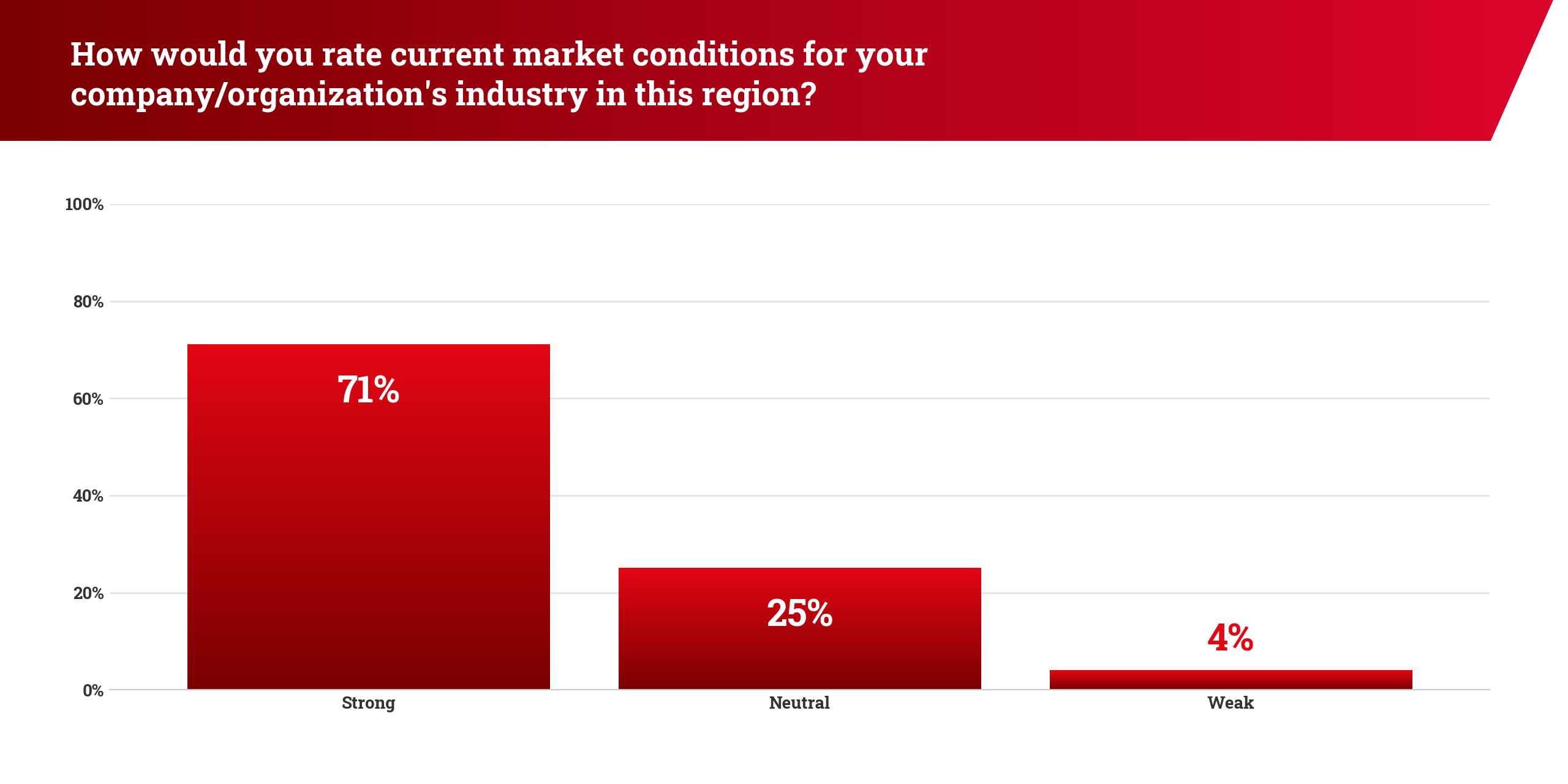
Executives across sectors pointed to steady demand despite macroeconomic uncertainty.
“Healthcare continues to expand pretty rapidly… the public sector has filled the void for us,” a construction executive told caa.
Technology and AI continued to emerge as common investment priorities.
“We are studying AI carefully, particularly where it can improve underwriting, loan analysis, and operational efficiency,” a banking executive in San Antonio said.
Local government sentiment improves
Business leaders expressed greater confidence in local governments’ ability to support economic growth. Nationally, 61% of respondents rated local government support as strong, up from 50% in the previous quarter.
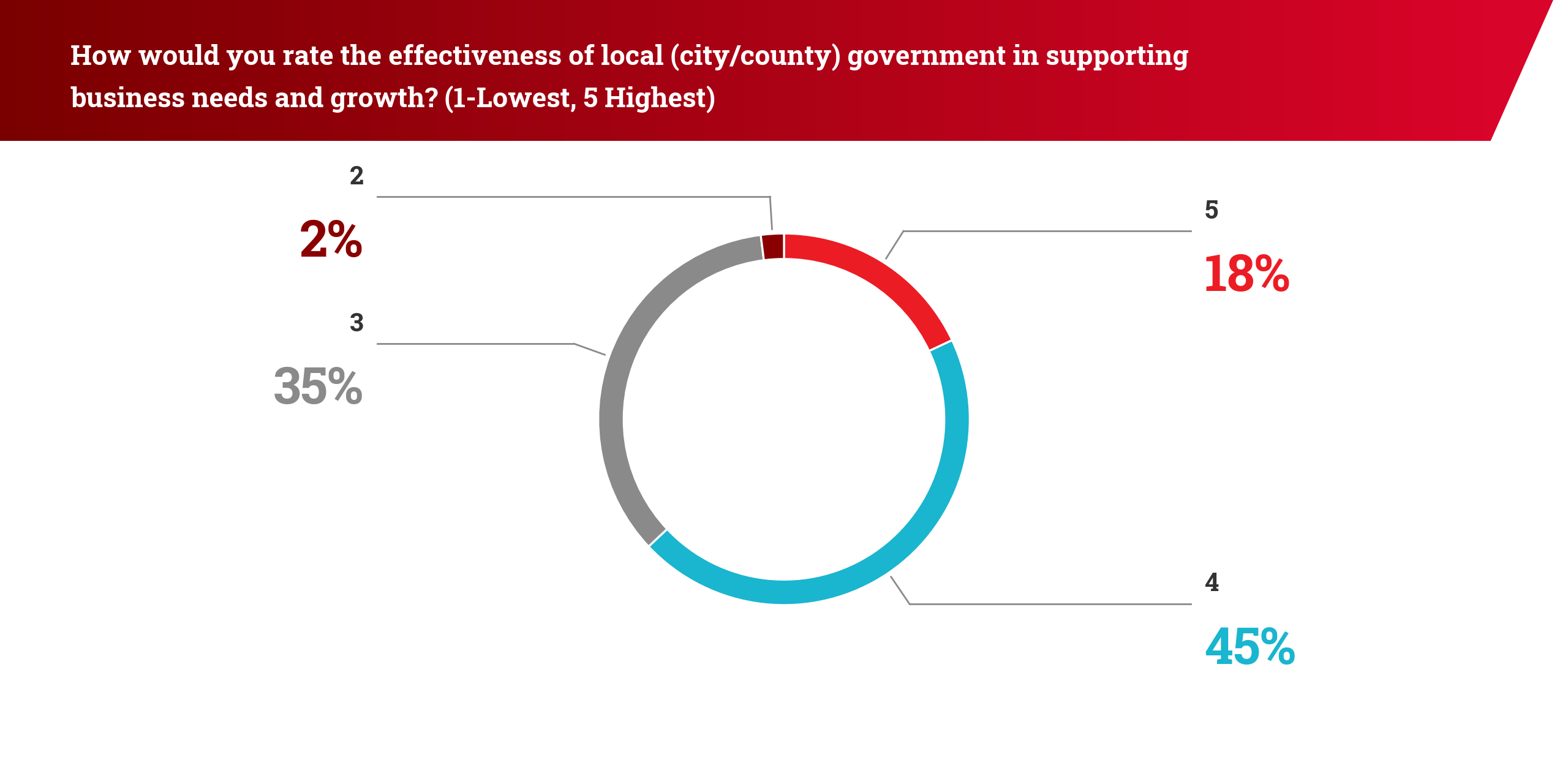
Even with improving sentiment, executives continued to emphasize infrastructure investment and public-private collaboration as essential to sustaining long-term growth. The prior quarter’s I:BSS had flagged permitting and regulatory processes as areas for improvement, with leaders pointing to streamlining as one of the clearest ways local governments could accelerate private investment. The 11-point jump in 2Q26 suggests that message landed — and that executives are beginning to see follow-through.
“The most important investments are transportation infrastructure and water,” a banking executive in San Antonio said.
“There is not a facilities project that we are doing or exploring that can happen without some public funding and some private funding,” an economic development executive in Durham said.
Executives entering 3Q26 should watch two variables closely. First, whether the Federal Reserve moves rates lower, which several executives identified as the clearest potential catalyst for releasing delayed capital investment and real estate decisions. Second, whether labor market stability holds as AI-driven displacement accelerates mid-career transitions across banking, advisory, and professional services. The executives surveyed for 2Q26 are navigating both pressures from a position of organizational strength. The question for the second half of the year is whether the macro backdrop gives them room to act on it.
For more I:BSS reports, click here.