Pittsburgh higher education addresses future workforce needs
Key points:
- • Pittsburgh-area colleges are redesigning curricula, credentials, and experiential learning to match real-time regional workforce demand.
- • College leaders see AI as a tool for personalizing education and sharpening critical thinking — not a replacement for it.
- • Institutions serving first-generation and low-income students are building professional-readiness skills directly into coursework, not just career services.
 September 2026 — Pittsburgh‘s colleges and universities are increasingly building their programs around what the region’s employers actually need, aligning curricula with demand in technology, life sciences, and manufacturing to close a persistent local workforce gap. At the University of Pittsburgh, that has meant partnering with Anthropic and AWS through Claude for Education to build AI fluency into coursework, while its School of Education leads a life sciences workforce initiative in communities like Greater Hazelwood, creating stackable credentials and non-degree pathways into the sector. The Community College of Allegheny County takes a different route to the same goal, offering accelerated eight-week FOCUS pathways, apprenticeships, and specialized health care certificates designed to move students into high-demand fields quickly and affordably.
Join us at caa’s upcoming leadership summits! These premier events bring together hundreds of public and private sector leaders to discuss the challenges and opportunities for businesses and investors. Find the next summit in a city near you!
Four-year institutions outside the city are making similar adjustments. PennWest University leans on an Industrial Advisory Board to shape its Mechatronics Engineering Technology curriculum and pairs students with corporate-sponsored capstone projects drawn from regional manufacturers, according to the Pittsburgh Business Times. Carlow University, meanwhile, has oriented its Health and Wellness and Arts and Sciences programs toward the region’s “Eds, Meds, and Tech” economy, emphasizing practical career skills alongside professional ethics. Taken together, these efforts sketch a regional higher education system trying to answer a single question: what will Pittsburgh’s workforce need next, and who is preparing students to meet it?
Higher education leaders from the Pittsburgh area, including Susan Traverso, president of Thiel College; Megan Nagel, chancellor of Penn State Greater Allegheny; Kathy Humphrey, president of Carlow University; and Michael Driscoll, president of Indiana University of Pennsylvania, shared their perspectives on how colleges and universities are preparing students to meet the evolving needs of the future workforce.
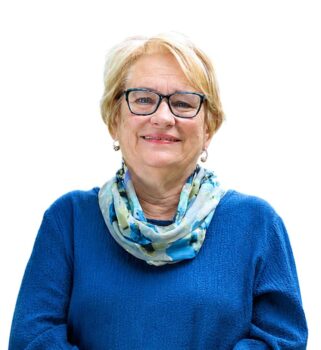 Susan Traverso, President, Thiel College
Thiel is a comprehensive liberal arts college founded in 1866. We remain committed to the liberal arts: understanding information, asking critical questions, and learning about cultures that are different from one’s own. Thiel has always emphasized programs that prepare students for careers and meaningful lives.
Education should have a long-term outcome, but it must also help graduates begin meaningful careers that can grow over a lifetime. That mission is especially urgent because many of our students are the first in their families to attend college and are pursuing professional opportunities in nursing, teaching, business, and other fields. They must be ready on day one to use those opportunities.
We are closely connected to Penn-Northwest Development Corporation, the Allegheny Conference, and economic development organizations that surround us. We follow workforce data for northwestern Pennsylvania and eastern Ohio. The region needs qualified business leaders, accountants, allied health professionals, and educators, so we have strengthened those programs while maintaining liberal arts pathways to graduate study.
 Megan Nagel, Regional Chancellor, Penn State Greater Allegheny
More than half of our students are the first in their families to attend college. Many are low-income students, come from diverse backgrounds, or are navigating several of those circumstances at once. There is a great deal riding on their success, and attending Penn State can represent a significant financial sacrifice.
I feel responsible for ensuring that students receive an excellent Penn State education and are prepared with what employers expect after graduation. Whether they enter the workforce immediately or continue to graduate school, they should be as prepared as anybody else for that next step. Many have not grown up surrounded by professional environments or conversations about job interviews, so we approach career preparation as more than a function of the career services office.
We infuse professional behavior, language, and the ability to translate experiences into workforce skills throughout the curriculum. Students begin learning about the National Association of Colleges and Employers competencies in their first-year seminar. Those competencies then appear in coursework, syllabi, and co-curricular experiences. Over time, students learn to explain how they have developed teamwork, critical thinking, and professionalism.
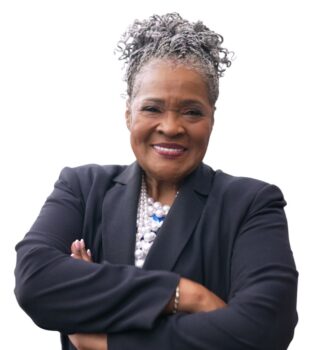 Kathy Humphrey, President, Carlow University
The ability to communicate well, analyze information, and think critically cannot disappear. Those qualities are more important today than ever.
ChatGPT can write a sentence, but you still have to know what you want to say. AI cannot tell you what is authentically yours or connect ideas in the same way. That is why critical thinking, analysis, and data literacy are becoming even more valuable.
AI should also help personalize education. Instead of discovering every four weeks that students did not understand a topic, we should be able to assess learning continuously. Faculty should receive immediate feedback showing which concepts students are struggling with and suggestions for teaching them differently.
It is a different educational model, but we have to get there. Higher education must use the tools available to ensure students receive what they came for. The return on the investment must be greater.
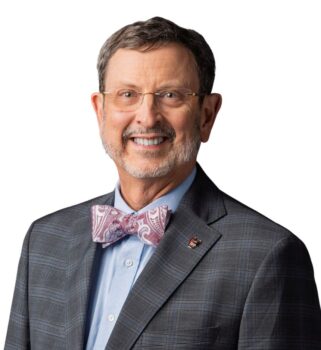 Michael Driscoll, President, Indiana University of Pennsylvania
We have looked at our academic program set and connected those programs that we’ve invested in with the needs of the communities that we serve, working to provide an educated workforce. We’ll continue to review our programs to ensure that the programs we offer make sense for the needs of the region and that what we’re doing within those programs makes sense for employers.
We have several partnerships and experiential learning opportunities for students now. A key goal for this year is to bring together the work of the last couple of years so that every one of our students will have at least one, and preferably more than one, experiential learning opportunity before graduating. That means as students are learning, our students are taking their knowledge and their skills out into the communities we serve. Even as first-year students, they will provide value to our communities.
The biggest thing that’s moving forward at IUP is the new College of Osteopathic Medicine. I certainly would talk about that as meeting the needs of rural Pennsylvania and beyond.
In late May, we received pre-accreditation status, which means we meet the standards, we can start admitting medical students, and we can start talking about it as a college of medicine as opposed to a ‘proposed’ college of medicine. We are now recruiting educators to fill the faculty needs and recruiting students for the college. The students will be here next summer. There will be about 64 students in that first class. As of July, we have already received 1,765 applications for those 64 slots.
Want more? Read the Invest: Pittsburgh report.