Invest: Raleigh-Durham leadership summit maps the Triangle’s growth, challenges
Key points:
- • Triangle leaders tied sustained growth to coordinated investment in housing, mobility, infrastructure, and talent.
- • Employers, schools, and colleges must create earlier, clearer pathways from learning to opportunity.
- • The region’s research advantage depends on startups and stronger partnerships between industry and local institutions.
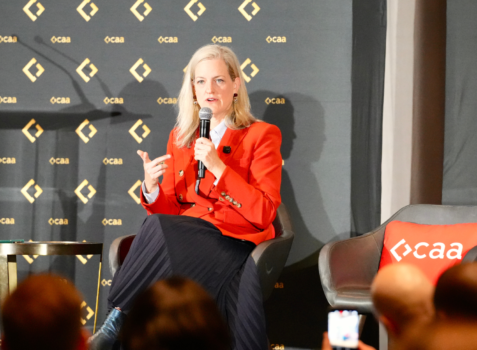 October 2026 — Raleigh-Durham continues to attract talent, capital, and research-driven companies. The Triangle’s growth now tests its housing supply, transportation network, workforce pipeline, and ability to turn research into scalable businesses. At caa’s Invest: Raleigh-Durham 4th Edition Leadership Summit, public- and private-sector leaders discussed how they plan to coordinate those systems and sustain the region’s economic advantage.
Abby Lindenberg, founder and CEO of caa, opened the summit by framing the Triangle’s economic rise as deliberate and collaborative. “When you look at the economic landscape of the Triangle, you are looking at one of the most successful, intentional economic experiments in modern American history,” Lindenberg said. “What truly sets the Triangle apart, however, is its distinct reputational character. The Triangle has earned a national reputation as a high-IQ, low-ego marketplace — a region where intellectual rigor meets genuine Southern hospitality and deep collaborative spirit.”
The summit marked the official launch of Invest: Raleigh-Durham 4th Edition, caa’s annual review of the region’s economy and investment climate. (Become a member today to access the latest edition of Invest: Raleigh-Durham.)
Growth needs connected systems
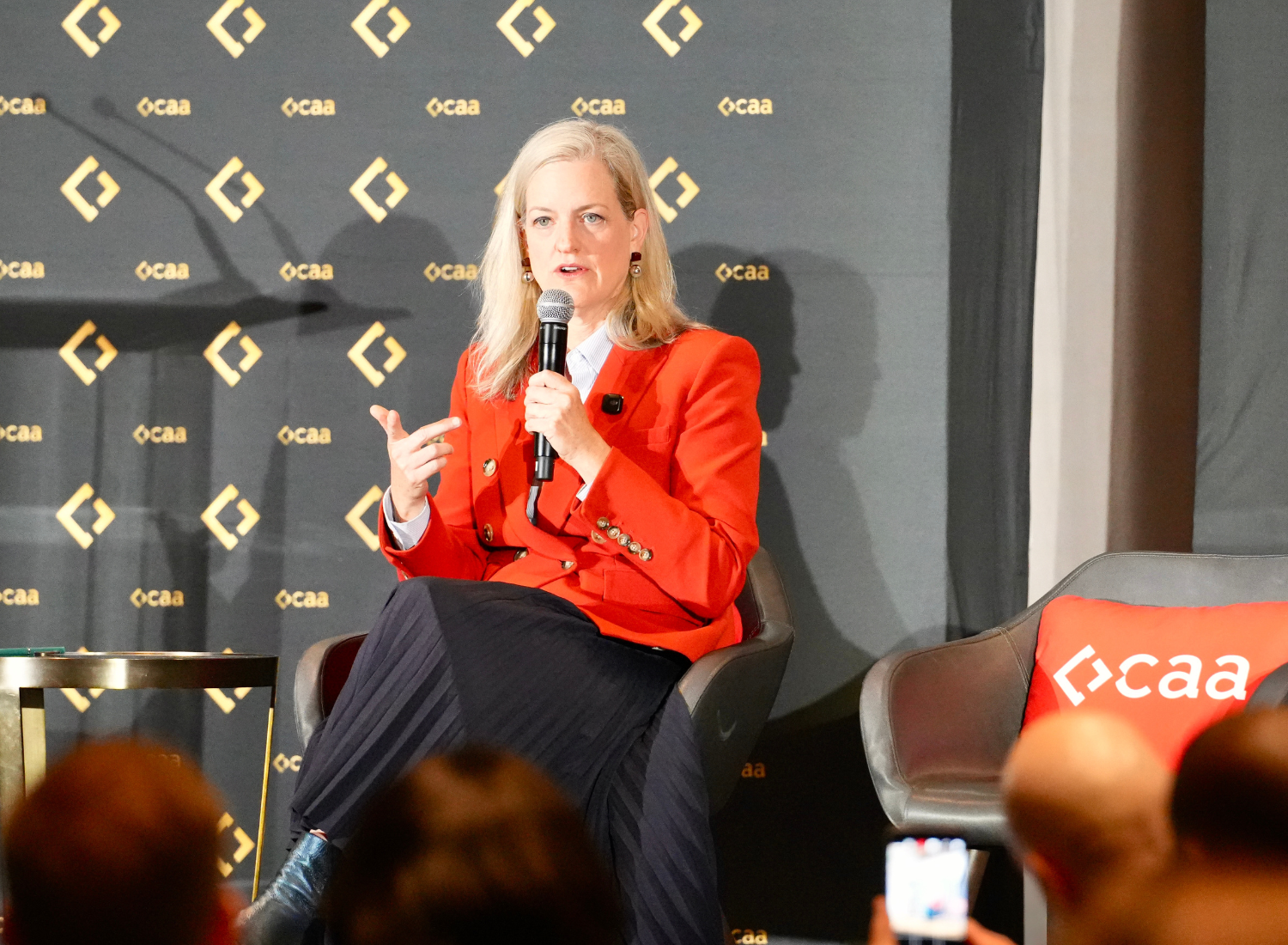
Raleigh Mayor Janet Cowell opened the event with a fireside chat, framing the Triangle’s growth as a land-use and service-delivery challenge. “What’s critical for this whole area as we grow, and we’re projected to grow by another 50% over the next 25 years, is investing where we already have existing infrastructure,” Cowell said. “That means redevelopment and infill, rather than just greenfield development.”
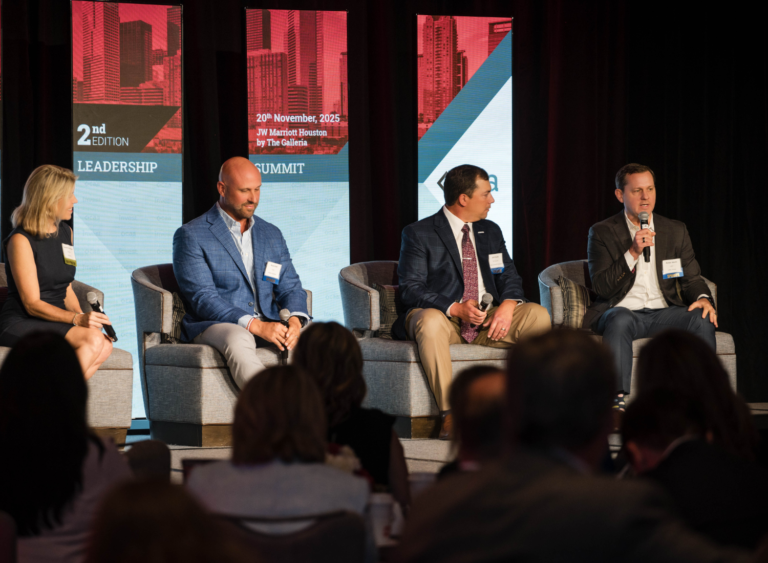
Cheryl Richards, President and CEO of Catapult Employers Association, moderated “The Next Triangle: Transforming the region as talent, technology, and sustainable development converge,” with Brian Reid of TowneBank, Joe Milazzo of the Regional Transportation Alliance, Marq Conley of Verizon, and Nicole Sheedy of Delta Air Lines. Their discussion tied mobility, utility capacity, housing, and access to talent directly to corporate investment decisions.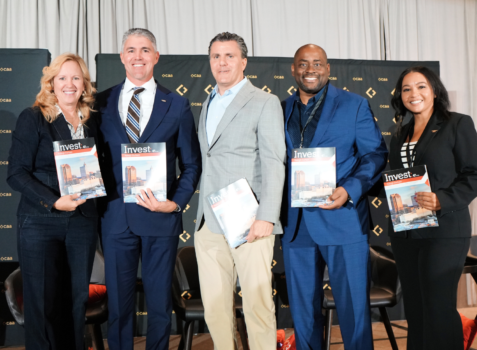
The panelists returned repeatedly to the systems that allow a growing region to function — transportation, education, and coordinated investment. Milazzo focused on the need to move those priorities forward together. “Over a ten-year horizon, a lot of things need to happen, but one main thing is just focus,” he said. “What it’s going to take is working together, with a consensus of the community that we’re moving forward on it.” Sheedy linked that work to the Triangle’s ability to attract investment and talent. “The easier we can connect the Triangle to opportunities broadly, the more continued investment, interest, and talent we’ll see in this area,” she said.
The workforce starts early
Employers can help students turn emerging interests into opportunity through workplace visits, mentorships, hands-on projects, and internships. The second panel, “Curiosity to Career: How education is shaping purpose, perspective, and potential,” examined that work. Kori Mackall, Head of School at The Piedmont School and John Yowell Academy, presented the panel and argued that “potential becomes visible when students have meaningful opportunities to demonstrate it.”
Jerrica DuBois, senior editor at caa, moderated a discussion with Michael Ulku-Steiner of Durham Academy, Jami Woods of Wilson Community College, and Adam Holden of Saint Mary’s School. Ulku-Steiner stressed that students need knowledge as well as skills. “You can’t become a critical thinker until you know something to think about,” he said.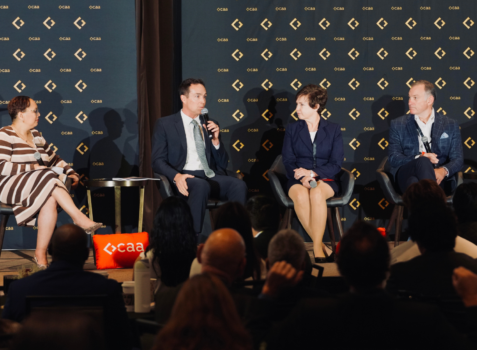
Woods focused on the region-wide partnerships that can turn education into a stronger talent pipeline. “We must reinforce the idea that you do not simply find talent; you build talent together,” she said. “By intentionally connecting our region’s powerful assets — our community colleges, world-class university system, and Research Triangle Park — we can raise wages to family-sustaining levels and inspire employers to recognize this as the premier talent pipeline in the nation.”
Turn research into enterprise
The Triangle’s next advantage will depend on how quickly it turns research and talent into companies, products, and jobs. “We are living through a truly remarkable inflection point, one that unites talent, technology, and a fundamental shift in how we work,” said April Bogard Pinder, CEO of Cranfill Sumner LLP, who presented the final panel, “Where Ideas Take Root: How the Triangle is turning talent and research into transformation.”
Richard Warr, Associate Dean for Faculty and Research at NC State University’s Poole College of Management, moderated a discussion with Mike Carnes of NCBiotech, Bonita Brown of Winston-Salem State University, and Zac Schnell of Pamlico Community College.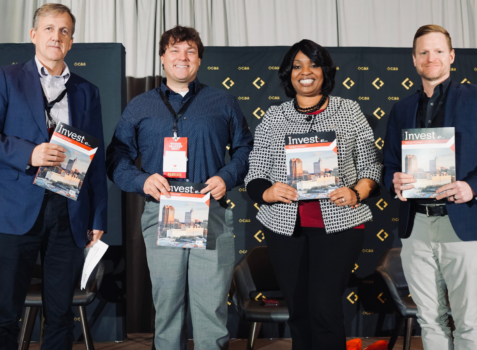
The conversation focused on the path from academic discovery to commercial application. That path increasingly runs through startups, rather than direct licenses to established companies, which Carnes described as “a primary engine for commercialization and regional economic development.”
It also depends on whether companies bring their challenges into the region’s institutions. Brown said faculty already work in many of the fields that businesses need to navigate: “If industry leaders share their challenges with us, I guarantee our faculty are already exploring those fields and can help deliver that next great breakthrough.”
The panel connected those two ideas, startup formation and direct industry engagement, as complementary routes for moving research, talent, and capital into the market.
The program concluded with the caa Business Leadership & Innovation Awards, presented by the NC State University Poole College of Management, which recognized four leaders whose work reflects the Triangle’s economic priorities. The Professional Services Leadership Award went to Stella Chen, Tax Partner at Aprio; the Legacy & Impact Award to Larry Barbour, CEO of North State Bank; the Excellence in Development Award to Jim Allen, CEO of The Jim Allen Group; and the Healthcare Advancement Award to Vera Yigle-Kaljob, CEO of Triangle Springs.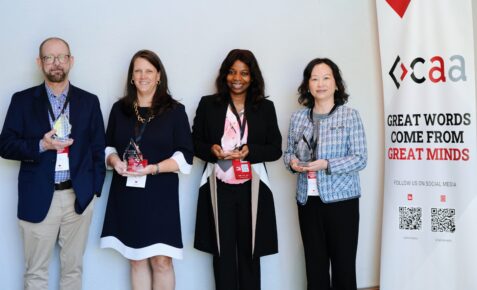
The recognition brought the summit’s conversations back to the leaders advancing the Triangle’s growth across business, development, healthcare, and financial services.
Stay tuned for more photos from the event, and follow caa’s YouTube channel to watch the panel discussions from the Invest: Raleigh-Durham Leadership Summit.
About caa & Invest: Raleigh-Durham
caa is an integrated media platform producing in-depth business intelligence through its annual print and digital economic reviews, high-impact events, and exclusive video interviews via its platform, Invest:Insights.
Invest: Raleigh-Durham 4th Edition is an in-depth economic review of the key issues facing the Triangle region, featuring exclusive insights from more than 200 economic leaders, sector insiders, elected officials and institutional heads. The publication aims to equip local, national and international investors with comprehensive insights on the region and to promote Greater Orlando as a competitive, innovative and collaborative place to do business.
The report takes a deep dive into the region’s top economic sectors, including real estate, construction, infrastructure, banking and finance, legal, healthcare, education and tourism. It also analyzes the leading challenges facing the market and uncovers emerging opportunities for investors, entrepreneurs and innovators.
Want more? Read the latest Invest: Raleigh-Durham report.