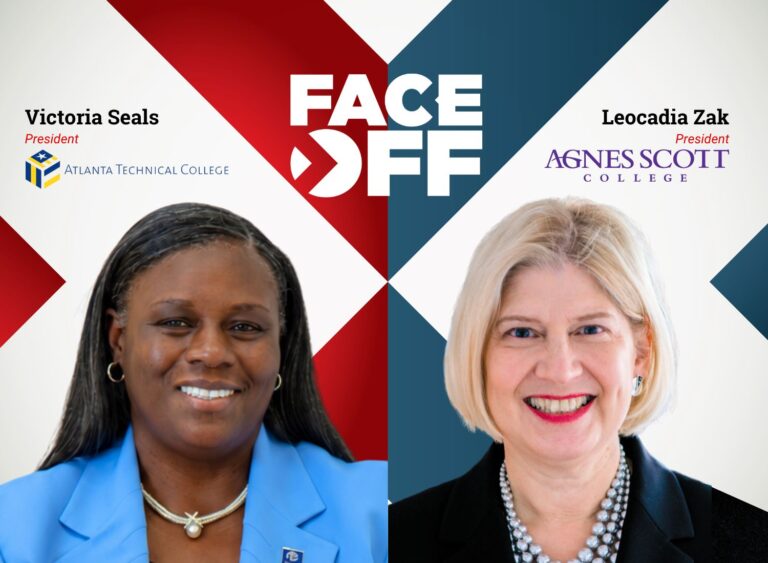

Face Off: Two paths to preparing Atlanta’s future workforce
Key points:
- • Future-workforce preparation now combines AI fluency with judgment, communication, and adaptability.
- • Work-based learning and employer partnerships help students turn classroom knowledge into experience that matters in hiring.
- • Atlanta Technical College and Agnes Scott College offer different routes to economic mobility through technical credentials, workplace immersion and liberal-arts learning.
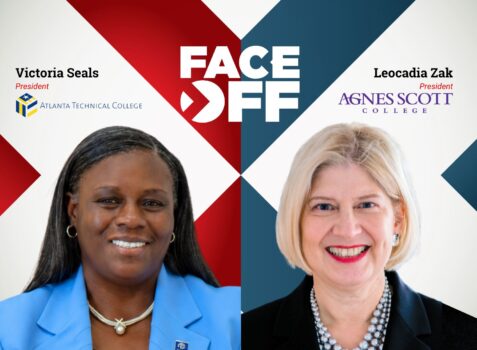 October, 2026 — Preparing students for the future workforce requires more than technical training. In metro Atlanta, Atlanta Technical College and Agnes Scott College are taking different approaches to building the adaptability, communication, leadership, and collaboration skills graduates need.
Join us at caa’s upcoming leadership summits! These premier events bring together hundreds of public and private sector leaders to discuss the challenges and opportunities for businesses and investors. Find the next summit in a city near you!
AI is becoming more common in both coursework and the workplace. In the 2Q26, 47% of U.S. employees said their organization had integrated AI tools to improve productivity, efficiency, or quality, up from 41% in the prior quarter, according to Gallup. Among college students, 57% reported using AI in coursework at least weekly, according to a Lumina Foundation-Gallup survey. Colleges are incorporating AI into coursework while continuing to emphasize workplace experience and communication, problem-solving, and collaboration skills.
READ MORE: Why artificial intelligence needs human skills
Metro Atlanta employers report gaps in both experience and workplace skills. In a July 2026 survey commissioned by Penn Foster of 252 employers and HR professionals, 38% cited a lack of relevant experience and 37% a lack of technical skills as barriers to filling entry-level jobs. Forty-four percent of employers identified reliability and work ethic as candidate deficiencies, followed by problem-solving at 37% and communication at 29%.
Work-based learning can give students a setting to apply classroom knowledge and practice technical and workplace skills. That experience can also differentiate otherwise similar candidates. Employers responding to the National Association of Colleges and Employers’ Job Outlook 2026 survey rated an internship with their organization or in their industry as the most influential factor when choosing between otherwise equally qualified candidates.
Invest: spoke with Victoria Seals, president of Atlanta Technical College, and Leocadia Zak, president of Agnes Scott College, about how their institutions are preparing students for immediate opportunities and long-term career mobility.
What is your institution’s core mission, and how do you support economic mobility and success for your student body?
Victoria Seals: We have focused on economic mobility, which is a core part of our mission.
More than 42% of the students we serve are now first-generation students. We take a holistic approach to serving the whole student and ensure that wraparound services are available. Students need technical skills to prepare for their career pathways, but they may also need help addressing barriers so they can focus and succeed.
Leocadia Zak: We are ranked among the Top 20 for best value, and students care deeply about value. They want to know where college will lead them, whether that is employment or graduate school, and how they can achieve those goals at an effective price point.
We innovate because we care about our students and want to ensure their success
How is your campus integrating AI into the curriculum and preparing students to use it responsibly?
Seals: At the college, we emphasize that it is not only about AI but also human intelligence. We train students, faculty, and staff to use AI as a tool that can improve efficiency without becoming so dependent on it that they stop using their own intelligence.
I am a mathematician by trade, and I compare AI with the introduction of the graphing calculator… It was still a tool, and students had to learn to use it responsibly.
Zak: Every first-year student will have an experience focused on artificial intelligence fluency. Whether a student is a STEM major or a history major, they will learn AI tools while applying the liberal arts approach to critical thinking, including when to use AI, when to question it, and when to rely on their own judgment. Innovation is central to that mission. It is why we launched Universal AI.
How do regional employer partnerships shape your students’ real-world work experience before graduation?
Seals: We have developed several strong partnerships, including our Microsoft-powered Data Center Academy. It provides another pathway connected to data centers, cybersecurity, and artificial intelligence.
All our programs have industry advisory councils that guide the curriculum, equipment, and software we use.
Zak: Every second-year student completes a workplace immersion experience across metro Atlanta with one of our 22 partners, including nonprofit organizations, corporations, and other employers. SCALE is our second-year experience within Summit.
Preparing students for their second-year work experience includes asking our partners what they want to see from graduates, what skills are needed, and how we can better prepare students.
Beyond technical or domain knowledge, what essential human competencies must modern graduates possess?
Seals: Our employer partners tell us that, in addition to technical skills, students still need soft skills, which we call workplace essentials. These include communication, problem-solving, and the ability to work with others. When students graduate, they need to know their field, interact effectively with others, show up consistently, and properly communicate when they encounter a challenge.
Zak: Applying the liberal arts approach to critical thinking, including when to use AI, when to question it, and when to rely on their own judgment.
One priority is ensuring students spend four years in a culture of innovation that prepares them for lifelong success. They must learn to embrace change and look toward the future.
How are your academic degree paths structured to keep students advancing in a fast-changing labor market?
Seals: Our model is based on stackable credentials. Students can bring community-based training into a certificate program, build that into a longer certificate, and then progress toward an associate degree.
It really is about a pathway, rather than just a job. We have a 100% job placement rate, and we are proud of that.
Zak: We have expanded our graduate offerings to include post-baccalaureate pre-medical studies, medical sciences, and clinical mental health counseling. We plan to launch our physician assistant program in fall 2026.
Environmental and sustainability studies is one example. We have long offered the field as a minor supported by our Center for Sustainability, and it became a major beginning this fall.
Want more? Read the Focus: Atlanta report.