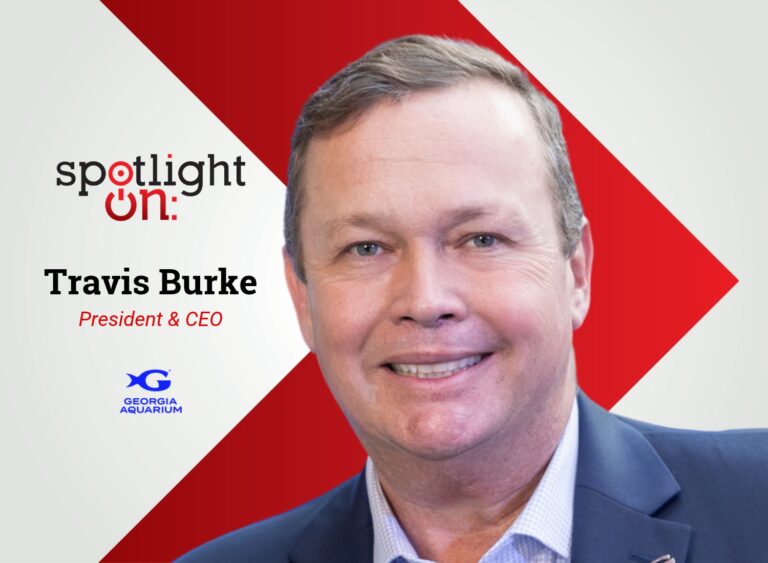
Spotlight On: Travis Burke, President & CEO, Georgia Aquarium
Key points:
- • Georgia Aquarium welcomes about 3 million guests annually as a downtown Atlanta driver.
- • The nonprofit is expanding freshwater conservation, including mussel work in the Flint River.
- • Rising consumer expectations require experiences that combine value and meaning.
 November 2026 — Travis Burke, President & CEO of Georgia Aquarium, spoke with Focus: about evolving visitor expectations, conservation and the Aquarium’s role in downtown Atlanta. “We want to be the best aquarium in the world, but we also want to leave this place better than before we were here,” Burke said.
Join us at caa’s upcoming leadership summits! These premier events bring together hundreds of public and private sector leaders to discuss the challenges and opportunities for businesses and investors. Find the next summit in a city near you!
What has the Aquarium’s 20-year history revealed about its impact?
The past year has been exciting and strong. We welcome about 3 million guests annually, including roughly 500,000 in July and August. That summer period is important. It tells us there’s still tremendous demand for shared experiences that bring families together and that connect people with something larger than themselves.
Attendance is only one measure. We’re a nonprofit, which many people don’t realize. We exist to educate K-12 students, care for animals, inspire guests and Georgia’s children, and hopefully leave the natural world better than we found it. Attendance tells us people want to visit; impact tells us whether we’re doing our job.
Guests increasingly expect an extraordinary experience and want to know the organization they support stands for something meaningful. We can entertain a family while inspiring a child who might become a veterinarian, biologist, or conservationist 20 years from now. Those responsibilities strengthen each other.
What has international collaboration contributed to animal care and rescue?
Connections matter in hospitality and attractions. Through trade associations, such as the Association of Zoos and Aquariums and the International Association of Amusement Parks and Attractions, we’re part of worldwide networks.
We learn from local neighbors, but we also work with people in Spain, China, Japan, and other parts of the world. That helps us understand what is working elsewhere and bring new ideas and best practices into Atlanta.
The rescue from Canada involved 30 belugas and four dolphins going to several institutions. We received two belugas, Balor and Zephyr. They’re doing well, and our trainers and nutrition team are learning about them..
How are you strengthening freshwater conservation and community education?
Historically, we’ve done significant work in distant places with manta rays, whale sharks, and dolphins. Over the past couple of years, we’ve become more involved in freshwater. Our team is doing important work with mussels in the Flint River, which runs south from the Atlanta airport area toward Lake Blackshear.
The community initiative is part of our education work. We want to reach children and people across the community so they understand how their behavior affects the environment and how small lifestyle changes can improve it. Atlanta is our home, and we have to take care of it. This is one investment in helping communities understand how much their actions matter.
How does innovation guide the research team’s work?
Our experience drives innovation, whether we’re working with dolphins and other animals in our care or with wild populations. We encourage the team to push boundaries and try new things, and they have achieved some remarkable things, from trying new ways to attach satellite tags to a manta ray using a suction cup, to utilizing drones to observe wild dolphins. We truly believe in doing the right thing for animals and our planet, and we have to ask the right questions first. The world is changing fast, and we have to be incredibly nimble to stay at the forefront of science and conservation.
How do you balance the visitor experience with education and conservation?
We have two main pillars. One is serving as an economic driver for downtown Atlanta. The Aquarium has brought millions of guests here. That gives us an opportunity and a responsibility to educate and inspire them.
A major part of our mission is sharing the work of the people caring for animals and doing research and conservation in the field. We want to tell those stories, educate visitors, and perhaps help them change daily behaviors that harm the environment.
How are changing consumer expectations shaping the guest experience?
Consumers keep changing, and they have more choices for their time and discretionary income. We can offer an experience they can’t get from a phone or screen. We give them time together with other people and give parents time with their children. We want that experience to leave an impression.
Expectations for service, technology, convenience, and value keep rising. Economic factors make things more challenging for consumers. We’re fortunate to receive about 3 million guests annually, but we can’t assume last year’s guests will return. We need to earn those next 3 million guests.
People increasingly want meaning. They want to understand what an organization stands for and the impact of participating. We must deliver an exceptional experience while remembering why we exist. We have to earn people’s time, trust, and spending every day. Otherwise, they won’t come, and we’ll lose the opportunity to educate students and other visitors.
What are your priorities for the Aquarium over the coming years?
I’m optimistic about Atlanta’s growth. Our city continues to attract businesses, talent, and investment. Centennial Yards, conventions, sports, hospitality, entertainment, and broader downtown redevelopment are bringing another important chapter. Atlanta hosted World Cup matches this year, and the College Football Playoff semifinal is coming up. We have a responsibility to participate.
We’ll continue investing in our people, community, animals, guests, education, science, and conservation while thinking boldly about what Georgia Aquarium can become.
We want to be the best aquarium in the world, but we also want to leave this place better than before we were here. If we do that while making Atlanta stronger for families, visitors, and investment, I think we’ve done our job.
Want more? Read the Focus: Atlanta report.