



Face Off: North Texas biotech leaders on the region’s innovation renaissance
 December 2024 — The Dallas-Fort Worth (DFW) area is rapidly emerging as a powerhouse in the biotechnology and biomedical sectors. With the region’s life sciences labor pool growing by 17% between 2019 and 2023 — outpacing the national average of 13.7% according to CBRE — DFW has solidified its position as a top contender among the nation’s biotech hubs.
Read more: Five reasons Dallas-Fort Worth is the next big life sciences hubs
In 2023, Texas-based biotech raised $1.57 billion in capital — a 251% increase from the previous year, according to Beyond Borders: EY Biotechnology Report 2024. The influx of private investment in public equity (PIPE) and follow-on offerings accounted for 73% of total funding in early 2024, underscoring a shift toward alternative financing mechanisms amid tighter public markets.
Bridge Labs, a 135,000-square-foot facility at Pegasus Park, is designed to meet the growing demand for institutional-quality lab and office space for growth-stage biotech companies. Located within a 26-acre campus that includes leading accelerators, research organizations, and nonprofits, Pegasus Park is projected to generate $1.9 billion in annual gross product and create over 15,000 jobs, according to The Perryman Group.
Further complementing the region’s biotech infrastructure is the TCU Burnett School of Medicine, located in Fort Worth’s Medical District. Opened earlier this year, the school offers cutting-edge facilities, including AI-powered anatomy labs and high-fidelity simulation centers, to train the next generation of healthcare leaders. Projected to contribute $4 billion annually to the regional economy by 2030, the school reflects the critical role education plays in sustaining North Texas’ biotech momentum.
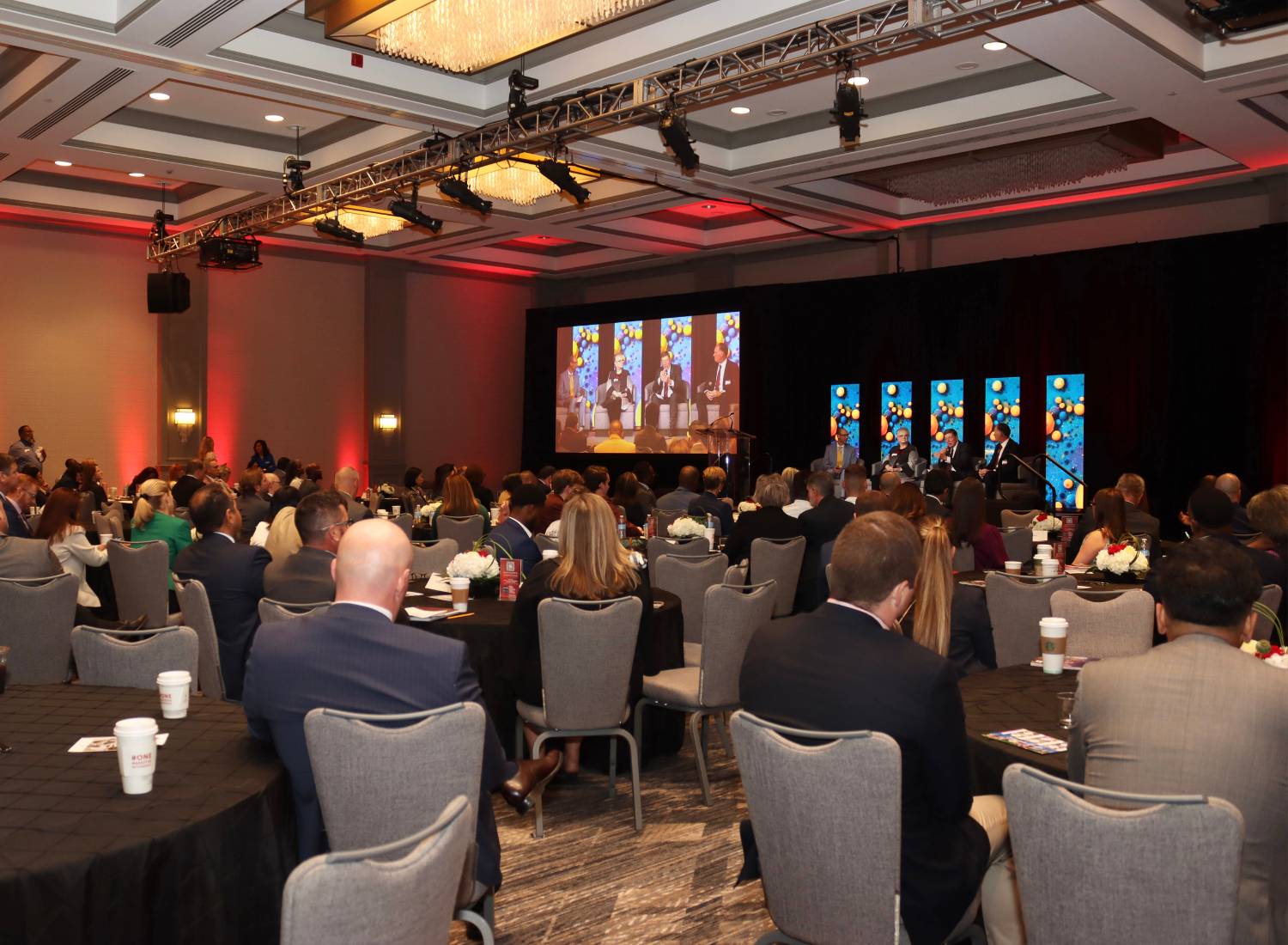
To explore DFW’s biotech trajectory, Invest: sat down with Gabby Everett, director of business operations and strategy and the site head at BioLabs, and Kathleen Otto-Rosenblum, CEO of BioNTX, to discuss how the region is leveraging innovation, infrastructure, and talent to fuel its growth.
How does North Texas compare to other bio and health centers across the United States?
Gabby Everett: North Texas offers a unique combination of factors that make it ideal for a thriving biotech ecosystem. To succeed, you need outstanding research institutions, skilled talent, and access to funding. North Texas is home to six Tier 1 research centers producing world-class science and technologies, which naturally fuel the growth of startups. This region also boasts one of the top technical workforces in the country, ensuring a steady pipeline of skilled professionals for the biotech industry.
Additionally, while funding in North Texas has traditionally focused on real estate and energy, we are witnessing a shift toward healthcare and biotechnology investment, opening new opportunities for growth. What sets North Texas apart is its collaborative ecosystem. Cities like Arlington, Mansfield, Plano, DeSoto, and Irving work closely together, supported by organizations such as the Dallas Regional Chamber. This collaboration ensures smooth transitions for companies as they grow, from shared facilities like Pegasus Park to larger spaces such as Bridge Labs or even new manufacturing hubs. However, challenges remain, particularly the need for local manufacturing facilities for biotech products, which often require outsourcing to other states or countries. Addressing these gaps is a priority as we continue to build a comprehensive biotech ecosystem.
Kathleen Otto-Rosenblum: The first and most defining factor is collaboration. North Texas is uniquely collaborative, with stakeholders across government, industry, and academia all working together toward a shared vision of becoming a leading bioscience hub, akin to Boston. This level of cooperation isn’t something you see everywhere.
Collaboration here doesn’t eliminate competition; it makes it healthier. Organizations understand that they thrive better together, creating a dynamic yet unified ecosystem. This cooperative mindset, coupled with world-class science, strategic infrastructure like Pegasus Park, and logistical assets such as DFW Airport, positions North Texas for extraordinary growth over the next decade.
Another critical differentiator is DFW Airport. It is one of only two airports in the United States certified for excellence in biopharmaceutical shipping, storage, and last-mile delivery. This specialized infrastructure supports the transportation of medicines and chemical reagents that require meticulous handling, giving North Texas a logistical edge.
Additionally, the region benefits from abundant open space for development, no personal income tax, and a relatively affordable cost of living. While we are still advocating for stronger state incentives to attract more companies, North Texas already has influential leaders actively promoting the region to the broader biotech industry.
What are some recent achievements and developments driving the growth of biotech in North Texas?
Everett: BioLabs has been incredibly busy since last year. One of the most significant updates at Pegasus Park is the expansion of the lab space on campus. BioLabs, as the startup incubator, reached 90% occupancy recently, a milestone we originally projected for six to seven years of operation. Reaching this capacity in just two and a half years accelerated the need for expansion. Currently, BioLabs offers 32,000 square feet of fully equipped lab space, and on Sept. 29, we opened Bridge Labs, a new facility with 135,000 square feet of more space. Bridge Labs includes graduate lab spaces for companies transitioning out of shared facilities and spec labs ranging from 5,000 to 8,000 square feet, designed for single companies. This expansion is generating significant interest, and we anticipate reaching 50–60% occupancy by Q2 next year. It’s an exciting time for biotech, with substantial growth and an influx of companies driving demand for space.
Otto-Rosenblum: In 2019, the construction of the 26-acre multi-use campus known as Pegasus Park marked a transformative moment for North Texas, driven by the vision and philanthropy of Lyda Hill. Her substantial investment in this project provided a critical foundation for the region’s bioscience community, addressing the longstanding challenge of retaining businesses emerging from institutions like UT Southwestern Medical Center. Before Pegasus Park, many startups left North Texas due to a lack of infrastructure and community support. Today, Pegasus Park stands as a state-of-the-art facility where biotech companies can grow and thrive, catalyzing the region’s potential as a bioscience hub.
How do your organizations support the biotech ecosystem and workforce development in the region?
Everett: Collaboration is at the core of what we do. We work closely with institutional technology development offices to help researchers navigate the process of taking their discoveries from the lab to commercialization. Our partnerships extend to BIO North Texas, a local biotech trade organization that provides startups with resources and expertise in areas such as talent, regulatory processes, logistics, and IP. These connections allow our startups to integrate seamlessly into the broader ecosystem, ensuring they have access to the expertise and networks needed to succeed. We also host investor events and networking happy hours to catalyze the partnerships that accelerate innovation.
Otto-Rosenblum: A prime example of this is the 2022 workforce initiative led by Dallas College in collaboration with other stakeholders, supported by an $8.8 million grant. This initiative creates pathways for individuals in rural and urban populations across 16 North Texas counties to transition from “jobs” to “careers” that require advanced skills and education. By leveraging our extensive ecosystem relationships and working closely with partners like Dallas College, BioNTX fosters awareness, inspires growth, and helps build a robust workforce pipeline essential for the region’s continued success.
Another pivotal moment came in 2023 with ARPA-H, a multibillion-dollar government project dedicated to advancing healthcare and biotechnology innovation. ARPA-H selected Dallas, specifically Pegasus Park, as its customer experience hub — one of only three hubs nationwide, alongside Washington, D.C., and Boston. This decision underscores the region’s growing prominence in industry and its strategic importance in the national bioscience landscape.
What funding initiatives are in place to support bioscience sectors in Texas?
Everett: There has been a growing awareness of the biotech sector among investors in North Texas. While traditional venture capital remains crucial, family offices have shown increasing interest in impact investing within this field. However, biotech is a complex industry, and many investors hesitate to engage with something they don’t fully understand. To address this, we partner with groups like LaunchBio to educate investors on the biotech landscape, including the risks, opportunities, and potential returns. These educational efforts have started to shift perceptions and increase interest in the sector.
Otto-Rosenblum: Texas is home to CPRIT (Cancer Prevention and Research Institute of Texas), a state-created fund for cancer research and startups. CPRIT provides non-dilutive funding to young companies and academic institutions, attracting top talent and fostering innovation in cancer treatment and prevention. This fund is second only to the National Cancer Institute Fund in Washington, D.C.
Building on this success, there is momentum to create a similar fund for brain research. This initiative is expected to support research and young companies focused on neurological science. While the brain research bill is still under legislative review, it has strong support and could become a game-changer for Texas’ bioscience ecosystem.
BioNTX also helps small companies save money through our purchasing consortium. In collaboration with BIO, we provide discounts on lab supplies, clinical trial insurance, and other necessities, helping startups stretch their budgets.
For more information, please visit:
https://www.biolabs.io/north-texas