






Healthcare reimagined: How Minnesota is closing care gaps

August 2025 — From AI-powered “listening devices” to virtual therapy, Minnesota’s healthcare leaders are radically redefining how medicine is delivered — and who it reaches. As provider burnout grows and access to healthcare remains difficult, the state’s top health systems are turning to technology and community-focused innovation to rewrite the rules of care.
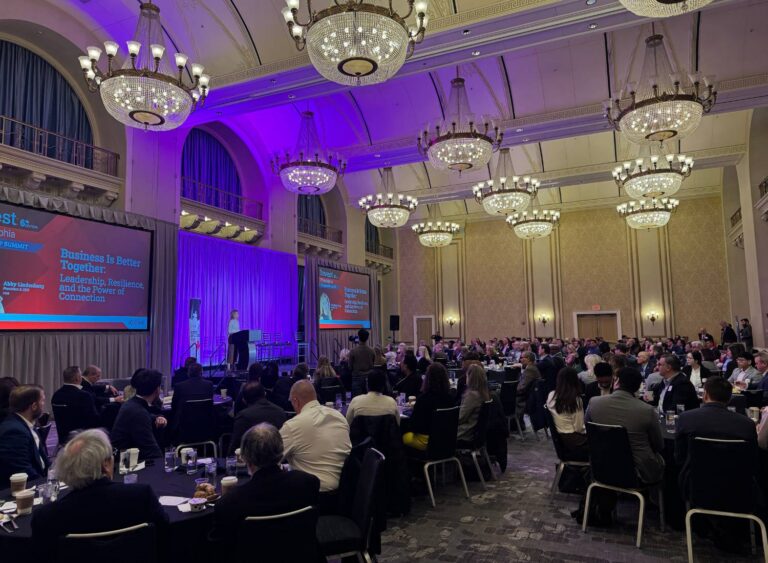
At the recent Invest: Minneapolis-St. Paul leadership summit, Sanford Health CMO Jeremy Cauwels, Dominica Tallarico, chief operating officer of Allina Health, and Krista Skorupa, east market president of Essentia Health, laid out a bold vision for a tech-empowered, human-centered future on medicine — one where ambient listening AI lifts the burden of administrative work, virtual visits replace clinic commutes, and social inequality is tackled with data-driven solutions.
Integrating AI and data analytics into day-to-day patient-doctor interactions presents a new opportunity to cut down administrative burden and support the evolving needs of medical practitioners.“Thanks to ambient listening and large language models, we’re now able to actually put a listening device in between the patient and the doctor,” said Cauwels.
Ambient listening models — which are powered by artificial intelligence — allow providers to cut down on time spent updating medical records and completing other menial tasks, boosting satisfaction all around. “Ambient listening technology makes 95% of our physicians’ lives better,” added Cauwels. “[So this] has brought us back to a spot where not only are patients much happier with their care, but doctors are actually happier providing it as well.”
According to a report by the Canadian Agency for Drugs and Technologies in Health, AI scribes can reduce time spent on administrative tasks by a whopping 69.5% in laboratory settings and average three hours less per week in practical conditions. However, with every two in three physicians using AI, the growing role of technology in healthcare interactions has raised concerns among some medical practitioners about the over-reliance on digital medical records and data-driven systems, which possibly limit the human connection element.
In a study by the American Medical Association (AMA), 35% of physicians said their enthusiasm for AI exceeded their concerns, while 25% reported that their AI-related fears outweighed the technology’s potential benefits.
According to former AMA President Jesse Ehrenfeld, most physicians remain concerned with the design of health AI and potential liabilities introduced by its flawed use, poor integration with EHR systems, and offerings of incorrect recommendations.
Yet Cauwels notes that telemedicine is perhaps paradoxically bringing doctors and patients closer than before, allowing them to focus more on direct care. In treatment areas like behavioral medicine, for instance, Twin Cities medical practitioners have observed a notable uptick in virtual visits for mental health since Covid. “More than 20% of our mental health visits are still virtual,” Cauwels said, highlighting that the stigma of being seen in therapy has supported the demand for virtual therapy.
More importantly, though, virtual care visits are becoming key to delivering healthcare to some of the most isolated and rural communities in the state of Minnesota, ranging from Vern to Worthington. Access to quality and affordable healthcare remains critical outside of major metro areas. However, telehealth is now helping bridge the divide by delivering timely assistance to patients in non-urban areas.
Technology alone, however, cannot solve all the challenges facing Minnesota’s healthcare system, observed Skorupa, who highlighted the importance of developing more holistic solutions to address social determinants of health.
“This moment in time is described as the silver tsunami, where the aging population and their care demands are starting to significantly exceed the U.S. healthcare system’s capacity to meet those care needs,” said Skorupa. “It is an absolute necessity that we focus more on those upstream factors that have a much larger wall and contribute to one’s health and well-being.”
According to Skorupa, 90% of a person’s health and well-being is determined by upstream factors such as geographic location, access to housing, food, and education, among others, which is why Essentia Health is rethinking its healthcare prevention strategy by moving beyond critical care into broader determinants of health through the application of technology.
Essentia’s built-in referral program leverages information from digital medical records to place direct referrals to Second Harvest — a Canadian food rescue charity — for patients without access to food. “It’s just one example of many of what we’re doing to really address that whole person and provide care through community partnership”.
“We have to lean into technology,” added Tallarico. “And we have to break down the silos.”
Still, pressing challenges remain on the regulatory front, which may slow down the rate of tech adoption in the healthcare industry.
“We can provide care through telemedicine, but we need to be paid to provide that care. So given the economics, we just need to make sure regulatory policy keeps pace with the innovation as well,” urged Tallarico.
Watch Panel 3 of the Invest: Minneapolis-St. Paul 3rd Edition launch conference:
To access the Invest: Minneapolis-St. Paul 3rd Edition report, click here. (Subscription required.)
For complete conference panel discussions, tune in to our YouTube Channel.