





How next-gen leadership is reshaping Pittsburgh’s business landscape
Key points:
• Next-generation leadership is shifting from hierarchy to purpose, values, and long-term people investment.
• Emotional intelligence, authenticity, and mentorship are becoming core leadership competencies across sectors.
• Technology access, early talent exposure, and intentional succession planning are defining future-ready organizations.
 January 2026 — As Pittsburgh continues to evolve from its industrial roots into a hub for healthcare innovation, financial stewardship, technology, and energy transformation, a common question is emerging across sectors: how will the next generation of leaders differ from today’s — and what must employers do now to prepare them?
Join us at the Invest: Pittsburgh 3rd Edition Leadership Summit! This premier event brings together hundreds of Pittsburgh’s business and regional leaders to discuss the challenges and opportunities for businesses and investors. Buy your ticket now!
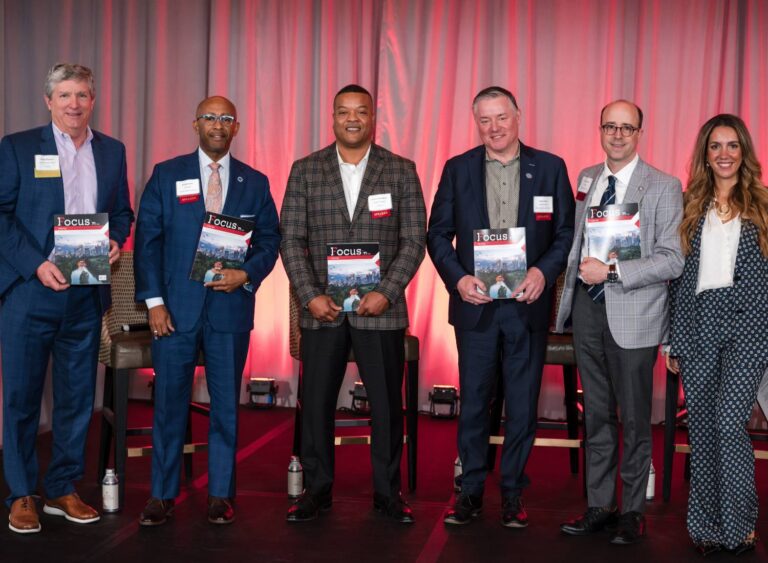
At the Invest: Pittsburgh 3rd Edition Leadership Conference, executives from healthcare, wealth management, financial services, insurance, and energy will explore how leadership is changing in practice — not theory.
Through interviews with Invest:, insights from Jewish Healthcare Foundation, Glenmede, Baird, Aon, and NRG point to a shared conclusion: next-gen leadership is less about hierarchy and more about values, adaptability, and intentional talent development.
Purpose-driven leadership
For Karen Feinstein, president and CEO of the Jewish Healthcare Foundation, effective leadership — and leadership development — begins with clarity and consistency. “We shift within priorities. We don’t shift priorities,” Feinstein told Invest:.
That stability creates the conditions in which future leaders can develop without constantly reacting to changing agendas. Feinstein directly tied leadership to long-term investment in people, emphasizing, “We need to invest in our next generation.” In healthcare and public-interest organizations, she underscored that developing leaders requires patience, mission alignment, and systems that support growth over time — not short-term wins.
Her broader vision also reframes leadership at the regional level. By positioning Pittsburgh as the potential “Safety Capital of the World,” Feinstein highlighted how next-gen leaders must understand how legacy, place, and purpose intersect — and how leadership can elevate not just organizations, but entire communities.
Emotional intelligence
In wealth management, leadership development is increasingly shaped by emotional intelligence and trust. Bethany Bryant, regional director at Glenmede, emphasized that next-gen leaders must be equipped to guide people through uncertainty.
“Money is very personal, and people’s livelihoods and goals are dependent on their investments and savings,” Bryant said. “When we take care of our clients, the business takes care of itself.”
She also made clear that growth depends on people strategy as much as market conditions. “Our growth is dependent on being able to retain and develop the people we have while attracting additional talent,” Bryant noted. Glenmede’s midsized structure allows younger professionals to take on responsibility earlier, blending mentorship with autonomy — a model that resonates strongly with emerging leaders seeking both impact and development.
Bridging generations
At Baird, leadership succession is not a future concern — it is a current one. Joseph Thompson, senior vice president and branch manager, shared with Invest: the demographic realities driving the need for next-gen leadership pipelines.
“We have an aging financial advisor population. The average age of an advisor in the industry is over 60 years old,” Thompson said. In response, Baird has prioritized early coaching and cultural integration. “I think it is important to go after Next Gen advisors because they have room for growth and development. We can coach them to be a part of who we are,” Thompson noted.
He also stressed that authenticity is a defining leadership trait for the next generation, noting that one of the biggest challenges today is “having people be authentic and build real connections.” His approach reflects a broader shift toward mentorship-driven leadership models grounded in trust, values alignment, and long-term relationships.
Technology, collaboration, and future-ready leaders
For Ken Scaggs, Pittsburgh market leader at Aon, next-gen leadership is inseparable from technology access and employer value proposition. “Aon’s approach to talent is centered on creating a compelling value proposition for both recruitment and retention,” Scaggs said.
He added that this message has become easier to communicate as the firm invests heavily in innovation: “It’s become easier to showcase Aon’s differentiators — most notably, our $1 billion-plus investment in technology and data analytics.” For emerging leaders, access to advanced tools, global teams, and data-driven insight is not optional — it is foundational to how they expect to work and lead.
Developing talent for a more complex energy landscape
In the energy sector, next-gen leadership is being shaped by rapid change and expanding skill requirements. Stephen Girard, vice president at NRG, emphasized that talent development is central to navigating this complexity.
NRG focuses on early exposure as a leadership strategy. “We recruit from local universities like University of Pittsburgh, Penn State and Carnegie Mellon, bringing in interns to introduce young talent to our organization,” Girard said. As industry needs evolve, the company has broadened its talent pipeline: “While we initially focused on engineers and finance professionals, we’re now tapping into university energy management programs to attract passionate individuals who understand the industry.”
Succession planning remains a priority. “As some of our best team members move into new phases of their careers, we’re committed to developing the next generation of leaders at NRG, especially here in Pittsburgh,” Girard added — reinforcing a theme echoed across sectors: leadership of the future is built through intentional investment in people today.
Want more? Check out the Invest: Pittsburgh report.
Subscribe to Our Newsletters