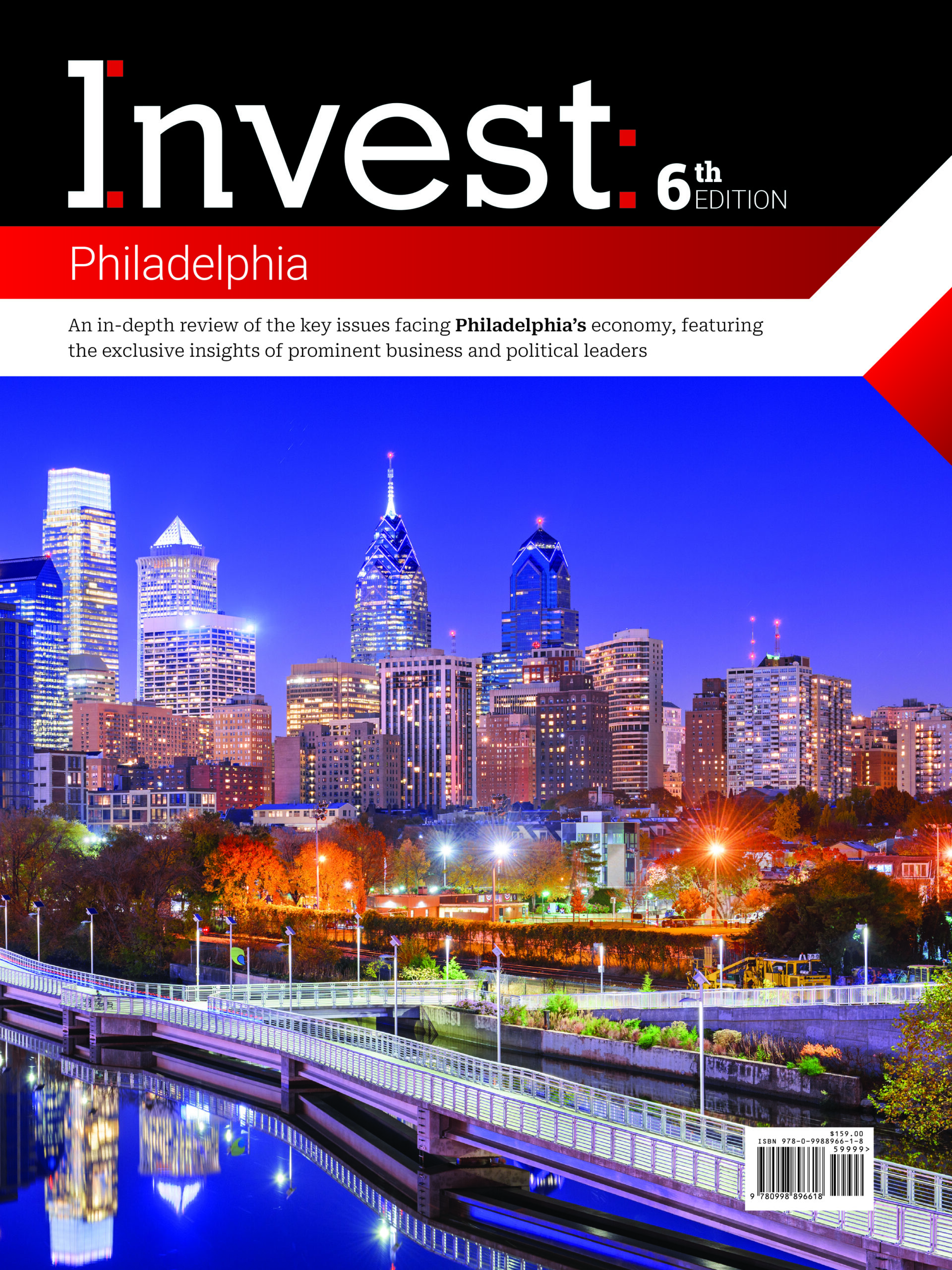

Invest: Philadelphia summit highlights education, research, and infrastructure planning
Key points:
- Leaders examined how education, research, and infrastructure shape Philadelphia’s economic trajectory.
- Panels focused on workforce wellbeing, innovation ecosystems, and institutional capacity to support growth.
- David L. Cohen closed by underscoring calm, consistent leadership and listening as core principles.
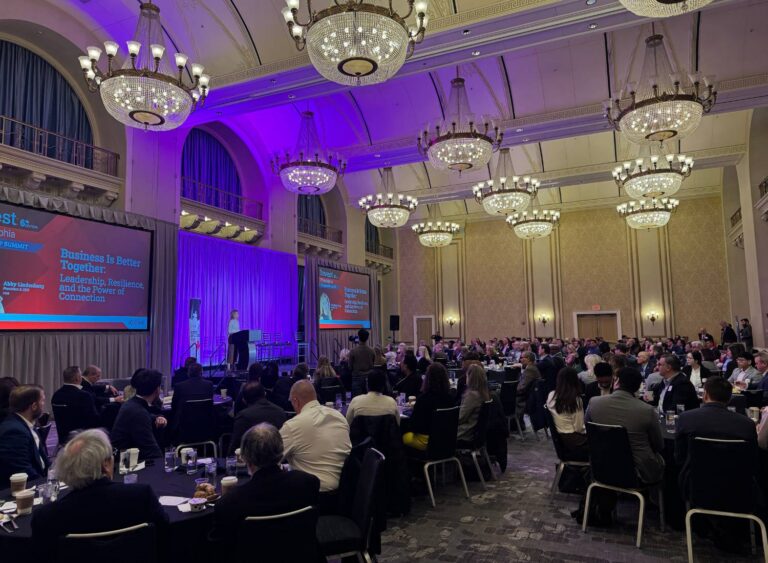
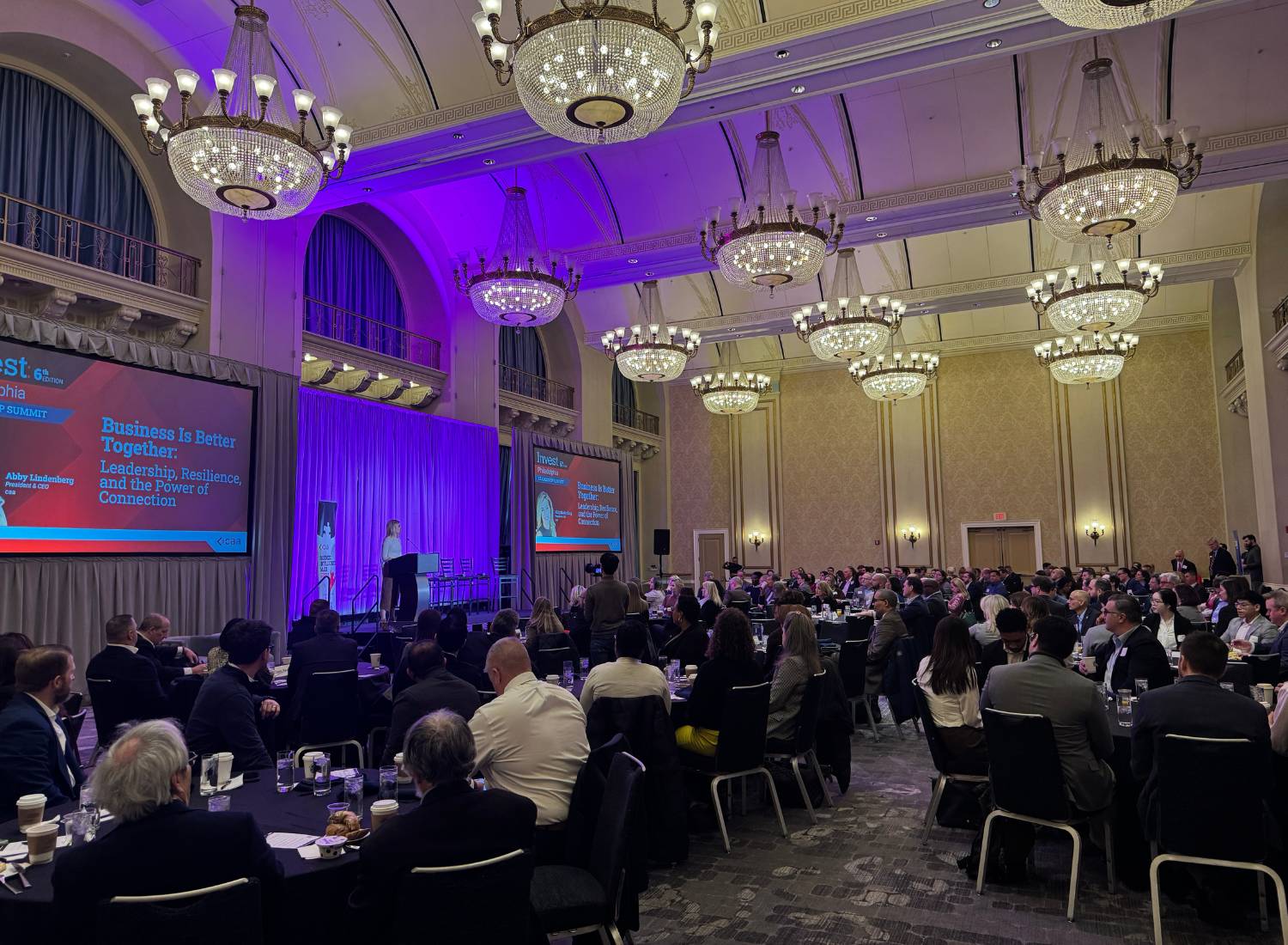 February 2026 — Business, education, and civic leaders from across the Greater Philadelphia region gathered for the Invest: Philadelphia 6th Edition Leadership Summit. The event convened executives from education, healthcare, finance, utilities, and cultural institutions to discuss how educational institutions, research organizations, and infrastructure systems are influencing the region’s economic direction.
Join us at caa’s upcoming leadership summits! These premier events bring together hundreds of public and private sector leaders to discuss the challenges and opportunities for businesses and investors. Find the next summit in a city near you!
Abby Lindenberg, founder and CEO of caa, opened the program by speaking to how investment decisions are shaped by a broader view of regional conditions. “Insight only works when it reflects all sides of the investment community — and when it tells the story of real people building real businesses in real places,” Lindenberg said. “We know from our research that it is never one person or one company that an investor or a business is looking at. It is always the entire community.”
Lindenberg also pointed to Philadelphia’s distinctive approach to growth, citing the city’s use of arts, culture, and density as drivers of civic and economic engagement.
(Become a member today to access the latest edition of Invest: Philadelphia)
Emotional health and technology in education and the workforce
The opening panel, “Emotional Health & Responsible Tech: Education’s new core learning goals, and their impact at school and in the workforce,” examined how emotional health, neurodiversity, and technology use are affecting learning environments and workplace expectations. The session was presented by Mark McGuriman, regional business development director for the Mid Atlantic, New England, and New York Metro region at CBIZ.
Moderated by Stephen Stunder, executive director of the Life Skills through Career Program at Chestnut Hill College, the panel included Sally Schufreider, market leader and general manager at Cigna Healthcare; Mary Ann Newell, director of employment initiatives and partnerships at the Kinney Center for Autism Education and Support at Saint Joseph’s University; Kevin Mayne, head of school at Hill Top Preparatory School; and Gregory Martin, head of school at Woodlynde School.
Panelists described a workforce shaped by generational differences, constant connectivity, and uneven access to care. Schufreider noted that behavioral health challenges are increasingly visible at work, particularly among younger employees. “When employees cannot access care, organizations feel the impact, including higher turnover,” Schufreider said.
The conversation also touched on inclusion and support for neurodivergent individuals. Stunder emphasized the difference between programs and practice, saying, “Providing support means hiring people and truly accepting them into the community.”
Research and regional economic activity
The second panel, “Powering Research: How cutting-edge research and innovation are critical to the region and businesses,” focused on how research institutions contribute to workforce development and economic activity. The session was presented by Brittany Lewis, director of community education and engagement at the Pennsylvania Academy of the Fine Arts, and moderated by Gary Liguori, chancellor of Penn State Abington.
The panel included Ben Smith, executive director and president of the Monell Chemical Senses Center; Heather Steinman, senior vice president of business development and executive director of technology transfer at The Wistar Institute; Amanda Purdy, associate chief academic officer and director of academic affairs at Fox Chase Cancer Center, Temple Health; Joel Boyd, CEO of Mastery Schools; and Sarah Baker, head of school at Tower Hill School.
Panelists spoke about how research environments shape long-term participation in the regional economy. Ben Smith pointed to the role of research density in retaining talent. “Research builds the innovation pipeline, and talent follows,” Smith said.
Speakers also emphasized the value of early exposure to discovery. Amanda Purdy described problem-solving as a central outcome of research training. “Teaching people how to adapt and recalibrate prepares them to respond to uncertainty,” Purdy said. Education leaders Sarah Baker and Joel Boyd referenced career-connected learning to link students more directly to applied research and industry-facing roles, particularly for those pursuing nontraditional academic paths.
Infrastructure considerations for institutional growth
The final panel, “Leading the Charge: How strategic infrastructure is paving the way for Philly’s eds and meds success, and how leaders are overcoming obstacles,” focused on the operational systems that support institutional activity, including energy, water, financing, and facilities.
Moderated by Brad Fouss, senior vice president and market president for Greater Philadelphia at OceanFirst Bank, the panel featured Marc Lucca, president of Aqua Pennsylvania; Mike Rombach, vice president of East Energy at NRG Energy; Yulia Murphy, senior vice president of middle market health care at KeyBank; and Martin Kimmel, president of Kimmel Architecture.
The discussion centered on the practical constraints institutions face as demand grows. Rombach and Lucca spoke about electricity use and water infrastructure, noting that both systems require sustained investment and long-term planning to keep pace with institutional needs.
From a financing and design perspective, Murphy addressed how infrastructure considerations factor into lending decisions. “Before financing even enters the conversation, we ask whether the infrastructure can support the plan,” Murphy said. “These are not just banking questions. Infrastructure directly affects cost, timelines, and the ability to complete a project.
Leadership behavior
The event concluded with a fireside conversation between David L. Cohen and Abby Lindenberg. Cohen, who served as U.S. ambassador to Canada from 2021 to 2025 and previously held senior leadership roles at Comcast NBCUniversal, reflected on leadership, listening, and decision-making across business, government, and diplomacy.
“I believe the best leaders behave the same regardless of the circumstances they are in,” Cohen said. “They demonstrate calm, consistency, and clarity no matter the conditions, and they listen before they act.”
Interested in reading the Invest: Philadelphia report? Sign up today!