



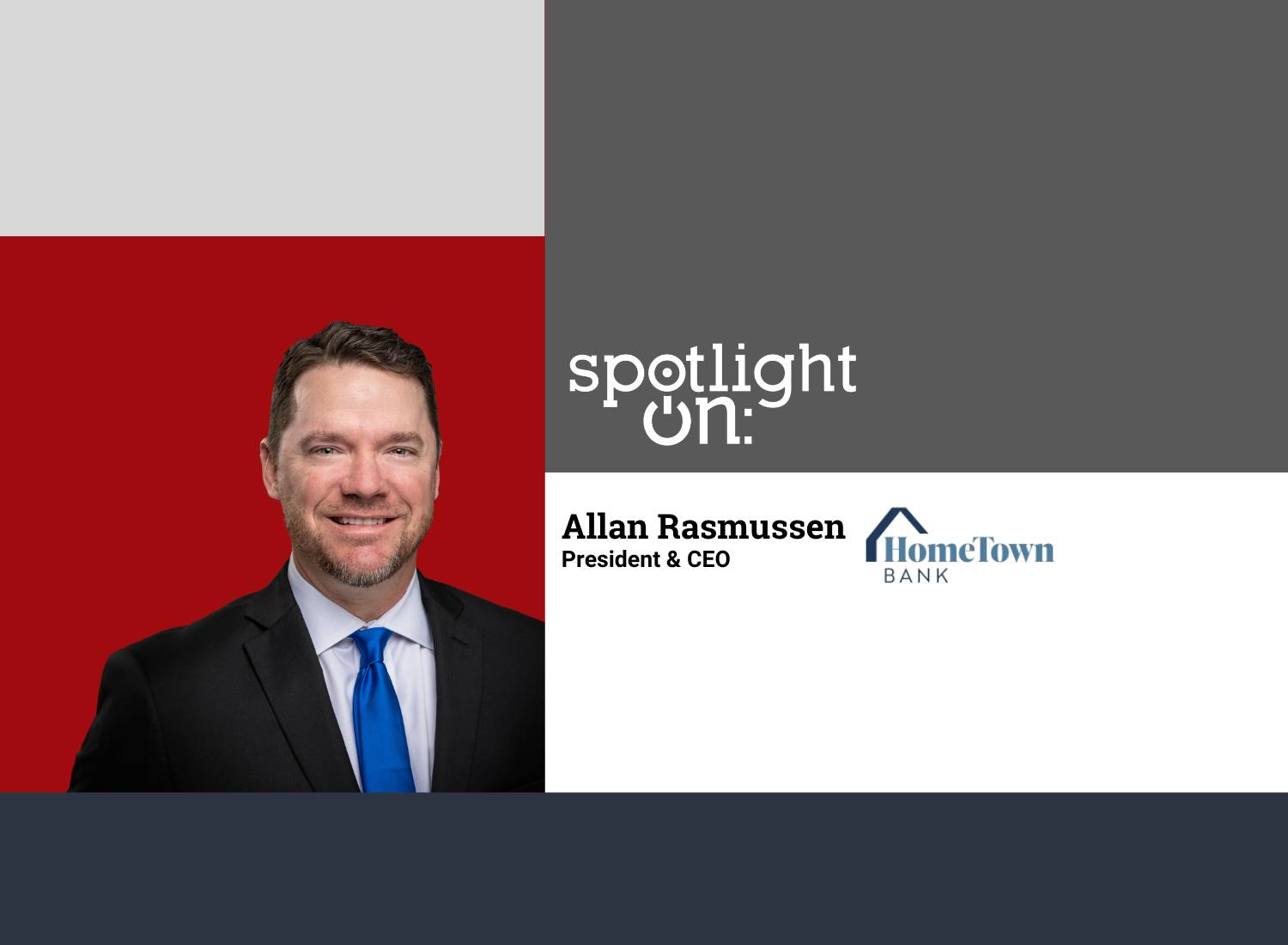
Spotlight On: Allan Rasmussen, President & CEO, HomeTown Bank, N.A.

Key points:

  • • HomeTown Bank is leveraging strong regional growth to expand selectively while maintaining its community-focused model.
  • • Investment in technology and AI is enabling scale without sacrificing relationship-driven banking.
  • • Future priorities include managing fraud risks, adapting to digital trends, and sustaining disciplined growth.
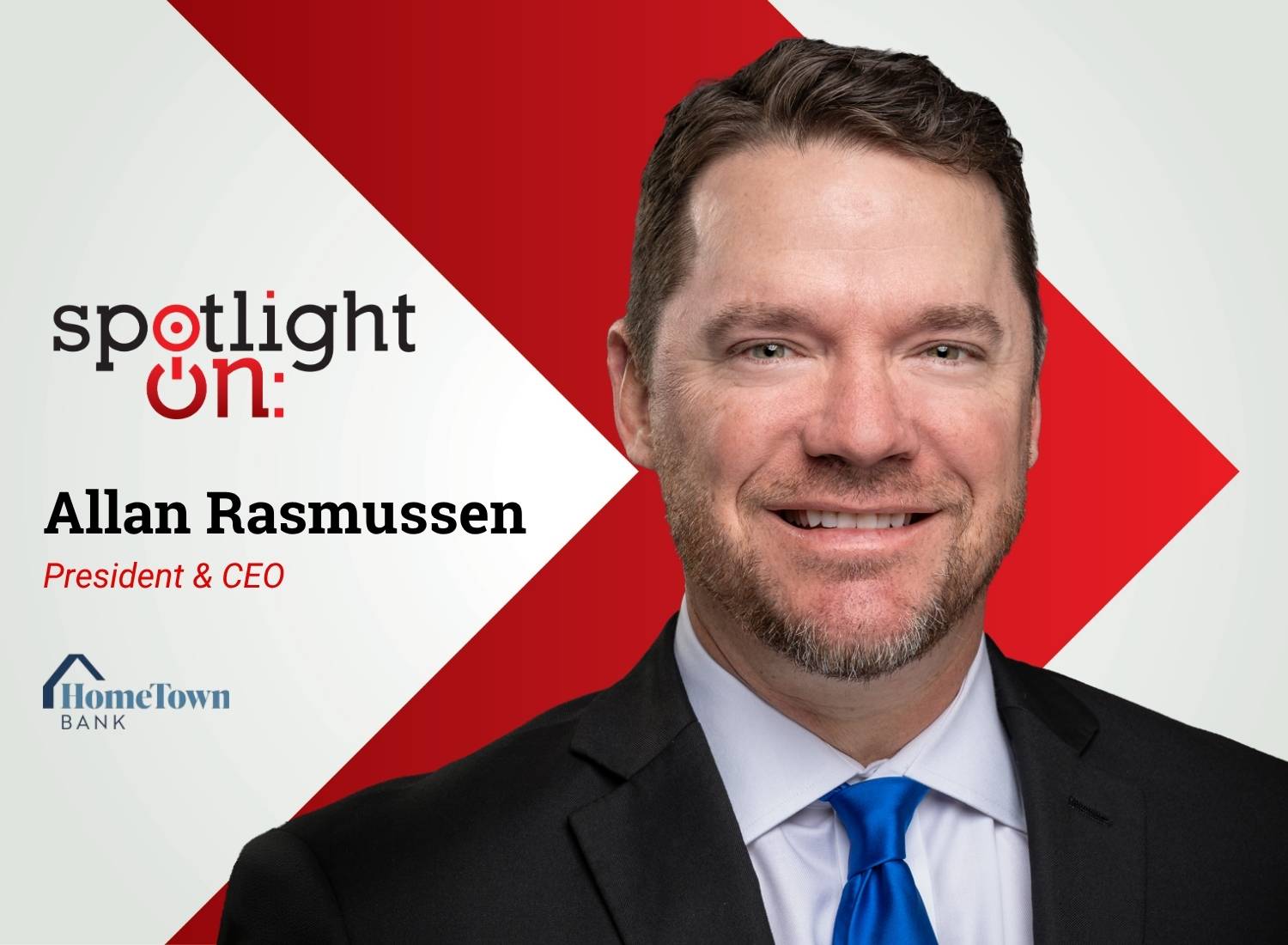
Allan Rasmussen Spotlight onApril 2026 — In an interview with Invest:, Allan Rasmussen, president and CEO of HomeTown Bank, discussed how the company is building on a strong 2025 by expanding into new markets, investing in technology, and staying closely rooted in the communities it serves. “We are not trying to be everything to everyone. We are trying to be the right fit in the right places,” said Rasmussen.

What trends have had the biggest impact on HomeTown Bank over the past year?

We had a strong year in 2025. It was a record year for loans, which was a big accomplishment for us, and our earnings were up significantly over 2024. We also introduced and launched some new products and services, and we are expanding into new markets. That has given us a lot of momentum going into 2026.

We feel fortunate to be in the Houston area because the regional economy is so diverse and resilient. Population growth continues, and both residential and commercial development remain strong. That creates opportunities for banks like ours to grow alongside the communities we serve. Our priority is to take advantage of that growth in a way that aligns with who we are as a community bank.

How is Houston’s growth influencing your lending strategy?

We are a community bank, and our culture fits best on the outskirts of Houston rather than in the downtown core. We are in a lot of smaller cities around the Greater Houston area, and when we look at potential new locations, we are studying the communities carefully. We look at school districts, family life, local businesses, and whether that area is a place where our culture can make an impact.

That shapes our lending strategy as well. We are focused on markets where we believe relationship banking still matters and where people want a bank that is part of the community. We are not trying to be everything to everyone. We are trying to be the right fit in the right places.

How are you balancing growth, credit quality, and profitability in the current environment?

We have been fortunate from an asset quality standpoint. Our losses have been minimal, if any, and that comes down to underwriting, communication, and knowing our customers. Sometimes there is a little bit of luck involved because life happens and circumstances change, but disciplined underwriting and strong relationships make a big difference.

Communication is probably our biggest strength. We stay in touch with customers through social media, through direct outreach, and simply by being present in the communities we serve. Because we are local and accessible, people know where to find us, and we know them. We know our customer. That is something community banks talk about a lot, but for us, it is more than a slogan. It is a practical advantage that helps us manage risk and maintain long-term relationships.

How are you thinking about scale as the bank expands?

Technology is the equalizer. That is the biggest thing. We are investing heavily in technology both for our internal operations and for customer-facing products because it allows us to compete on a much larger scale than we could have five or ten years ago.

We recently invested in a new credit and lending platform that includes an artificial intelligence component, and we are evaluating other tools with similar capabilities. Those investments help us improve efficiency, improve service, and create a stronger experience for both customers and employees. For a bank of our size, technology is one of the most important ways to scale thoughtfully without losing what makes us a community bank in the first place.

How are customer expectations evolving, particularly among small businesses and commercial clients?

Everything is moving in a more digital direction. Customers expect more functionality through their phones, their apps, and their online banking experience. That has been a big area of focus for us. We want to make sure our digital channels are keeping pace with what people expect from their bank today.

Zelle is a good example. When the standalone Zelle app went away, banks had to move quickly to integrate it into their own systems. We were able to launch that in the fourth quarter, even though there was a bottleneck across the industry. We also launched a secondary market for mortgages in the fourth quarter, which is something our bank had never had before.

We believe that is going to be a major benefit as we continue growing in communities with a lot of new residential development. Our Board of Directors wants to grow and expand, and my job is to make sure we have as many tools in the toolbox as possible so we are ready to meet those needs.

What is your approach to attracting and retaining talent?

Culture is a huge part of it, and that starts with leadership. It starts with me, with management, and with the board. Communication is central to that culture. When people feel informed, trusted, and empowered to make decisions, they become much more invested in what they are doing.

We have been fortunate with turnover. It has been low for years. We recently had a few employees retire who had, collectively, been with the bank for 70 years. We also have a 50-year employee and several people who have been with us for 20 or 30 years. That kind of longevity says a lot about the environment we try to create.

You have to be fair to people. You have to provide competitive pay, good benefits, and a workplace where they want to come every day. Just as important, you have to give them ownership. When people are only repeating the same task over and over again, they are less engaged. When you empower them and promote from within whenever possible, they start to feel that the bank’s success is their success too. That has been a big part of our growth.

What markets are you targeting for expansion?

We recently executed a lease in Mont Belvieu, which is on the east side of Houston. That is the type of market we like — a growing community with small businesses, residential growth, some light industrial activity, and a character that fits our brand and culture.

We have looked in all directions around Greater Houston, but we are being selective. We are looking for areas where we believe we can thrive as a community bank, not just add another location. That means communities where relationship banking still matters, where growth is happening, and where there is an opportunity for us to support families and local businesses over the long term.

What are your top priorities for the next two to three years?

A few themes are front and center for us. One is digital assets and stablecoin. I think the banking industry is still a ways off from where all of that may eventually go, but it is important that we stay informed. We are working closely with our state and national banking associations and making sure we are educating ourselves as the landscape evolves.

Artificial intelligence is another major area of focus. AI is changing every industry, including banking, and the question for us is how to use it safely and responsibly. It has the potential to improve efficiency and customer service, but it also introduces new risks.

That leads directly to fraud, which is one of the issues that keeps me up at night. I am not just talking about cybersecurity in the traditional sense, but also spear phishing, voice spoofing, face spoofing, and the increasingly sophisticated ways criminals try to deceive both employees and customers. We do ongoing employee training, a lot of social media education for our customers, and we have invested in technology to help reduce fraud risk. AI is going to make that environment even more complex, so vigilance is essential.

What is your outlook for the near term?

I am bullish on 2026. We made a number of strategic moves to our balance sheet that we think will benefit earnings this year, and we have budgeted for a record year. There is a lot of volatility in the world right now, and the interest rate environment still shifts quickly, so we try to focus on what we can control rather than what we cannot.

What gives me confidence is what we are seeing locally. Development is moving. New housing is coming online. Jobs are being created throughout the region. What is happening in Galveston with the cruise industry and shipbuilding, what is happening across the broader Houston economy, and the amount of residential growth all point to more opportunities ahead.

There are thousands of new residents coming into this area, and with that comes demand for homes, services, banking, and local businesses. All of those things support one another, creating optimism and paving the way for HomeTown Bank, N.A. to make an impact for generations. We have momentum from 2025, we made the right strategic moves, and we believe 2026 can be another strong year.

Want more? Read the Invest: Houston report.

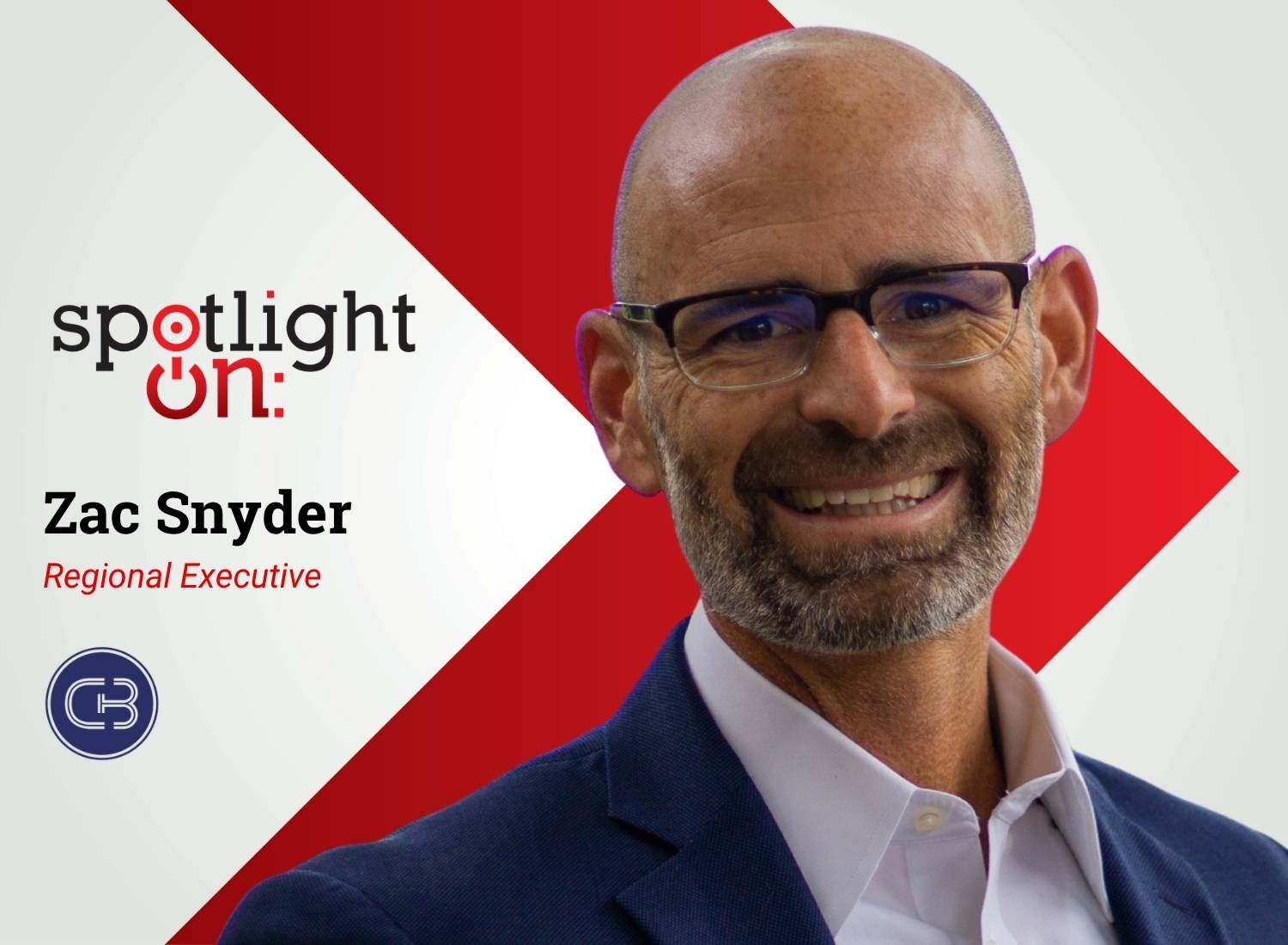
Spotlight On: Zac Snyder, Regional Executive, Carter Bank

Key points:

  • • Banking strategy is shaped by uncertainty, with AI, regulation, and digital assets in focus.
  • • Capital demand remains steady, but underwriting is more selective across sectors.
  • • Technology, fraud risk, and talent define competitiveness alongside relationships.

Zac Snyder Spotlight on MainApril 2026 — Invest: spoke with Zac Snyder, regional executive of Carter Bank, about what’s shaping banking strategy in 2026, where Charlotte’s growth is driving demand, and how community banks can compete through cycles. “Organizations that stay disciplined, informed, and client-focused are well positioned to succeed,” Snyder said.


Join us at caa’s upcoming leadership summits! These premier events bring together hundreds of public and private sector leaders to discuss the challenges and opportunities for businesses and investors. Find the next summit in a city near you!


How would you reflect on the past year, and what trends are informing your strategy for the year ahead?

If I had to summarize the business environment in one word, it would be uncertainty. The past 12 months have been defined by disruption, opportunity, and a persistent need for clarity. From a banking standpoint, digital assets and blockchain continue to move from headline territory into practical regulatory conversations. Anything that can change the plumbing of the financial system matters, and the industry has to watch for unintended consequences as frameworks evolve. I’m optimistic we’ll find common ground, but it’s a space to monitor closely.

On the regulatory side, there has also been reflection on the post-GFC era and the impacts of Dodd-Frank. Industry advocates have done a strong job telling the story of why community banks matter. We are fortunate to have thousands of banks across the country. Competition is healthy, and a diverse banking system supports a resilient economy.

We are also seeing meaningful M&A activity, and I expect that to continue. Part of that is more confidence that deals can be processed and completed without extended delays. Layered on top are issues every bank is navigating: AI, security, and cybersecurity. These are foundational concerns.

Whether it’s tariffs or policy shifts, uncertainty makes it difficult for business owners to plan long term. The more certainty we have, the better businesses can invest and grow.

Locally, the Carolinas and Charlotte in particular are a remarkable place to live and build. Population growth is rapid, the talent pool is strong, and the region continues to attract jobs and household formation. For a bank, that means expanding client needs. Our focus is to meet those needs with consistent execution, local decision-making, and a long-term mindset.

What sectors in the region are showing the strongest demand for capital right now, and where are you seeing more caution?

Commercial real estate remains a major area of activity, especially for community and commercial banks that operate in the construction-to-permanent space. The key is to stay granular, because the story shifts by asset class and submarket.

Multifamily, including build-to-rent, has been a defining theme. Charlotte delivered an outsized amount of new supply, and absorption has been impressive. That said, we are seeing heavier concessions and flatter rent growth in certain pockets. Areas that carried a larger share of supply have tighter fundamentals in the short term. The takeaway is not to overreact, but to underwrite with discipline and adjust assumptions around lease-up and rent growth. The upcoming leasing season will be an important indicator of the next phase of the cycle.

Industrial has been another strong performer. Historically overlooked, the sector has benefited from e-commerce, demographic growth, and shifting supply chains. Onshoring and reshoring trends could add additional tailwinds, and the Carolinas are well positioned to capture that activity.

Retail is more nuanced than many assume. Grocery-anchored centers continue to show demand, and retailers are following household growth across the region. The opportunity is real, but tenant strength and location remain critical.

Office continues to generate debate, but Charlotte has seen encouraging absorption tied to professional services growth. Like every asset class, performance varies widely depending on building quality and location.

Across these categories, one practical issue is tenants requesting higher levels of tenant improvements. That can work if structured correctly, but it increases break-evens and leverage for owners. Banks must stay nimble and underwrite accordingly.

Beyond real estate, we are focused heavily on commercial and industrial lending. Operating businesses, manufacturers, and service providers need not only loans but also strong cash management, payment tools, and fraud protection. As business owners express optimism about revenue growth and expansion, we want to support them with the right capital structure and services.

How is Carter Bank approaching acquisitions, and how do you help clients navigate competition and consolidation?

Carter Bank is active on the acquisition side. We are a $4.8 billion community bank with deep roots in Virginia and North Carolina, and we have recently expanded into South Carolina. We completed a two-branch acquisition last summer, including locations in Winston-Salem and Mooresville.

In terms of competition, many products look similar from the outside. The difference is how you deliver and whether clients can rely on you through the cycle. Our approach centers on execution, knowledge, and consistency. Business owners want to know their bank will do what it says, communicate clearly, and make decisions efficiently.

We also add value beyond the transaction. Many business owners are navigating succession planning or evaluating acquisition opportunities. Our role is to connect them with the right advisors and help them evaluate options thoughtfully.

During the early days of COVID, many clients faced real operational uncertainty. We worked closely with customers to find solutions and navigate challenges. That type of partnership builds trust that lasts beyond a single transaction.

How are technology investments changing the way you compete, especially with AI and crypto in the conversation?

Fraud and cybersecurity are especially important. Many institutions offer similar products, but the differentiator is how well you help clients use them and how much education you provide. Attackers are sophisticated and patient. Strong procedures matter just as much as strong software. A practical example is verifying wiring instructions. Businesses should have disciplined callback procedures using verified contact information, not details embedded in an email signature. As AI advances, impersonation becomes easier, so awareness and internal controls must evolve as well.

Banks must invest consistently in both technology and people. A major focus for us is strengthening our cash management platform so businesses can move money faster and more securely. We continue to enhance fraud protection tools and roll out capabilities such as same-day ACH.

It is not if, but when, and that reality shapes how we advise clients. Our goal is to pair technology with education and consistent habits to reduce risk.

How would you describe the talent market for banking in Charlotte, and how are you building and retaining strong teams?

Talent remains a challenge across industries, and banking is no exception. The industry can do a better job promoting banking as a career path, especially to younger professionals. We touch every sector of the economy, and the opportunities are significant.

For us, retention comes first. If you cannot keep your people, you cannot build momentum. Taking care of your team creates stability and fosters advocacy. Strong teams tend to attract other strong professionals.

Our expansion into Gastonia is a good example. As we increased our presence in that market, we connected with a team of bankers who were open to change. Bringing them on board has been a strong cultural fit and reinforces our belief that growth begins with people.

We are also expanding into Greenville, South Carolina, a market with compelling demographic growth and economic momentum. We have onboarded bankers there and are building our footprint thoughtfully. My role centers on driving organic growth, and that means identifying the right markets, hiring the right people, and building the right culture.

What differentiates Carter Bank in a competitive market like Charlotte?

A detail that reflects our culture is our stock symbol: CARE. It aligns with how we approach our work. We strive to be a trusted financial partner, and that starts with genuinely caring about clients and communities.

We are large enough to offer the products and services clients expect, but we maintain a personal, relationship-driven approach. Local decision-making and local knowledge are central to how we operate. When you understand your market and your clients, you can make better decisions for everyone involved.

Execution, responsiveness, and consistency matter, particularly when the cycle turns.

Charlotte’s growth story is real, and it extends across the broader region. Organizations that stay disciplined, informed, and client-focused are well positioned to succeed. Our role is to help businesses and families navigate decisions with clarity and confidence, and to stand beside them through every phase of the cycle.

Want more? Read the Invest: Charlotte report.

Justin Hall, District Secretary, Florida Department of Transportation

Justin HallApril 2026 — In an interview with Invest:, Justin Hall, district secretary for the Florida Department of Transportation (FDOT) District 7, discussed how the agency is accelerating project delivery, investing in workforce development, and planning for the next generation of transportation technologies. Hall also emphasized the importance of balancing large-scale infrastructure improvements with community-focused initiatives. “With billions of dollars in construction underway, we need a strong pipeline of skilled workers to support those projects,” Hall said.

What key changes over the past year have most significantly impacted FDOT’s work in District 7?

Over the past year, one of our biggest areas of focus has been improving how we deliver projects. Revenues have plateaued somewhat, so we have to be smarter about how we maximize the resources we have. That has meant looking closely at procurement methods and finding ways to deliver infrastructure faster and more cost-effectively.

One of the approaches we have adopted is a procurement model called Modified Phase Design-Build. This process allows us to move projects into construction more quickly while also identifying opportunities to reduce costs. We have already seen substantial savings using this method, along with meaningful time reductions in project delivery.

That focus aligns with a broader priority from the state: providing congestion relief now rather than decades from now. Florida continues to grow rapidly, and residents want to see improvements that make an immediate difference in their daily travel. By changing how we procure and manage projects, we can get construction underway faster and begin delivering those benefits sooner.

Which major infrastructure initiatives do you see having the biggest impact in the Tampa Bay region?

There is a tremendous amount of activity underway right now. In District 7 alone, we have approximately $12 billion in active construction projects.

One of the most significant projects is the Howard Frankland Bridge expansion. That project is just under $1 billion and will add additional capacity across Tampa Bay, including express lanes that provide more reliable travel times for commuters. About 200,000 people cross that bridge every day, so improving that connection between Hillsborough and Pinellas counties is extremely important.

Another major initiative is the Tampa Westshore Interchange project, which is now getting underway. This project strengthens the connection between Tampa International Airport, Pinellas County, and Hillsborough County. It is a critical link in the region’s transportation network and represents more than $1 billion in investment.

We are also constructing the Downtown Tampa Interchange project. This one is particularly complex because it involves building above an active interstate while maintaining daily traffic flow. It requires extensive coordination with the City of Tampa and Hillsborough County, but it will significantly improve mobility in one of the region’s busiest areas.

In addition, the state launched the Moving Florida Forward initiative, which accelerates major transportation projects that otherwise might not have been completed for 20 to 30 years. One example in our district is the widening of Interstate 275 in Pinellas County. That corridor serves as a critical backbone connecting St. Petersburg and Tampa and carries traffic volumes that are comparable to the Howard Frankland Bridge.

How is FDOT working with partners to develop the skilled workforce needed to deliver projects at this scale?

Workforce development is one of the most important issues facing our industry. With billions of dollars in construction underway, we need a strong pipeline of skilled workers to support those projects.

At the statewide level, FDOT has launched several workforce development initiatives. One example is a mobile classroom program that provides commercial driver’s license training. This allows individuals to gain hands-on experience operating heavy equipment and commercial vehicles, which are essential skills for transportation construction.

The program is designed to lower the barrier to entry for individuals who want to pursue a career in the industry. Many people are interested in these careers but cannot access the training or licensing required. By bringing the classroom directly into communities, we make it easier for people to participate and begin building a career.

In the Tampa Bay region specifically, we also created a program called Onboard Tampa Bay. This initiative connects job seekers with transportation construction opportunities through job fairs and direct engagement with employers.

We also partner with organizations such as the Department of Corrections to help individuals reenter the workforce after incarceration. Providing stable employment opportunities is one of the most effective ways to reduce recidivism, and transportation construction offers long-term career paths.

Another major milestone is the creation of the Florida Transportation Academy, which was funded by the state legislature. This academy provides comprehensive training, education, and licensing so that graduates are ready to enter the workforce immediately. It represents a transformational step in building the next generation of transportation professionals.

What broader trends are shaping transportation and infrastructure planning today?

One of the most exciting developments in transportation right now is advanced air mobility. Many people are familiar with the concept of air taxis or electric vertical takeoff and landing aircraft, and Florida is positioning itself at the forefront of that technology.

FDOT is developing a first-of-its-kind testing and research facility called SunTrax Air. This builds on the existing SunTrax Ground facility, which has been used for testing connected and autonomous vehicles. SunTrax Air will focus specifically on advanced air mobility.

The facility already has one vertiport constructed, with another nearing completion. These vertiports will allow manufacturers and technology companies to test and refine new aircraft systems in a controlled environment.

What is particularly interesting about this initiative is that it generates new research opportunities across multiple fields. For example, aviation meteorology has traditionally focused on high-altitude conditions because commercial airlines operate at those levels. Advanced air mobility aircraft operate much closer to the ground, so we need entirely new datasets that track weather conditions at lower altitudes.

How is FDOT strengthening community engagement when planning large infrastructure projects?

Community engagement is a critical part of how we plan and deliver transportation projects. We still use traditional engagement methods such as public meetings, hearings, and workshops to gather feedback and keep residents informed.

We are expanding how we communicate with communities. Social media has become an increasingly important tool for sharing updates and reaching people who may not attend public meetings.

One initiative we are particularly proud of is something we call Transportation Talks. Instead of presenting a finished project to the community, we meet with residents early in the process and ask them directly about their transportation concerns.

This approach allows us to incorporate community feedback into our planning process before projects are finalized. Sometimes the solutions are large infrastructure improvements, but other times they are small changes that make a big difference.

For example, during one meeting in East Tampa, a resident raised concerns about damaged sidewalks near her home that made it unsafe for children walking to school. Within a week, our team repaired the sidewalks, trimmed trees, and improved the area. It was a relatively small project, but it had a meaningful impact on that community.

Moments like that demonstrate the value of listening and responding quickly to residents’ concerns.

What are FDOT’s key priorities for the next two to three years?

Our priorities focus on three main areas: innovation, efficiency, and community impact.

From an innovation perspective, advanced air mobility and emerging transportation technologies will play an increasingly important role in the future of our transportation network.

We will continue refining how we deliver projects so we can build infrastructure faster and more efficiently. That includes procurement innovations such as Modified Phase Design-Build and other strategies that maximize the value of every dollar invested.

Finally, we remain focused on maintaining the right balance between large-scale infrastructure improvements and local community projects. In District 7, our five-year work program includes approximately $5 billion in planned investments that address both regional mobility and neighborhood-level needs.

The growth of the Tampa Bay region makes these investments essential. By expanding capacity, improving connectivity, and engaging communities throughout the process, we can ensure that the transportation system supports both economic growth and quality of life for residents across the region.

Tampa Bay is building the infrastructure for the next 50 years

Key points:

  • • Tampa Bay is investing billions in infrastructure to reduce congestion and support long-term growth.
  • • Major projects and new procurement models are accelerating timelines and improving regional connectivity.
  • • Workforce development and emerging mobility initiatives are positioning the region for future demand.

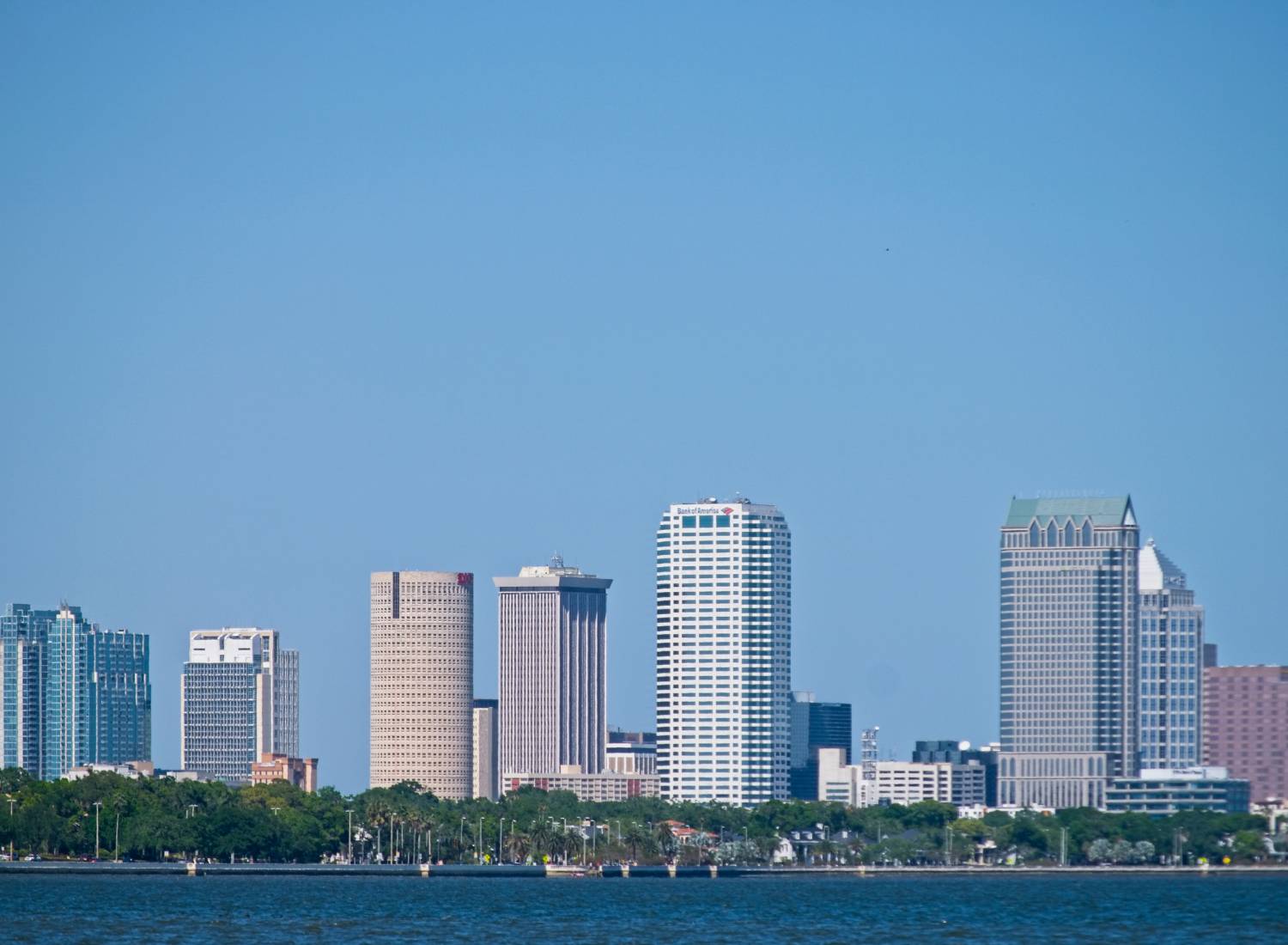
Tampa BayMarch 2026 — Tampa Bay has outgrown its own roads, and the race to catch up is now one of the most consequential economic stories in the Southeast.


Join us at caa’s upcoming leadership summits! These premier events bring together hundreds of public and private sector leaders to discuss the challenges and opportunities for businesses and investors. Find the next summit in a city near you!


Justin Hall, district secretary for the Florida Department of Transportation’s District 7, which covers the Tampa Bay area, is at the center of that effort. His agency currently oversees approximately $12 billion in active construction, reflecting both the scale of the region’s ambitions and the urgency behind them. 

“Revenues have plateaued somewhat, so we have to be smarter about how we maximize the resources we have,” Hall said, in an interview with Invest: Tampa Bay. That has meant rethinking what gets built and how, adopting a procurement model called Modified Phase Design-Build that compresses timelines and cuts costs without sacrificing scope.

Megaprojects reshaping regional connectivity

The projects underway across Tampa Bay are structural investments in the region’s long-term competitiveness. The Howard Frankland Bridge expansion, a nearly $1 billion project, will add express lanes serving those 200,000 daily commuters linking Hillsborough and Pinellas counties. The Tampa Westshore Interchange — exceeding $1 billion in investment — strengthens the connection between Tampa International Airport and both counties, a critical node for the region’s logistics network and corporate travel ecosystem.

Meanwhile, the Downtown Tampa Interchange project is being built above an active interstate, requiring deep coordination with the City of Tampa and Hillsborough County. It is among the most technically complex projects in the region’s history, and its completion will directly improve mobility in one of Tampa Bay’s highest-traffic corridors.

These projects are being fast-tracked through Florida’s Moving Florida Forward initiative, which is accelerating major congestion relief work decades ahead of the original schedule. The I-275 expansion in Pinellas County alone is expected to reduce travel delays by up to 85% and generate more than $1.4 billion in regional economic value. 

Statewide, Florida has committed more than $68 billion to transportation improvements over the next five years. For businesses evaluating Tampa Bay, these investments translate directly into reduced friction from shorter commutes for employees and faster freight movement to improved access to the region’s major employment and logistics centers.

A workforce pipeline built for scale

Transportation investment at this magnitude requires human capital to match. “With billions of dollars in construction underway, we need a strong pipeline of skilled workers to support those projects,” Hall said.

FDOT is addressing this through a layered workforce strategy. A mobile classroom program brings commercial driver’s license training directly into communities, removing barriers to entry for careers in transportation construction. The Onboard Tampa Bay initiative connects job seekers with construction employers through targeted outreach and job fairs, while partnerships with the Department of Corrections create reentry pathways into the trades.

The capstone is the Florida Transportation Academy, a state-funded institution that delivers comprehensive training, education, and licensing. Hall called it “a transformational step in building the next generation of transportation professionals.”

Positioning Tampa Bay for the next era of mobility

Beyond roads and bridges, FDOT is making a longer-term bet on Tampa Bay’s relevance in emerging transportation sectors. The agency is developing SunTrax Air, a first-of-its-kind research and testing facility for electric vertical takeoff and landing (eVTOL) aircraft — the foundation of the commercial air taxi market. With one vertiport already constructed and another nearing completion, the facility will allow manufacturers and technology companies to test new systems in a controlled environment, generating research activity and attracting investment from an entirely new industry vertical.

The initiative also creates spillover opportunities. Low-altitude aviation meteorology, for example, is an emerging field with no existing data infrastructure, the kind of greenfield research opportunity that draws university partnerships and federal funding alike.

Infrastructure as a competitive signal

Large-scale public infrastructure investment serves as a forward-looking signal about a region’s trajectory. Tampa Bay’s growth is the outcome of long-horizon investment and aligned economic fundamentals. 

FDOT’s community engagement model reinforces that picture. Through its Transportation Talks initiative, the agency works with residents before projects are finalized, gathering input that improves planning outcomes and reduces costly revisions. In one instance in East Tampa, a resident raised concerns about damaged sidewalks near a school, and FDOT repaired them within a week. It is a small example of a broader governing philosophy that prioritizes responsiveness.

“By expanding capacity, improving connectivity, and engaging communities throughout the process, we can ensure that the transportation system supports both economic growth and quality of life for residents across the region,” said Hall.

Want more? Read the Invest: Tampa Bay report.

Spotlight On: Ashley Loute, Executive Director, Lake Nona Chamber of Commerce

Key points:

  • • Lake Nona’s growth is driven by a dense ecosystem of health, tech, and innovation anchors.
  • • Workforce development focuses on early pipelines, internships, and stronger education partnerships.
  • • The chamber’s role centers on connecting businesses, talent, and institutions to sustain growth.

Ashley Loute Spotlight on mainApril 2026 — Invest: spoke with Ashley Loute, executive director of the Lake Nona chamber of commerce, about the community’s expanding innovation ecosystem and its long-term workforce strategy. “Our role is to be the connector,” Loute said.

Join us at caa’s upcoming leadership summits! These premier events bring together hundreds of public and private sector leaders to discuss the challenges and opportunities for businesses and investors. Find the next summit in a city near you!


How would you describe the economic momentum within the Lake Nona community?

Lake Nona is experiencing sustained and intentional growth. We have built a concentrated hub of leaders across health care, sports performance, technology and innovation, and that ecosystem continues to expand.

Significant commercial development is underway, including new retail and mixed-use projects led by Tavistock. As residential density increases, so does economic opportunity. More residents and visitors create stronger demand for small and mid-sized businesses, fueling a healthy cycle of growth.

What makes this momentum unique is that corporate expansion, entrepreneurial activity and community development are happening simultaneously and reinforcing one another.

What makes Lake Nona’s business ecosystem distinct from the wider Greater Orlando region?

Lake Nona has an unusually concentrated mix of global anchors and emerging innovators within a compact footprint. Siemens is establishing operations here. AdventHealth is expanding with a new emergency department. Nemours Children’s Hospital anchors pediatric care. KPMG’s Lakehouse, the GuideWell Innovation Center and the USTA National Campus are all located within minutes of each other.

That proximity matters. Education, health care, entrepreneurship and technology intersect daily rather than operating in silos. Companies view Lake Nona as a strategic location where collaboration happens naturally.

Quality of life is also a differentiator. Lake Nona blends business and lifestyle in a walkable, master-planned environment with trails, green space and integrated amenities. When professionals can live, work and engage within the same community, it strengthens both talent attraction and retention.

With Lake Nona’s reputation as a hub for innovation and healthtech, what trends are shaping the future of this mixed-use, innovation-driven community?

One major trend is demographic growth among young families and early-career professionals. College students and emerging talent are choosing Lake Nona intentionally, which influences demand for housing, services and community programming.We are also seeing stronger identity formation across specific business communities, including veterans, minority-owned businesses and emerging entrepreneurs. Our first Veterans Business Networking event sold out, demonstrating how much momentum exists when we create intentional spaces for connection.

The opportunity now is being intentional about convening. If we create more points of connection, businesses and community leaders can collaborate more easily and build prosperity together.

What recent developments have had significant influence on the region’s economic landscape for new businesses, especially startups and entrepreneurs?

Lake Nona has several innovation hubs that help companies test, build, and scale. One example is the MS2 Accelerator lab, which functions like a curated co-working environment for companies aligned with Lake Nona’s growth priorities. It attracts entrepreneurs focused on niche and applied technologies.

We also have the GuideWell Innovation Center, which houses Plug and Play Health. That model is solutions-based: large organizations bring challenges, and startups develop and pitch solutions through an incubator pathway. That structure helps strengthen the entrepreneurial pipeline and keeps innovation close to major health institutions.

From the chamber’s perspective, the goal is to connect those assets into a pipeline that starts earlier than college. If students begin building skills in high school, they are better positioned to launch startups, connect to incubators, and partner with major employers as they move through UCF or Valencia.

What industry sectors are driving the most activity and opportunity right now?

Technology, especially AI, and the medical space are driving a lot of activity. At the same time, we are seeing pressure on the workforce pipeline.

Across the region, leaders consistently raise shortages in health care roles, including nursing, and in professional services, including accounting. In tech, the challenge is helping students start early enough so they can advance quickly once they reach college or the workforce.

Access is a major factor. There are programs and career pathways available, but many students, especially those without exposure, do not know what options exist. When young people can see careers firsthand, whether in medicine, coding, or skilled trades, they can make more informed decisions and prepare earlier.

As workforce development remains a regional priority, how are you working with educational partners or employers to keep talent in the region?

We are building a clear approach around three priorities: visibility, internships, and advocacy.

First, we are focused on access and visibility. We are inviting local high schools to participate in Nona Fest as a showcase. The idea is to put programs like culinary, robotics, medical tracks, and Innovation High in front of employers, so business leaders can see what is being built locally and where talent is emerging.

Second, we are working to expand internship pathways with UCF, Valencia, and Crummer. When students can access meaningful experience close to home, it creates early buy-in and makes it more likely they will stay in the region after graduation.

Third, we are emphasizing advocacy. We launched a legislative series to focus on issues that matter most to Lake Nona, including education and transportation. We are neutral and do not lobby, but we do inform our members and create platforms where education partners and employers can share what they need and align around solutions.

How are you positioning the chamber to support both established employers and small businesses as the community grows?

Our role is to be the connector. Lake Nona has large anchors, but growth has to translate into opportunity for local entrepreneurs and service providers, too. We focus on convening decision-makers, sharing information, and creating programming where relationships can turn into contracts, mentorships, and collaboration.

That includes bringing people together around specific themes, like health innovation, veteran entrepreneurship, or emerging professional networks, and making sure small and mid-sized businesses have access to the same rooms and conversations as larger employers and institutions.

You have been in this role for a short time. What leadership priorities are you bringing to the chamber right now?

I stepped into this role with ambitious goals and a strong focus on generational leadership.

Executive transitions are accelerating across industries. When succession happens without intentional overlap, organizations can experience culture shock. There is an opportunity to improve that process.

As a Gen Z executive director, I am focused on bridging generational leadership styles. My priority is creating environments where Gen X through Gen Alpha can collaborate effectively, and where emerging leaders can build executive presence while maintaining authenticity.

Strong succession planning and cross-generational alignment will be essential as Lake Nona continues to grow.

Looking ahead, what are the biggest opportunities and challenges you see for Lake Nona’s next phase of growth?

The opportunity is continuing to deepen what already makes Lake Nona distinct: the concentration of health, education, innovation, and quality of life in one connected community. When those pieces stay aligned, Lake Nona can keep attracting investment and talent.

The challenge is managing growth responsibly, especially around transportation and infrastructure, and ensuring access to opportunity keeps pace. If we can keep building strong talent pipelines, connect generations of leaders, and keep the community engaged, then growth can be both sustainable and inclusive.

Want more? Read the Invest: Greater Orlando report.

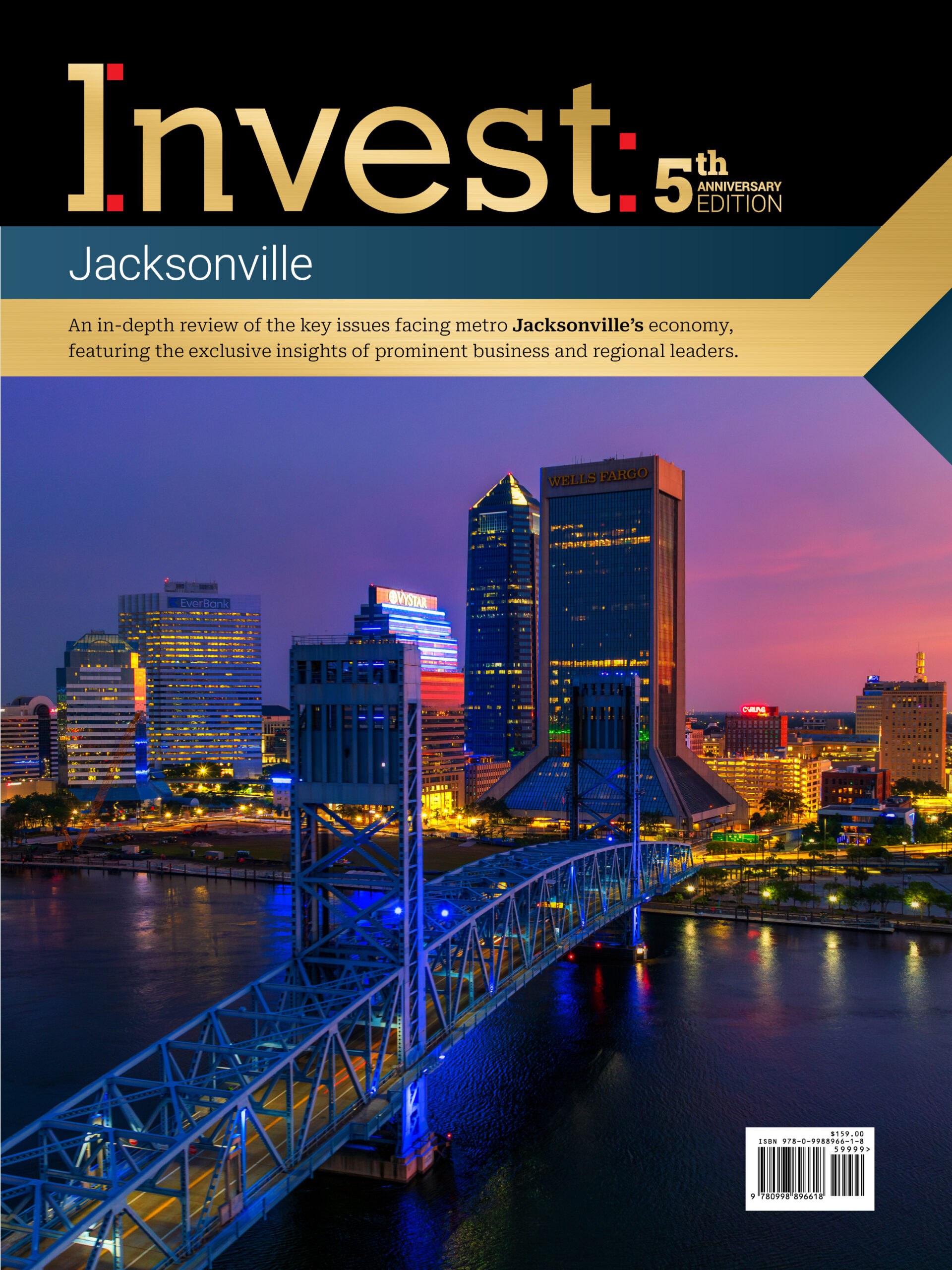
Five years in: Research for Invest: Jacksonville’s anniversary edition is underway

Key points:

  • • Jacksonville’s growth is driven by a diversified economy, strong infrastructure, and sustained population inflows.
  • • Key sectors such as logistics, finance, healthcare, and emerging tech continue to attract investment and talent.
  • • Invest: Jacksonville 5th Edition will provide a comprehensive outlook on the region’s opportunities, challenges, and long-term trajectory.

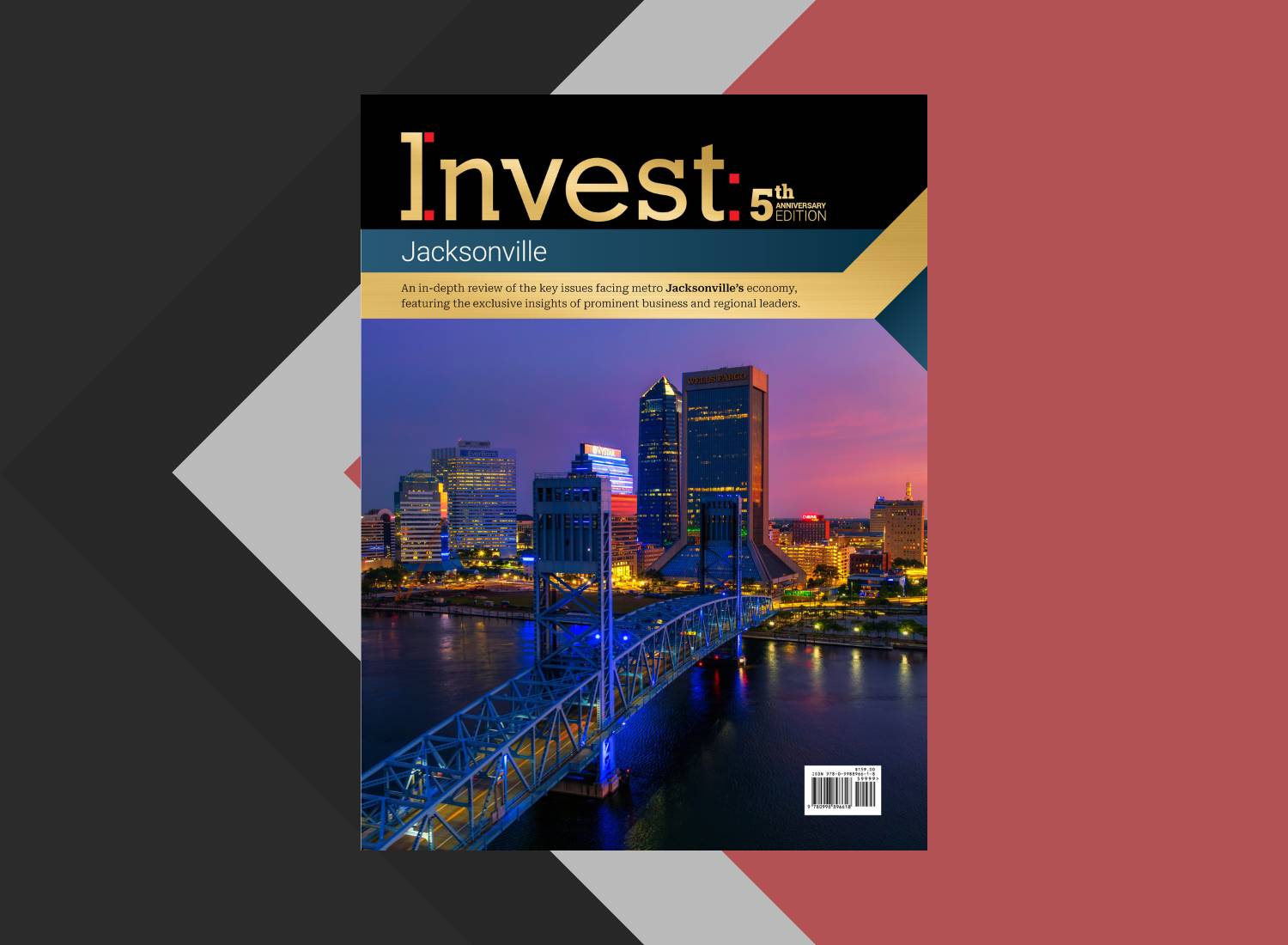
Invest: Jacksonville mainMarch 2026 — As one of the fastest-growing metropolitan areas in the United States, Jacksonville is experiencing economic expansion through diversification and infrastructure investment.
Ranked No. 3 among the top-performing large cities for economic growth, the region continues to attract businesses, talent, and capital across industries, from logistics and financial services to healthcare and emerging technology.

Now in development, the fifth edition of Invest: Jacksonville will provide a comprehensive analysis of the region’s evolving economic landscape, featuring exclusive insights from more than 200 leaders across business, government, and education, alongside caa’s sector-by-sector breakdown of the market.

“Jacksonville continues to stand out as one of the most dynamic and business-friendly markets in the Southeast,” said Abby Lindenberg, founder and CEO of caa. “This next edition will explore how the region is leveraging its strategic advantages to position itself for long-term success.”

Diversified base

Jacksonville’s economic strength is rooted in its diversified industry base, with logistics, finance, healthcare, and manufacturing driving sustained growth in recent years. The city’s strategic location and infrastructure, including JAXPORT and extensive rail and highway connectivity, continue to position it as a critical logistics and distribution hub for both national and international trade.

Northeast Florida’s financial services sector remains one of the largest in the region, with more than 13% of all employees working in this sector, supporting a strong employment base and attracting continued investment. Healthcare systems and related services are also expanding, responding to both population growth and increasing regional demand.

Growth opportunities

Jacksonville’s continued population growth is playing a central role in shaping its economic trajectory. The region has seen steady inbound migration, with more than 100 new residents moving to Northeast Florida every day, contributing to a growing labor force and increased demand for housing, services, and infrastructure.

With a competitive cost of living and business-friendly environment, Jacksonville is an attractive destination for both companies and professionals seeking alternatives to higher-cost markets.

Beyond its established industries, Jacksonville is gaining recognition as an emerging technology hub, supported by an influx of remote workers, startup activity, and workforce development initiatives. The city’s affordability and quality of life continue to attract tech talent relocating from more saturated markets, contributing to the expansion of fintech, digital services, and innovation-driven companies.

Steady expansion

As companies expand and new sectors gain traction, the region is expected to strengthen its role as a key economic engine within Florida and the broader Southeast.

The Invest: Jacksonville 5th Edition will explore these trends in depth, highlighting the leaders, projects, and strategies shaping the region and providing a platform for stakeholders to share their vision with a national and global audience.

About caa & Invest: Jacksonville

caa is an integrated media platform that produces in-depth business intelligence through its annual print and digital economic reviews, high-impact conferences and events, and top-level interviews via its video platform, Invest:Insights.

Invest: Jacksonville 5th Edition is an in-depth economic review of the key issues facing the greater region, featuring exclusive insights from more than 200 economic leaders, sector insiders, elected officials, and institutional heads. The publication aims to 1) equip local, national, and international investors with comprehensive insights on the region and 2) promote Jacksonville as a competitive, innovative, and collaborative place to do business.

The report conducts a deep dive into the top economic sectors in the region, including real estate, construction, infrastructure, banking and finance, legal, healthcare, education, and tourism. The publication analyzes the leading challenges facing the market and uncovers emerging opportunities for investors, entrepreneurs, and innovators.

The caa team is currently connecting with stakeholders across the region to gather perspectives and analysis that will define this year’s edition. Invest: Jacksonville is a unique opportunity for the business community to share its story with a national and global audience.

For more information, contact:

Ana Karen Gonzalez

Executive Director

[email protected]

Mariana Hernandez

Content Manager
[email protected]

Want more? Read the Invest: Jacksonville report.

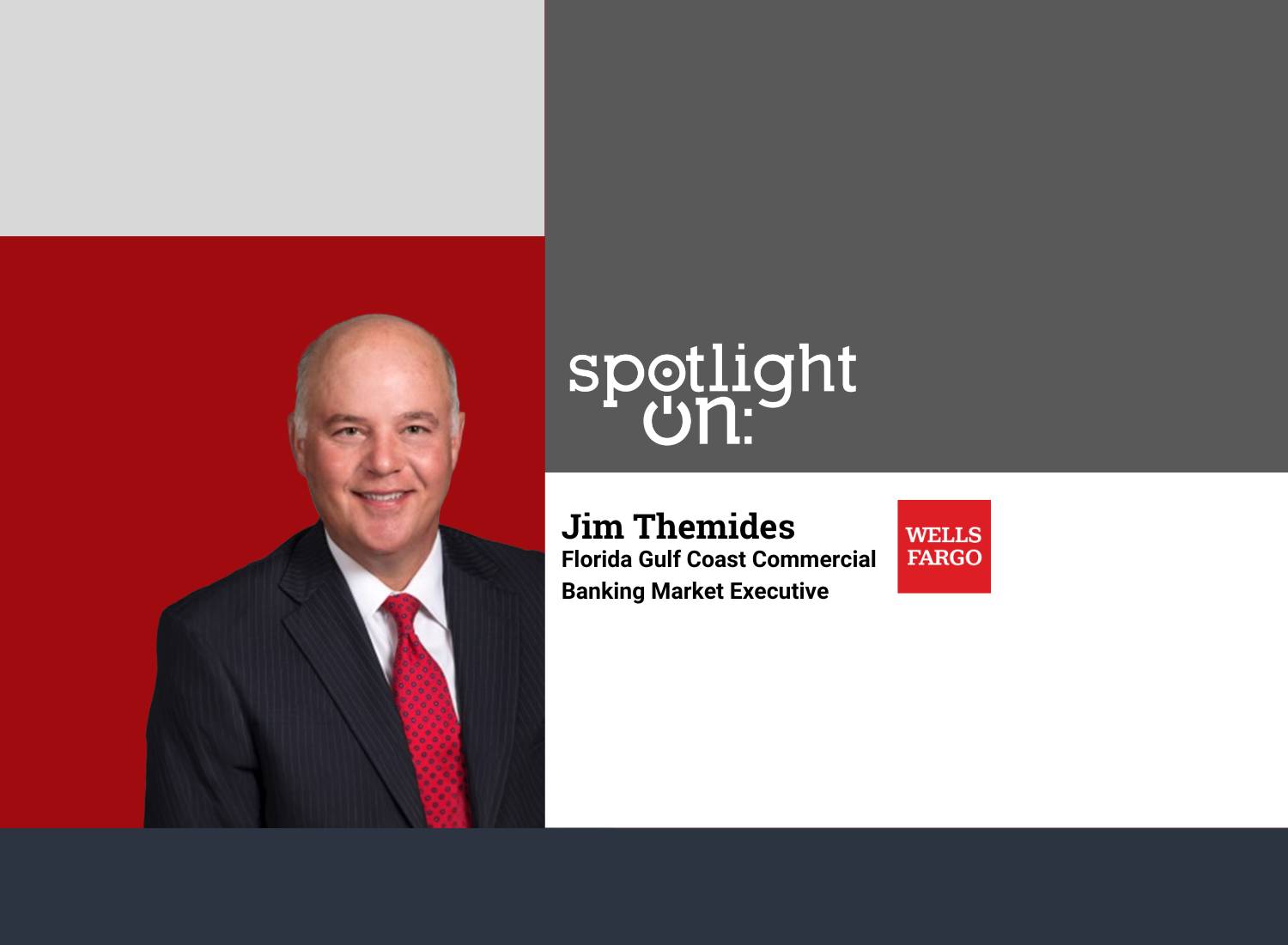
Spotlight On: Jim Themides, Florida Gulf Coast Commercial Banking Market Executive, Wells Fargo

Key points:

  • • Wells Fargo’s growth in West Florida is driven by talent expansion and the lifting of its asset cap.
  • • Lower interest rates and increased focus on AI are shaping commercial banking decisions.
  • • Long-term strategy centers on relationship banking, community investment, and supporting clients through all growth stages.

Jim Themides Spotlight onMarch 2026 — Invest: spoke with Jim Themides, Florida Gulf Coast commercial banking market executive of Wells Fargo, about the bank’s renewed growth trajectory, talent strategy, and the commercial banking landscape in West Florida. “The one thing that I always tell them is that they can’t outgrow us,” Themides said.

What changes over the past year impacted Wells Fargo in Tampa Bay, and in what ways?

I’ll start with a little context. I’ve been with Wells Fargo, and predecessor bank Wachovia, for almost 40 years, so I’ve lived through several economic cycles. I lead commercial banking in West Florida, covering the Tampa Bay market through Sarasota and Naples, and also including Lakeland. We work with privately held and publicly traded companies with annual revenues generally ranging from $25 million to $2 billion, across a wide range of industries.

At the company level, the biggest change over the past year was the lift of the asset cap. To me, that reflects the hard work that thousands of employees have done over many years to strengthen the company and improve outcomes for our stakeholders. Just as importantly, it means we can grow again after nearly a decade of limits on growth.

Locally, we’re expanding our commercial banking team in West Florida. We’re adding bankers to meet the needs of companies that are growing here and relocating here. We’re also adding specialized bankers in industries that require deeper subject matter expertise. Healthcare is one example. In 2025, we made the decision to have a dedicated healthcare banker covering healthcare companies throughout Florida, and that person happens to sit in our Tampa office. Those moves are directly tied to what our clients are asking for and how the region is evolving.

How is Wells Fargo attracting, developing, and retaining top banking and financial services talent in a competitive market like Tampa Bay?

Technology has evolved tremendously, but the importance of high-quality people has never wavered. If anything, it’s even more important today, because relationships still matter, and clients want bankers who understand their business and can help them navigate through change.A big part of our talent strategy is what we call the Early Talent Program. It starts with college students through internships with our commercial banking teams across the country. They spend time learning what the work looks like, how teams operate, and how we serve clients. After graduation, many join our Early Talent Program, beginning with two years as commercial banking analysts. That phase builds a strong foundation in credit knowledge and the disciplines that support client relationships.

After that, they move into an associate program in local markets, where they continue developing on the credit side while also spending time with senior bankers, meeting clients, and learning what strong engagement looks like. It’s designed as a four-year investment before someone is placed on the front line as a relationship manager.
After that pathway, people can move into relationship management, portfolio management, or product specialties such as treasury services, depending on their strengths and interests.

The benefits of the city of Tampa also helps us recruit. There are only a handful of cities that are especially attractive for young, college-educated professionals to launch their careers, and Tampa is one of them. The quality of life and the market’s momentum make it a compelling place for talent, which strengthens our ability to recruit and retain.

What trends in commercial banking are most shaping the financial services landscape in Tampa Bay right now?

One major trend over roughly the last 18 months is that short-term interest rates have come down meaningfully. That affects how middle-market CEOs and CFOs evaluate the cost of debt capital. With borrowing costs lower than they were, companies are more willing to use debt to support growth. It’s simply easier to make expansion decisions when the cost of capital is more attractive than it was 18 months ago.

Most economists have also suggested that in 2026 there will be one to two more rate reductions, and whether that prediction lands exactly or not, the overall sentiment is that financing conditions are less restrictive than they were.

The other trend that has accelerated, especially since the COVID years, is investment into technology and AI. In meetings with owners and CFOs, those topics come up frequently. Companies are looking for ways to improve efficiency, mitigate risk within their company, and create new paths to growth by using technology and AI more intentionally. From what I see, many organizations are still in the learning stages with AI, and we’re in the early innings of understanding what it can do at scale.

How is Wells Fargo engaging with Tampa Bay’s business community, nonprofits, and economic development organizations to support inclusive growth?

Community engagement is a core part of how I think about leadership. I’ve always felt that we serve four constituents, and none is more important than the others: our customers, our employees, our shareholders, and the community.

There are two primary ways we give back. One is with our money, and the second is with our time. Through the Wells Fargo Foundation, we’re a significant investor in nonprofits throughout Tampa Bay, contributing upwards of a million dollars a year to organizations that help make the community stronger. One example is the $1 million Wells Fargo gave to Volunteer Florida to help people after the hurricanes of late 2024, particularly with housing-related needs. We also provided $315,000 to St. Petersburg College to support personal finance literacy.

The second part is volunteerism. Across our lines of business, our employees contribute thousands of volunteer hours each year, ranging from hands-on work like Habitat for Humanity builds to serving on board positions with important local organizations. Our people understand that giving back is part of our DNA, and I believe giving time can be as important as giving money because it builds long-term capacity and trust.

How would you assess the overall health of Tampa Bay’s banking and finance sector right now?

Very healthy. Florida has been one of the faster-growing states in the country for several years. Growth may be slowing, but companies and people are still relocating here, and that immigration supports economic momentum.
The banking industry follows business activity, so as companies move in and expand, more banks come here. I view that as positive. Competition makes institutions better, and it’s good for clients. Tampa Bay has a healthy, robust economy, and I believe there’s room for strong banks to be successful as long as they execute well and stay focused on serving clients.

Looking ahead, what are your key goals and priorities over the next two to three years?

We are very bullish on Florida and Tampa Bay. The state has a strong business climate, an overall business-friendly atmosphere, and a quality of life that continues to attract people and employers. Those fundamentals support continued growth.

Our priorities are to keep adding bankers as needed, continue building specialized expertise where client demand requires it, and keep serving our clients as they expand. We want clients to feel confident that Wells Fargo can support them through every stage of their life cycle. The one thing that I always tell them is that they can’t outgrow us. We bank very small companies that one day become very large companies, and we can be there for them throughout that life cycle.

Want more? Read the Invest: Tampa Bay report.

She Was Always in the Arena

Key points:

  • • Roosevelt’s “Man in the Arena” reflects the reality of leadership, one that women have long embodied without recognition.
  • • Data shows women remain underrepresented in leadership despite active contributions across industries.
  • • Organizations are challenged to better recognize and elevate women already driving impact within their teams.

In the arenaMarch 2026 — I have a confession: Teddy Roosevelt is my favorite president. I love his brashness, his relentless curiosity, his obsession with the natural world, and his absolute refusal to be anything other than himself. He was a sickly child who became a cowboy, a war hero, a conservationist, and a president — all because he decided, early on, that the only place worth being was in the fight. Historians have even called him the great male feminist of his era. As a Harvard senior, he wrote his thesis advocating for marriage equality and urged women not to change their names upon marriage. As a New York assemblyman, he introduced legislation to punish men who abused their wives. And in 1912, he became the first presidential candidate in American history to formally endorse women’s suffrage. So when I tell you one of his quotes has been living rent-free in my head this month, it should surprise no one.

In 1910, Roosevelt stood before a crowd in Paris and delivered what would become one of the most quoted speeches in history, “Citizenship in a Republic.” You’ve likely heard the centerpiece, often cited as the “The Man in the Arena” passage: 

“It is not the critic who counts; not the man who points out how the strong man stumbles … The credit belongs to the man who is actually in the arena, whose face is marred by dust and sweat and blood; who strives valiantly; who errs, who comes short again and again … but who does actually strive to do the deeds.”

He wrote “The Man in the Arena” a full decade before American women could even vote. But here’s the irony: the man who wrote those words was actively working to change the world that made them true. In 2026, every single word of this quote describes something women have been doing throughout all of history, while rarely being handed the credit for it.

Women were always in the arena. They just weren’t “supposed” to be.

The numbers don’t lie

At caa, we’ve spent 10 years conducting business reviews across 18 U.S. markets. We interview hundreds of CEOs annually — not just Fortune 500 leaders, but the full spectrum of American business: small companies, midmarket firms, family businesses, startups. The leaders who are actually running the economy.

Only 18.43% of our interviewees are women. And it’s not just our data that show this disparity. A Grant Thornton report illustrates a recent trend: the number of women in senior leadership roles is, in fact, declining. In 2026, only 31% senior leadership roles are held by women, down from 34% in 2025, and 35% in 2024.

Those numbers bother me deeply. Not because the women aren’t there — they are. They’re leading, building, striving, failing, and showing back up every single day. They are absolutely in the arena. But something continues to keep them from the seat at the table where they’d be seen, heard, and counted.

What Roosevelt was really describing

What made that 1910 speech so enduring wasn’t its bravado. It was its honesty about what leadership actually looks like. Not the clean version. Not the highlight reel. The unglamorous grind of someone who commits so fully to a worthy cause that they’re willing to be wrong, fall short, and be visibly marked by the effort.

Face marred by dust and sweat and blood” is not a description of men. It is a description of every leader who has ever truly led.

I see it constantly in my own organization — in the women on my team who push through challenges that would make many fold, who mentor and hold people accountable without drama, who get out of their comfort zones again and again and never once ask for a standing ovation. They are in the arena. They have always been in the arena.

What this means for you

As CEOs, Women’s History Month can feel like a moment for reflection that doesn’t quite connect to the Monday morning decisions on your desk. I want to change that.

This is not about a diversity checkbox. It’s about something far more practical: Are you actually seeing the people in your organization who are doing the hardest work? Because if the data is any guide, a meaningful number of them are women, and they are performing without the title, the compensation, or the visibility that their output has earned.

Roosevelt’s “Man in the Arena” passage  ends with the idea that the person in the arena, even if they fail, “at least fails while daring greatly,” and that their place will “never be with those cold and timid souls who neither know victory nor defeat.” That’s the standard real leaders hold themselves to. And it’s the standard we owe to the people on our teams who are already living it.

This Women’s History Month, I don’t want to just celebrate the names in the history books. I want to honor the women who are in the arena right now — in your company, on your team, perhaps sitting two desks away — daring greatly, every single day.

The question is whether you’re paying attention.

Ask yourself this: Who on your team is quietly in the arena — striving, falling short, coming back, doing the work — and what would change in your organization if you truly saw them, elevated them, and gave them the platform their effort has already earned?

Have something to say? You can become a contributor by reaching out to caa today!

Nashville’s real developers? Healthcare and higher ed

Key points:

  • • Universities and healthcare systems are anchoring long-term development and shaping regional growth patterns.
  • • Higher borrowing costs and tighter lending standards are driving more selective, fundamentals-based project evaluation.
  • • Workforce alignment and institutional collaboration are becoming critical to sustaining Middle Tennessee’s expansion.

NashvilleMarch 2026 — Healthcare systems, universities, and financial institutions are playing an increasingly central role in shaping how and where development takes place across Nashville. As population growth continues and capital markets tighten, institutional investment and financial discipline are emerging as key forces behind the region’s real estate activity.

“When universities and healthcare systems invest in land and facilities, they are making a long-term commitment to that community,” said Harry Allen, executive vice president of financial excellence and chief financial officer at Belmont University, during the Invest: Nashville 4th Leadership Summit. “These are not short-term investments. They are meant to shape the community for decades.”

Anchor developments

Education and healthcare campuses often anchor surrounding development, influencing nearby business activity, workforce formation and long-term land use patterns. From a research perspective, they play a critical role in sustaining economic momentum. 

“These institutions bring stable employment and long-term activity to the region,” said Murat Arik, director of the Business and Economic Research Center at Middle Tennessee State University. “They are not going anywhere, and that stability creates a foundation for growth around them.” 

Healthcare development, in particular, is driving both economic and physical expansion across Middle Tennessee. Ascension Saint Thomas, one of the largest health systems in the region, announced more than $537 million in capital investments to expand facilities, modernize hospitals and increase capacity across multiple counties. Smaller-scale projects are also contributing to that growth, including a $25 million expansion at TriStar Centennial Medical Center in Nashville, following multiple projects by HCA Healthcare. 

“We are seeing a shift toward care being delivered closer to where people live,” said Blake Bratcher, partner and executive vice president at Flagship Healthcare Properties. “That is changing how and where healthcare real estate is developed.”

This trend is influencing site selection and development patterns, as providers prioritize accessibility and proximity to growing population centers. Across the United States, more procedures are moving into outpatient settings, as a result, ambulatory surgery center volumes are expected to grow by about 9% between 2023 and 2028, outpacing hospital outpatient departments. It is also expanding the scale of the sector, with procedure volumes projected to increase by more than 20% over the next decade. 

As these systems expand, their impact extends beyond real estate into workforce development. Colleges, universities, and healthcare providers are increasingly working to align training programs with labor market needs, helping address workforce gaps while supporting regional growth. 

“Workforce development does not happen in silos,” said John Cunningham, director of healthcare partnership solutions at Nashville State Community College. “It requires coordination between education providers, employers and institutions to make sure training aligns with real opportunities.”

Development in a more selective market

Panelists noted that financial conditions are reshaping how projects are evaluated and financed. Borrowing costs remained elevated compared with prior years, with new commercial real estate loans in 2025 averaging around 6.2%, up from roughly 4.7% on loans originated earlier in the decade, according to S&P Global Market Intelligence. Rates vary widely depending on the asset and structure, with many deals pricing between 5% and 8.75% in early 2026. 

“It is a different calculation to get deals to pencil today. Costs are higher, rates are higher, and sponsors are having to bring more equity and stronger fundamentals to each project,” said Bradford Vieira, regional president & CEO at ServisFirst Bank. 

This discipline is also visible in lending conditions, with banks maintaining tighter standards compared with historical norms and requiring stronger fundamentals across projects.
“Deals are getting done, but they are getting done with a lot more scrutiny. Everyone is paying closer attention to fundamentals, whether that is location, demand or long-term viability,” said Alex Sanders, president and CEO of Pinnacle Construction Partners.

Banks have kept commercial real estate lending standards tight compared with historical norms, according to Federal Reserve data, while lower loan-to-value ratios and higher return thresholds are requiring developers to bring stronger fundamentals and more equity into each project.
“There is still capital in the market, but it is being deployed more selectively,” said Kelley Kee, Tennessee state president at United Community Bank. “Lenders are looking closely at fundamentals and making sure projects are positioned for long-term success.”

Even as financing conditions change, population gains, job creation and business expansion continue to support investment across Middle Tennessee. As projects become larger and more capital-intensive, development is increasingly defined by how well institutions, investors, and operators align early in the process, particularly in a market where long-term demand remains strong but financing has become more selective.

“Success really depends on having the right team together from the start,” said Sanders.

Interested in reading the Invest: Nashville report? Sign up today!

For complete conference panel discussions, tune in to our YouTube Channel.

Six cities, 10 lessons: What business leaders are seeing

Key points:

  • • caa’s leadership summits focus on candid, cross-sector dialogue about regional challenges and opportunities.
  • • Events emphasize the human element behind economic growth, bringing leaders together for real-time insight sharing.
  • • Findings from Q1 2026 highlight key priorities shaping business communities across multiple U.S. markets.

LeadersMarch 2026 — Abby Lindenberg has a habit that tends to unsettle people. Before every leadership summit, before every panel, before the coffee goes cold and the networking turns to attentive listening, she asks a room full of 250-plus industry leaders a question most conference organizers shy away from: What are the hills still left to climb?

Lindenberg, the founder and CEO of B2B multimedia outlet caa, has built a decade-long business on the conviction that the most valuable thing you can do for a business community is tell the truth, about where it’s thriving, where it’s stalling, and what it’s going to take to close the gap.

In the first quarter of 2026, Lindenberg tested that conviction across metros from sunshine-soaked Palm Beach County to the northern reaches of New Jersey. Back-to-back summits, each one drawing hundreds of executives, civic leaders, developers, healthcare executives, and educators into the same room to do the thing Lindenberg believes the business world has quietly stopped doing enough of: talk to each other, face to face, about what’s actually happening. In effect, bringing the human element back to decision-making.

“At caa, we don’t just report on the economics of a region,” Lindenberg said. “We report on the humans behind it. Because we know those two things are inseparable.”

In 2025 alone, CAA hosted hundreds of speakers across more than 50 panels and welcomed over 3,000 attendees across 18 markets. The organization’s research consistently shows that executives who attend its events are more engaged in their local communities, make more economic impact, and carry what Lindenberg calls a growth mindset — “not only for themselves but for their companies and their communities.”

When it comes to the “hills left to climb,” these events yielded numerous takeaways. Download your free Q1 2026 Leadership Summit brief to read the 10 key things these communities said this past quarter, as voiced by the leadership panel members across numerous cities, as well as the data explaining why they matter.

Want more? Read the Invest: reports.