




Key points:
- • Rock Hill is shifting to a proactive growth strategy, targeting industries like life sciences to build a more resilient economy.
- • A diverse pipeline of projects across headquarters, manufacturing, and logistics supports balanced economic development.
- • Strong planning, infrastructure investment, and workforce partnerships are central to sustaining long-term growth.
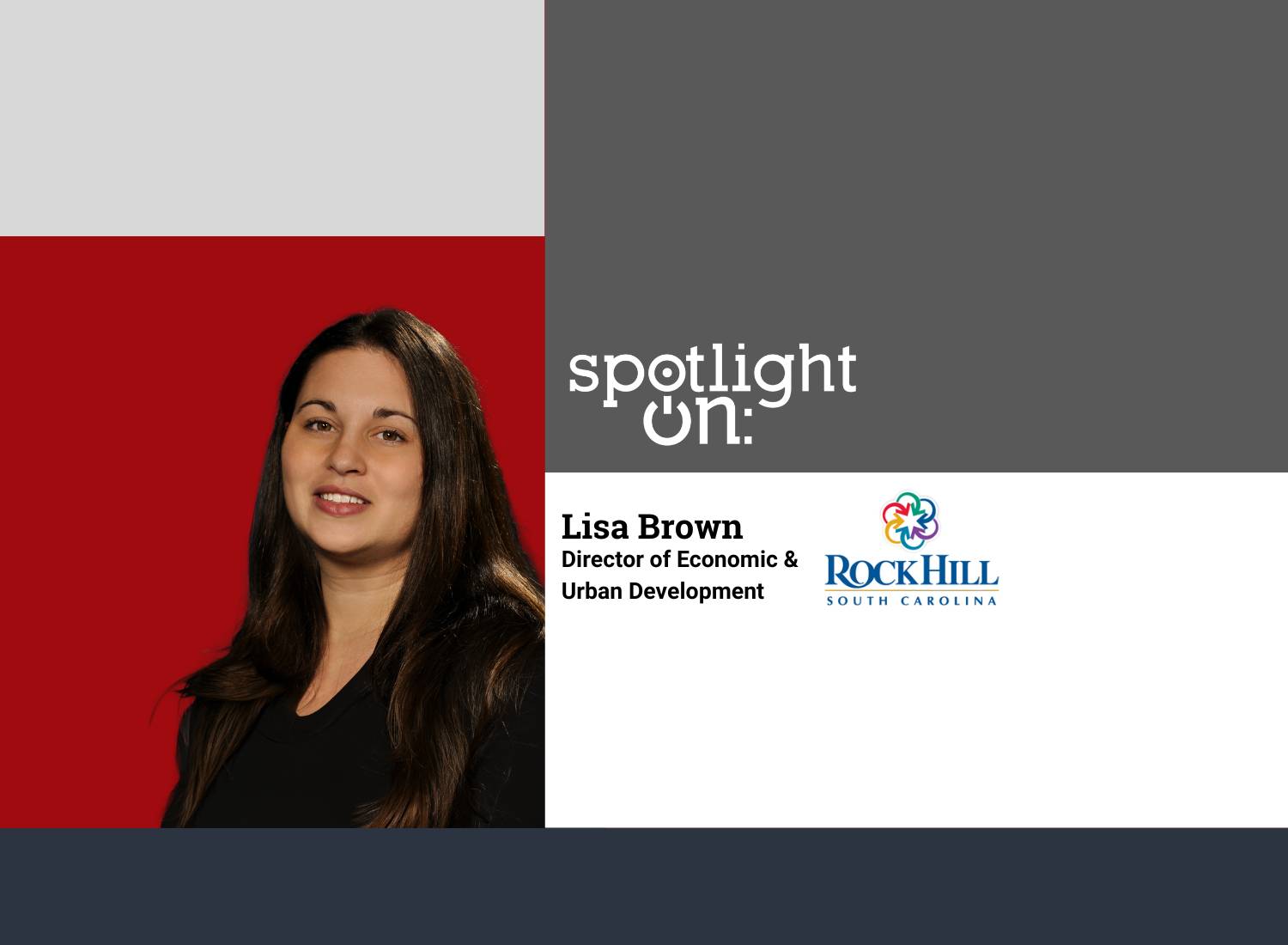 March 2026 — Invest: spoke with Lisa Brown, director of economic and urban development for the city of Rock Hill, about how a former mill town is shaping its next chapter through intentional growth and long-term planning. “Rock Hill is willing to reinvent itself time and time again, and to take calculated risks to create the kind of economic development we want to see,” Brown said.
Over the past year, what have been some significant changes in Rock Hill’s economic development, and how are they shaping your approach?
Over the last year, the biggest shift has been our mindset. Instead of waiting for the phone to ring, we’re proactively going after the kinds of jobs and investments we want. Rock Hill is a former mill town, and I think we’ve always had a bit of a chip on our shoulder and something to prove. I love the word “grit” because it captures who we are.
Rock Hill is willing to reinvent itself time and time again, and to take calculated risks to create the kind of economic development we want to see. That has translated into a real bootstrap mentality — getting out to conferences, telling our story, and making sure prospects understand that when they choose Rock Hill, they’re getting a community that will work hard and fight for them.
Which key sectors are you targeting for future growth, and why do they make sense for Rock Hill?
Right now, we’re very focused on life sciences, including biopharmaceutical manufacturing and medical devices. I know that’s a sector a lot of communities are targeting, but for us it’s about identifying industries with a long-term future that are vital to people’s lives. As people live longer and rely more on medicines and treatments, these companies become an essential part of the economy, and if we can leverage reshoring trends to bring those operations here, we can build a more sustainable base.
We also learned some hard lessons from the decline of textiles. At one point, Rock Hill had 13 mills; by the year I was born, there was only one left. When that industry went overseas, it essentially wiped out the local economy. That experience reinforces our focus on sectors that will continue to exist in some form, even as technologies and specific products change.
Rock Hill benefits from a strong education ecosystem. How is the city helping businesses access a skilled workforce through partnerships and initiatives?
We’re a city of about 75,000 people in a county that’s the second-largest in the Charlotte metro, so we have scale but still feel very connected. Our greatest strength is the network of partnerships we’ve built, especially around education and workforce. South Carolina’s technical college system is a huge asset, and we’ve seen a real shift toward dual-enrollment programs.
We recently hosted high school students who are dually enrolled through Rock Hill schools and either York Technical College or Winthrop University. Getting students plugged into those programs early is incredibly impactful for building the talent pipeline our employers need. Quality of life also plays a big role. As congestion increases on I-77, more people are looking for opportunities closer to where they live. Rock Hill offers that combination: a strong workforce, good schools, and a quality of life that keeps people here, which in turn helps us recruit and retain employers.
What do announcements like those from Riverstone Logistics, Pratt Industries, and the Costco distribution facility say about your overall strategy?
Those three projects really illustrate our strategy of building a well-rounded economy. Riverstone Logistics is a headquarters operation at the Thread in downtown Rock Hill. Those are high-wage, corporate jobs in a walkable, mixed-use environment — a great fit for our urban core. Pratt is an advanced manufacturer of corrugated packaging materials, representing a significant investment and a good number of jobs, many of which are accessible to people who don’t necessarily have a four-year degree.
The Costco project is a large-scale distribution facility with an investment that benefits not just Rock Hill but also the state and the Port of Charleston. Together, they form a spectrum of opportunity: headquarters-level jobs, advanced manufacturing roles, and distribution positions. It’s not all one sector or one type of job, and that diversity is exactly what we want to see.
How are you managing zoning and land use to balance growth across the residential, industrial, and mixed-use segments?
The city has a long history of strategic planning. Beyond the state-mandated comprehensive plan, we’ve created tools like redevelopment plans, tax increment financing districts, and small-area plans. Some go through full public processes and others are more internal, but all of them are about long-term sustainability. On the zoning side, we’ve raised our development standards. That can mean higher upfront costs, but it leads to higher-quality projects that hold their value over time.
The Thread in downtown is a major project. Phase 1 is largely office with ground-floor retail, including Sully’s Steamers, and we’re adding a coffee shop and incubator space for entrepreneurs called Work at Wheel. The Herald redevelopment — our former newspaper printing site — is moving toward construction with about 300 residential units and some commercial space tied to a shared parking deck and a pedestrian bridge.
We’re also building a Southside Regional Park, which will be the largest park we’ve ever developed at 132 acres and will include a strong sports tourism component with baseball and football facilities. The Bleachery Fieldhouse just opened and is adding indoor basketball, volleyball, and pickleball to support larger tournaments at our Sports and Event Center. Nearby, we’re introducing new for-sale, brownstone-style residential units, which help diversify our downtown housing stock beyond rental apartments.
As a full-service city and regional utility provider, what are some of your key strengths and challenges in supporting growth?
Being a full-service utility provider is one of our greatest strategic advantages. A large share of our investment is tied to utilities, and that gives us a high level of control and responsiveness when it comes to economic development. We’ve expanded our water and wastewater plant capacity and are investing in major projects like the Wildcat pump station, which handles about 60% of the effluent in the city of Rock Hill.
The challenge is that infrastructure is expensive, and you’re constantly trying to anticipate where development will go and how much capacity it will require. You can’t have every line in the ground in advance, so there’s always a balancing act between current demand, long-term projections, and what fits within our capital improvement plan. That’s especially true on the power side as data centers and AI-related uses drive huge electricity needs. From an electric-utility standpoint, data centers can be attractive, but from an economic development and community-balance standpoint, you have to ask whether those projects truly fit your vision and deliver the return you want for your residents.
What is your near- to midterm outlook for Rock Hill, and what priorities will guide your work?
I’m extremely optimistic, and I think that starts with having stable, aligned leadership. Our mayor, John Gettys, just began his third term, after previously serving on city council, and our elected officials and city management team trust staff to act in the community’s best interest. That alignment allows us to execute long-term plans rather than chasing short-term wins. We offer a genuine small-town feel and vibe, but we’re punching above our weight in terms of the businesses we attract and retain.
We’ll stay focused on strengthening our utilities and infrastructure, growing our sports tourism platform, and maintaining a diverse economic development pipeline, from headquarters and life sciences to advanced manufacturing. And yes, I’d still love to land a Trader Joe’s at some point. That’s a lighthearted example, but it speaks to our broader approach. We’re listening closely to what our community wants, and with that same gritty, bootstrap mentality, we’re committed to figuring out how to meet those needs in a way that keeps Rock Hill thriving for the long term.
Want more? Read the Invest: Charlotte report.


 Shane Hoyle:
  Miriam Mitchell: