
Bernardo Fort-Brescia, Principal, Arquitectonica
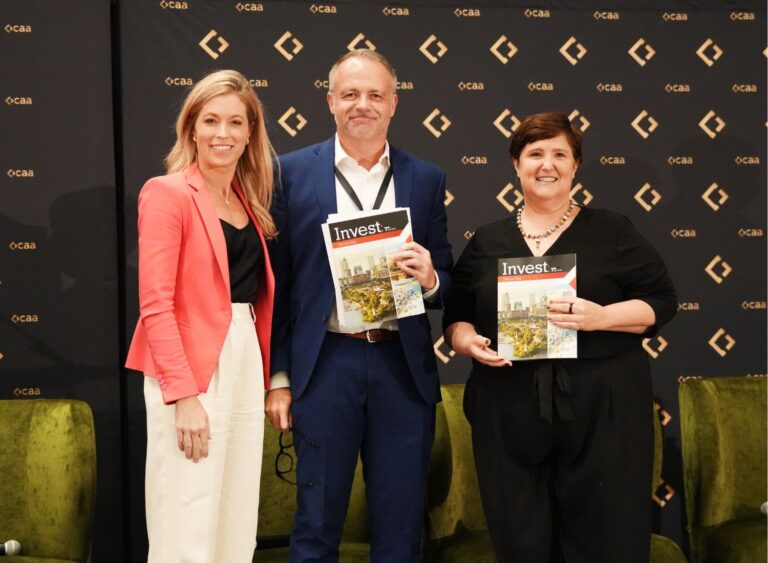
Miami is the perfect market for a real estate company, according to Bernardo Fort-Brescia, principal at Arquitectonica. In an interview with Invest:, he said that not only does Miami have a weather advantage, but it also offers an international and multilingual environment and has great connectivity because of its location and huge airport.
Can you give us an overview of Arquitectonica?
We’re building in 44 countries. We have 11 offices worldwide. In the United States, we have offices across the country, from California to New York. We have a practice in the residential sector, but we are also in the office, public, sports and theater segments, among other building types. Residential is the biggest component of the real estate economy and that has always been our fortune.
Our business originally started in Florida, with our first buildings on Brickell Avenue in Miami. Florida remains our main market, which is fortunate because it is the fastest growing market just about anywhere in the world.
There is also a lot going on in the office building, shopping center, and public sectors, despite hearing a lot of negativity, for example, regarding the office space.
How is the office market doing now?
We remain in Silicon Valley, which is the strongest market for office. But there’s also a strong market in Florida, which is unexpected. We’re doing the headquarters of an important financial company that is moving from New York to Boca Raton, for example, and we have projects in Palm Beach County. There is still activity here and there for users in the office market, even though the perception is that a lot of offices are moving in the direction of working from home. Silicon Valley has probably been the precursor of requiring people to come to work in person, but that is starting to happen in many other locations, if not required then on a voluntary basis.
However, human interaction is a very important part of a productive workforce. I see that starting to happen again.
What are the prospects for the luxury sector in Miami?
There is demand in all sectors. The luxury sector has always been important in the economics of the city because those visitors or people who move here are also important consumers. They go to restaurants, they go to shops, they participate in the economy in a very important way.
We have a series of upcoming projects in this market. One example is Miami Tropic, which has a Jean-Georges restaurant in it. That’s a project that is at the entrance to the design district. The design district is a significant contributor to the new Miami. People recognize design districts everywhere in the world today. We have a couple of projects there.
Other locations where there are significant projects of that kind that we’re working on include Brickell where we’re working on 1428 Brickell — a new benchmark of sustainable luxury residential design. And more is coming to the design district. In Edgewater, we’re doing additional residences that are moving along nicely. In Miami Beach, there’s Five Park, which is almost finished. And there are others that we are involved in in other neighborhoods of Miami Beach. Miami Beach remains a very desirable location for those who want a more direct access to the beach. Those who want city life energy and are not beach-oriented gravitate towards places like Edgewater or North Bay Village. We’re doing a new Ritz Carlton residence there. More developments are happening there as well. It’s sort of a new neighborhood that’s been discovered because it has a lot of waterfront and beautiful views. That is where some of the new luxury residential is also going.
What is driving demand in the region?
The demand is multifaceted. Some of it has to do with many companies moving here. Sometimes, it is simply the quality of life. Sometimes it has to do with taxes, and sometimes it has to do with proximity to multiple markets.
There is also a new base of residents, both young executives and senior executives. Some may want mansions, some may want a condominium, and some may want to rent. And all that needs to be supplied by the construction marketplace. I see that in just about every sector, whether office, residential, or retail, because they’re all interconnected. If people are moving here, they need an office to work from. We have probably the lowest vacancy rate in office buildings in the world. And those people go out to restaurants, go shopping, go to entertainment venues, go to museums, the performing arts center, and to the art galleries. They use the city. Once the residential market is strong, all the other markets follow because that person moving here is inherently a consumer of all these other services. It is pretty much what fuels the rest of the economy.
What makes Miami such a strong market for your business?
Miami is a distinct market because there’s this interconnection between every sector. Retail, residential, and office space are tied together in Miami. We have a very vibrant market. That is true in all sectors.
We have a weather advantage. People can work from anywhere today. They can operate globally. If you want a pleasant location with beautiful geography, vegetation, water, views, and leisure, and you’re not obligated to be in any particular place, Miami offers that.
It’s also a central, easy-access city. We have a huge international airport. You can fly just about anywhere from here with a lot of flight offerings. Connectivity is an important part of the choice of where to work or live, and Miami is very well connected. Geographically, it takes an equal amount of time to go to any major city in South America or Europe or the Northeast or California. You’re right in the middle.
Another factor is that we have a multilingual population, and most companies have modernized and expanded globally, and they often need multilingual staff. People think it’s only Spanish, but there are a lot of French speakers, there are a lot of Italian speakers, and a lot of other speakers here. The school system in Miami-Dade County has international schools. Unusually, a public school has international programs. People from here speak other languages. And I think that if you want to be an international city, you need that.