

The real impact of Pittsburgh’s regional airports
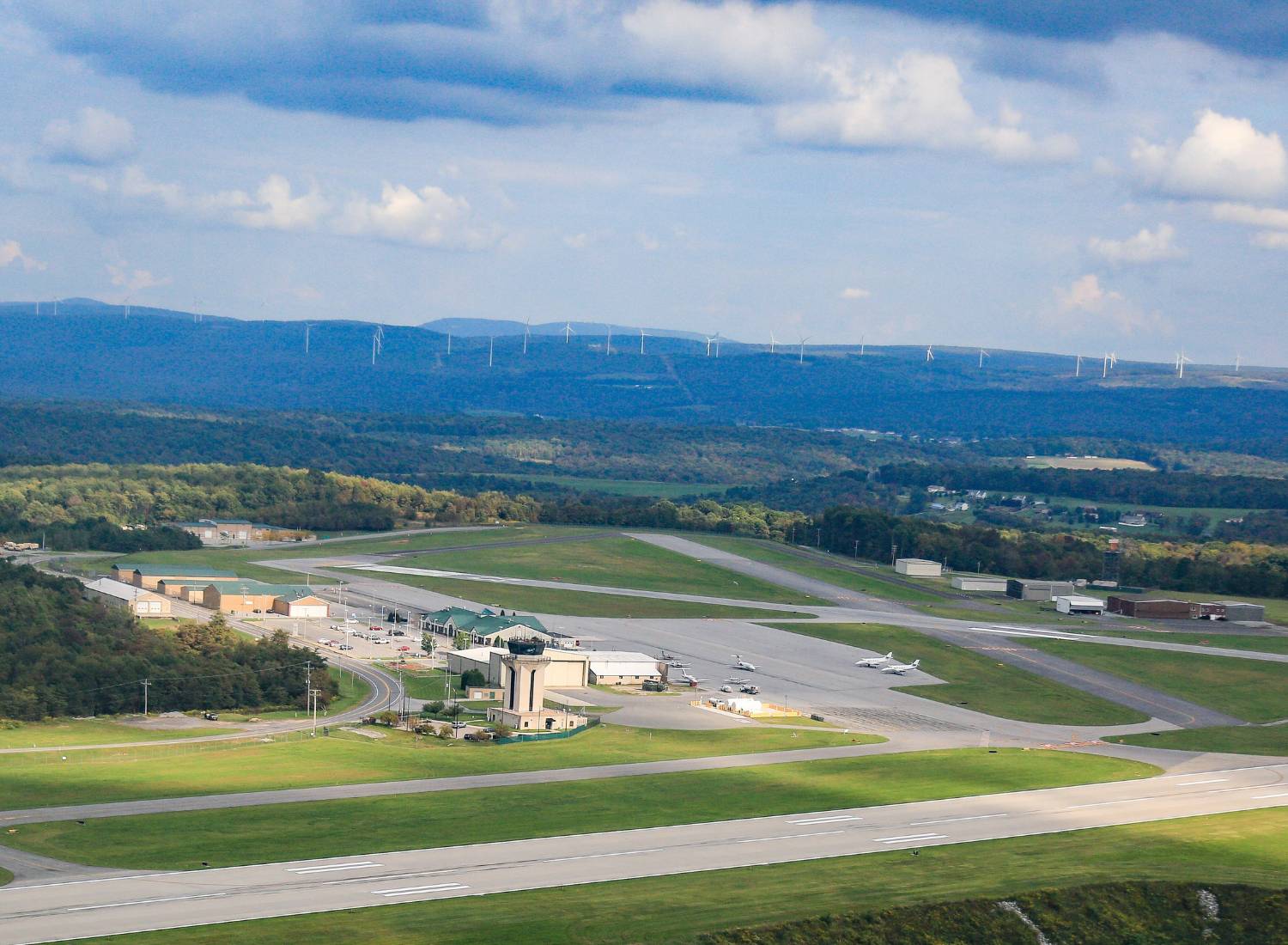 October 2025 — Regional airports across the Pittsburgh area are proving essential to Western Pennsylvania’s economic and transportation network. While Pittsburgh International Airport anchors the region with nearly 10 million annual passengers, smaller airports such as Arnold Palmer Regional Airport (LBE) in Latrobe and John Murtha Johnstown-Cambria County Airport (JST) serve important roles in connecting surrounding counties, supporting local industries, and training the next generation of aviation professionals.
These airports also deliver sizable economic impact. According to the Pennsylvania Department of Transportation’s Aviation Economic Impact Study, general aviation airports contribute more than $15 billion annually to the state’s economy and support over 104,000 jobs.
From leisure travel and charter operations to education and advanced air mobility research, regional airports are bridging communities while relieving congestion at major hubs.
To discuss the growing importance of these facilities, Invest: Pittsburgh sat down with Gabe Monzo, executive director of Arnold Palmer Regional Airport, and Cory Cree, airport manager at John Murtha Johnstown–Cambria County Airport.
What major changes have shaped your airports recently, and how are they influencing operations?
 Gabe Monzo: At the beginning of the year, one of the first challenges we faced was Spirit Airlines filing for bankruptcy. That was a major issue for us. We were concerned that their bankruptcy would affect our operations, especially since they’re the only airline we have. We have a significant investment in Spirit Airlines, and we wanted to ensure they remained viable and operational. The good news is that another flight from Fort Lauderdale was added. That was a city we had lost for a period of time, and they’ve now brought it back. The air traffic controllers are ecstatic. They now have an elevator! It doesn’t take them the whole way up to the cab, but it reduces the climb from 75 stairs to just 6 stairs. They also got new blinds, new windows — it’s been fully refurbished. We’re a contract tower, which is different from an FAA tower. We’re part of the FAA’s Contract Tower Program, so while the controllers are FAA-certified, the tower itself operates under a different structure. That entire project was 100% federally funded.
 Cory Cree: Over the past year, several significant developments have taken place. We embarked on a $6.5 million Eastside Development Project, which involves widening an access road to our Keystone Opportunity Expansion Zone (KOEZ). This zone provides 130 acres of tax benefits to any new company that moves into the area. In addition to widening the access road, we are adding a 162-stall parking lot to support St. Francis University’s aviation maintenance technician school and the Nulton Aviation Flight Academy, both located at the airport.
Furthermore, we are reconstructing a hangar apron to support these programs and making security gate and fencing upgrades. This project is expected to be completed by this fall. Another exciting development is the introduction of a local restaurant, Balance Restaurant @ the Airport, which provides food options for passengers and attracts visitors to the airport, raising awareness of our services.
How do regional airports like yours support local economies and connect communities?
Monzo: We know we’re a party. We fly to Myrtle Beach, Fort Lauderdale, and Orlando. People come here to have fun. We want to encourage that from the moment they park to the moment they board. That’s the time we control, and we want it to be enjoyable rather than a hassle. We try to be part of the party, not the problem. We’ve actually seen people tailgating in the parking lot before flights to Myrtle Beach. We don’t officially advocate for it, but it happens. We know our place. Most people aren’t flying to Fort Lauderdale for a business meeting — they’re going to have fun, so we’re courteous, conscientious, and focused on service. With a name like Arnold Palmer, we want to be a class act. He was on our Airport Authority board and instilled the importance of providing a positive experience.
Also, parking is free, whether it’s for a day or a week. That’s $100 in savings travelers can spend on their trip instead. We’re not trying to compete with Pittsburgh — we’re part of Pittsburgh’s system. Our prices are reasonable, depending on the travel date. And travelers are savvy — if they can save $50 by flying Tuesday instead of Saturday, they’ll do it.
Cree: We are planning to invest approximately $30 million to construct a Regional Jet (RJ) Hangar/Innovation Center, which will support overnight maintenance for SkyWest Airlines (SkyWest), operating as United Express. This facility will enhance our local economy and potentially increase flight options for passengers.
In 2026, we will begin Phase One of this project, a $10 million investment to construct the initial phase of the hangar, enabling overnight jet maintenance. Additionally, the U.S. Department of Transportation recently selected SkyWest’s for another four year contract as our EAS (Essential Air Service) provider, reinforcing our partnership.
Our passenger numbers have grown significantly, from 7,500 departures in 2022 to nearly 18,000 last year, which has also increased our FAA funding eligibility. We are currently on pace to exceed last year’s passenger numbers.
What priorities or innovations are positioning your airports for long-term success?
Monzo: Everyone strives toward being carbon neutral. Sustainability means a lot to us and to the environment. We’ve switched all of our ramp equipment to electric. That’s a big deal for a small airport. Fifteen years ago, we didn’t even have a tug – now all our tugs, lavatory carts, and baggage carts are electric. The only diesel equipment left is the aircraft pushback vehicle, and we’re still figuring out how to make that electric. Solar power is the future, and airports have a lot of unused land. Now that solar arrays no longer pose risks to aircraft, they’re going to be a major trend. We’re heavy electricity users, so reducing that footprint is a huge step toward sustainability. You’ll never find anyone better than Pittsburgh International when it comes to sustainability leadership – they’re setting the standard.
Cree: Aerium, a nonprofit organization associated with the airport, has secured six CIP codes for aviation education in Pennsylvania high schools, enabling public funding for aviation courses. Saint Francis University’s Aviation Maintenance Technician School (AMTS), which opened in fall 2024, provides a direct career pathway for students. Graduates can interview with SkyWest for airline maintenance technician positions or join Lockheed Martin, a major employer in Johnstown’s industrial park.
For aspiring pilots, the Nulton Aviation Flight Academy offers training from private to commercial licenses, with guaranteed interviews at SkyWest for qualified candidates. We are also exploring advanced air mobility (AAM) and drone technology, including a groundbreaking medical drone delivery initiative in Johnstown. The Southern Alleghenies Planning & Development Commission received a $1.9 million U.S. DOT SMART Grant to develop a drone-based medical delivery system. This program, known as Drone814, will deploy drones beyond visual line of sight to deliver emergency medical supplies. This initiative, the first of its kind in the United States, could expand statewide and nationally, with potential Medicare reimbursement.”
Top image provided by John Murtha Johnstown-Cambria County Airport
Want more? Check out the Invest: Pittsburgh report.
Subscribe to Our Newsletters