
Spotlight On: David Fitzpatrick, Scientific Director & CEO, Max Planck Florida Institute for Neuroscience
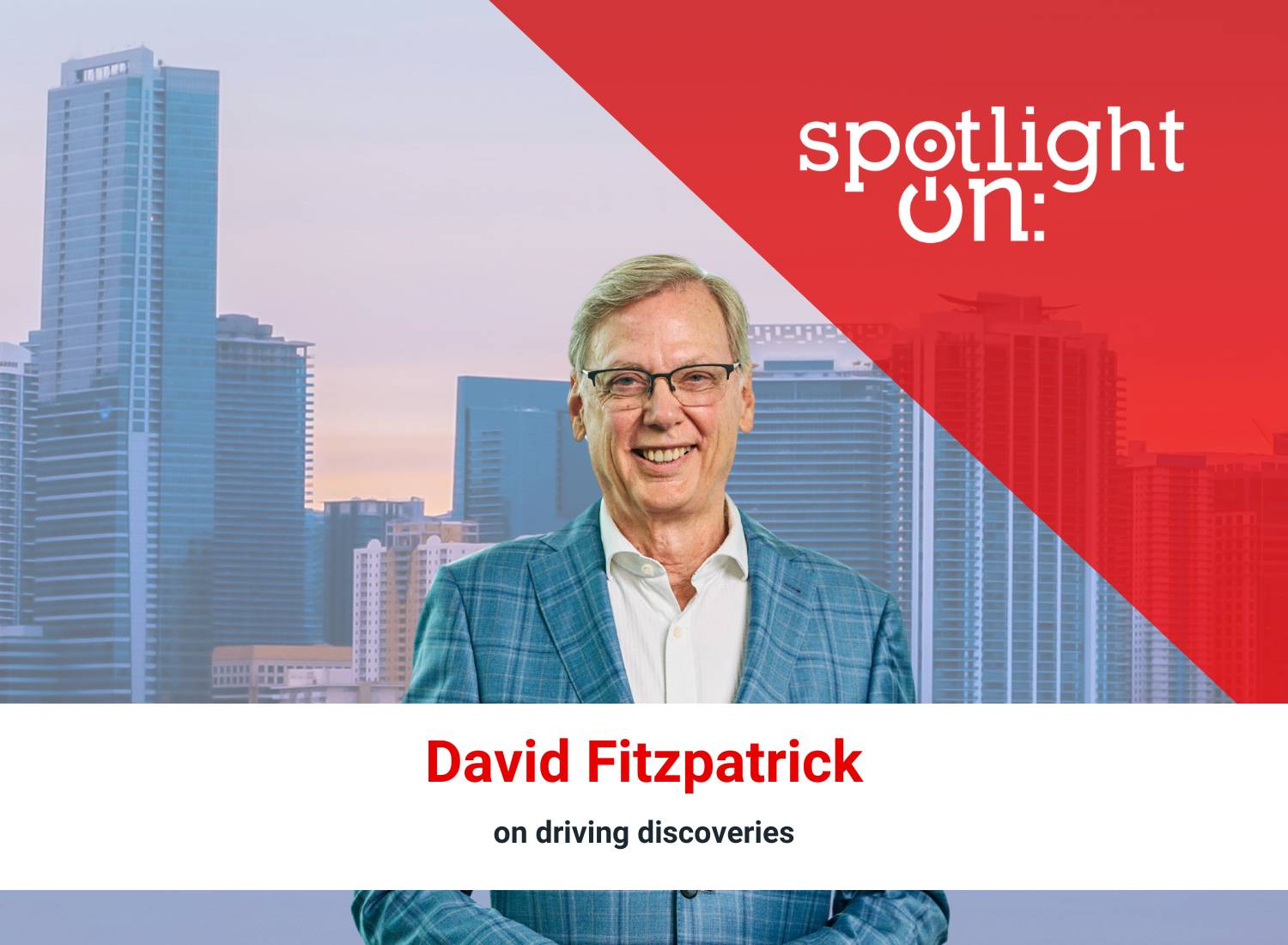 December 2025 — In an interview with Invest:, David Fitzpatrick, scientific director and CEO of the Max Planck Florida Institute for Neuroscience, highlighted advancements in neurotransmitter imaging, neuron energy dynamics, and emphasized the role of interdisciplinary collaboration in driving discoveries and the support from the Palm Beach and South Florida communities. “American science has long been a global leader, and I believe it will continue to drive innovation,” said Fitzpatrick.
Join us at the Invest: Palm Beach 6th Edition Leadership Summit! This premier event brings together hundreds of Palm Beach’s business and regional leaders to discuss the challenges and opportunities for businesses and investors. Buy your ticket now!
What can you tell us about the latest developments in neuroscience that the Max Planck Florida Institute for Neuroscience is working on?
It is important for people to understand that we are focused on fundamental basic science. We are striving to comprehend how the brain functions in order to develop new technologies, cures, therapies, and methods for visualizing how disease alters the brain.
To provide clarity on our work, it is essential to recognize that our research enables us to visualize the living brain at an unprecedented scale. This includes examining single neurons and synapses, observing their activation during various behaviors, identifying the neurotransmitters involved, and understanding how these circuits operate, develop, and are affected by disease.
A critical component of this progress is the development of new technologies. We are fortunate to have scientists working at the cutting edge of innovation. For instance, one of our scientific directors, Lin Tian, is developing advanced sensors for neurotransmitters and neuromodulators. These sensors, used in animal models such as mice, allow us to detect changes in fluorescence when a neuromodulator is released, revealing its location, timing, and correlation with behavior.
Additionally, other researchers are investigating finer details within synapses. Ryohei Yasuda, another scientific director, has pioneered technologies to visualize specific molecules and their role in synaptic plasticity. This research is vital for understanding memory and disorders like Alzheimer’s disease, as it explores the molecular interactions underlying memory formation.
Furthermore, our institute supports early-career scientists through a dedicated program. One of our research group leaders, Vidhya Rangaraju, has made groundbreaking discoveries regarding our understanding of the energy mechanisms within neurons. Her work focuses on mitochondria, which supply the energy required for synaptic maintenance and plasticity. She has recently submitted a paper demonstrating for the first time how a small segment of a mitochondrion provides energy to a specific synapse.
This is just a glimpse of our work, but it highlights the importance of cutting-edge research. While we have learned much about the brain, we still understand only a fraction of what is necessary to address the neurological diseases affecting society.
How does the Max Planck Florida Institute for Neuroscience train and recruit the next generation of scientists in Palm Beach and South Florida?
To put it briefly, engaging students early helps them envision careers in science while strengthening public support for research. By showcasing the excitement and impact of neuroscience, we inspire the next wave of scientists and ensure continued progress in understanding the brain.
Now, having spent many years in science, including at Duke University before joining this institute in 2012, I can emphasize that trainees are not just the future of science, they are actively driving current research. Our trainees, including graduate students and postdoctoral fellows, work in labs under mentorship while contributing significantly to ongoing projects.
Since 2012, we have trained 360 individuals, with 18 advancing to university professorships and others applying their experience in scientific industry roles. Our training programs include the International Max Planck Research School for Synapses and Circuits, which is approved by the Max Planck Society in Germany. For context, the Max Planck Society is the world’s leading scientific research organization, with 84 institutes spanning life sciences, natural sciences, and humanities. It has produced 31 Nobel laureates, including six since 2020.
Notably, the Max Planck Florida Institute is the only Max Planck institute in the United States, with most others located in Germany. Establishing this institute was a calculated risk, but the support from the local community, the state of Florida, Palm Beach County, and neighboring institutions has been extraordinary. Nearby, we collaborate with the University of Florida Scripps, Florida Atlantic University (FAU), and the FAU Brain Institute, creating a robust biotech hub focused on neuroscience and other disciplines.
Regarding training, we engage not only graduate students and postdocs but also undergraduates from FAU and high school students. During summer programs, high school students work in our labs, gaining exposure to scientific research. This initiative is crucial for fostering public understanding of science and inspiring future generations.
Science thrives when the broader community appreciates its significance. By involving young students, we cultivate interest and ensure a pipeline of talented researchers. Our goal is not only to advance knowledge but also to demonstrate the transformative power of fundamental scientific inquiry.
How is the Institute leveraging technology, digital platforms, and the integration of AI to streamline operations and optimize scientific research?
We have a number of new technologies on the optical side. For instance, fluorescent lifetime imaging is a technology that one of our directors has developed, which provides fine resolution and allows researchers to observe changes in the brain.
In terms of artificial intelligence, we are just starting an initiative now. One of our long-term donors has expressed interest in supporting this effort. The goal is to bring in an expert in artificial intelligence and computational neuroscience who can collaborate with our biologists. This is often challenging because biologists possess deep knowledge of imaging techniques and biological insights, while artificial intelligence and computational approaches require a different expertise. We are currently building a platform to establish a computational neuroscience initiative here, which will serve as an interface and provide the necessary training to maximize the effectiveness of these technologies.
I would also mention that we have a machine shop within the institute. When I arrived, I never imagined it would reach a level where organizations like the Howard Hughes Medical Institute Janelia Campus would request custom equipment from us. It is a point of pride that our capabilities have grown to meet such high demand.
What can you tell us about the institute’s Science Meets Music series?
This initiative serves multiple purposes. First, it engages the public, both to educate and to attract potential financial supporters. Many people might hesitate to attend a lecture on brain science, but combining it with music makes the event more accessible. The quality of these performances has been outstanding, and we are grateful to the Benjamin School for providing their auditorium.
The format begins with a musical performance, transitions into a scientific talk from a Nobel Laureate or otherwise renowned neuroscientist, and concludes with another musical piece. The response has been remarkable. Many attendees initially come for the music but leave impressed by the science. This approach lowers barriers and draws people in. Seeing a full auditorium learning about Max Planck and neuroscience is incredibly rewarding.
Additionally, every other year, we host a scientific conference called “Sunposium,” a playful twist on symposium. This event brings neuroscientists from around the world to present their latest findings at the convention center in downtown West Palm Beach. The timing coincides with favorable weather, allowing attendees to enjoy the beach. When we first started, few knew about Max Planck Florida, but now it is recognized globally in neuroscience circles.
With the majority of the Max Planck Society being headquartered in Germany, are you looking to expand further in the United States?
I wish we could, but this is a challenging and uncertain time for science in the United States. The president of the Max Planck Society recently visited and discussed potential partnerships with American universities and institutions to establish collaborative facilities. These would be supported by German government funding, as the Max Planck Society is publicly funded in Germany.
While I do not know how long this will take, it is an exciting prospect. Many scientists are considering relocating to Europe or China due to concerns about research support in the U.S. However, I remain hopeful. American science has long been a global leader, and I believe it will continue to drive innovation.
How is the Max Planck Florida Institute for Neuroscience engaging in partnerships in the community?
Our graduate program, the International Max Planck Research School, relies on a partnership with Florida Atlantic University, which grants the degrees. Beyond academia, we collaborate with technology companies such as Zeiss, a microscopy and imaging leader. They established a solutions center near our institute, where they develop and test new technologies with input from our scientists. This collaboration ensures that the tools they produce meet research needs.
Another partnership is with Thorlabs, a company specializing in imaging moving animals. They have a dedicated space within our institute to refine their technologies with our researchers’ expertise. These synergies are incredibly productive. And, another outreach program, Ask Max, has had a significant community impact. We bring scientific technologies into public schools, allowing students to experience hands-on science. The program has been so well-received that we were recently named Nonprofit of the Year by Palm Beach North Chamber of Commerce . While science remains our priority, initiatives like Ask Max to help the public understand its importance, especially for future generations.
Want more? Read the Invest: Palm Beach report.