Spotlight On: John Menoni, Senior Vice President of Branch Operations, Navy Federal Credit Union
Key points:
• Branch banking is shifting from transactions to consultative, relationship-driven interactions supported by digital tools.
• Navy Federal is investing in an integrated model that blends digital access with targeted physical expansion in member-dense markets.
• Financial education, human connection, and mission-driven service remain central to long-term member loyalty and growth.
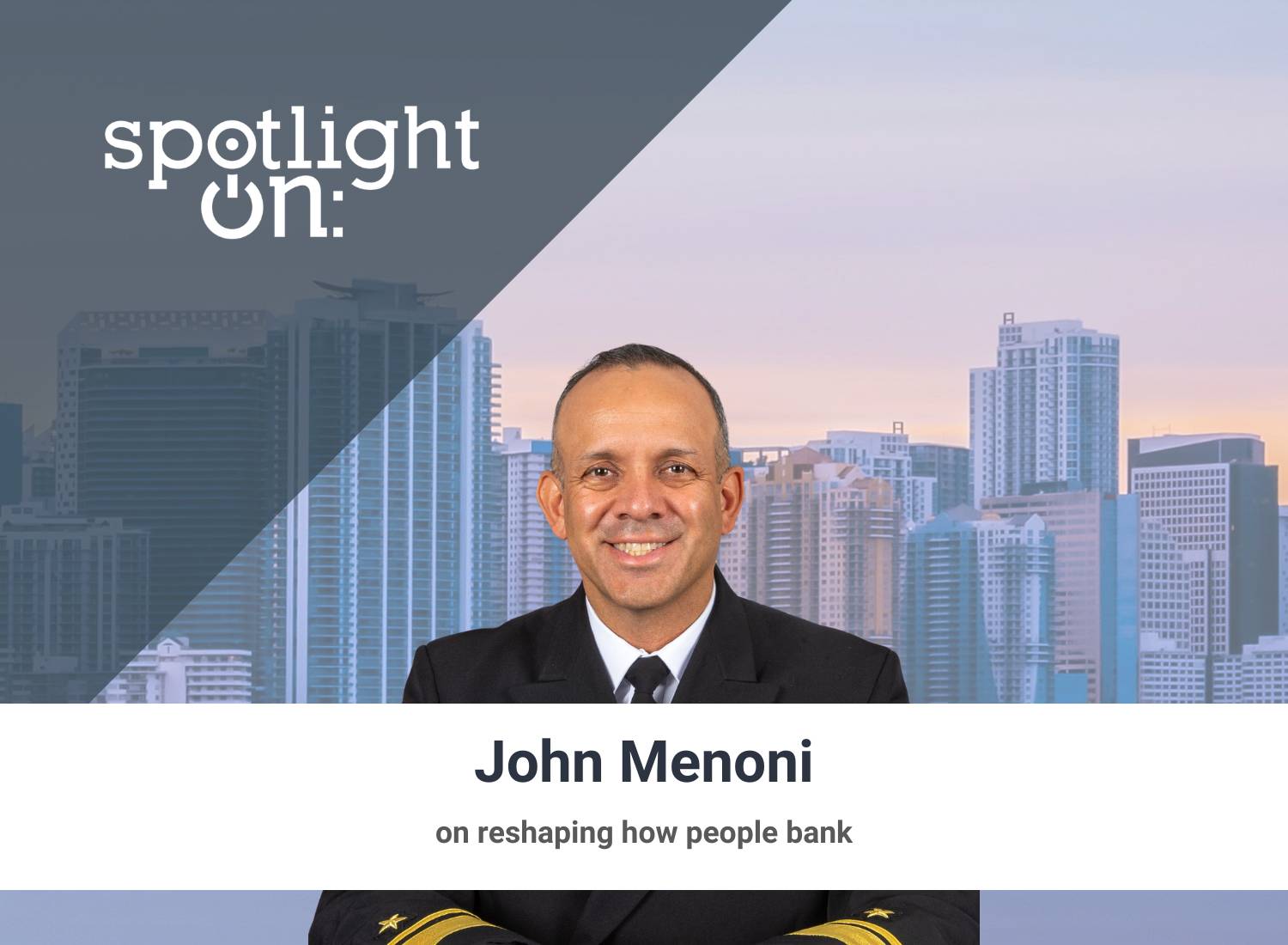 February 2026 — John Menoni, senior vice president of branch operations at Navy Federal Credit Union, oversees a global branch network serving military members, their families, and other eligible members at a time when digital channels are reshaping how people bank. In an interview with Invest:, he discussed how the credit union is rethinking branch investments, balancing automation with human connection, and deepening its commitment to financial education while staying anchored to a simple idea: “Our members are our mission. We want to provide the best possible service to the most people. When you lead with that, everything else falls into place.”
Join us at caa’s upcoming leadership summits! These premier events bring together hundreds of public and private sector leaders to discuss the challenges and opportunities for businesses and investors. Find the next summit in a city near you!
How have you seen the financial services industry evolve over the past year, and how is that influencing Navy Federal’s approach to branch operations and regional strategy?
The biggest shift is in the nature of transactions happening inside branches. Historically, branches handled routine, low-engagement activity — bringing in a paycheck, cashing a check or making basic cash deposits. Most of that has now shifted to digital channels. Members use computers and phones to complete those tasks independently.
As a result, branch interactions have become more engaged and more consultative. Members are coming in to discuss financial health, long-term goals, and what the way forward looks like for them. That changes how we staff and design branch roles and how we think about the purpose of the physical location.
At the same time, our membership is global, especially given how many active-duty military members and families we serve. That requires us to think of branch strategy as one part of a broader ecosystem that includes digital platforms, call centers, and physical locations. The priority is a seamless experience across all channels.
How is this shift in behavior guiding decisions around branch investments and physical presence?
Our guiding principle is that our members are our mission. We aim to provide the best service to our members globally. That means blending physical presence with strong digital capabilities so members can engage how they prefer.
Ideally, branches would exist everywhere members live, but a global membership makes that impossible. So we invest in multiple channels — mobile apps, online platforms, U.S.-based contact centers and branches — to create a unified member experience.
The goal is consistent, superior service regardless of income, demographic background, or location. Sometimes that means opening new branches in markets where members need face-to-face support, and other times it means enhancing digital tools to ensure convenience and accessibility.
How are you approaching industry pressures like talent retention, rising operational costs, and compliance requirements?
I simplify by going back to our North Star: the members are our mission. We want to provide the best possible service to the most people. When you lead with that, everything else falls into place.
Regulations and compliance requirements are not obstacles — they’re tools designed to protect financial health and member data. When viewed that way, they support our mission rather than hinder it. The same is true of digital tools. They exist to improve service. If a better tool emerges, we will adopt it.
Whether we’re addressing talent retention, cost pressures, or regulatory expectations, the question we ask is: does this help us deliver superior service? If the answer is yes, that’s where we focus.
How do you think about balancing automation and digital tools with the human connection in branch interactions?
That balance is essential. We constantly evaluate whether a tool enhances the member experience — does it increase speed, convenience, or effectiveness? If so, it has a place in our model.
But today, members still value human interaction. The convenience of digital channels is great when everything is going smoothly. When something feels uncertain or emotionally significant, people want someone they can talk to.
So while we invest heavily in digital capabilities, we intentionally maintain clear pathways to real people, whether in person or over the phone. Some days, a member wants to complete a quick transaction on their phone. Other days, they want a face-to-face conversation. Superior service means meeting them where they are, in either environment.
Explore more from our Raleigh-Durham coverage:
Spotlight On: Jeff Cox, President, North Carolina Community College System
Spotlight On: Brian Reid, President – Triangle, TowneBank
What role does member education and financial wellness play in your strategy, and which models have proven most effective?
We operate on the philosophy that once a member joins, they’re a member for life. Our vision is to be the preferred financial institution for military members, their families, and anyone eligible to join. Financial education is central to that commitment.
Ideally, education begins before someone becomes a member. We offer free financial education in branches, online learning through our My Making Sense portal, and digital content across multiple channels.
Education continues throughout the member relationship. We work with our investment group and branch teams to help members understand their financial health, assess goals and develop paths toward long-term financial well-being. Our aim is to help members move from financial health to, potentially, financial wealth over time.
What are your top priorities for Navy Federal’s growth over the next three to five years?
Our priorities return to that same North Star: delivering the best service to the most members and meeting them where they are. That means identifying markets where expanded presence will meaningfully improve member access.
North Carolina, and specifically Raleigh-Durham, is one of those markets. We have seen strong success in uncovering underserved members who lacked access to face-to-face support. By the end of the year, we expect to have five branches in Raleigh-Durham. Across the state, we’re growing from 16 to 19 branches, with plans for further expansion over the next three years.
More broadly, we see continued demand for physical presence even as digital tools expand. Members appreciate digital convenience, but when it’s not enough, they want the comfort and reassurance of a branch. We plan to continue investing in places where the combination of digital and in-person support can deliver the best outcomes.
What makes Raleigh-Durham and North Carolina such important markets for Navy Federal’s expansion?
North Carolina is extremely military-friendly. We see strong concentrations of active-duty personnel, veterans, and family members — the communities we exist to serve. We look not only at large bases like Camp Lejeune and Fayetteville but also at where members live and work across the state.
A recent example illustrates the opportunity. We opened a new branch in Charlotte this past Monday. The first member who walked in had joined around 2008 with a car loan. She paid off that loan, met with a financial adviser in the branch, and opened a certificate of deposit to support her long-term goals. She left saying, “We’ve got big plans for my future.”
Moments like that — people literally singing and dancing as they came into the branch on opening day — capture why we view North Carolina as a key growth market. It’s a place where we can build strong, community-centered engagement.
Is there anything you’d like to add about Navy Federal’s role in supporting members during times of crisis?
Navy Federal’s commitment becomes most visible when times are tough. I served 34 years in the military and have been a member for just as long. During that time, there were deployments, global events and government shutdowns. One of the most stressful moments for anyone is when a paycheck might not arrive.
I remember being overseas during a shutdown, worrying whether my family would receive the funds they needed for basic expenses. The relief I felt when Navy Federal guaranteed my paycheck was enormous.
We saw the same commitment during the longest recent government shutdown, when around 401,000 accounts were enrolled in our guarantee-of-pay program. Nearly 200,000 members received paycheck assistance, and Navy Federal provided roughly $350 million to ensure those paychecks were covered.
Whether it’s a hurricane, wildfire, earthquake or shutdown, Navy Federal shows up quietly and consistently, doing what’s right for members without fanfare. As a former service member, a parent of a service member and now part of the Navy Federal team, that commitment is deeply meaningful to me. Our job is to support members so they can focus on theirs, including defending our nation.
Want more? Read the Invest: Raleigh-Durham report.