
Michael Krause, Partner, Atrium Management Co.
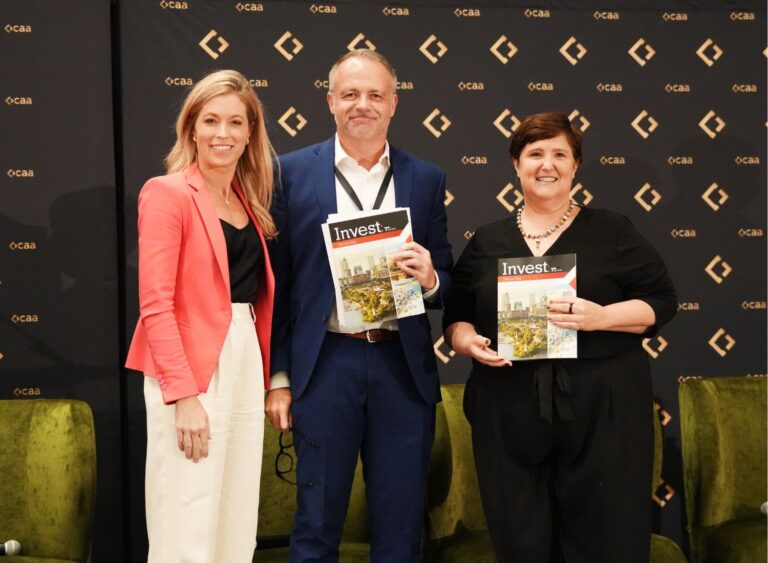
 April 2026 — Invest: spoke with Michael Krause, partner at Atrium Management Co., about how shifting rent dynamics, new supply, and emerging product types are reshaping Central Florida’s multifamily market and where the company is focused as it expands its footprint across the state. “The goal is not just the number of units. We want to have a positive impact on the communities we’re in and on the lives we touch,” Krause highlighted.
How have recent market shifts in Central Florida’s multifamily sector impacted Atrium Management Co.’s operations?
Over the past few years, we’ve really seen a break from what had been a long period of stability in apartments and multifamily. In 2022 and 2023, that changed as rents shot through the roof. Then, toward the end of 2023, the market started to flatten, and by 2024 we saw rare negative rent growth in Central Florida, Something the market hasn’t experienced in decades.
As we’ve moved through 2024 and into 2025, the market has largely stabilized. Rents have stopped declining, but they’re also not climbing the way owners and developers had become accustomed to. When you layer that on top of other pressures, such as higher interest rates and the cost of capital, you get a very different environment than the one people underwrote deals for back in the low-rate years.
Another important factor is supply. Orlando has seen a record number of new units delivered over the past few years. While absorption has remained positive, it hasn’t fully kept pace. In some submarkets, that’s led to elevated vacancy rates and a wave of concessions as new communities race to lease up within a 12- to 24-month window. That is creating real pressure on stabilized properties — but it’s also resulted in a more affordable apartment environment overall, which is something the market had been calling for during the post-COVID rent spike.
From Atrium’s standpoint, we’re navigating all of this by staying close to the data, being selective about the projects we take on and working with owners to recalibrate expectations. It’s a more challenging environment in some ways, but it’s also an opportunity to differentiate through execution, service and local market knowledge.
With rents softening but construction and materials costs still volatile, how can developers and owners maintain sustainable returns and keep investors engaged?
One of the clearest consequences has been a slowdown in new development. In Orlando, there was a period not too long ago where you could point to entire submarkets – like southwest Orlando – that had gone multiple quarters without a single new start. For projects to move forward, the numbers simply have to make sense, and for a while they just didn’t.
As fewer new communities get underway, the law of supply and demand starts to work in another direction. Suppliers of lumber, concrete, steel and other materials still need to move product, so as construction volumes pull back, there is pressure for pricing to come down. Over time, that can help projects pencil again.
On the capital side, I don’t expect us to go back to the historically low interest rate environment we saw in the prior cycle – so developers and investors have to adjust to a more normal range.
In this environment, value engineering and efficiency are critical. There is a lot of work happening around consolidating suppliers, standardizing where it makes sense, and finding ways to reduce costs without compromising the resident experience. At the same time, you have to take a realistic view of rent growth. For deals to be sustainable, construction costs need to move to a more rational place, the cost of money has to be manageable, and rents have to at least hold steady and eventually grow as population gains continue and excess supply is absorbed.
From an investor-relations standpoint, that means being transparent about timing and return expectations. Central Florida continues to benefit from strong in-migration trends, consistently ranking among the fastest-growing regions in the country. Most projections show that we will catch up with the unit deliveries that came online in 2023 and 2024. The fundamentals remain solid; it’s just a question of navigating through this phase with the right partners, underwriting and patience.
Mixed-use and build-to-rent communities have been gaining traction. How do you see these product types fitting into Orlando’s growth trajectory?
A lot depends on the submarket. In some areas, particularly where a large number of properties came online at once, we’ve seen occupancies dip into the 60% range and vacancy rates much higher than what the market is used to. St. Cloud is one example where a significant number of communities have delivered since 2023, and they’re all competing to lease up at the same time.
Broadly, there’s a tension between the desire to energize and redevelop downtown Orlando and the reality that this is still a very car-driven, sprawling metro. Much of the recent development has favored suburban, garden-style apartments and build-to-rent communities, in part because it’s less expensive and there’s typically less political friction and zoning complexity on the outskirts.
Build-to-rent, in particular, fills an important niche for younger residents. Many Gen Z and millennial households aren’t ready or willing to buy a home, but they still want more space and a neighborhood feel. A well-executed build-to-rent community can give them a fenced yard for the dog, a driveway where kids can play and the sense of belonging that comes with a residential neighborhood, without locking them into a 30-year mortgage.
At the same time, Orlando’s districts – places like the Milk District, the SoDo District and the Mills District – have developed into vibrant environments with great local restaurants and a strong food scene. They provide a different flavor of the downtown experience, even as efforts continue to revitalize the core itself. The projects that succeed are the ones that understand where their residents truly want to live, how they move around the city and what kind of lifestyle they’re seeking, then tailor design, amenities and operations accordingly.
Atrium has new projects such as Horizon View and Plant Street Commons. How do these initiatives fit into your broader growth strategy?
Horizon View, which our partner Kamaya Commercial is developing and our sister company Kamaya Management will manage, is a great example of following population growth. Horizon West is one of the fastest-growing areas in the country, and the growth there has been incredible. That project is really about filling a clear housing need as more people move closer to Winter Garden, which is a bit of a hidden gem and a community we’re excited to be more involved in.
Plant Street Commons has a slightly different profile. It’s a more intimate infill development right in downtown Winter Garden, near properties we already manage, like Tremaine Boyd Apartments. That neighborhood has tremendous character, with destinations like Plant Street Market and Crooked Can drawing people from across the region. With Plant Street Commons, we’re combining for-sale luxury townhomes, a small number of apartments and carefully curated ground-floor retail, including a new restaurant concept we’re looking forward to introducing. It’s about contributing something distinctive and high-quality to a place that already has a strong identity.
More broadly, we’re in the process of planting our flag across Central Florida and expanding outward. In addition to Orlando, we have a strong presence in markets like Lakeland, Tampa, St. Petersburg and Gainesville, and we’re excited about our entry into Jacksonville. From our perspective, no market in Florida is off the map if it fits our strategy and we can serve residents and owners well.
Our goal is to get to about 24,000 units under management; today we’re a little over a third of the way there, with roughly 10,000 units. The goal is not just the number of units. We want to have a positive impact on the communities we’re in and on the lives we touch. One of the things I’m most proud of is that our company was recently named the No. 1 Best Place to Work in Orlando among medium-sized companies, based on anonymous feedback from our team. Our people genuinely like coming to work, and that culture is created by our 200 team members. Our role is to intentionally create and protect an environment where that culture can thrive.
Over the next three to five years, we expect to reach our unit goals, but more importantly, we want to keep building a company that makes a meaningful difference for our residents, clients and team members across Florida.