Spotlight On: Mike List, President, List Engineering Design
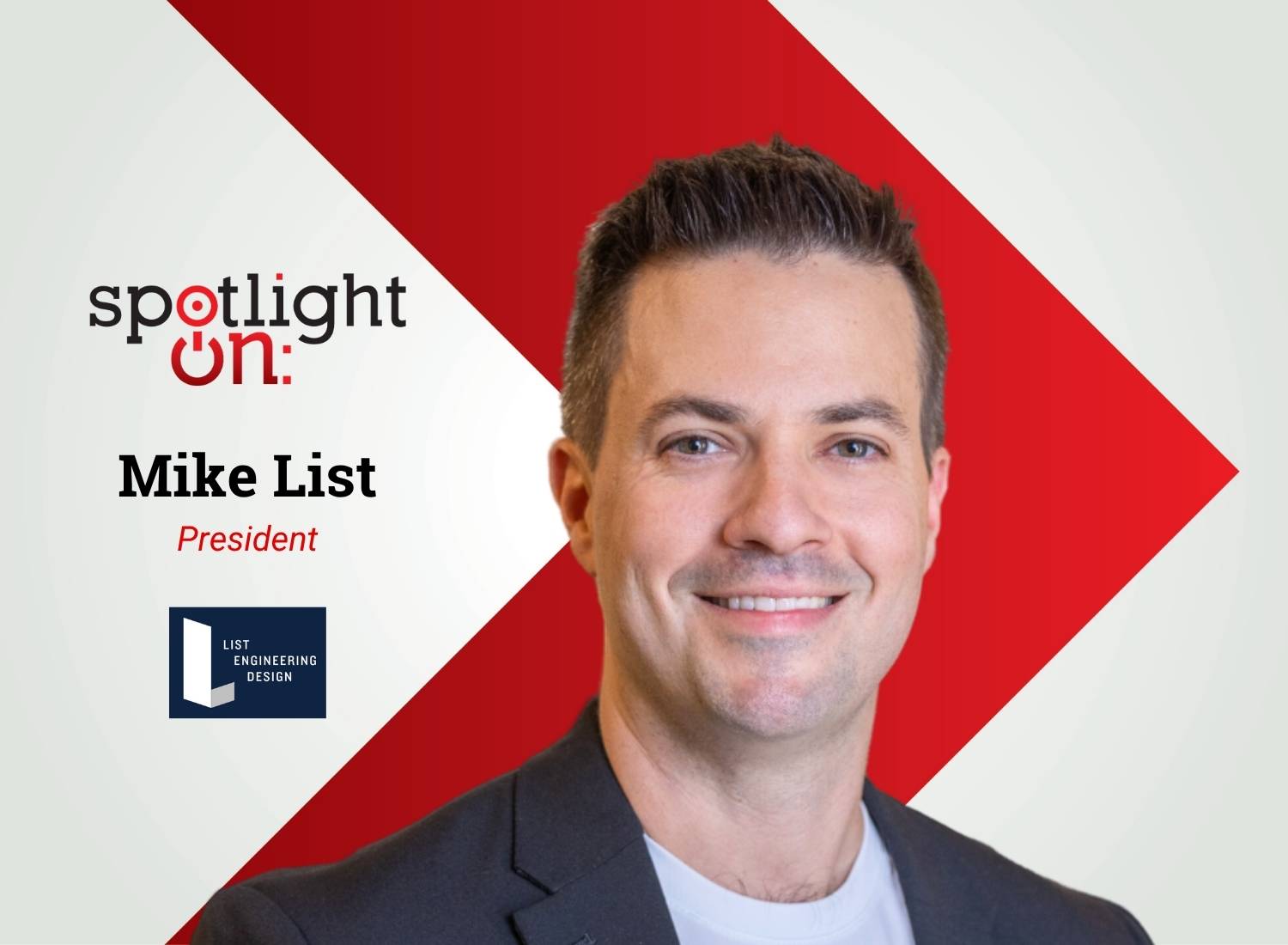 April 2026 — Mike List, PE, president of List Engineering Design, sat down with Invest: to discuss the firm’s rapid growth and evolving priorities in Florida’s construction market. “It feels like every quarter in 2025, we’re setting new benchmarks. With that kind of momentum, our priority is to ensure we’re scaling efficiently and intentionally, starting from the ground up,” List said.
Join us at the Invest: Greater Orlando 4th Edition Leadership Summit! This premier event brings together hundreds of Greater Orlando’s business and regional leaders to discuss the challenges and opportunities for businesses and investors. Buy your ticket now!
What is your overview of List Engineering Design and what changes and milestones have had the most impact in the past 12 months?
The biggest change we’ve experienced this year is growth. We launched our firm last year, and since then, we’ve been actively engaging the market, building relationships with both existing and new partners, and expanding our reach into additional states beyond Florida.
It feels like every quarter in 2025, we’re setting new benchmarks. With that kind of momentum, our priority is to ensure we’re scaling efficiently and intentionally, starting from the ground up. As we chart our path forward, we’re focused on growing strategically and consciously, with a clear understanding of where we want to go and how we plan to get there.
How do you see the state of the engineering-consulting landscape, particularly for firms like List Engineering Design?
I don’t see any slowdown. I see a consistent influx of people moving here. Orlando remains one of the most visited destinations in the world, and tourism continues to thrive. When you combine that with the steady population growth we’re seeing each year, it’s no surprise that construction in Florida has remained strong, and I believe it will continue to be for the foreseeable future. The demand for medical services is also rising, driven by the growing population. Tourism brings additional economic activity as well.
One notable shift over the past year is the return to the office. After several years of remote work, many companies started with hybrid models, one or two days a week in the office. Now I’m hearing more about four days in and one day remote. That tells me the commercial sector is rebounding. Offices are filling up, landlords are pleased to see their buildings occupied, and when people go to work, they also visit other businesses, restaurants, shops, and service providers. That ripple effect is having a positive impact across the board.
How is the demand shift from traditional office or retail affecting engineering consultancies in your region?
A mixed-use lifestyle offers a better quality of life. While there has been plenty of debate about whether working in the office five days a week is more productive, I believe happiness plays a bigger role, especially when people work for companies whose culture aligns with their values. The new generation of workers prioritizes that alignment more than previous generations, and it’s important for executives to understand who they’re hiring and what motivates them.
From our experience with mixed-use projects throughout our career, we’re seeing a shift toward more creative and diverse designs. Traditionally, these developments might include a standard café, but now we’re seeing a wide range of amenities that support lifestyle and hybrid work-life integration. One example is pickleball courts incorporated into buildings that also house restaurants or retail spaces. It’s a sign of how mixed-use is evolving.
We work across industries, and it’s exciting to design these types of spaces. We also handle a significant number of industrial projects, which are essential for supporting the infrastructure behind these developments, especially when it comes to storage and logistics.
What unique challenges do diverse sectors bring from an MEP (Mechanical, Electrical, and Plumbing) design perspective?
One of the biggest challenges today is the increasing urgency across industries. We live in a society where everything is accelerating, including construction. Projects are being built faster and more efficiently than ever before, and that pace creates pressure. To meet rising expectations, you have to be highly skilled and operationally efficient. Timelines that once felt reasonable, like 16 months for a construction job, are now met with, “Can you do it in 12?” That kind of request used to be less common; now it’s routine. Compared to 30 or 40 years ago, the rate of evolution is exponential.
To overcome this, we rely heavily on technology and software. These tools help us produce and communicate faster, whether it’s in design, construction, or project management. There are even incredible platforms that eliminate the need for site visits. I recently joined a call where we walked through a fully rendered 3D model of a building before it was even built. That’s the kind of innovation we need to embrace. In today’s climate, if you can’t deliver quickly, someone else will. Leveraging the right tools is essential to staying competitive.
What are the major disruptions you anticipate in MEP engineering services due to technological transformation, and how are firms adapting?
You have to use AI where it can truly work to your advantage. For example, I used to spend a lot of time tracking down cut sheets to specify in construction documents. That’s a clear use case in our industry: locating technical data that would otherwise take hours to dig through. In engineering, we’ve come a long way from pen and paper.
Today’s tools, like AutoCAD, are integrating AI directly into their platforms. It’s not just companies adapting; the tools themselves are evolving. It’s a natural progression. Whether it’s searching for technical specs or quickly understanding code requirements across jurisdictions, AI helps speed up the process. But it’s a trust-but-verify situation. You can’t take everything at face value, but AI can dramatically reduce the time it takes to get to the right information.
I think AI is great and will continue to improve. It may reach a plateau because the human element remains essential, but the biggest benefit right now is time savings. AI can do in seconds what used to take minutes. That said, there’s no substitute for true engineering expertise. I hear our engineers problem-solving all the time, tackling challenges that AI simply couldn’t handle, even with all the data. There are always nuances in complex buildings or unique architectural designs that require human judgment. Templates and standard models work for typical projects, but when it comes to designing building systems, it’s the technical skill and deep experience of our team, and others in the industry, that make the difference.
How is the company positioning itself to help clients meet sustainability demands, given Central Florida’s climate?
Energy efficiency is becoming increasingly code-driven, especially in system design. Much of it centers around HVAC, but there are many ways to approach system efficiency. Our philosophy is to present clients with multiple options, explaining the expected outcomes and potential payback periods. For example, one option might yield savings over seven years, and we make sure to outline both the initial costs and long-term benefits. A key conversation we have with building owners and developers is about project intent: Are you planning to hold the property long term? That helps guide decisions around energy investments.
As engineers, it’s our responsibility to educate architects, developers, and builders about emerging technologies. I recently attended a trade show and saw new equipment being developed that hasn’t yet reached widespread adoption, either due to limited exposure or because manufacturers haven’t begun selling it broadly. Awareness is critical. There are many energy-saving products available that may come at a higher price point but help projects meet important sustainability benchmarks. Certifications like LEED also play a role in guiding these decisions.
As the company scales, how will its priorities align with the broader commercial MEP services landscape in Greater Orlando over the next three to five years?
As we grow, our biggest priority is who we bring onto the team. This is a highly collaborative industry, not just internally, but across a broader network that includes architects, structural engineers, civil engineers, builders, and developers. Building and maintaining strong relationships is essential. When scaling, it’s critical to develop and protect company culture.
That starts with hiring people who can carry our values forward and represent them well to our clients. It’s not always easy to find the right fit, but we’ve been patient, and we’ll continue to be. We’re not growing just to expand our footprint, we’re growing with intention. Quality must remain constant, no matter what size we are.. That’s why we’re committed to bringing in the right people, those who will help us preserve the reputation we’ve worked so hard to build in these first years of our business, and maintain it for years to come.
Want more? Read the Invest: Greater Orlando report.