Miami cements status as global business hub

Key points:
- • Miami’s investment community says credibility, governance and public-private partnerships — not tourism — now determine which projects and companies attract capital.
- • Educators and employers agree artificial intelligence has become a baseline skill, urging tighter partnerships between universities and industry to keep pace with the workforce Miami needs.
- • Housing costs, insurance and aging infrastructure remain the biggest threats to converting Miami’s momentum into a lasting, sustainable global business hub.
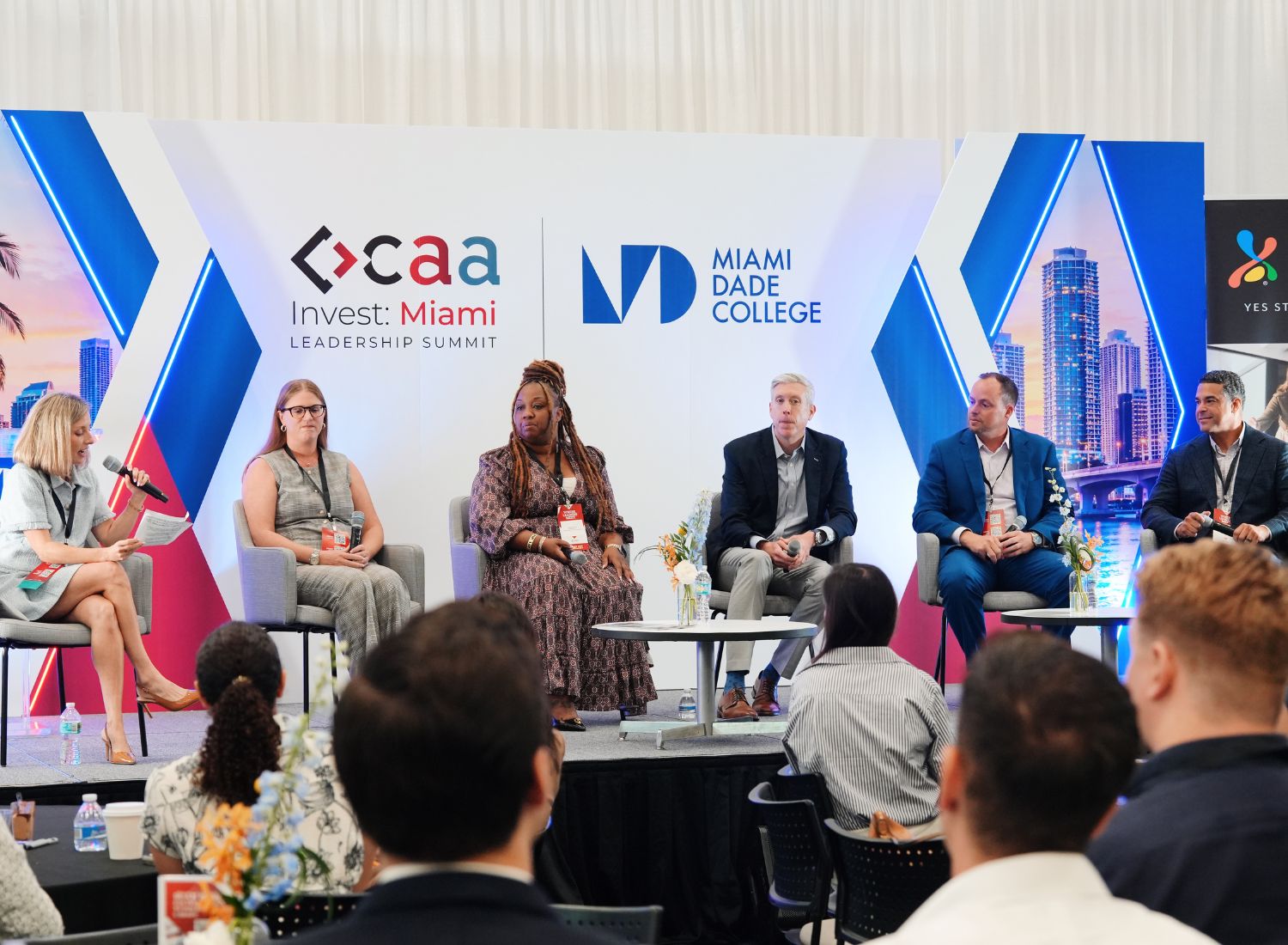
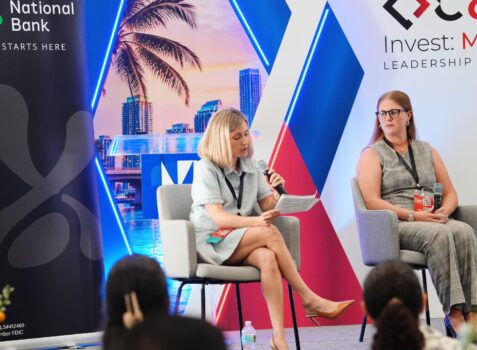
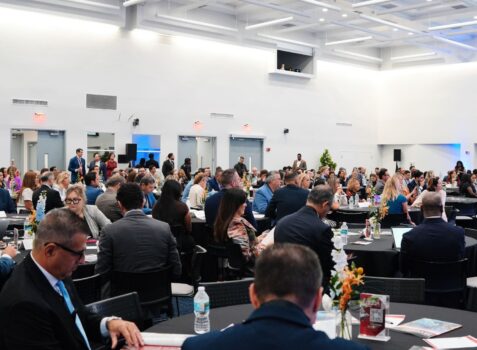
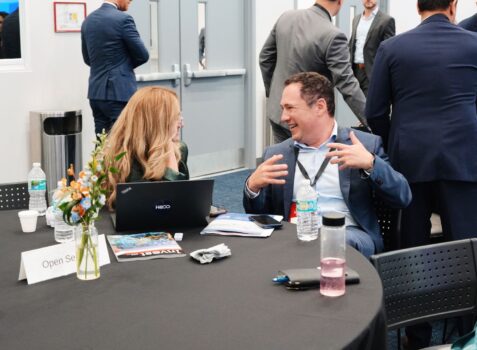
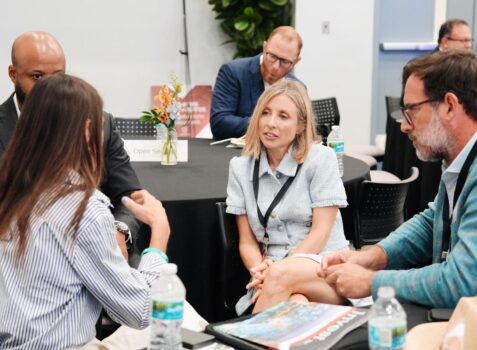
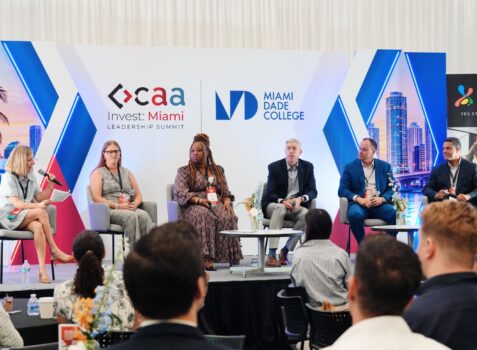 September 2026 — Miami has become a global business hub, not simply a tourism and banking market, according to Abby Lindenberg, founder and CEO of caa. Lindenberg opened caa’s Invest: Miami 11th Edition Launch Conference, the market’s first full-day summit, by pointing to Miami International Airport’s rise as a logistics powerhouse and a Miami-Dade County unemployment rate that sits well below the national average.
Join us at caa’s upcoming leadership summits! These premier events bring together hundreds of public and private sector leaders to discuss the challenges and opportunities for businesses and investors. Find the next summit in a city near you!
Presenter Enrique Martin, partner at Winston Taylor, stated that Miami’s gross domestic product now equals half of New York City’s, and that the region’s millionaire population has nearly doubled over the past decade. “The momentum is undeniable, but momentum alone is not enough,” Martin said.
Join us at caa’s upcoming leadership summits! These premier events bring together hundreds of public and private sector leaders to discuss the challenges and opportunities for businesses and investors. Find the next summit in a city near you!
Capital meets discipline
The day’s first panel, “Risk, Return, and Reinvention,” examined Miami’s maturing development market. Zachary Darrow, chairman and CEO of DarrowEverett LLP, said credibility now separates viable projects from those that struggle to find financing. “Miami is becoming a mature market. Credibility and durability will determine its future,” Darrow said.
Cristina Zampieri, senior vice president and CRE officer at Pibank, said sponsors need strong ties with debt and equity providers to manage execution risk, and that commercial real estate must move beyond square footage into neighborhoods that serve tenants and local culture alike. Gamal Caton, market leader at Verizon, cited the company’s partnership with Hard Rock Stadium and its support for Miami’s Formula One race as models for the collaboration the region needs. Brian Hagan, Florida market president at First American Bank, said reshoring trends tied to tariffs are reviving the aerospace and defense industry on Florida’s shores.
Asked what will separate lasting investments from those chasing the current cycle, Zampieri said sponsors need to look decades ahead. “Where will Miami be in 2100?” she asked.
Preparing tomorrow’s talent
A second panel, “The New Workforce Playbook,” turned to education. Paul A. Pavlou, dean of the University of Miami Business School, said continuous upskilling now separates workforce winners from those left behind, calling artificial intelligence “the new rate of literacy.” Pablo Ortiz, executive vice president and provost at Barry University, said the boundary between companies and universities “should no longer exist.” John Gresley, associate dean at the University of Florida’s Warrington College of Business, said hiring locally keeps homegrown talent from leaving.
Samuel Darko, associate vice provost for STEM initiatives and academic grants at St. Thomas University, echoed the AI theme during the third panel on teaching, saying faculty must become fluent in the technology first. Jason Asbury, senior director of academics at Miami Country Day School, also stated younger students still need play and hands-on experience that no algorithm can replace.
Miami goes global
Panelists in “From Miami to Multinational” described the region’s shift from a pass-through market to a home for major financial institutions, cementing Miami’s role as a global business hub. Aliette DelPozo Rodz, office managing partner at Shutts & Bowen LLP, said clean governance and arbitration clauses with countries such as Brazil and Colombia now give companies confidence to close cross-border deals. Pedro Parra, senior executive vice president and chief international banking officer at Amerant Bank, called Miami “the gateway to Latin America and the world.” David Roer, tax partner at EisnerAmper, pointed to the Florida Panthers’ back-to-back Stanley Cup championships as evidence that Florida’s tax environment draws talent well beyond business.
Growth’s next test
Jeffrey Taraboulos, managing partner at KSDT, questioned whether Miami can keep the talent it attracts as living costs climb in a panel focused on scaling success. Jaret Davis, senior vice president at Greenberg Traurig’s Miami office, suggested Florida reconsider its non-compete policy, while J.C. de Ona, division president for southeast Florida at Centennial Bank, summed up the mindset shift needed. “We should plan for the Miami that we are going to be, not the Miami that we are or that we were,” de Ona said.
In a discussion surrounding resilience and sustainability, Alexi Haas, chief operating officer of public affairs and governmental relations at INGAGE, said companies should not celebrate capital inflows “without acknowledging that 50% of households in Miami have a hard time covering costs.” John Newell, CEO of World Insurance Associates, said rainfall intensity in Miami has risen 12% even as overall rainfall declines, raising concerns about aging infrastructure below ground. Makeda Johnson, president and CEO of the Urban League of Greater Miami, said housing must be built “for sustainability and long-term durability, and not for the present.”
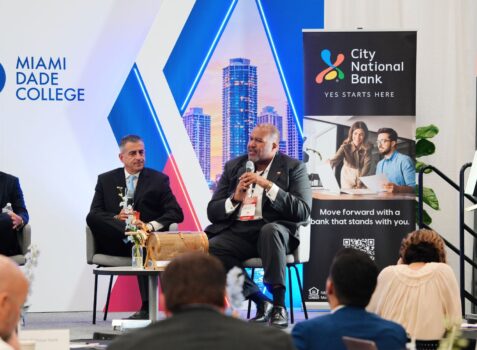
The event also featured fireside chats, more intimate discussions with Lindenberg. Juan Carlos Liscano, senior vice president of Miami International Airport operations for American Airlines, said the carrier hired 300 new workers in the past week alone as it continues to grow its 15,000-person Miami workforce. Jorge Gonzalez, vice chairman and CEO of City National Bank, said Miami should not try to be New York or London. “Miami is something by itself worth recognizing, so let’s become a better Miami, not try to be like someone else,” Gonzalez said. Madeline Pumariega, president of Miami Dade College, said the region must build “the capital of people, not just the capital of money.”
Gonzalez, closing the day, cautioned against growth for its own sake. “Companies and places sometimes lose sight of who they are as they grow bigger,” he said.
Executives leaving the summit should track three levers: workforce housing tied to the incentive programs referenced across panels, the pace at which Miami-Dade’s unemployment rate — among the lowest in Florida — holds as population growth continues, and how quickly universities turn new AI curricula into job placements. Miami’s wealth base is not shrinking: the region’s millionaire population has surged 94% over the past decade, giving leaders capital to deploy against the affordability and infrastructure gaps speakers flagged all day. The test now is whether that capital gets aimed at durability, not the current cycle.
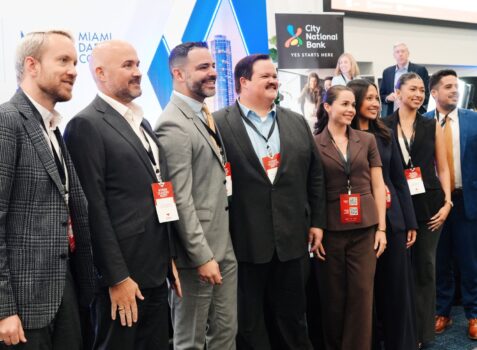
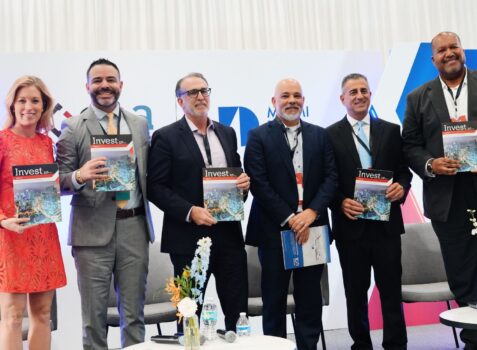
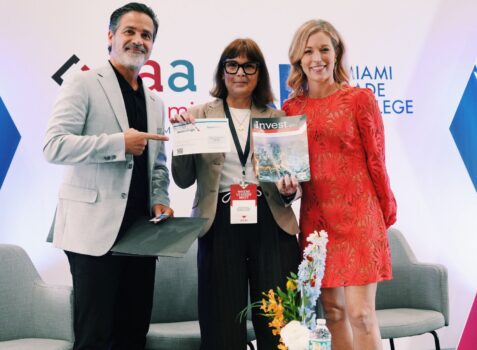
Following the Invest: Miami Leadership Summit, the celebration continued at a cocktail hour where the inaugural caa Business Leadership & Innovation Awards for Miami honored leaders shaping the region’s future. Juan Montoya of Rokk3r was named Miami Innovator of the Year; Jorge Pérez of Related Group received the Miami Real Estate Icon award; Rebecca Fishman Lipsey of The Miami Foundation won the Women Building Miami award; and Ken Griffin of Citadel received the Future of Miami Award. The awards also recognized honorees Melissa Medina of eMerge Americas, Alicia Cervera Lamadrid of Cervera Real Estate, Teresa King Kinney of the Miami Association of Realtors, and Eulois Cleckley of Friends of The Underline. The winners and honorees exemplify the entrepreneurial ambition, civic commitment and vision needed to translate Miami’s momentum into lasting opportunity.
Want more? Read the Invest: Miami report.