
Cyber defense tops Tampa Bay business news
Key points:
- • Tampa continues to rebrand as a national cybersecurity and AI hub.
- • NOAA funding merges maritime security with cyber innovation.
- • Tampa Bay Wave portfolio companies drive record regional employment.
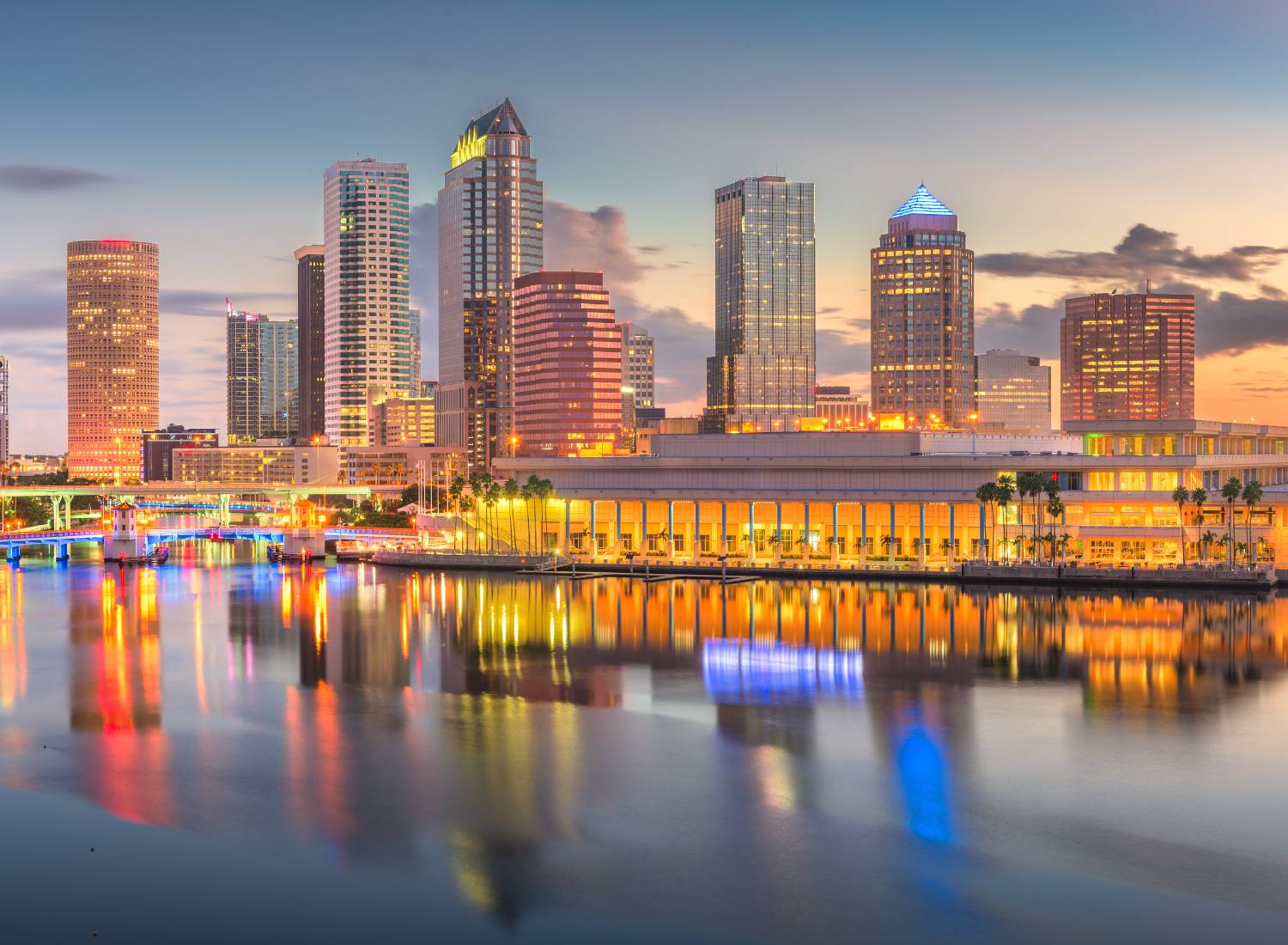 May 2026 — The fastest-growing line in Tampa Bay business news this spring is not real estate or hospitality; it is cybersecurity. Boosted by Department of Defense awards for MacDill Air Force Base and a surge in maritime security innovation, Tampa Bay is well underway to becoming the nation’s newest epicenter for digital defense.
Join us at caa’s upcoming leadership summits! These premier events bring together hundreds of public and private sector leaders to discuss the challenges and opportunities for businesses and investors. Find the next summit in a city near you!
The numbers from the past year’s developments confirm the momentum. Data from USAspending.gov shows obligated DoD spending for MacDill-based commands rising materially in fiscal year 2025. USSOCOM and U.S. Central Command (CENTCOM) have expanded their requirements for contractor capacity in incident response and threat intelligence. Local prime contractors and anchors, including ReliaQuest (headquartered on Water Street), ConnectSecure, and Rapid7, have significantly expanded headcounts. Tampa Bay Wave, a leading regional accelerator, reported in its 2025 Impact Report that its portfolio companies alone created 1,000 new jobs and raised $500 million in a single year.
Venture capital is following this contract flow. The “CyberBay” initiative, launched at a 1,000-leader summit in late 2025, has unified higher education and private-sector excellence. This pattern is breaking the traditional geography that previously favored Austin or Northern Virginia.
The shift is being reinforced by Cyber Florida at the University of South Florida (USF), which administers the $15 million Florida Local Government Cybersecurity Grant Program. As of early 2026, this program and related state appropriations have provided over $65 million to bolster digital resilience across Florida’s local governments.
The “CyberBay” catalyst
The emergence of this hub is driven by a unique convergence of factors. First, the federal demand signal has shifted toward software-defined and “dual-use” technologies. Tampa Bay is one of the few metros that can claim a major defense customer base alongside a maturing software ecosystem.
A critical development is the $14 million NOAA grant awarded to Tampa Bay Wave and the University of South Florida to launch the BlueTech|X Accelerator. This initiative, which launched in late 2025, merges maritime security with cyber-innovation, creating a specialized niche for “ocean enterprise” startups.
Second, the workforce pipeline is expanding through high-level partnerships. USF, The University of Tampa, and Florida Polytechnic University have all scaled their cybersecurity and AI curricula. In April 2026, USF formalized a strategic partnership with defense contractor By Light to advance “trusted AI” for national security, bridging the gap between academic research and operational necessity. Additionally, the U.S. Air Force’s training pipeline at MacDill continues to transition skilled service members directly into local high-wage roles.
Risks and constraints
Despite the surge, constraints remain. Workforce supply for cleared engineers is tight, and wage inflation in security-cleared roles is outstripping the regional average. While state property-insurance stabilization efforts are beginning to show early effects, housing affordability continues to be a concern for the high-wage employment base. Finally, the sector faces typical concentration risk; a reliance on a few large DoD contracts means regional growth can shift significantly between fiscal cycles.
Looking forward, the sustainability of “CyberBay” will be determined by three indicators:
1.- Whether venture-backed startups in Tampa can convert DoD prime contracts on their own credentials rather than as subcontractors.
2.- Whether the USF/By Light partnership delivers measurable “AI assurance” breakthroughs that attract further national security investment.
3.- Whether out-of-state capital continues to establish permanent regional offices rather than treating the metro solely as a destination for deal-flow.
Want more? Read the Invest: Tampa Bay report.