
Patrick Goddard, CEO, Brightline Florida
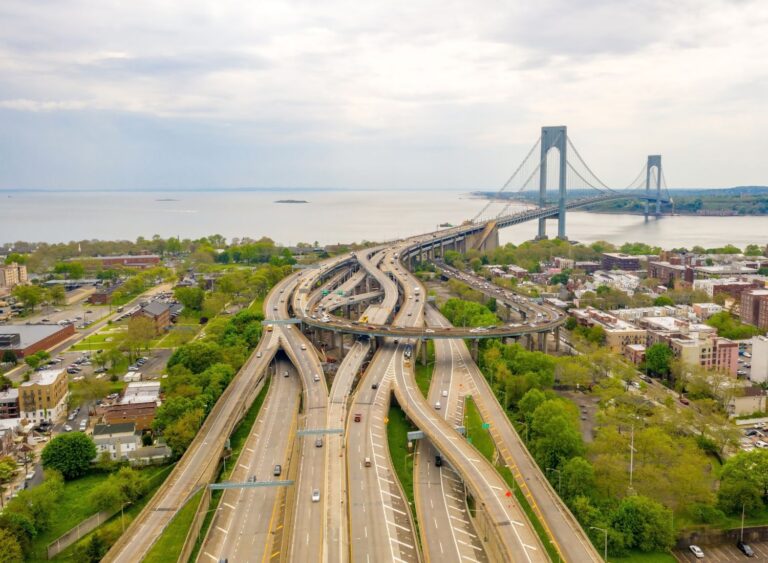
 May 2026 — Invest: spoke with Patrick Goddard, CEO of Brightline Florida, about how the company is redefining mobility across the state and shaping the next era of transportation infrastructure. “Florida cannot simply build more highways — geography makes that impossible,” Goddard said. Goddard also discussed the growing demand for modern rail, the role of transit-oriented development, and the long-term investments needed to support Florida’s rapid growth and evolving travel patterns.
How has the transportation industry changed over the past year, and how have those shifts influenced Brightline’s strategy or day-to-day operations?
We’ve spent the last several years being the change in Florida transportation. For the first time since the 1960s, there is a true alternative to driving in the state, and today Brightline connects nearly half of the state’s population — roughly 4 million people in Central Florida with about 6 million in South Florida. That level of connectivity is transforming tourism, economic development, and the business community.
Brightline’s success has also catalyzed statewide conversations about the future of mobility. In South Florida, the Coastal Link commuter rail project is gaining momentum; in Central Florida, there is renewed interest in extending SunRail to Orlando International Airport and the theme parks. Brightline’s resonance with residents and visitors has encouraged policymakers to think differently about how to create a car-alternative lifestyle in Florida and how to align long-term funding and planning around that goal.
What changes are you seeing in how people choose to travel, especially around comfort, convenience, or sustainability?
We now carry about 300,000 guests a month, and the variety is remarkable. We see commuters traveling daily between Miami and Fort Lauderdale, business travelers meeting clients across the state, students going to and from college, cruise passengers connecting to ports, and visitors using Brightline to reach airports, theme parks, and conventions. That reflects Florida’s profile: 20 million residents, well over 130 million annual visitors, and some of the world’s busiest airports and cruise ports.
At the same time, population growth and companies bringing employees back to the office have increased congestion on the roads. The math is simple: more cars and no additional road capacity does not equal an easy commute. People are actively looking for alternatives that are efficient, comfortable, environmentally friendly, and compatible with everyday life. With Brightline, guests can choose how they want to spend their time — relaxing with entertainment and a drink or being productive on our Starlink Wi-Fi.
Brightline was deliberately designed for the modern traveler. That includes comfortable seating, power at every seat, onboard food and beverage, and stations with thoughtful architecture, design, and amenities. These elements matter to us because we do not simply provide transportation; we deliver an experience that makes it worthwhile for people to leave their cars behind.
How do you see the combination of train travel with real estate, technology, and hospitality shaping the future of transportation?
At Brightline, we think of ourselves as a hospitality company in the train business. Experience is everything to our guests. The basics — reliability, safety, cleanliness, and a frictionless transaction — are foundational, but they are not enough on their own. Public transportation often carries “front-end friction,” where a traveler must first figure out how to get to a station and how to complete the end of their journey. Driving, by contrast, feels effortless at first and only becomes painful once you’re stuck in traffic.
That contrast highlights a broader land-use and mobility challenge. As Florida grows, connecting transportation with residential and commercial development becomes critical. Transit-oriented neighborhoods — where people can easily reach groceries, services, transportation, and jobs — will be vital to sustaining growth. Brightline can serve as the state’s intercity spine, but Florida will need to invest in east-west connections, commuter rail in dense areas, and micro-mobility around stations so people can move easily once they arrive.
Long term, the state must pursue a coordinated strategy around housing, transit, and mobility if it wants to maintain its economic momentum. Creating a cohesive network that integrates mass transit with daily life is essential.
What are the main challenges in expanding intercity rail in the United States, and how are you approaching those hurdles at Brightline?
One of Brightline Florida’s biggest advantages is that when we started, we already controlled a freight railroad, which meant we controlled the right-of-way. That access to the right-of-way is foundational to any intercity rail system. In other regions, lack of right-of-way access has been a major barrier.
The key questions are whether you can secure a viable corridor and what the environmental implications are for converting it to passenger rail. Because the federal government oversees the permitting process, federal leadership is essential. We’ve spent more than a decade working with federal partners to streamline certain requirements, so private systems can scale more efficiently. That work continues as we develop the Los Angeles–Las Vegas corridor, known as Brightline West.
Across the United States, there are several regions where intercity rail is ideally suited: densely populated city pairs 200 to 400 miles apart, connected by congested highways and too close to justify air travel. These are the markets where rail can be most competitive.
Finally, these are capital-intensive projects, and affordable financing is critical. Brightline Florida is privately owned, aside from limited public funding for safety enhancements. As more corridors are developed, government support through lower-cost financing and targeted grants will be essential, especially when multiple systems — such as intercity rail and commuter rail — can share common infrastructure. That creates a strong public benefit and a more efficient model for scaling mobility.
What is your vision for Brightline’s future as you look ahead to the Tampa expansion and the next few years more broadly?
Last year, we carried more than 3 million passengers, and we anticipate adding at least a million more this year. We continue to consistently break our own ridership records as we connect guests between Central and South Florida. The extension to Tampa represents a major opportunity to grow the system, and we have the ability to add both more trains and longer trains as demand rises. Over time, we project Brightline Florida carrying 6 to 7 million guests annually.
We continue to strive to provide a true car-alternative transportation option across Florida. At the same time, we want to continue expanding partnerships with local governments to support commuter rail and other initiatives that shift daily travel patterns. The more people get used to using transit in their own communities, the more naturally they adopt Brightline for longer trips.
Florida cannot simply build more highways — geography makes that impossible. The state must focus on alternatives. We’ve created a strong intercity backbone along the east coast; now we need to prioritize east-west links, commuter rail in high-density areas, and local mobility options that make car-free or car-alternative travel viable. Our role is to keep improving the product to meet the needs of business travelers, leisure travelers, and residents while building a sustainable system for the next 50 to 100 years.
Is there anything else you’d like to highlight?
2026 will be an extraordinary moment for Florida. Major events — from the College Football National Championship to FIFA World Cup matches, Formula 1, and IPW in Greater Fort Lauderdale — will draw global audiences. Brightline will play a central role in connecting people across the state to these events.
Meanwhile, the cruise industry continues to expand, and Florida’s ports will welcome even more ships in the coming year. All of this underscores Florida’s strong trajectory and the need to keep investing in mobility. Brightline has laid the foundation, and the task ahead is to build a system around it that supports the state’s long-term economic future.